+8613003178786
  sales@lingyufab.com



What Is Laser Cutting in Sheet Metal Fabrication?
30
Jul’2026What Is Laser Cutting in Sheet Metal Fabrication?
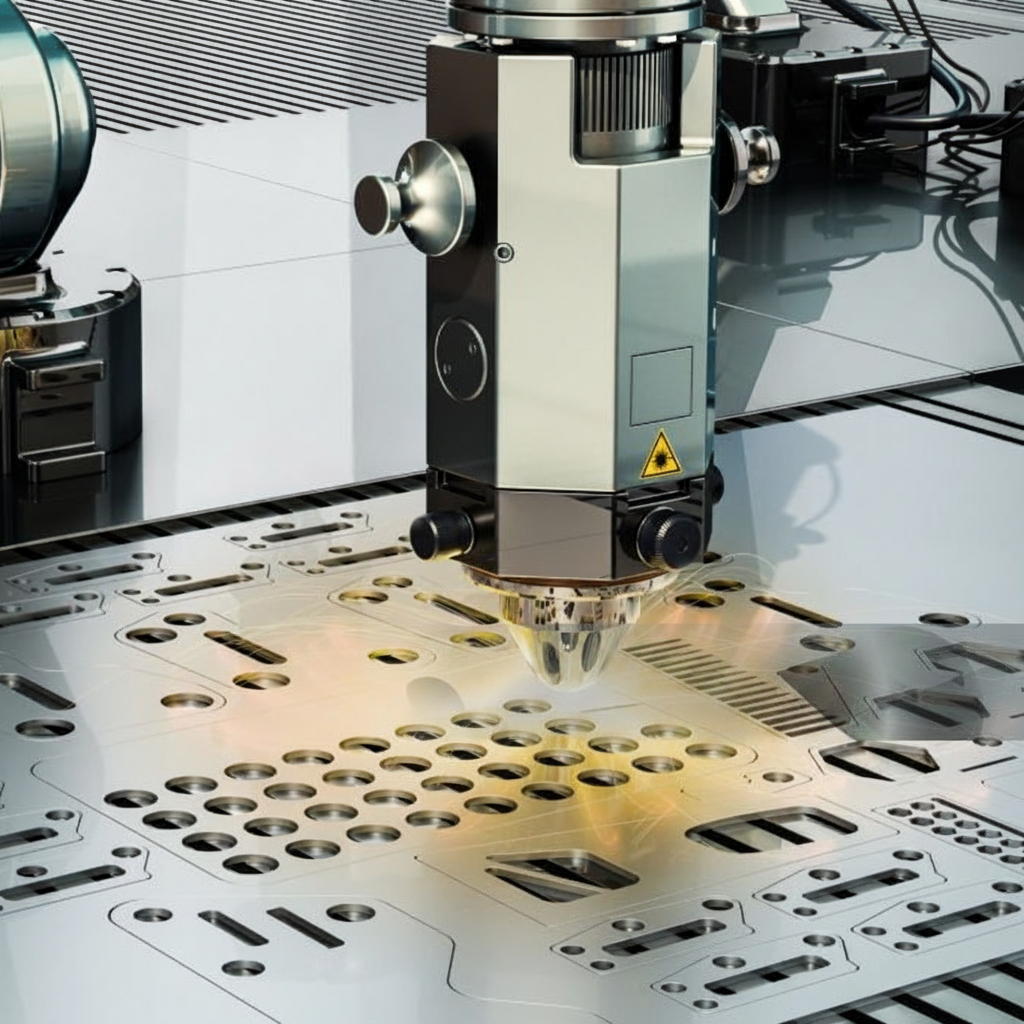
Laser cutting is a manufacturing process that uses a focused laser beam to cut metal sheets into precise shapes, profiles, and finished parts. In sheet metal fabrication, it is used to produce brackets, panels, covers, enclosures, frames, machine parts, and a wide range of other custom metal components. Its combination of high precision and design flexibility has made laser cutting one of the most important processes in modern sheet metal manufacturing.
For OEM buyers, laser cutting is much more than a cutting method. It directly affects dimensional accuracy, edge quality, production efficiency, part-to-part consistency, and overall fabrication cost. The right laser cutting setup helps buyers move more efficiently from drawings to finished parts, particularly for custom designs and medium-volume production.
At Lingyufab, we provide sheet metal fabrication services for OEM and industrial projects, including laser cutting for a wide range of custom metal parts. Based on customer drawings, material requirements, and end-use applications, we deliver practical manufacturing solutions for different product structures and fabrication needs.
How Does Laser Cutting Work?
Laser cutting works by directing a concentrated beam of light onto the surface of a metal sheet. The beam’s energy heats the material until it melts or vaporizes, while an assist gas blows molten material clear of the cut zone. This produces clean, accurate cuts that follow the programmed design precisely.
In day-to-day production, the process typically follows these steps:
· importing the drawing or cutting file
· selecting the material and thickness
· setting cutting parameters
· positioning the metal sheet
· cutting the required profiles and holes
· checking dimensions and cut quality
Because the cutting path is CNC-controlled, laser cutting is especially well suited for custom parts, complex profiles, and repeatable production runs.
Why Is Laser Cutting Widely Used in Sheet Metal Fabrication?
High cutting precision
Laser cutting is valued for producing accurate profiles and crisp feature details. This matters most for parts that require precise hole positions, a tight fit with mating components, or reliable consistency for downstream bending and assembly.
Good flexibility for custom parts
Because the process is digitally programmed, laser cutting handles custom sheet metal parts with varying dimensions, profiles, and hole patterns with ease. It serves both prototyping and series production of customized OEM parts equally well.
Clean cutting results
Compared with many traditional cutting methods, laser cutting delivers cleaner edges and sharper contour definition. This reduces secondary processing in many applications and supports a better finish on visible parts.
Efficient material utilization
Laser cutting allows tight part nesting on the sheet, which can improve material utilization depending on the layout and production planning. This is especially valuable in projects where minimizing scrap matters.
Suitable for a wide range of applications
Laser cutting is used across electrical cabinets, machine covers, brackets, appliance parts, transport components, enclosures, display products, and many other custom sheet metal applications.
What Materials Can Be Laser Cut?
Laser cutting works with a variety of sheet metal materials. The right choice depends on product function, service environment, strength requirements, appearance targets, and cost goals.
Carbon steel
Carbon steel is widely used for general industrial parts. Its combination of strength and cost efficiency makes it a common choice for brackets, frames, cabinets, covers, and structural components.
Stainless steel
Stainless steel is the preferred option when corrosion resistance, hygiene, and long service life are required. Laser-cut stainless steel parts are common in food equipment, medical products, enclosures, and industrial machinery.
Aluminum
Aluminum is widely used where lower weight and reliable corrosion resistance matter. Laser-cut aluminum parts are commonly found in electronics housings, decorative panels, transport-related products, and lightweight structures.
Galvanized steel
Galvanized steel pairs the strength of steel with improved corrosion resistance from its protective zinc layer. It is a frequent choice for ducts, cabinets, appliance parts, and general industrial products.
Different materials and thickness ranges call for different cutting parameters, so material selection should always be evaluated alongside the product design and fabrication process.
Common Applications of Laser Cutting
Electrical and electronic equipment
Laser cutting is widely used to produce cabinet panels, control box parts, enclosures, mounting plates, and server rack components. These products typically demand accurate holes, slots, and cutouts for hardware mounting and electrical integration.
Industrial equipment
Machine covers, guards, structural brackets, supports, frames, and access panels are all commonly produced by laser cutting. Cutting accuracy is especially important here, as these parts often need to mate with bent, welded, or assembled structures.
Home appliances
Laser cutting is used for appliance panels, internal supports, mounting parts, and protective housings. Consistency and production efficiency are key in these applications.
Construction and HVAC
Laser-cut parts are also common in ducts, covers, support components, utility cabinets, and architectural metalwork. Material selection and corrosion resistance are major considerations in this sector.
Transportation and OEM custom products
Laser cutting is widely used for vehicle-related parts, battery enclosures, custom brackets, light structural components, and a broad range of OEM products that demand custom shapes and reliable repeatability.
What Are the Advantages of Laser Cutting Compared with Other Cutting Methods?
Every cutting method has its strengths, but laser cutting is often preferred for custom sheet metal parts because of its balance of precision and flexibility.
Compared with more basic cutting methods, laser cutting tends to be better suited for:
· complex part profiles
· small holes and detailed cut features
· fast design changes
· short production runs
· prototype development
· repeatable custom manufacturing
For many OEM projects, laser cutting simplifies the path from design to production, especially when part geometry rules out simpler manual or lower-precision cutting methods.
What Affects the Price of Laser Cutting?
The cost of laser cutting depends on several practical factors, not just part size.
Material type
Different materials carry different costs and cutting characteristics. Stainless steel and aluminum typically price differently from carbon steel or galvanized steel.
Material thickness
Thicker materials generally need more cutting time and adjusted machine settings, which affects both efficiency and total cost.
Part complexity
A simple rectangular blank is very different from a part with numerous holes, slots, internal contours, and detailed profiles. More complex cutting paths mean more machine time.
Quantity
Production quantity directly affects pricing. Larger quantities improve efficiency, while small custom batches or samples typically carry higher unit cost.
Nesting efficiency
How parts are arranged on the sheet also influences material usage. Tighter nesting reduces waste and improves cost efficiency.
Additional processing requirements
Laser cutting is often just one step in a broader fabrication project. If bending, welding, hardware insertion, finishing, or assembly are also needed, total project cost increases accordingly.
For an accurate quotation, buyers should provide drawings, material type, thickness, quantity, and any downstream fabrication requirements.
Factors to Consider When Purchasing Laser Cutting Service
When sourcing laser cutting services, buyers should look beyond piece price.
Drawing clarity
A clear drawing or cutting file helps prevent errors and speeds up production. Hole sizes, dimensions, tolerances, and material specifications should all be clearly defined.
Material suitability
The chosen material should match the product’s strength, corrosion, appearance, and budget requirements. The supplier should also confirm whether the material is well suited for efficient cutting.
Required precision
Different products have different precision needs. Buyers should communicate clearly whether the part is for simple structural use, a visible exterior application, or further assembly with tight fit requirements.
Downstream fabrication needs
Many laser-cut parts go on to be bent, welded, coated, or assembled. It is important to consider the complete fabrication route, not just the cutting step.
Supplier capability
A reliable supplier should be able to manage cutting quality, drawing review, material control, dimensional inspection, and coordination with downstream processes. For OEM projects, this capability is especially important.
Why OEM Buyers Value One-Stop Laser Cutting Service
In many projects, buyers need more than flat-cut parts. They may also need bending, welding, hardware insertion, finishing, and final assembly.
When laser cutting is sourced separately from the rest of the fabrication chain, buyers may face:
· repeated technical communication
· more supplier coordination
· fit issues in later processes
· higher logistics complexity
· longer project lead time
A one-stop supplier simplifies this by coordinating cutting with the full fabrication process. For OEM buyers, this typically improves communication, reduces interface problems, and makes sourcing more efficient.
Laser Cutting Supplier in China
Lingyufab is a China-based manufacturer offering sheet metal fabrication services for OEM and industrial customers. We handle laser cutting for a wide range of custom metal parts and also provide related fabrication processes including CNC bending, welding, hardware insertion, and surface finishing.
For projects that go beyond simple cut parts, working with a supplier that understands the full fabrication process improves efficiency and reduces sourcing complexity. This is especially valuable for products such as enclosures, brackets, panels, cabinets, covers, and other custom sheet metal components.
If you are looking for a reliable laser cutting supplier in China, Lingyufab can support your project with practical manufacturing solutions tailored to your drawings, technical requirements, and application needs.
FAQ
What is laser cutting in sheet metal fabrication?
Laser cutting is a process that uses a focused laser beam to cut sheet metal into custom shapes, profiles, and parts with high precision and repeatability.
What materials can be laser cut?
Common materials include carbon steel, stainless steel, aluminum, and galvanized steel. The best choice depends on the product’s strength, corrosion resistance, weight, appearance, and budget.
What are the advantages of laser cutting?
Key advantages include high cutting precision, flexibility for custom parts, clean cut profiles, efficient CNC control, and suitability for a wide range of OEM fabrication projects.
What affects the cost of laser cutting?
Cost is influenced by material type, thickness, part complexity, quantity, nesting efficiency, and whether additional fabrication processes are involved.
How do I choose a laser cutting supplier?
Look for a supplier with capable equipment, strong drawing review ability, solid quality control, reliable material management, and good coordination with downstream fabrication.
Need laser cutting for your next project? Send Lingyufab your drawings, material requirements, or product specifications, and our team will review the design and provide a practical solution for your OEM manufacturing needs.