+8613003178786
  sales@lingyufab.com



What Are Industrial Fasteners?
30
Jul’2026What Are Industrial Fasteners?
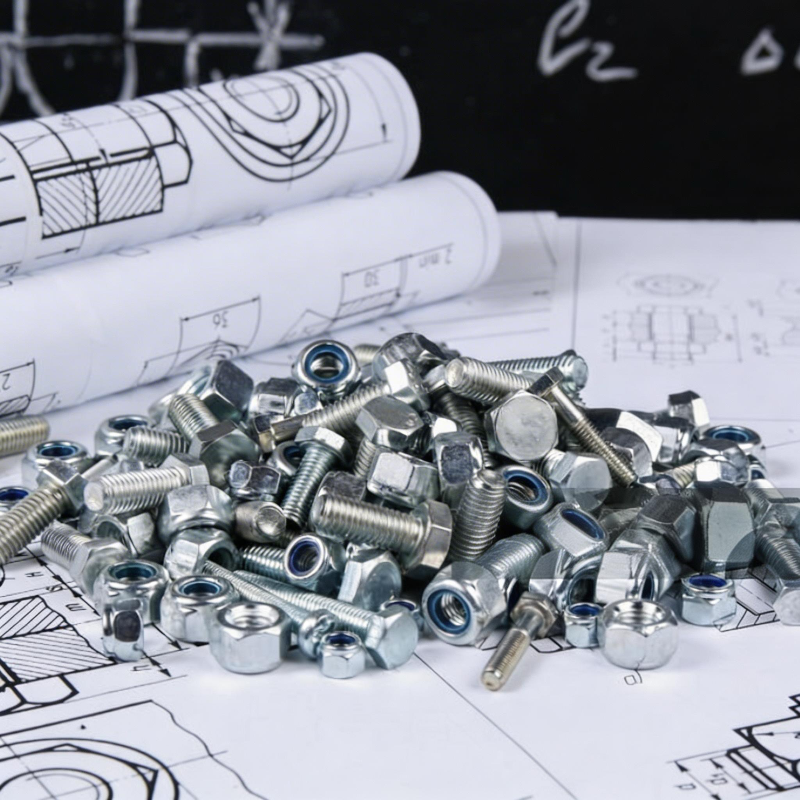
Industrial fasteners are mechanical components designed to join, clamp, or secure two or more parts in an assembly. They are widely used across sheet metal fabrication, machinery, automotive, electrical equipment, appliances, construction, and many other manufacturing sectors. The most common types include bolts, screws, nuts, washers, rivets, pins, and retaining rings.
For OEM buyers, fasteners go well beyond standard off-the-shelf hardware. The right fastener directly affects assembly efficiency, structural integrity, vibration resistance, corrosion performance, serviceability, and total procurement cost. Selecting the right fastener type, material, grade, and surface treatment is a critical step in both product design and supply chain planning.
At Lingyufab, we supply both standard and custom industrial fasteners for OEM manufacturing projects. Because we also handle sheet metal fabrication and assembly, we can support customers who prefer to source metal parts and matching fasteners from a single supplier—simplifying purchasing and coordination.
Main Types of Industrial Fasteners
Bolts
Bolts are externally threaded fasteners typically used with nuts to clamp parts through pre-drilled holes. They are among the most widely used fastener categories in industrial assembly.
Common bolt types include hex bolts, flange bolts, carriage bolts, and socket head cap screws. Bolt strength is specified by property class under ISO standards—such as 8.8, 10.9, or 12.9—with higher grades selected where greater tensile strength and preload are needed.
Screws
Screws are threaded fasteners that engage directly with the workpiece material or a tapped hole, without requiring a separate nut. They are a staple in sheet metal products, electrical enclosures, appliances, electronics, and precision assemblies.
Common screw types include self-tapping screws, machine screws, and self-drilling screws. Selection depends on the substrate material, installation method, torque control requirements, and target assembly speed.
Nuts
Nuts are internally threaded fasteners that mate with bolts or studs to generate clamping force. The hex nut is the most common type, though many industrial applications call for more specialized designs.
Examples include hex nuts, lock nuts, flange nuts, weld nuts, and clinch nuts. In environments with vibration, cyclic loading, or elevated temperatures, the right nut design is especially critical.
Washers
Washers sit under a bolt head or nut to distribute bearing load, protect the mating surface, or improve resistance to loosening.
Common types include flat washers, spring washers, lock washers, Belleville washers, and specialized anti-loosening washers. Small as they are, washers play a real role in maintaining joint stability and protecting finished surfaces.
Rivets
Rivets are permanent fasteners chosen when a non-removable joint is required. They see heavy use in sheet metal products, enclosures, vehicle components, and light structural assemblies.
Common types include solid rivets, blind rivets, and semi-tubular rivets. Blind rivets are particularly practical when the back side of the assembly is not accessible.
Key Features of Industrial Fasteners
Industrial fasteners offer several practical advantages that make them the default joining method in most manufacturing and assembly operations.
Most fasteners are produced to international standards such as ISO, DIN, ANSI, JIS, and GB. This standardization ensures dimensional compatibility between mating parts and simplifies replacement and multi-source procurement.
Fasteners are available in a broad range of materials—carbon steel, alloy steel, stainless steel, aluminum, brass, and titanium—each offering a different balance of strength, corrosion resistance, weight, conductivity, and cost.
Surface treatment is often just as important as base material selection, particularly for parts exposed to moisture, chemicals, or outdoor conditions. Common finishes include zinc plating, hot-dip galvanizing, zinc-aluminum flake coatings, black oxide, nickel plating, and tin plating.
Standard fasteners are manufactured through high-efficiency processes—cold heading, thread rolling, heat treatment, and surface finishing—enabling large-volume production with consistent dimensions and reliable mechanical performance.
Common Applications of Industrial Fasteners
Industrial fasteners appear in virtually every manufacturing sector. The specific type required depends on load conditions, assembly method, material pairing, and service environment.
Automotive and new energy equipment rely on a wide variety of bolts, screws, nuts, and washers for structural parts, brackets, housings, battery systems, and interior trim. Strength consistency, vibration resistance, and tight process control are essential in these applications.
Electronics and electrical equipment use machine screws, self-tapping screws, cage nuts, and small precision fasteners in control cabinets, telecom gear, consumer electronics, and industrial electrical products. In certain designs, the plating material also affects grounding or EMI shielding performance.
Home appliance manufacturers depend on screws, flange bolts, nuts, and sheet metal fasteners for high-volume assembly lines, where installation speed and dimensional consistency are paramount.
Construction and infrastructure projects call for structural bolts, anchors, nuts, and washers in steel frames, supports, bridges, and utility systems. These applications typically involve specific load-rated standards, preload requirements, and long-term corrosion protection.
Aerospace, rail, and other high-reliability industries demand full material traceability, fatigue-rated performance, certified test reports, and advanced locking solutions.
How to Choose the Right Industrial Fasteners
For OEM buyers and sourcing teams, fastener selection involves much more than size and price. A thorough evaluation typically covers the following areas.
Joint performance requirements
Start with the joint itself: what load will it carry, is that load static or dynamic, is vibration present, and will the joint require periodic maintenance or disassembly? The answers drive decisions on fastener type, diameter, thread form, property class, and locking method.
Material and corrosion environment
The service environment directly influences material selection. Carbon steel suits general indoor industrial use; stainless steel is preferred for humid or corrosive conditions; aluminum saves weight where that matters; and specialty alloys may be needed for extreme thermal or chemical exposure. Galvanic compatibility between the fastener and the mating material should also be evaluated.
Standards and quality requirements
Different end-use markets may require different standards or certifications. Buyers should clearly specify the applicable standard system, dimensional tolerances, coating requirements, mechanical properties, and any required inspection or test documentation.
Manufacturing capability
When sourcing industrial fasteners, it is useful to confirm whether the supplier can support the required production processes, such as cold heading, thread rolling, heat treatment, surface treatment, dimensional inspection, and mechanical testing. For custom fasteners, the supplier’s engineering support and drawing review capability are also important.
Total procurement efficiency
The lowest unit price does not always mean the lowest total cost. Quality consistency, lead-time reliability, packing and logistics coordination, incoming inspection workload, communication responsiveness, and the risk of assembly issues or line stoppages all factor in. A dependable supplier can eliminate hidden costs even if the per-piece price is not rock-bottom.
Standard and Custom Industrial Fasteners
Most industrial buyers need a mix of standard and custom fasteners.
Standard fasteners work well when the application follows common dimensions and established performance specs. They are readily available in volume and widely used across general industrial applications.
Custom fasteners come into play when the project calls for non-standard dimensions, special head profiles, unique thread forms, uncommon materials, application-specific coatings, or parts engineered to fit a proprietary assembly. In OEM projects, custom fasteners can streamline assembly, save installation space, or satisfy product-specific functional requirements.
Why One-Stop Sourcing Matters for OEM Buyers
For many manufacturers, fasteners represent just one piece of the finished product. A typical project may also involve sheet metal parts, brackets, enclosures, welded structures, or complete sub-assemblies.
Sourcing fasteners and metal parts from separate suppliers often means managing multiple vendor relationships, duplicated technical communication, independent quality follow-up, assembly fit-up issues, and more complex logistics.
A one-stop supplier can streamline this by coordinating fastener selection with the actual fabricated components and assembly requirements. For projects that combine metalwork and matching hardware, this approach improves communication efficiency and cuts sourcing complexity.
Industrial Fastener Supplier in China
Lingyufab is a China-based manufacturer of industrial fasteners and sheet metal assemblies. We supply standard and custom fasteners for OEM and industrial applications—including bolts, screws, nuts, washers, and related hardware—alongside sheet metal fabrication services such as laser cutting, CNC bending, welding, and surface finishing.
With fastener production and metal fabrication under one roof, we are well positioned to support customers who need matched hardware and fabricated parts delivered as a single package. This is especially valuable for buyers sourcing enclosures, brackets, chassis, and assembled metal products.
If you are looking for a reliable fastener manufacturer in China—whether for standard parts, non-standard parts, or assembly-based OEM projects—feel free to reach out to Lingyufab with your drawings, specifications, or product requirements.
FAQ About Industrial Fasteners
What are industrial fasteners used for?
Industrial fasteners join, secure, or clamp parts together in machinery, sheet metal products, appliances, vehicles, electrical equipment, structures, and a wide range of other industrial products.
What is the difference between a bolt and a screw?
A bolt typically passes through clearance holes and is secured with a nut, while a screw engages directly with the workpiece material or a tapped hole. In practice, the distinction can overlap depending on the specific design and application.
What materials are commonly used for industrial fasteners?
Common materials include carbon steel, alloy steel, stainless steel, aluminum, brass, and titanium. The best choice depends on strength requirements, corrosion exposure, weight constraints, and budget.
Can I order custom industrial fasteners?
Yes. Many OEM projects call for custom fasteners based on drawings, non-standard dimensions, special materials, or application-specific designs.
How do I choose the right fastener supplier?
Look for stable quality, clear technical communication, appropriate production capability, solid inspection support, and reliable on-time delivery. For OEM work, it also helps if the supplier understands how the fastener fits into the final assembly—rather than just shipping individual hardware items.
Need standard or custom industrial fasteners for your next project? Send Lingyufab your drawings, specifications, or product requirements, and our team will review the application and provide a tailored solution for your OEM sourcing needs.