+8613003178786
  sales@lingyufab.com



What Is Sheet Metal Assembly?
30
Jul’2026What Is Sheet Metal Assembly?
Sheet metal assembly is the process of joining fabricated sheet metal parts with other components to form a finished product or sub-assembly. It is widely used to produce enclosures, brackets, cabinets, panels, frames, covers, chassis, and a broad range of other industrial products. In a typical production flow, sheet metal assembly follows upstream processes such as laser cutting, punching, bending, welding, and surface finishing.
For OEM buyers, sheet metal assembly goes well beyond simply putting parts together. It directly affects product accuracy, structural strength, appearance consistency, production efficiency, and total procurement cost. A well-managed assembly process reduces sourcing complexity, improves fit between mating parts, and helps buyers move more efficiently from drawings to delivered products.
At Lingyufab, we provide sheet metal fabrication and assembly services for OEM and industrial projects. Based on customer drawings, technical requirements, and end-use applications, we handle the manufacturing of custom sheet metal parts and their assembly into finished or semi-finished products.
What Is Included in Sheet Metal Assembly?
A typical sheet metal assembly brings together fabricated metal parts along with hardware and other supporting components. Depending on the product, an assembly may include:
sheet metal panels
brackets
covers
frames
welded structures
fasteners
rivets
studs
hinges
inserts
plastic or rubber accessories
electrical or mechanical sub-components
In many projects, the goal goes beyond producing individual parts. It is to deliver components that are already matched, assembled, and ready for the customer’s next production step. That is what makes sheet metal assembly so valuable in OEM manufacturing.
Key Processes in Sheet Metal Assembly
Sheet metal assembly brings together several manufacturing and joining steps. The exact sequence depends on product structure, material, dimensional requirements, and end-use conditions.
Cutting and Blank Preparation
Production typically starts with raw sheet metal being cut into the required shapes. Common methods include laser cutting, punching, and shearing. Dimensional accuracy at this stage is critical because downstream assembly quality depends on how well the individual parts fit together.
Bending and Forming
After cutting, parts are bent or formed into their designed shapes. Bending accuracy directly influences assembly alignment, hole-position matching, and overall structural fit. Poor forming control leads to gaps, distortion, or installation difficulties further down the line.
Hardware Insertion
Many sheet metal products require hardware such as self-clinching nuts, studs, standoffs, screws, or other fastening elements. These components are inserted before or during assembly, depending on the product design. Hardware insertion is standard practice in cabinets, enclosures, brackets, and structural sheet metal parts that require repeatable fastening points.
Welding and Joining
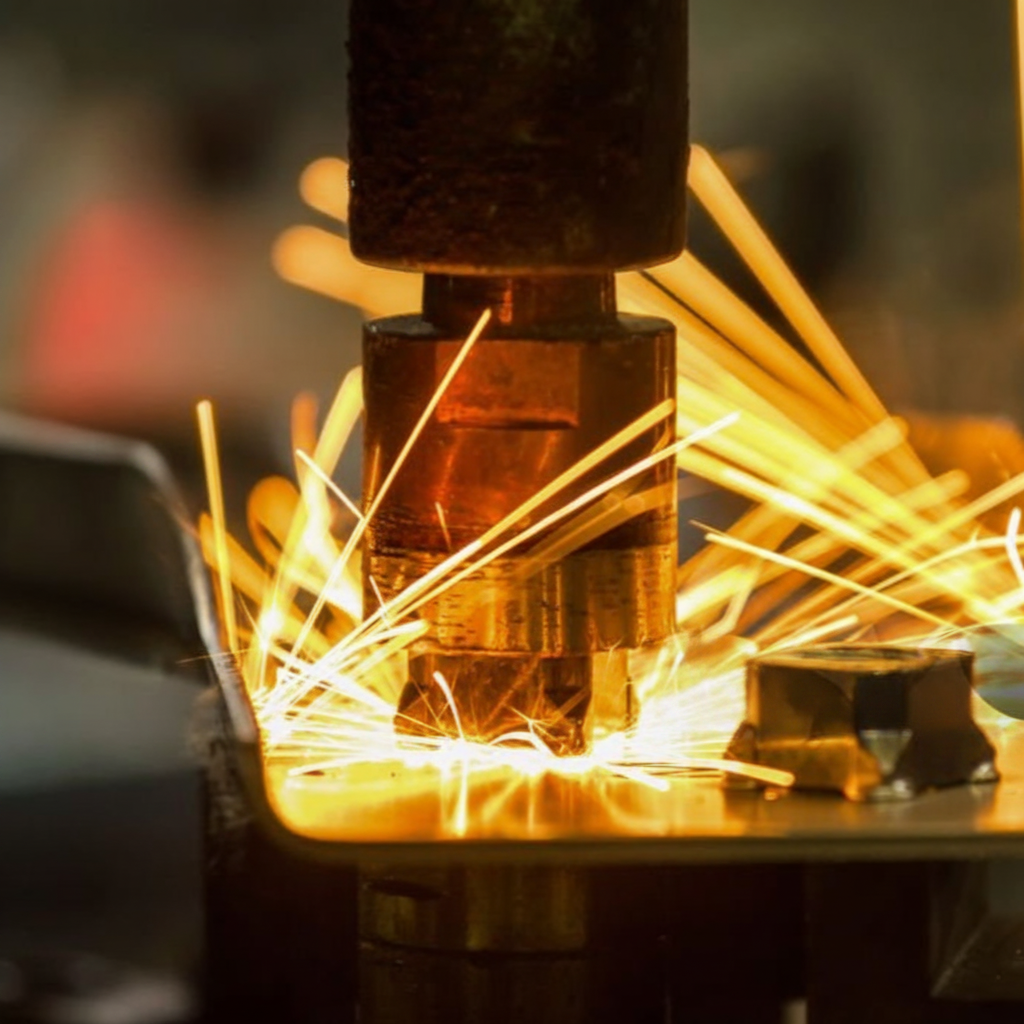
Welding is the go-to method when a permanent joint is required. Depending on the product, this may involve spot welding, MIG welding, TIG welding, or other suitable techniques. In other cases, the assembly relies on screws, rivets, clinch fasteners, or other mechanical joining methods instead of welding.
Surface Finishing
Some products require surface treatment before final assembly; others are assembled first and finished afterward. Common surface treatments include powder coating, plating, anodizing, polishing, and painting. The sequencing depends on product structure and finish specifications.
Final Assembly and Inspection
The final stage covers putting all parts together, checking fit and appearance, and verifying that the completed assembly meets drawing and quality requirements. Depending on the product, this may also include packaging, labeling, or shipment preparation per customer instructions.
Common Joining Methods in Sheet Metal Assembly
Different products call for different joining methods. The best choice depends on strength requirements, service conditions, appearance targets, maintenance needs, and production efficiency.
Welding
Welding is used where strong, permanent joints are needed. It is common in frames, cabinets, supports, brackets, and structural assemblies. Welding delivers excellent joint strength, but it also demands careful control of distortion, appearance, and post-weld finishing.
Fasteners
Screws, bolts, nuts, washers, and self-clinching hardware are all common in sheet metal assembly. Mechanical fasteners are particularly useful when the product requires disassembly, maintenance access, or straightforward part replacement.
Riveting
Rivets are a common choice for permanent joining in sheet metal products, especially where welding is not practical or where assembly access is limited. Blind rivets see heavy use in enclosures, covers, panels, and light structural products.
Adhesive or Auxiliary Joining
In certain applications, adhesives, sealants, or other auxiliary joining methods may be used alongside mechanical fastening. These are typically selected when sealing, vibration damping, or material compatibility is an added concern.
Applications of Sheet Metal Assembly
Sheet metal assembly spans many industries because fabricated metal parts on their own are rarely the final product. Assembly is what turns those parts into functional products or sub-systems.
Electrical and Electronic Equipment
Sheet metal assembly is widely used for electrical cabinets, control boxes, enclosures, server racks, telecom housings, and similar products. These assemblies typically demand accurate hole positioning, reliable hardware insertion, proper grounding provisions, and a clean finished appearance.
Industrial Equipment
Machine covers, protective guards, frames, supports, access panels, and equipment housings are all commonly produced through sheet metal assembly. Structural stability, consistent dimensions, and ease of installation are the key priorities in these applications.
Home Appliances
Many appliance products rely on assembled sheet metal parts for outer panels, inner supports, mounting brackets, and protective covers. High throughput and repeatable assembly quality are especially important in this sector.
Automotive and Transportation
Sheet metal assembly also covers brackets, structural supports, covers, battery housings, and other vehicle-related parts. Depending on the application, strength, vibration performance, and corrosion resistance may receive particular attention.
Medical, Commercial, and Specialty Products
Medical device housings, commercial equipment cabinets, display structures, and bespoke industrial products also rely on sheet metal assembly. These projects often place elevated demands on appearance, cleanliness, or functional integration.
What Affects the Price of Sheet Metal Assembly?
The cost of sheet metal assembly depends on more than raw material and part size. Several practical factors shape the final quotation.
Material Choice
Carbon steel, stainless steel, aluminum, and galvanized steel each carry different price points and processing requirements. Material choice directly affects both manufacturing cost and assembly method.
Part Complexity
Simple brackets or covers are naturally quicker to assemble than multi-part cabinets or welded frames. As the component count rises, so do assembly time, inspection effort, and production coordination.
Joining Method
Each joining method carries its own cost profile. Welding, riveting, hardware insertion, and screw assembly all call for different levels of labor, equipment, and quality control.
Surface Finishing Requirements
Products requiring powder coating, plating, polishing, or cosmetic-grade finishing may involve additional steps before or after assembly, affecting both cost and lead time.
Tolerance and Quality Requirements
Assemblies with tighter tolerances, cosmetic standards, or functional fit requirements call for closer process control and more thorough inspection, which adds to total production cost.
Order Quantity
As with most manufacturing work, volume matters. Larger production runs improve efficiency, while lower-volume custom assemblies tend to carry higher per-piece costs.
For an accurate quotation, buyers should provide drawings, assembly requirements, material specifications, finish requirements, and estimated order quantities.
Factors to Consider When Purchasing Sheet Metal Assembly
When sourcing sheet metal assembly, buyers should look beyond unit price and evaluate the overall manufacturability and delivery reliability of the project.
Product Structure and Assembly Design
The supplier should understand how the parts fit together and whether the design is practical for fabrication and assembly. This helps head off problems such as misalignment, interference, poor fastening access, or unnecessary process complexity.
Material and Finishing Requirements
Material selection should match the service environment, corrosion exposure, strength requirements, and appearance goals. Buyers should also confirm whether finishing is needed before or after assembly.
Joining Method Suitability
The joining method should suit the product’s functional needs. Some products call for permanent welded joints; others are better served by removable mechanical fasteners that allow maintenance or part replacement.
Quality Control Capability
A capable supplier should be able to control dimensions, assembly consistency, weld quality, hardware installation, and final appearance. Stable, repeatable assembly quality is especially important for products that feed into further downstream processes.
Communication and Project Coordination
For OEM projects, clear technical communication is essential. A supplier that can review drawings, understand assembly intent, and coordinate fabrication with assembly helps reduce delays and avoid repeated corrections.
Why One-Stop Sheet Metal Assembly Service Matters
In many OEM projects, buyers need more than individual fabricated parts. They need finished assemblies that are ready for installation, testing, or integration into a larger product.
When sheet metal parts, hardware, welding, and final assembly are sourced from different suppliers, buyers often face:
multiple suppliers
repeated technical communication
inconsistent fit between parts
more complicated logistics
higher coordination workload
A one-stop sheet metal assembly service simplifies this considerably. Combining fabrication and assembly under one supplier improves communication efficiency, reduces interface problems, and streamlines procurement management.
Sheet Metal Assembly Supplier in China
Lingyufab is a China-based manufacturer offering sheet metal fabrication and assembly services for OEM and industrial customers. We handle custom sheet metal manufacturing based on drawings and project requirements, covering laser cutting, CNC bending, welding, hardware insertion, and surface finishing.
For projects that call for both fabricated sheet metal parts and assembly support, working with a single supplier helps improve efficiency and reduce sourcing complexity, especially for products such as enclosures, cabinets, frames, brackets, covers, and other custom metal assemblies.
If you are looking for a reliable sheet metal assembly supplier in China, Lingyufab can support your project with practical manufacturing solutions tailored to your product structure, technical requirements, and application needs.
FAQ
What is sheet metal assembly?
Sheet metal assembly is the process of joining fabricated sheet metal parts and related components into a finished product or sub-assembly, using methods such as welding, mechanical fastening, riveting, hardware insertion, and surface finishing.
What products use sheet metal assembly?
Common products include electrical enclosures, industrial cabinets, brackets, machine covers, frames, appliance components, and a wide variety of custom OEM metal products.
What joining methods are used in sheet metal assembly?
Common methods include welding, screws, bolts, nuts, rivets, self-clinching hardware, and in certain cases adhesives or sealants.
What affects the cost of sheet metal assembly?
Cost is influenced by material type, part complexity, joining method, finishing requirements, tolerance specifications, and order quantity.
How do I choose a sheet metal assembly supplier?
Look for a supplier with proven fabrication capability, assembly experience, solid quality control, drawing review ability, and clear project communication.
Need sheet metal assembly for your next project? Send Lingyufab your drawings, specifications, or product requirements, and our team will review the design and provide a practical solution for your OEM manufacturing needs.