+8613003178786
  sales@lingyufab.com



How Laser Cutting Improves Accuracy in Custom Sheet Metal Fabrication
30
Jul’2026How Laser Cutting Improves Accuracy in Custom Sheet Metal Fabrication
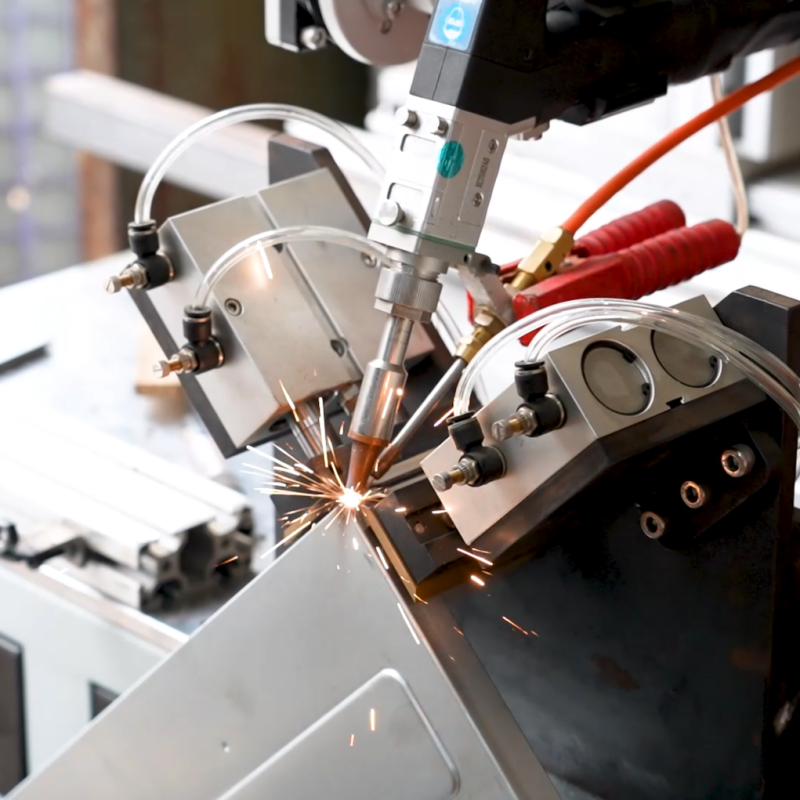
What is Laser Cutting in sheet metal fabrication?
Laser cutting is a non-contact, thermal-based digital fabrication process that utilizes a focused, high-powered laser beam to slice, score, or pierce sheet metal with extreme fidelity. Guided by Computer-Aided Design (CAD) files and driven by CNC (Computer Numerical Control) systems, the process directs intense light energy along a precise geometric path.
When looking at how laser cutting fundamentally improves accuracy, the definition expands beyond just "cutting with light." Unlike traditional mechanical shearing or stamping—which rely on physical blades, dies, and sheer brute force—laser cutting delivers localized, concentrated thermal energy. By focusing a beam (often fraction of a millimeter in diameter) onto a microscopic area, it instantly melts or vaporizes the metal.
Because the tool itself is a weightless beam of light, it exerts zero mechanical force on the workpiece. This eliminates the material distortion, edge rounding, and micro-fractures common in stamping, making it the foundational mechanism behind achieving micron-level tolerances in custom sheet metal assemblies.
.
How Does Laser Cutting Work in Sheet Metal Fabrication?
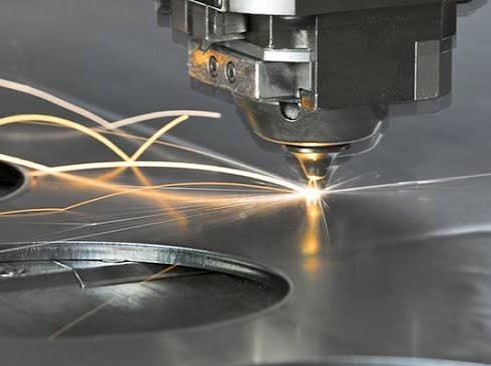
The entire process of laser cutting relies on light, heat, and gas to achieve high-precision cuts. Instead of using a physical blade, it can be broken down into four core steps:
Beam Generation & CNC Guidance
The process begins with the laser source generating a high-intensity light beam. This beam is then directed through a series of mirrors or fiber optic cables into the cutting head. A computer numerical control (CNC) system reads your CAD design file and guides the cutting head along the precise coordinates of the programmed path.
High-Density Focusing
Inside the cutting head, a specialized lens focuses the laser beam into an incredibly small, concentrated spot—often just a fraction of a millimeter in diameter. This dramatic focusing amplifies the thermal energy density to extreme levels, allowing it to instantly heat the target surface.
Rapid Melting & Material Vaporization
As the focused beam hits the sheet metal, the localized temperature skyrocketing in milliseconds causes the metal to rapidly melt, burn, or vaporize along the designated line. Because the beam is so concentrated, only the immediate contact zone is affected, leaving the surrounding material untouched.
Gas Assist & Clean Ejection
Simultaneously, a high-pressure assist gas (such as Nitrogen, Oxygen, or Compressed Air) is blown through a nozzle right alongside the laser beam. This gas stream immediately expels the molten metal out of the bottom of the cut (the kerf).
Nitrogen is typically used for stainless steel and aluminum to prevent oxidation, ensuring a bright, clean, and burr-free edge.
Oxygen is often used for carbon steel, acting as a catalyst to speed up the burning process.
The Role and advantages of Laser Cutting in Sheet Metal Fabrication
In custom sheet metal manufacturing, laser cutting is far more than just an isolated cutting step—it is the foundational engine that drives the entire fabrication workflow. As the very first phase of production, its execution directly dictates the efficiency, quality, and feasibility of every downstream process.
Here is a closer look at the essential functions laser cutting performs across the sheet metal fabrication lifecycle:
The Gateway Process: Precision Blanking and Nesting
Every custom sheet metal part begins as a raw, standard-sized metal plate. Laser cutting serves as the primary "blanking" or "shaping" phase that extracts individual part profiles from the sheet. Because it is a software-driven process, advanced nesting software can tightly pack complex, irregular part geometries onto a single sheet. This maximizes material utilization, minimizes high-value metal scrap, and establishes the exact structural layout of the component before it undergoes physical forming.
Eliminating Tooling Constraints for Rapid Prototyping
Traditional sheet metal shaping often relies on mechanical punching, stamping, or shearing, which require expensive, custom-machined hard tooling or die sets. Laser cutting completely eliminates these hardware constraints. By directly reading 2D CAD blueprints, the CNC laser system can instantly transition from cutting an automotive bracket to a complex medical enclosure without any tool changes. This role is vital for rapid prototyping and low-to-medium volume OEM projects, slashing upfront setup costs and reducing lead times from weeks to hours.
Streamlining Downstream Processes (Bending & Welding)
The accuracy of the initial cut establishes a benchmark for all subsequent fabrication stages. Sheet metal parts are rarely just flat; they usually require bending on a press brake or assembly via welding.
For Bending: Laser cutting delivers identical dimensions and highly accurate notch placements, ensuring the part seats perfectly in the bending die and achieves consistent bend angles without cumulative tolerance errors.
For Welding: Clean, laser-cut edges ensure seamless, tight-fitting joints. This eliminates wide gaps, preventing weld sinkage, structural weaknesses, or excessive distortion during the thermal welding process.
Integrating Features in a Single Pass
Instead of forcing a part to move across multiple workstations—such as a saw for outer contours, a drill press for bolt holes, and a milling machine for slots—a laser cutter integrates all these features simultaneously. In a single continuous program, it cuts the outer perimeter, punches intricate internal ventilation grates, and slots high-tolerance mounting holes. This multi-functional role optimizes shop-floor logistics and drastically reduces the labor-hours required per part.
Key Factors That Determine Laser Cutting Precision
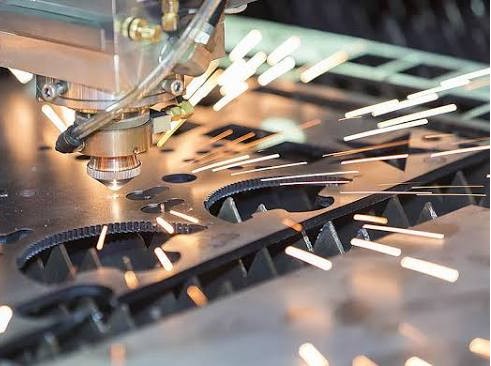
Here are the key technical factors that determine precision in custom sheet metal fabrication using laser cutting:
Zero Mechanical Force and Contact
Laser cutting is a completely non-contact process. The only thing touching the sheet metal is a weightless beam of light. Because there is no physical pressure or tool friction applied to the workpiece, the material remains perfectly flat and structurally relaxed, completely eliminating the risk of mechanical distortion.
An Incredibly Microscopic Kerf Width
A focused laser beam is compressed into an incredibly small, concentrated focal spot. This ultra-narrow cutting path allows the laser to execute highly complex, tight-radius curves, sharp internal corners, and micro-features that traditional tools simply cannot physically fit into.
Advanced CNC Automation and Direct CAD Translation
Laser cutting systems are entirely governed by Computer Numerical Control (CNC) automation.The machine's software translates digital 2D CAD blueprints directly into precise X/Y coordinate movements. The high-resolution servo motors and optical encoders tracking the laser head ensure that the path drawn on screen is replicated on the metal plate with absolute geometric fidelity, time after time.
Minimal Heat-Affected Zone (HAZ)
Because laser cutting relies on thermal energy to melt metal, managing heat dissipation is critical.Modern CNC lasers move at exceptionally high speeds, concentrating immense thermal energy onto a microscopic area for just a fraction of a second. This rapid execution minimizes the Heat-Affected Zone (HAZ). By keeping the surrounding metal cool, the material does not expand or warp during the process, locking the final dimensions exactly in place.
Absolute Repeatability Across Batches
A laser beam does not wear out. As long as the CNC programming and focal parameters remain constant, the machine delivers identical cuts across large production runs. For OEM projects that demand uniform part fitment across thousands of assemblies, this endless repeatability is invaluable.
Material Matters: Maintaining Micron-Level Accuracy in Sheet Metal Fabrication
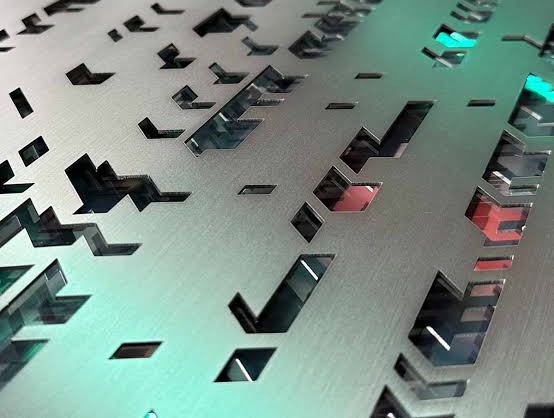
Achieving micron-level precision is not a one-size-fits-all process. In custom sheet metal fabrication, different metals react uniquely to concentrated thermal energy. To maintain unmatched accuracy across an entire project, our CNC laser systems dynamically adjust cutting parameters—such as laser wattage, pulse frequency, focal depth, and assist gas—to match the exact metallurgical fingerprint of each material.
| Material Type | Assist Gas Used | The Accuracy Challenge | The Precision Solution |
| Carbon Steel | Oxygen | Over-burning: Oxygen acts as a catalyst; excessive thermal buildup can widen the kerf and round sharp geometric corners. | Pulsed Laser Control: Utilizing advanced pulsing technology to strictly confine the thermal reaction to the microscopic focal spot. |
| Stainless Steel | High-Pressure Nitrogen | Dross & Oxidation: As an inert gas, nitrogen relies purely on mechanical pressure to eject molten metal without chemical assistance. | Perfect Focal Alignment: Deploying high optical intensity to melt metal rapidly, achieving a clean, square edge with zero bottom slag. |
| Aluminum | High-Pressure Nitrogen | High Reflectivity & Heat Sinking: Reflects light back into laser optics and conducts heat rapidly, leading to thermal expansion/warping. | Fiber Laser Tech: Operating at a wavelength absorbed efficiently by aluminum, cutting faster than the material can dissipate heat to minimize the HAZ. |
| Copper & Brass | High-Pressure Nitrogen | Extreme Thermal Stress: Highly reflective yellow metals undergo severe localized distortion if the laser cutting speed drops even slightly. | Capacitive Distance Sensors: Constantly maintaining a uniform distance between the nozzle and the sheet down to the micrometer for a stable focal point. |
Laser Cutting Applications: Precision Sheet Metal Parts in Major Industries
Laser cutting delivers micron-level accuracy with minimal mechanical stress, making it an indispensable process for producing high-precision sheet metal components across key global industries.Below are the primary applications of laser-cut sheet metal parts by sector.
Automotive & Electric Vehicles (EV)
Support and Mounting Brackets: Complex structural supports that secure internal vehicle components.
Battery Enclosures: Precision-cut housings and covers designed to protect EV battery cells.
Thermal Management Plates: Intricate cooling plates required for EV battery temperature control.
Motor Laminations: High-tolerance electrical steel sheets stacked inside electric motors.
Pillar Reinforcements: Ultra-high-strength steel profiles that reinforce vehicle crash structures.
Aerospace & Defense
Combustion Liners: Specialized, heat-resistant alloy panels used within jet engines.
Cabin Brackets: Lightweight structural supports for aircraft interiors and seating.
Fuselage Skin Panels: Contoured outer metallic sheets forming the body of the aircraft.
Radar Equipment Shims: High-precision, ultra-thin shims used for sensitive electronic calibration.
Drone Structural Ribs: High-strength, lightweight internal frameworks for unmanned aerial vehicles (UAVs).
Medical Devices & Healthcare Equipment
Surgical Instrument Trays: Perforated stainless steel trays built for sterilization and tool organization.
MRI Scanner Components: Non-magnetic structural parts and internal brackets for imaging machines.
Hospital Enclosure Panels: Clean, smooth outer casings for medical monitors and diagnostic devices.
Ventilator Brackets: Precision mounting brackets for critical internal respiratory components.
Orthopedic Implant Tools: Custom guides and trial components used during surgical procedures.
Electronics, Telecommunications & Enclosures
Server Rack Chassis: Heavy-duty, highly ventilated metal frames that house data center hardware.
Electrical Control Boxes: Outdoor and indoor industrial junctions that require tight-fitting, weather-resistant doors and seals.
EMI/RFI Shielding Enclosures: Intricate metal boxes that block electromagnetic interference in electronic circuits.
5G Base Station Brackets: Rugged mounting hardware engineered for telecom towers and infrastructure.
Terminal Plates: Custom interface plates featuring high-density cutouts for electrical connectors.
Industrial Machinery & Heavy Equipment
Crane Boom Brackets: Thick-gauge, load-bearing steel plates used in heavy-lifting equipment.
Conveyor System Links: Precision-cut, interlocking metal parts that drive automated assembly lines.
Pump Housings: Structural metal sheets formed to enclose high-pressure industrial pumps.
Agricultural Frames: Rugged steel frameworks for tractors, harvesters, and tilling machinery.
Generator Enclosures: Heavy-duty, sound-dampening metal housings for commercial power generators.
Lingyufab: Your Trusted Laser Cutting Supplier in China
Lingyufab is a premier China-based manufacturer specializing in precision sheet metal fabrication for OEM and industrial sectors. Beyond our core laser cutting capabilities, we provide a fully integrated suite of secondary processes, including precision bending, welding, hardware insertion, and surface finishing.
To ensure your projects achieve maximum efficiency and reduced sourcing complexity, Lingyufab delivers uncompromised manufacturing excellence built upon our Core Supplier Qualifications:
Certified Mitsubishi Electric Supplier: Proudly serving as a certified core supplier for Mitsubishi Electric, consistently meeting their stringent global quality and delivery benchmarks.
Advanced Machinery: Our modern workshop is fully equipped with high-precision laser cutting systems, CNC bending centers, stamping presses, and in-house cold heading machines for specialized bolts and nuts.
One-Stop Solution Hub: By providing integrated manufacturing for both industrial fasteners and complex sheet metal components, we drastically streamline your supply chain logistics.
Technical Expertise: Our experienced engineering team offers proactive design optimization (DFM) and strategic cost-saving solutions tailored to your blueprints.
Flexible Manufacturing: We feature highly scalable production capabilities engineered to seamlessly transition your projects from rapid prototypes to high-volume mass production.
Cost-Effective Operations: By eliminating unnecessary intermediaries and extra logistics, we reduce overall manufacturing costs by 15-20%, directly boosting your market competitiveness.
Get a Quote. Send an inquiry and get reply within 24 hours.
FAQ About Laser Cutting
Q1: How does laser cutting achieve such high accuracy?
It concentrates intense thermal energy onto a microscopic area (fractions of a millimeter), instantly melting or vaporizing the metal while leaving the surrounding area untouched.
Q2: Why does laser cutting prevent material deformation?
Because the laser is a weightless beam of light, it applies zero mechanical force to the workpiece, eliminating the distortion common in mechanical stamping or shearing.
Q3: What are the core elements involved in the cutting process?
The entire process relies on the synergy of three core elements: Light (the laser source), Heat (thermal density), and Gas (to expel molten material).
Q4:How does the laser beam actually separate the metal?
The extreme, localized heat shocks the metal in milliseconds, causing it to rapidly melt, burn, or vaporize along the designated program line.
Q5:What does "non-contact" process mean?
It means the physical cutting tool (the laser head) never touches the metal surface, removing any risk of physical tearing, scratching, or tooling wear.