+8613003178786
  sales@lingyufab.com



Precision Sheet Metal Electrical Control Boxes: Types, Materials & Key Applications
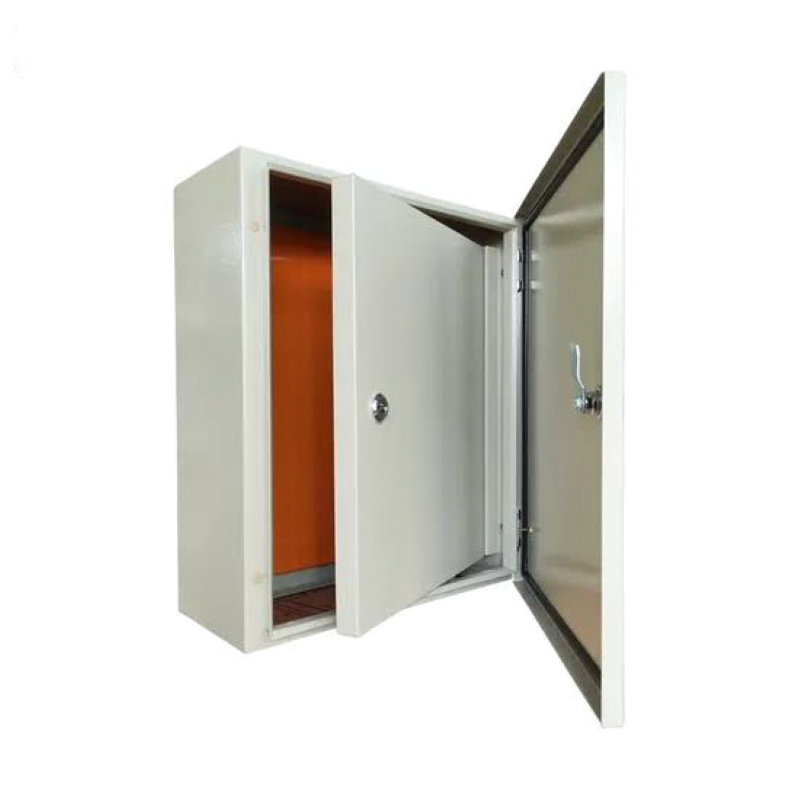
30
Jul’2026Precision Sheet Metal Electrical Control Boxes: Types, Materials & Key Applications
What is Sheet Metal for Electrical Control Boxes?
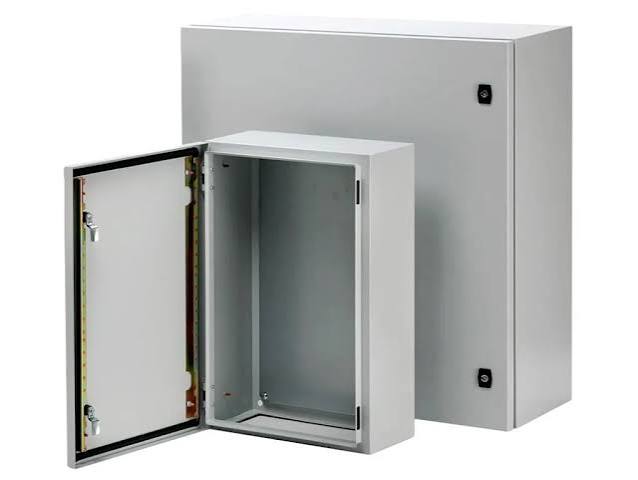
Sheet metal refers to metal that has been industrially processed into thin, flat pieces (typically ranging from 0.5 mm to 6 mm in thickness for enclosures). It serves as the primary structural material used to form the protective outer chassis, housing, or casing for electrical control boxes, switchgear, and control systems.
Critical Performance Requirements of Sheet Metal Enclosures
To ensure a sheet metal enclosure effectively protects sensitive components and performs reliably over its lifespan, it must meet several critical engineering and operational requirements:
Ingress & Environmental Protection (IP/NEMA Ratings)
The foremost duty of an enclosure is keeping external elements out. Enclosures are engineered to meet specific standard ratings depending on their deployment environment:
Dust & Solid Particles: Preventing fine airborne dust, dirt, or accidental finger contact from reaching live electrical components.
Moisture & Water: Resisting everything from light condensation and dripping water (indoor) to high-pressure washdowns (food processing) or heavy rain and ice formation (outdoor).
Gasketing: Relying on precise mechanical tolerances paired with high-quality gaskets (e.g., polyurethane, EPDM, or silicone) to form an airtight, liquid-tight seal.
Structural Integrity & Mechanical Durability
Enclosures must withstand physical stress throughout transport, installation, and operation:
Load-Bearing Capacity: The chassis must support the physical weight of heavy internal components like transformers, PLCs, and busbars without sagging or warping.
Impact Resistance: Guarding internal electronics against accidental bumps from machinery, tools, or vandalism. This is controlled by choosing the correct sheet thickness.
Rigidity: Utilizing formed flanges, stiffeners, and precise bend radiuses to prevent oil-canning (pop-buckling) on large flat panels.
Electrical Safety & Grounding
Because sheet metal is highly conductive, safety compliance requires dedicated electrical protection:
Equipotential Bonding: Integrating dedicated, unpainted grounding studs or clips on both the main body and the door. This ensures that if an internal wire faults and touches the enclosure, the current safely redirects to the ground rather than shocking an operator.
Arc Flash Resistance: In high-power applications, enclosures may need to withstand or safely vent the explosive energy generated by an internal short circuit.
Thermal Management
Electrical components generate heat, which can degrade electronics if trapped inside:
Passive Dissipation: Leveraging the natural thermal conductivity of sheet metal (especially aluminum) to radiate heat outward.
Active Ventilation Cutouts: Precision laser-cut structural openings designed to integrate louvers, cooling fans, or air conditioning units while maintaining structural rigidity and preventing water ingress.
Corrosion & Chemical Resistance
The choice of material and surface finish determines how well the enclosure survives its operating atmosphere:
Chemical/Salt Exposure: Harsh environments—like marine settings, wastewater treatment, or chemical processing plants—demand materials that won't degrade.
Surface Finishes: Utilizing industrial finishing techniques like multi-stage powder coating, galvanization, or choosing inherently resistant metals like 304/316 stainless steel or aluminum to prevent rust and chemical pitting.
Electromagnetic Compatibility (EMI/RFI Shielding)
Modern electronic controls are highly sensitive to signals, and they can also emit interference:
Signal Blocking: A properly sealed metal enclosure acts as a Faraday cage, blocking external electromagnetic interference (EMI) and radio frequency interference (RFI) from disrupting internal circuitry, while simultaneously containing any radiation generated by internal equipment.
Material Selection Guide for Electrical Sheet Metal Fabrication
When fabricating sheet metal electrical control boxes, selecting the right material is a balancing act between environmental exposure, structural requirements, weight, and budget.Here is a comprehensive selection guide detailing the most common materials used in electrical sheet metal fabrication:
Carbon Steel
Carbon steel is the most widely used material for standard industrial and commercial enclosures due to its excellent balance of cost and mechanical properties.
Key Characteristics: High structural strength, excellent machinability, and highly cost-effective. However, it has zero inherent corrosion resistance and must be finished with a protective layer (typically powder coating).
Best Suited For: Indoor environments, factory floors, commercial buildings, and temperature-controlled rooms where exposure to moisture and corrosive chemicals is minimal.
Common Gauges: 14 Gauge (approx. 1.9 mm) to 16 Gauge (approx. 1.5 mm) for standard control boxes.
Galvanized & Galvannealed Steel
This is carbon steel that has been coated with a layer of zinc (either through hot-dipping or electroplating) to provide built-in rust protection.
Key Characteristics: Offers sacrificial protection against rust, even if the surface is scratched. Galvannealed steel undergoes further heat treatment, making its surface highly receptive to paint and powder coating.
Best Suited For: Cost-sensitive outdoor applications, damp indoor environments (like basements or HVAC areas), and utility enclosures.
Pro-Tip: Often used as the material for internal mounting plates (sub-panels) inside control boxes because it doesn't require painting to prevent rust.
Stainless Steel
When an enclosure faces harsh environments, stainless steel is the industry standard. It contains chromium and nickel, which form a self-healing oxide layer that resists corrosion.
Grade 304: Highly resistant to rust and moisture. It is widely used in washdown environments, food and beverage processing plants, and medical facilities.
Grade 316: Contains molybdenum, making it significantly more resistant to chlorides (salt) and aggressive chemicals. It is the go-to choice for marine environments, offshore oil rigs, and chemical processing plants.
Key Characteristics: Extremely durable, long lifespan, naturally hygienic, and requires no painting. It is heavier, harder to tool (leading to higher fabrication costs), and more expensive than carbon steel.
Aluminum
Aluminum is selected when weight, heat dissipation, or severe outdoor weathering are the primary engineering concerns.
Key Characteristics:
Lightweight: Roughly one-third the weight of steel.
Natural Corrosion Resistance: Forms a protective oxide layer when exposed to air.
Thermal & Electrical Conductivity: Excellent at dissipating heat generated by internal electrical components.
Best Suited For: Telecommunications towers, solar power systems, marine applications, aerospace, and pole-mounted outdoor control boxes where weight savings reduce installation strain.
Trade-off: It is more pliable than steel, so thicker gauges (e.g., 2.0 mm or higher) are often required to achieve the same structural rigidity.
A Quick Reference: Material Comparison Matrix
| Selection Factor | Carbon Steel (Painted) | Galvanized Steel | Stainless Steel (304/316) | Aluminum |
| Material Cost | Low | Low to Moderate | High | Moderate to High |
| Corrosion Resistance | Poor (Relies entirely on paint) | Moderate | Excellent | Very Good |
| Weight | Heavy | Heavy | Heavy | Light |
| Heat Dissipation | Fair | Fair | Poor | Excellent |
| Welding/Fabrication | Excellent | Good (Requires care with zinc fumes) | Moderate (Harder to cut/bend) | Moderate (Requires skilled TIG welding) |
| Primary Environment | Indoor Industrial | Indoor Damp / Basic Outdoor | Marine / Chemical / Food Grade | Outdoor / Weight-Sensitive |
Core Sheet Metal Manufacturing Processes for Control Box Production
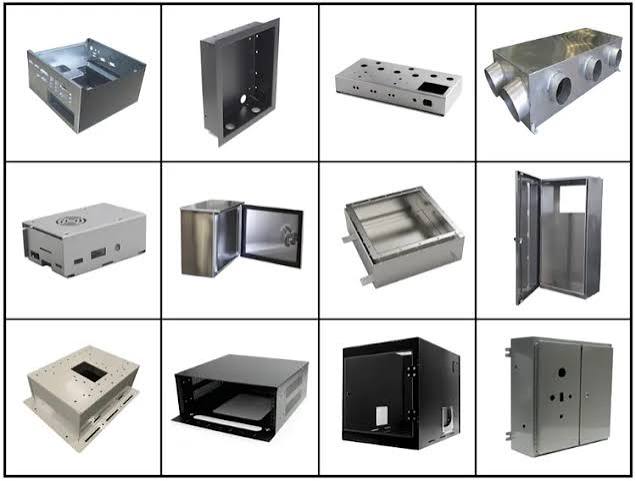
Here is an in-depth breakdown of the core manufacturing processes required to transform flat sheet metal into a high-precision, industrial-grade electrical control box:
Blanking & Cutting
Before any shaping can occur, the 2D flat profile of the control box must be cut from a large metal sheet. Achieving tight tolerances at this stage ensures that all subsequent folds line up perfectly.
Laser Cutting: High-powered CNC fiber lasers cut the outer perimeter and intricate internal geometries with extreme accuracy. This process handles irregular shapes, fine venting holes, and fan cutouts cleanly without distorting the surrounding metal.
CNC Punching: For high-volume production, a mechanical turret punch is highly efficient. It quickly stamps out standard geometric shapes, knockouts for conduit entry, and embossed features like countersinks or ventilation louvers.
Bending & Forming
Once the flat blank is cut, it is moved to a CNC press brake to be folded into its three-dimensional chassis.
Precision Folding: Specialized tooling clamps the metal sheet and applies calculated force to bend it along programmed lines, forming the walls, top, and bottom of the box.
Flanging & Return Bends: To give the control box structural rigidity and provide a solid sealing surface for the door gasket, the edges are folded inward or outward. This step eliminates sharp edges and prevents flat panels from flexing or "oil-canning."
Joining & Welding
To permanently lock the folded sheets into a rigid, sealed enclosure, the seams and corners must be securely joined.
MIG/TIG Welding: Corner seams are welded together to ensure the box is structurally sound. TIG welding is heavily favored for stainless steel and aluminum enclosures because it provides clean, precise welds that require minimal cleanup.
Spot Welding: This is utilized for attaching internal stiffeners, mounting brackets, or inner panel supports quickly without warping the main outer chassis.
Grinding & Dressing: Welded corners are ground smooth to create a seamless, professional appearance. This step ensures no sharp burrs disrupt the application of the outer finish or door gaskets.
Hardware Insertion
Electrical components need to be mounted securely inside the box, which requires threaded connection points that won't strip over time.
Self-Clinching Fasteners (PEM Studs): High-pressure hydraulic presses insert threaded studs, standoffs, and nuts directly into pre-punched holes in the sheet metal. These fasteners become permanently cold-welded into the metal, ensuring they won’t spin or break free when internal sub-panels or grounding wires are bolted down.
Surface Finishing
Raw sheet metal is highly susceptible to environmental damage. Surface treatment is crucial to meet industrial protection standards.
Pre-treatment & Degreasing: The box undergoes a multi-stage chemical wash (often involving a phosphate coat) to remove fabrication oils, dirt, and scale, ensuring optimal coating adhesion.
Powder Coating: An electrostatic charge applies a dry thermoplastic or thermoset powder to the box, which is then cured in an oven under high heat (180°C to 200°C). This creates a thick, uniform, and highly scratch- and corrosion-resistant exterior.
Brushing/Anodizing: For stainless steel and aluminum enclosures respectively, mechanical brushing or chemical anodizing preserves the metal's natural aesthetic while providing a clean, professional surface finish.
Gasketing & Final Assembly (Environmental Sealing)
The final stage ensures the enclosure achieves its required ingress protection (IP/NEMA) rating.
Foam-in-Place (FIP) Gaskets: Automated CNC dispensing robots apply a continuous liquid polyurethane bead directly onto the inside channel of the enclosure door. The liquid expands and cures into a seamless, highly resilient foam gasket that seals tightly against dust, water, and oil when the door is latched.
Hardware Fit-Out: The final step involves installing hinges, 3-point locking systems, viewing windows, and quarter-turn latches to complete the control box.
Industry-Specific Applications of Sheet Metal Control Boxes
Sheet metal control boxes are utilized across a wide range of industries, each demanding specific material configurations, IP/NEMA ratings, and design adaptations to ensure reliable operation:
Industrial Automation & Manufacturing: Used on factory floors to house Programmable Logic Controllers (PLCs), motor drives, and circuit breakers. These enclosures typically rely on heavy-duty powder-coated carbon steel to withstand physical impacts, vibration, and airborne factory dust.
Food, Beverage & Pharmaceutical: Demands strict hygiene and cleanability. Enclosures in these facilities are almost exclusively fabricated from 304 or 316 stainless steel with a brushed finish, featuring sloped roofs to prevent water pooling and high IP ratings (e.g., IP66 or IP69K) to survive high-pressure chemical washdowns.
Renewable Energy & Utilities: Found in solar inverter housings, wind turbine control decks, and outdoor electrical grids. These applications favor aluminum or galvanized steel for their exceptional rust prevention, lightweight handling during high-altitude or remote installations, and superior passive heat dissipation.
Infrastructure & Telecommunications: Houses sensitive fiber-optic routing equipment and 5G network components on poles or highway roadside chassis. They prioritize thermal management (often integrating precision-cut active cooling louvers or dual-wall insulation) and robust locking mechanisms to prevent vandalism.
Marine & Offshore Engineering: Exposed to constant salt spray, high humidity, and aggressive corrosive elements. These environments strictly require 316 marine-grade stainless steel or specialized marine-grade aluminum alloys, paired with heavy-duty silicone or EPDM gasketing.
How to Choose the Right Sheet Metal Supplier for Control Boxes?
Selecting the right fabrication partner is critical for your product's success. Look for these five core capabilities:
100% Build-to-Print OEM Commitment: Your designs must be completely safe. Choose a supplier that strictly executes your 2D and 3D CAD drawings without unauthorized modifications, ensuring full IP protection and exact compliance with your blueprints.
Scalable Cost Reduction: The supplier should bridge the gap between R&D and mass production. They must offer cost-effective, zero-tooling laser cutting for rapid prototyping, and seamlessly transition to high-tonnage stamping with custom progressive dies to minimize unit costs as volume grows.
Precision Assembly Guarantee:Tight manufacturing tolerances are non-negotiable. Ensure the supplier utilizes advanced CNC technology and strict quality control so that every enclosure, door, and internal chassis component aligns perfectly with your internal electronics.
Material and Fabrication Expertise: Your partner must possess deep expertise in processing diverse metals. Whether your design specifies the structural strength of cold rolled steel, the mass-stamping ductility of DC52D, or the heat dissipation of aluminum alloys, they must process them flawlessly.
Direct Factory Advantage: Eliminate middleman markups. Working directly with a source manufacturing facility ensures transparent communication, consistent quality control from raw sheet to finished box, and highly competitive, factory-direct pricing.
Lingyufab: One-stop sheet metal assembly solution manufacturer
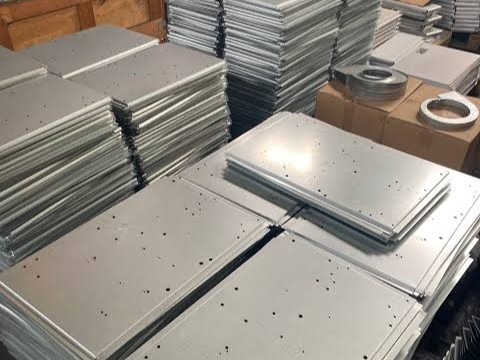
Lingyufab is a One-stop sheet metal assembly solution manufacturer, Our full-service sheet metal capabilities include Laser Cutting, CNC Bending, Welding, and Surface Treatment. We handle everything from single prototypes to mass production with short lead times and consistent quality control.
Advanced Equipment | Precision Cutting | CNC Bending Equipment
High-Precision Stamping Processes Meeting Diverse Needs
Advanced tooling center for design, manufacturing, testing, and maintenance.
Comprehensive suite of advanced inspection equipment and rigorous QC workflows.
Fully automated product ion line to deliver superior surface treatment solutions.
Ready to bring your enclosure designs to life with flawless execution and optimized costs? Get an Instant Quote
FAQ
Q1: What services does Lingyufab offer for control boxes?
Lingyufab provides one-stop sheet metal assembly, including laser cutting, CNC bending, welding, stamping, and automated surface treatment from prototyping to mass production.
Q2: What are the benefits of laser cutting for custom enclosures?
It delivers high precision and clean cuts for complex geometries, minimizing material waste and ensuring a perfect fit for internal components.
Q3: How does Lingyufab ensure product quality?
Quality is guaranteed through an advanced tooling center, high-precision inspection equipment, and rigorous QC workflows.
Q4: What materials are commonly used for these control boxes?
Common materials include cold-rolled steel (cost-effective), galvanized steel (rust-resistant), stainless steel (corrosion-resistant), and aluminum (lightweight and excellent heat dissipation).
Q5: Can I order a single prototype?
Yes, the workflow flexibly accommodates everything from a single initial prototype for design verification to full-scale mass production.