
 +8613003178786
  sales@lingyufab.com
Laser Cutting
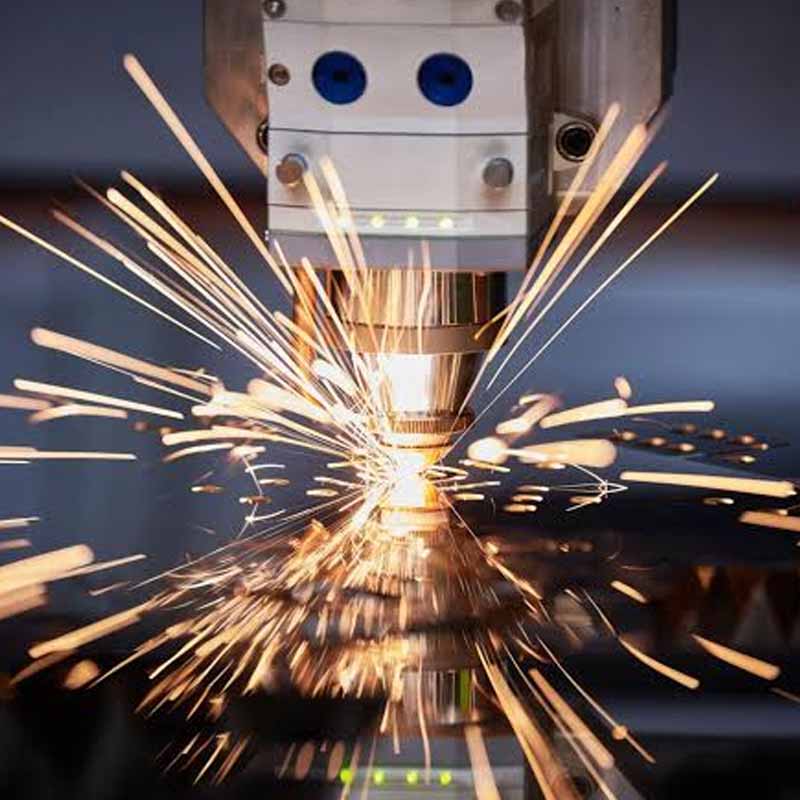
Unleashing China's World-Class Laser Cutting Capabilities
Strategically anchored within China’s premier sheet metal manufacturing ecosystem, Lingyufab delivers the ultimate synergy of world-class supply chain speed, scaling capacity, and engineering depth. We harness advanced, ultra-high-power fiber laser cutting systems (ranging from 10kW to over 60kW) to fulfill complex global demands with unmatched efficiency. For our partners in telecom, renewable energy, and industrial sectors, this means a flawless build-to-print execution. Our machinery achieves a precise, micron-level tolerance window of ±0.05 mm for intricate thin-gauge electronic chassis, while seamlessly shearing heavy-gauge industrial power cabinets up to 20 mm thick with perfectly clean, oxide-free edges. Backed by intelligent CNC automation and rapid AI nesting, Lingyufab effortlessly scales from zero-tooling rapid prototyping to 24/7 high-volume mass production—giving your business an aggressive speed-to-market advantage without compromising on structural integrity.
Precision Sheet Metal Laser Cutting Services
At Lingyufab, precision begins with our advanced sheet metal laser cutting technology. We utilize state-of-the-art fiber laser cutting systems to deliver high-speed, ultra-accurate cuts across a wide range of materials, including carbon steel, stainless steel, and aluminum. Whether your project involves intricate geometries for compact electronic chassis or heavy-gauge components for industrial power cabinets, our laser cutting process ensures clean edges, minimal heat-affected zones, and burr-free finishes.
As a build-to-print OEM manufacturer, we seamlessly translate your 2D and 3D CAD designs into reality with strict tolerance control. This zero-tooling process allows us to rapidly pivot from rapid prototyping to high-volume mass production, giving you the flexibility and speed-to-market your business demands. Partner with Lingyufab to experience the perfect synergy of dimensional accuracy and superior structural integrity for all your custom enclosure components.
Precision Sheet Metal Laser Cutting Techspecs
Our facility utilizes advanced, high-wattage CNC Fiber Laser systems engineered for extreme dimensional accuracy, clean edge quality, and rapid processing across diverse material grades.
1. Material Thickness Capabilities
Our laser power scaling allows us to cut everything from ultra-thin shims to heavy industrial plate. Maximum cutting thicknesses depend on the assist gas setup used to optimize edge quality.
| Material Type | Max Thickness (mm) | Max Thickness (Inch) | Preferred Assist Gas |
|---|---|---|---|
| Carbon Steel / Mild Steel | 20.0 mm | 0.78" | Oxygen (O₂) for speed / Nitrogen (N₂) for clean cut |
| Stainless Steel (304 / 316) | 12.0 mm | 0.47" | Nitrogen (N₂) – Oxide-free edge |
| Aluminum (1000 - 6000 Series) | 10.0 mm | 0.39" | Nitrogen (N₂) or High-Pressure Air |
| Brass / Copper (Reflective) | 5.0 mm | 0.20" | High-Pressure Nitrogen (N₂) |
2. Dimensional & Feature Tolerances
We achieve industry-leading precision through automated beam focus adjustment and high-rigidity CNC gantries.
- Standard Linear ToleranceApplicable to standard feature-to-feature distances.
± 0.13 mm (± 0.005")
- Precision Feature ToleranceAvailable upon request for critical alignment holes and mating slots.
± 0.05 mm (± 0.002")
- RepeatabilityEnsures absolute consistency from prototype to high-volume production batches.
± 0.03 mm (± 0.0012")
- Angular Accuracy / Kerf (Cut Width)Angular precision and typical laser beam kerf width variation.Angle: ± 0.1° Kerf: 0.15 - 0.30 mm
3. Design-for-Manufacturing (DFM) Guidelines
To prevent heat distortion, structural warping, or part failure during the thermal cutting process, we recommend engineers adhere to the following baseline rules:
Minimum Hole Diameter
Must be ≥ 1.0 × the material thickness. For example, if cutting 4 mm stainless steel, the minimum hole diameter should be 4 mm to ensure a perfectly round, non-tapered cylinder.
Minimum Feature Spacing
Keep web bridges, slots, and cutouts at least 2 × the material thickness apart to avoid localized heat accumulation zones.
Internal Corner Radii
Sharp 90° internal corners are susceptible to thermal stress. A minimum internal radius equal to the material thickness is recommended where design allows.
Edge & Finishing Note
All parts cut with Nitrogen assist gas feature a pristine, oxide-free edge that is instantly ready for structural welding or powder coating without secondary grinding. Parts are automatically deburred to eliminate sharp dross before final QC inspection.
Strategic Technology Selection: Fiber vs. CO₂ vs. YAG Lasers
At Lingyufab, we don't believe in a one-size-fits-all approach. Achieving cost-efficiency and premium edge quality requires deploying the exact laser wavelength and beam profile suited to your specific material chemistry and gauge thickness. Fiber Laser (~1.06 µm): Our Primary Choice. Best for thin-to-medium metals and highly reflective materials (Aluminum, Brass, Copper). It offers ultra-fast cutting speeds, high energy efficiency, and superior focus on thin electronic chassis. CO₂ Laser (~10.6 µm): Best for thick mild steels and non-metals. Deployed at our facility for ultra-smooth edge finishes on exceptionally thick, heavy-gauge industrial structural plates. YAG / Solid-State (~1.06 µm): Best for micro-cutting and thin shims. Utilized for specialized, high-precision micro-features where heat-affected zones must be kept near zero. Engineering Insight: Fiber lasers feature a wavelength 10x shorter than CO₂. This allows the beam to be absorbed much faster by metals, virtually eliminating the back-reflection danger that traditionally ruined optics when cutting highly reflective copper or brass.
Sheet Metal Laser Cutting Applications
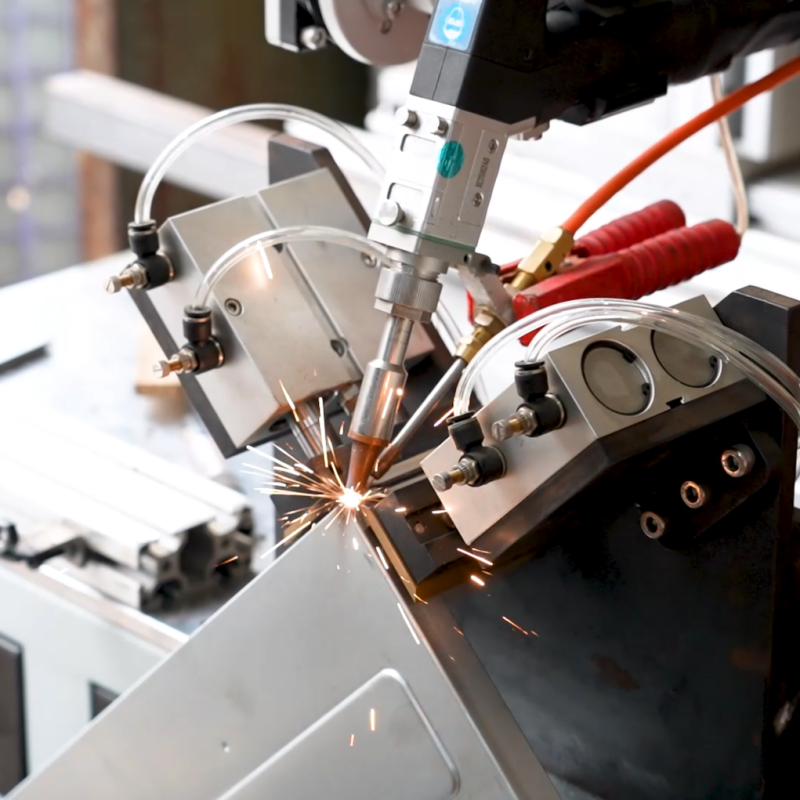
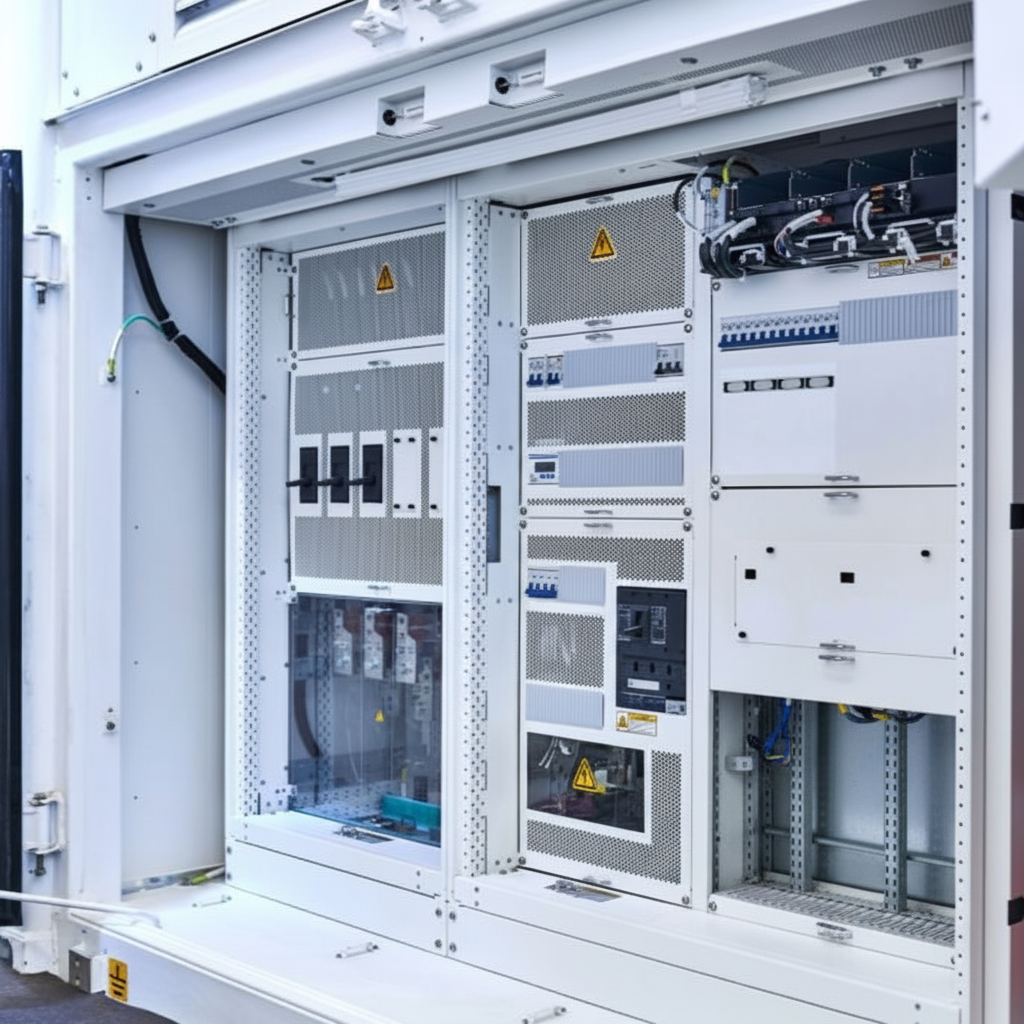
Precision sheet metal laser cutting is widely utilized across various modern industries, playing a critical role in the production of high-performance enclosures, structural frameworks, and intricate internal brackets. At Lingyufab, this technology is the foundation for fabricating robust telecom server housings, network switch chassis, industrial power cabinets, and renewable energy switchboards. By accommodating a broad spectrum of materials—such as carbon steel, aluminum, and stainless steel—laser cutting allows for the efficient creation of customized front panels, mounting brackets, and perforated ventilation grilles. Its ability to process complex geometries with zero tooling costs ensures smooth, high-speed execution for both electronic components and heavy-duty industrial assemblies.
Custom Sheet Metal Laser Cutting Parts
At Lingyufab, we transform raw metal sheets into highly complex, ready-to-assemble custom components based entirely on your 2D and 3D CAD blueprints. Our build-to-print services cater to demanding industries requiring precision, repeatability, and structural integrity.
What is Sheet Metal Laser Cutting?
Laser cutting is an advanced, computer-controlled (CNC) thermal fabrication process. It focuses a high-density, localized laser beam to melt, burn, or vaporize material along a pre-programmed path. Driven by automated CAD designs, it bypasses traditional tooling costs, delivering perfect edge profiles instantaneously.
Our Core Custom Offerings:
🔹 Custom Electronic Enclosures & Front Panels
🔹 Heavy-Duty Power Cabinet Components
🔹 Internal Brackets, Mounts, & Busbars
🔹 Sub-Chassis Modules & Shielding Cages
🔹 Perforated Grilles & Ventilation Shrouds
Key Features & Competitive Advantages
Zero-Tooling Costs
No expensive hard dies or stamps needed. Program directly from file to machine—ideal for fast prototyping.
Micro Precision
Capable of maintaining incredibly tight cut dimensional profiles without micro-fracturing material edges.
Pristine Edge Quality
Using Nitrogen gas yields oxide-free, completely burr-free borders ready for powder coating instantly.
Complex Geometries
Intricate internal cutouts, ventilation slots, and unique nesting shapes are processed at blistering speeds.
Industrial Applications & Component Scope
Our high-speed laser processing systems serve an expansive cross-section of high-precision electronic and industrial sectors globally.
Target Industry Sectors
Server rack panels, base-station housings, router shielding brackets.
Industrial solar inverter enclosures, heavy power-grid switchboards.
PCB mounting frames, precision custom heatsinks, small power module boxes.
What Parts Can We Process?
Technical Guidance: Materials, Tolerances & Quality Control
| Material Grade | Max Gauge Size | Standard Tolerance | Precision Setting |
|---|---|---|---|
| Carbon/Mild Steel (SPCC/SECC) | 20.0 mm | ± 0.13 mm | ± 0.05 mm |
| Stainless Steel (304 / 316) | 12.0 mm | ± 0.13 mm | ± 0.05 mm |
| Aluminum (5052 / 6061) | 10.0 mm | ± 0.15 mm | ± 0.08 mm |
| Copper / Brass alloys | 5.0 mm | ± 0.15 mm | ± 0.08 mm |
How We Guarantee Quality Control:
📐 First Article Inspection (FAI)
Every initial configuration gets multi-point dimensional validation prior to running production.
🔍 Automatic Kerf Compensation
Our dynamic CNC controllers constantly adjust beam widths to counter material micro-variance.
🛡️ Automated Material Heat Logs
Strictly checking sheet stress grades ensures cut parts stay flat without warp distortions.
Your Reliable Laser Cutting & Fabrication Producer
Lingyufab combines cutting-edge high-wattage fiber machinery, end-to-end raw steel logistics, and robust downstream processing (CNC bending, stamping, manual/robotic welding, assembly, powder coating) under one secure, quality-managed facility.
Frequently Asked Questions
Q1: What CAD file extensions do you accept for custom orders?
We primarily utilize .DXF and .DWG files for 2D flat geometric profiles. For full 3D assembly models and folded enclosure analysis, please upload .STEP, .STP, or .IGS file vectors.
Q2: Why does the choice of assist gas matter (Nitrogen vs Oxygen)?
Oxygen cutting utilizes an exothermic reaction to cut thick carbon steels rapidly but leaves a dark oxide layer that must be mechanically sanded down before powder coating. Nitrogen cutting cuts through material strictly via heat, producing a silver, laser-clean, oxide-free profile surface ready for secondary coatings or seamless welding instantly.
Q3: What is your Minimum Order Quantity (MOQ)?
We maintain a Zero-MOQ policy for prototyping stages to support development engineering teams during functional tests. Once approved, we have the mechanical infrastructure to smoothly transition you into structural high-volume production batches.
Q4: How do you prevent heat distortion during the laser cutting process?
We use optimized CNC thermal pathing and advanced nesting logic that distributes heat evenly across the entire workpiece rather than concentrating it in one localized area. Additionally, for intricate features, we implement pulse cutting modes and proper spacing between cutouts to keep the heat-affected zone (HAZ) at an absolute minimum.
Q5: Can your fiber lasers cut highly reflective metals like brass and copper?
Yes. Unlike older CO₂ systems which suffer critical optical damage from reflective beam feedback, our advanced fiber laser wavelengths are absorbed much more efficiently by non-ferrous metals. This enables high-speed, continuous, and damage-free precision cutting for all reflective copper, brass, and premium aluminum alloys.
Small Batch Sheet Metal Fabrication with No Minimum Order
Small batch sheet metal fabrication with no minimum order. Prototypes to production. One-stop service.
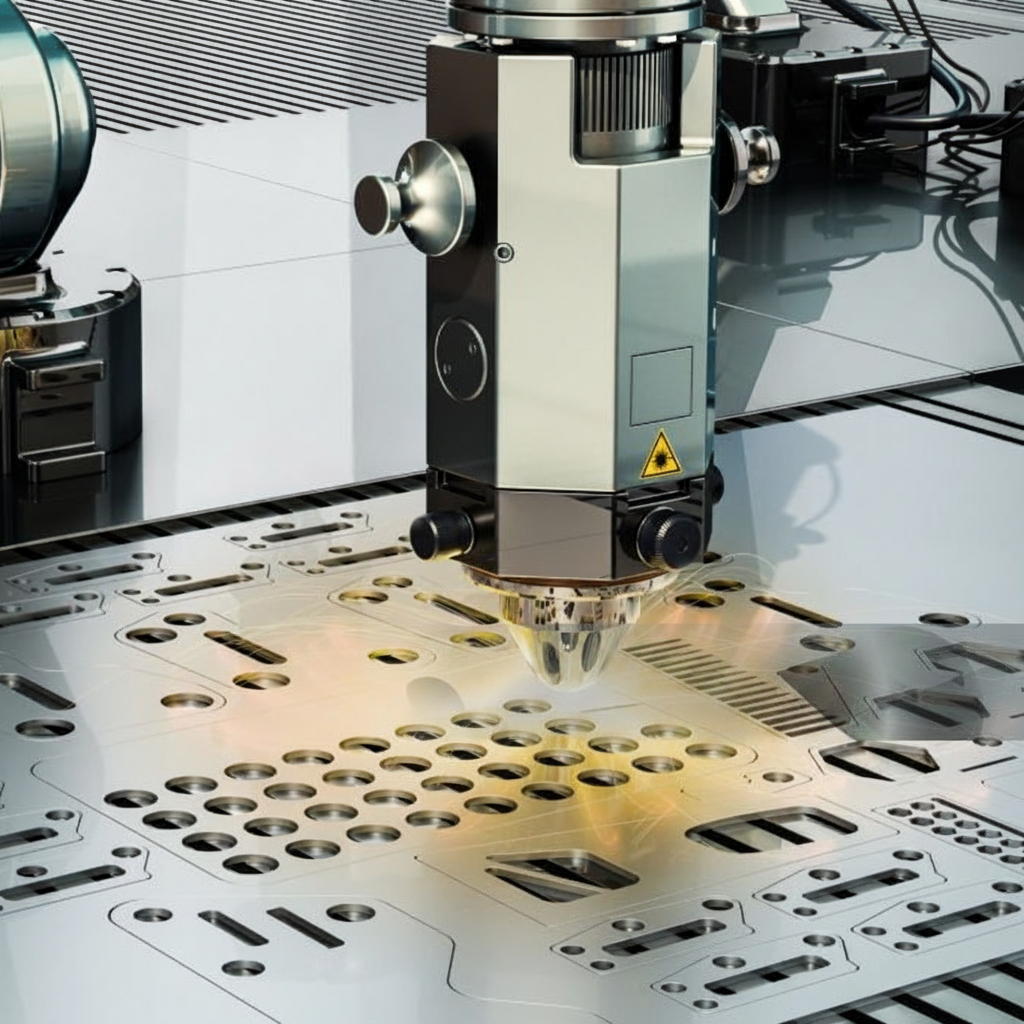
What Is Laser Cutting in Sheet Metal Fabrication?
Laser cutting is a precise sheet metal fabrication process used to cut metal sheets into custom shapes and parts. Learn how it works, its advantages, applications, pricing factors, and sourcing consid
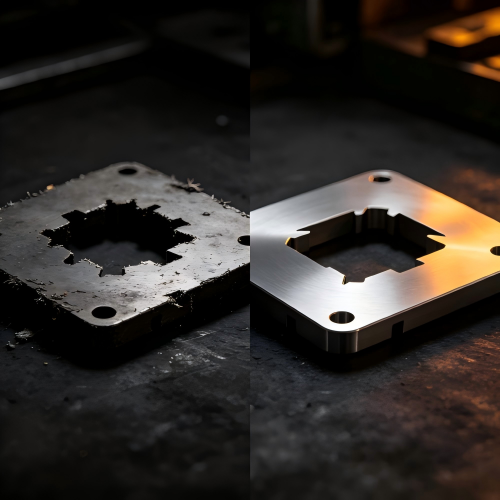
How to Judge Laser Cutting Quality: 5 Key Indicators for Buyers
Learn how to judge laser cutting quality with 5 key indicators. Edge quality, precision, holes, and more.
How Laser Cutting Improves Accuracy in Custom Sheet Metal Fabrication
Laser cutting is a non-contact, thermal-based digital fabrication process that utilizes a focused, high-powered laser beam to slice, score, or pierce sheet metal with extreme fidelity.