+8613003178786
  sales@lingyufab.com



How to Design Rigid and Lightweight Sheet Metal Parts?
30
Jul’2026How to Design Rigid and Lightweight Sheet Metal Parts?
What are Sheet Metal Parts?
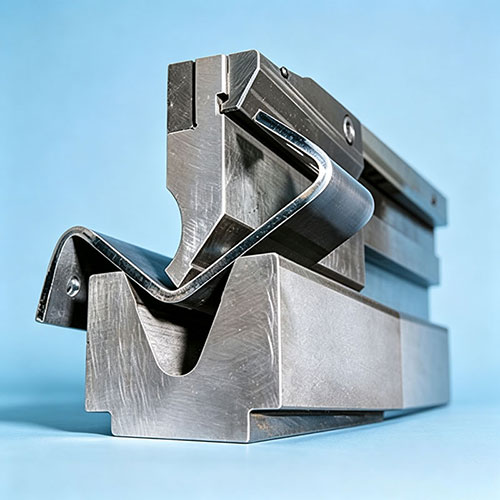
Sheet metal refers to metal processed into thin, flat pieces through industrial rolling. Sheet metal parts are components created from these sheets through processes including cutting, bending, stamping, welding, and assembling.
These parts form the structural basis for enclosures, chassis, housings, brackets, frames, and machine guards across electronics, automotive, telecommunications, and industrial equipment. They are distinguished from other metal forms by their thickness—typically less than 6mm for steel.
In practice, a finished sheet metal part involves more than just forming the metal. At Lingyufab, we integrate laser cutting, CNC bending, welding, surface treatment, and fastener installation under one roof. This eliminates the need for multiple suppliers and ensures every part meets consistent quality standards—ready for assembly with predictable fit and performance.
Features of Sheet Metal Parts
Understanding the inherent features of sheet metal is the first step in successful design:
Thickness (Gauge): The thickness of the material is a primary factor determining both weight and rigidity. Designers must select an optimal thickness that meets structural needs without adding excess mass.
Formability: Sheet metal can be shaped into complex three-dimensional forms through bending, stretching, and drawing. This allows for the creation of rigid structures from flat sheets.
Uniformity: Sheet metal has consistent properties across its surface, which ensures predictable behavior during fabrication and in service.
Material Variety: It is available in a wide range of materials, including steel, aluminum, copper, and their alloys, each offering a different balance of strength, weight, and corrosion resistance.
Joinability: Sheet metal parts can be joined using various methods—welding, riveting, fastener installation, and adhesive bonding—allowing for the construction of complex assemblies.
How to Improve Rigidity Through Structural Design
A flat sheet is inherently flexible, but its rigidity can be dramatically increased through structural design—using geometric features that add stiffness without significantly increasing material thickness:
Adding Ribs and Beads: Forming shallow channels or raised features into a flat surface is one of the most effective ways to increase stiffness. These features act like small I-beams, resisting bending and deflection.
Using Flanges and Hems: Bending the edges of a part creates a flange that significantly stiffens the perimeter. A hem, where the edge is folded back onto itself, creates a strong, thick, and rigid edge.
Creating Corrugations: A corrugated pattern, common in structural panels, provides a very high strength-to-weight ratio by distributing loads across multiple peaks and valleys.
Designing Enclosed Sections: Whenever possible, forming an open channel into a closed box section (like a tube) creates an immensely rigid structure from thin material.
How to Reduce Part Weight Through Design
Reducing the weight of a part goes hand-in-hand with smart design. Beyond simply using less material, here are practical strategies:
Optimize Material Thickness: Use finite element analysis (FEA) to identify areas of low stress and selectively thin the material, or use a continuous variable thickness blank to put material only where it is needed.
Remove Unnecessary Material: Use cutouts, slots, or perforations in non-structural areas of the part. This reduces weight without significantly sacrificing strength.
Use Structural Stiffening: Instead of increasing overall thickness, use the stiffening techniques mentioned above (ribs, flanges) to achieve the required rigidity with a thinner base material.
Choose Lightweight Materials: The most direct way to reduce weight is to use a material with a lower density, such as aluminum instead of steel, provided it meets strength requirements.
High-Strength Light Material Selection Guide
The choice of material is a critical decision that directly impacts the part's performance, weight, and cost. Here is a comparative guide to common materials:
| Material | Key Properties | Typical Applications |
|---|---|---|
| Aluminum Alloys (e.g., 5052, 6061) | Lightweight, good corrosion resistance, high strength-to-weight ratio, excellent formability. | Aerospace components, electronic enclosures, automotive panels. |
| Advanced High-Strength Steels (AHSS) | Very high strength, allowing for use of thinner gauges for significant weight savings. Good formability in specific grades. | Automotive structural parts, safety components, heavy equipment. |
| Stainless Steel (e.g., 304, 316) | High strength, excellent corrosion resistance, durable. Heavier and more expensive. | Medical equipment, food processing machinery, chemical plant parts. |
| Galvanized Steel | Good strength, good corrosion resistance at a lower cost than stainless steel. Formability is decent. | General enclosures, electrical cabinets, brackets. |
For most lightweight applications, aluminum alloys are the top choice due to their combination of low density and good mechanical properties. However, advanced steels are increasingly used where extremely high strength is needed, even if it means slightly heavier parts.
How to Design for Manufacturing
Designing with the manufacturing process in mind is essential for creating parts that are not only functional but also cost-effective and easy to produce. This is known as Design for Manufacturability (DFM).
Key DFM rules for sheet metal include:
Bend Radius: The inside bend radius should be at least the thickness of the material to prevent cracking and weaken the part.
Hole Placement: Holes should be placed at a minimum distance from the edge of a part or a bend line to prevent distortion and tearing. A common rule is at least 1.5 to 2 times the material thickness from an edge and 2.5 to 3 times the thickness from a bend.
Reliefs: Always include bend reliefs (small cuts) at the ends of bend lines. This prevents tearing and ensures a clean, accurate bend.
Tolerances: Specify tolerances realistically. Tight tolerances are expensive to achieve and may not be necessary for the part's function.
Material Springback: Account for springback, especially in high-strength steels. Plan for over-bending or coining features to achieve the final desired angle.
Performance Test & Structural Verification Methods
Once a part is designed and manufactured, it is crucial to verify its performance. Testing ensures that the part meets the required rigidity and weight specifications under real-world conditions.
Static Load Testing: Applying a controlled, constant force to the part to measure deflection and confirm its stiffness under load.
Finite Element Analysis (FEA): A powerful simulation tool used early in the design phase to predict how the part will behave under stress, heat, and vibration. It allows designers to virtually test and refine the design.
Vibration and Fatigue Testing: In applications with moving parts or repetitive loads, testing is needed to ensure the part can withstand cyclic stress without failing.
Dimensional Inspection: Using coordinate measuring machines (CMM) or optical comparators to verify that the manufactured part matches the design's critical dimensions and tolerances.
Supplier for Sheet Metal Fabrication in China
Choosing the right manufacturing partner is the final and most critical step in turning a great design into a high-quality product. A capable supplier does more than just cut and bend metal; they act as a collaborative partner that can help optimize the design for cost, lead time, and manufacturability.
For businesses seeking a reliable partner, Lingyufab stands out as a professional sheet metal fabrication factory in China with over 20 years of experience. As a one-stop sheet metal and fastener manufacturer, Lingyufab provides a comprehensive solution that streamlines the entire supply chain.
Why Lingyufab is the Ideal Partner:
Comprehensive Capabilities: From in-house laser cutting and CNC bending to welding, surface treatment, and fastener installation, Lingyufab offers full-service capabilities. This eliminates the need to manage multiple suppliers and reduces logistics costs.
Advanced Equipment: Their workshop is equipped with high-precision laser cutting systems, CNC bending centers, stamping presses, and cold heading machines. This advanced machinery ensures precision and consistency in every part.
Quality Assurance: Lingyufab follows strict quality management systems like ISO 9001:2015. They employ a comprehensive suite of advanced inspection equipment and rigorous QC workflows to ensure product consistency and traceability from raw material to final delivery.
Cost-Effectiveness: By eliminating intermediaries and extra logistics, they can help reduce overall costs by 15-20%, making them a competitive choice for both prototyping and mass production.
Flexibility: They handle everything from a single prototype for R&D purposes to full-scale mass production, working with you to grow with your product.
For a seamless experience from design to delivery, Lingyufab is equipped to bring your rigid and lightweight sheet metal designs to life.
FAQ
Q1: What is the best material for lightweight, rigid sheet metal parts?
For the best balance of low weight and high strength, aluminum alloys like 5052 and 6061 are the top choice. They offer a high strength-to-weight ratio and excellent formability.
Q2: What drawing formats do you accept for an accurate quote?
We suggest providing 3D files like STEP (.stp) or SolidWorks (.sldprt) for unfolding bends, and 2D drawings like PDF or DWG for specifying tolerances, finishes, and thread specs.
Q3: How can I reduce the weight of my sheet metal part?
You can reduce weight by optimizing material thickness with FEA, using cutouts in non-structural areas, and employing stiffening features like ribs instead of using thicker material.
Q4: What is the most critical design for manufacturability (DFM) rule?
A critical rule is to maintain proper hole placement. Holes should be located at least 1.5 times the material thickness from an edge and 2.5 times the thickness from a bend line to prevent deformation.
Q5: How do you ensure the quality of sheet metal parts?
Quality is ensured through a combination of rigorous material certification, in-process inspections, and final dimensional checks using advanced equipment. Suppliers like Lingyufab adhere to strict international quality management systems like ISO 9001:2015.