Lingyufab
+8613003178786+8613003178786          Lingyufabsales@lingyufab.com
Lingyufab
  • Home
  • Sheet Metal Assemblies
    • Enclosure & Chassis Assemblies
    • Internal Structural & Functional Components
    • Pre-installed Hardware & Sub-Assemblies
  • Fasteners
    • Bolts
    • Screws
    • Industrial Nuts
  • Capabilities
    • Laser Cutting
  • Support
    • About
    • News
    • Appliccations
    • Manufacturing Capacity
    • FAQ
    • Certificate
    • Quality Inspection
    • About Shipping
  • Contact
Get a Quote
Lingyufab
Get a Quote

Contact Info

  • Building 1, 6200 Hutai Road, Baoshan District, Shanghai, China
  • +8613003178786
  • sales@lingyufab.com

The Complete Guide to Selecting Sheet Metal Fasteners

  • Home
  • News
The Complete Guide to Selecting Sheet Metal Fasteners

14

Jul’2026

The Complete Guide to Selecting Sheet Metal Fasteners

In the world of precision manufacturing, the integrity of an assembly is only as strong as its weakest connection. For sheet metal fabrication, selecting the right fastener is not merely a task of choosing a screw or a nut—it is a critical engineering decision that affects the structural performance, assembly efficiency, and long-term durability of the final product.

Whether you are designing a sleek consumer electronics housing or a robust industrial control cabinet, understanding how to pair fasteners with sheet metal is a cornerstone of professional design. This guide explores the essentials of sheet metal fastening, from material science to practical supplier selection.

What Are Sheet Metal Fasteners?

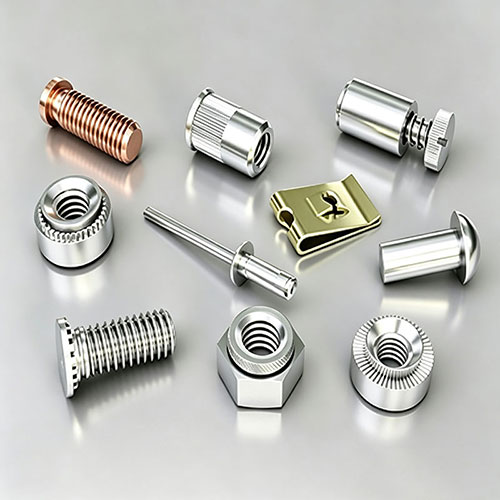
At its core, a sheet metal fastener is a specialized hardware component designed to join, secure, or attach pieces of thin-gauge metal together, or to attach auxiliary components to a sheet metal structure. Unlike heavy-plate fasteners, which rely on thick material engagement, sheet metal fasteners are engineered to handle the unique challenges of thin materials, such as limited thread depth, the risk of deformation, and the need for high-strength retention in soft or thin substrates.

These components are foundational to modern assembly. They transform individual metal components into functional systems, ensuring that electrical conductivity, structural load, and aesthetic alignment are maintained throughout the product's lifecycle.

Essential Types of Fasteners for Sheet Metal Fabrication

Choosing the right type depends on your assembly method and accessibility. Here are the most prevalent solutions in modern fabrication:

  • Self-Clinching Fasteners: These are the gold standard for sheet metal. They feature a specially designed shank that, when pressed into a pre-punched hole, causes the surrounding sheet metal to cold-flow into the fastener's undercut. This creates a permanent, high-torque-resistant mount that becomes an integral part of the panel.

  • Blind Rivets: When access to the backside of a panel is restricted, blind rivets are the go-to solution. They are installed entirely from one side, offering a simple, high-speed, and cost-effective way to secure two sheets of metal together.

  • Sheet Metal Screws: These are designed with sharp, hardened threads that cut or form their own mating threads in the base material. They are ideal for applications where disassembly or maintenance may be required.

  • Weld Fasteners: For applications requiring maximum load-bearing capability or where hermetic (airtight) seals are necessary, weld studs or nuts are fused directly to the metal. This ensures the fastener will not loosen under extreme vibration or thermal stress.

Understanding Material Compatibility and Performance

One of the most frequent errors in design is ignoring the electrochemical relationship between the fastener and the host metal.

Galvanic Corrosion Prevention

When two dissimilar metals—such as a stainless steel screw and an aluminum panel—come into contact in the presence of moisture, galvanic corrosion occurs. This can degrade the joint and compromise the structural integrity. To prevent this, always strive for material compatibility. When mixing is unavoidable, use protective finishes or isolating washers to break the electrical path.

Hardness Considerations

The fastener must always be harder than the sheet metal it is joining. If you are using a soft fastener on a hardened steel sheet, the fastener’s threads or locking features will strip before they can create a secure engagement. Conversely, if the sheet metal is too thin, you must choose fasteners with larger load-bearing footprints to prevent the metal from tearing out under stress.

How to Choose the Right Fastener for Your Sheet Metal Project?

The selection process should be guided by a systematic evaluation of four key factors:

  1. Assembly Accessibility: Can you reach both sides of the panel? If no, focus on self-clinching or blind rivets. If yes, traditional nuts and bolts may be more cost-effective.

  2. Required Load and Vibration: For high-vibration environments, such as aerospace or automotive parts, locking mechanisms (like nylon inserts or specialized thread-locking coatings) are mandatory.

  3. Hole Tolerance: Each fastener type requires specific hole sizes to function correctly. Ensure your design team is aware that overly loose holes reduce pull-out strength, while overly tight holes can induce stress cracks in the sheet metal during installation.

  4. Finish and Aesthetics: Does the fastener need to be hidden? Countersunk fasteners are ideal for flush surfaces, while decorative heads may be used to enhance the visual appeal of consumer-facing products.

Fastener Solutions by Application Scenarios

Different industries demand distinct fastening philosophies.

  • Industrial Automation & Robotics: In this sector, precision and repeatability are paramount. Self-clinching nuts and standoffs are preferred because they provide a high-precision, fixed location for mounting PCBs and sensors, ensuring that machine components do not shift over millions of cycles.

  • Enclosures & Racking: For large cabinets and chassis, speed of assembly and low cost are key. Blind rivets are frequently used for structural seams, while sheet metal screws allow for easy access to internal electronics during maintenance.

  • Outdoor Infrastructure: For panels exposed to harsh environments, weld fasteners combined with high-grade stainless steel hardware ensure longevity. These connections provide the durability required to withstand wind loads and temperature fluctuations without losing torque.

Avoid These 3 Critical Fastener Selection Mistakes

Even the best designs can fail if these common pitfalls are ignored:

  1. Ignoring Edge Distance: Placing a fastener too close to the edge of a sheet metal flange significantly weakens the material’s ability to hold the fastener. Always follow the manufacturer’s guidelines regarding the minimum distance from the edge of the panel to the centerline of the fastener hole.

  2. Overlooking Installation Tools: Using the wrong press or tool can lead to skewed fasteners or incomplete clinching. An improperly installed fastener is a failure point waiting to happen. Ensure your fabrication partner has the right hydraulic or pneumatic equipment to guarantee installation quality.

  3. Assuming Universal Thread Compatibility: Not all "M6" threads are created equal. Mixing thread pitches or classes can lead to cross-threading and ruined components. Always verify the thread class (e.g., 6H) and pitch match before moving to mass production.

Partnering with a Reliable Fastener Supplier in China

Selecting the right fasteners is only half the battle; ensuring the precision of their installation is equally critical. For OEM projects that demand high reliability, finding a supplier who treats assembly as a precision engineering process is essential.

At Leaders in Sheet Metal & Fastener (Shanghai Lingyu Industrial), we bridge the gap between complex design and reliable execution. With a 20-year heritage as a family-owned business, we have refined our expertise in both custom sheet metal fabrication and precision hardware integration.

Why Leading OEMs Partner with Lingyufab:

  • Uncompromising Quality: We operate under strict Japanese quality standards. Whether it is laser cutting, bending, or complex fastener insertion, every step is rigorously controlled to ensure the structural integrity and aesthetic finish of your product.

  • Integrated Solutions: We are more than just a component supplier. We provide a full-service manufacturing experience—from initial sheet metal fabrication to specialized self-clinching fastener and hardware insertion.

  • Technical Consultation: We don't just follow blueprints; we optimize them. If you are working on a new design, our engineering team is available to review your drawings and provide practical manufacturing solutions tailored to your specific performance requirements.

Ready to bring your project to life?

Whether you need high-precision fastening solutions or end-to-end sheet metal fabrication, our team is ready to support your production.

  • Visit our website to explore our capabilities:https://www.lingyufab.com/

  • Send us your drawings for a professional manufacturing assessment: Contact Us Today!

FAQ: Technical Queries for Sheet Metal Fasteners

Q: Can I use stainless steel fasteners on aluminum sheets?

A: It is possible, but you must be wary of galvanic corrosion. In outdoor or humid environments, we recommend using a protective coating on the fastener or an isolating washer to separate the two metals.

Q: What is the recommended hole tolerance for self-clinching nuts?

A: Hole tolerances are critical for self-clinching fasteners. Typically, the hole should be punched to a specific diameter, usually $+0.003$ to $+0.005$ inches larger than the fastener shank. Consult the manufacturer’s data sheet for the exact dimension, as deviations can lead to spin-out or poor pull-out performance.

Q: How to ensure surface finish remains intact after installation?

A: For sensitive surface finishes (like powder-coated or brushed metal), we recommend "flush-head" fasteners that require minimal pressure. Additionally, using a properly calibrated press ensures that the fastener is set to the correct depth without marring the surrounding material.

Q: Can your team assist in reviewing my assembly drawings?

A: Absolutely. At Lingyufab, we specialize in reviewing OEM drawings to identify potential assembly bottlenecks early in the process. We can suggest cost-saving alternatives for hardware placement that improve the structural integrity of your finished product.

The Advantages of Self-Clinching Fasteners in Sheet Metal Fabrication
Prev
The Advantages of Self-Clinching Fasteners in Sheet Metal Fabrication
Next
How to Design Rigid and Lightweight Sheet Metal Parts?
Return to the parent category page

Lingyufab Products

  • Enclosure & Chassis Assemblies
  • Internal Structural & Functional Components
  • Pre-installed Hardware & Sub-Assemblies

Popular Post

How Material Selection Impacts Sheet Metal Production Costs?
Jul 14,2026
How Material Selection Impacts Sheet Metal Production Costs?
The Impact of Material Choice on Enclosure Shielding Performance
Jul 14,2026
The Impact of Material Choice on Enclosure Shielding Performance
How to Design Rigid and Lightweight Sheet Metal Parts?
Jul 14,2026
How to Design Rigid and Lightweight Sheet Metal Parts?
The Complete Guide to Selecting Sheet Metal Fasteners
Jul 14,2026
The Complete Guide to Selecting Sheet Metal Fasteners
The Advantages of Self-Clinching Fasteners in Sheet Metal Fabrication
Jul 14,2026
The Advantages of Self-Clinching Fasteners in Sheet Metal Fabrication
Why SEMS Bolts Are Critical for Sheet Metal?
Jul 14,2026
Why SEMS Bolts Are Critical for Sheet Metal?
Enquiry

Enquiry

Enquiry

Get a quote on latest price

sales@lingyufab.com

One stop sheet metal and fastener manufacturer.PDF(6.8M)

Contact

Over 8000pcs of Fasteners and Metal Sheet Assemblies Delivered Monthly.

+8613003178786
sales@lingyufab.com
Get a Quote

Useful Links

  • Sheet Metal Assemblies
  • Fasteners
  • Capabilities
  • Support
  • Contact

Metal Sheets Assemblies

  • Enclosure & Chassis Assemblies
  • Internal Structural & Functional Components
  • Pre-installed Hardware & Sub-Assemblies

Let’s Build Something Great Together

  • Core Supplier Qualification
  • Advanced Machinery
  • One-Stop Solution
Free
Consultation

Privacy   Terms   Sitemap

Get Metal Sheet Assemblies with 50 Global Clients.

Copyrights © 2026 By Lingyufab
All Rights Reserved.