+8613003178786
  sales@lingyufab.com



Sheet Metal Fabrication Procurement: How to Choose the Right Supplier and Avoid Costly Mistakes
30
Jul’2026Sheet Metal Fabrication Procurement: How to Choose the Right Supplier and Avoid Costly Mistakes
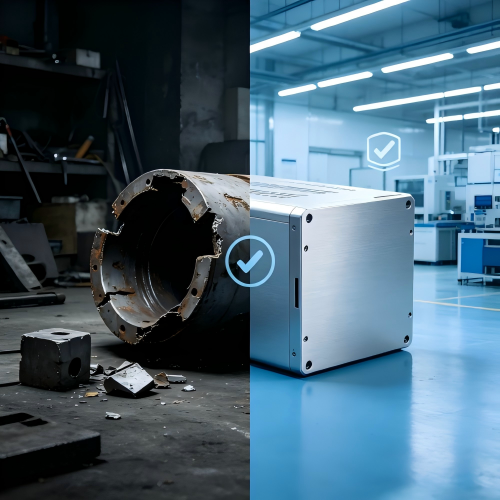
Have you ever chosen the lowest quote for a sheet metal project, only to find that the parts arrived with holes that didn't line up, doors that wouldn't close properly, and material that was thinner than what you specified? Or perhaps you have spent weeks negotiating with a supplier, only to receive parts that required expensive rework—and the supplier blamed your drawings instead of taking responsibility. These are not isolated incidents. They are the hidden costs of choosing a supplier based on price alone.
At Lingyufab, we believe in transparency and partnership. With over 20 years of precision manufacturing experience since 2003 and certification as a core supplier for Mitsubishi Electric, we have seen firsthand what goes wrong when buyers focus on price alone—and what goes right when they evaluate suppliers systematically. This guide will help you avoid common procurement mistakes and choose a sheet metal fabrication partner you can actually trust.
What Makes a Reliable Sheet Metal Fabrication Supplier?
A reliable sheet metal fabrication supplier is not simply a vendor who delivers parts on time. It is a partner who understands your drawings, asks clarifying questions, offers design improvements, and delivers consistent quality—order after order. In short, a reliable supplier is one who acts as an extension of your own engineering and procurement teams.
When evaluating potential suppliers, several key factors matter: certifications that prove documented processes, manufacturing equipment that demonstrates real capability, quality controls that catch defects before they reach you, engineering support that can identify cost savings, communication that is clear and responsive, and flexibility to handle both prototypes and volume production. Each factor is explored in detail below.
Why the Lowest Quote Is Usually the Most Expensive
Let's start with a hard truth. In sheet metal fabrication, a suspiciously low quote often signals cut corners—thinner material, skipped inspection steps, loose tolerance requirements, or unrealistic lead times. Here is what typically happens when you choose based on price alone:
Material substitution. The supplier promises 304 stainless steel but delivers a lower-grade alternative. Or they quote 1.5mm thickness but ship 1.2mm. The parts look fine at first glance, but they corrode faster, bend under load, or fail entirely within months.
Rework and delays. The parts arrive, but they don't fit. Holes are misaligned. Welds are weak. Surface finishes are uneven. Instead of installing parts, your team spends days modifying them.
Communication breakdowns. The supplier responds slowly to inquiries, doesn't clarify ambiguous drawings, and assumes they know what you need—until it's too late. Poor communication creates rework, delays, and expensive emergency freight.
No accountability. When problems arise, the supplier blames your drawings. Rework costs extra. The contract doesn't specify response times. You end up absorbing the cost of their mistakes.
The price difference between a low-cost supplier and a reliable one might be 10-20% upfront. But the total cost of ownership—including rework, delays, quality issues, and lost customer trust—can easily be 2-3 times higher.
How to Evaluate a Sheet Metal Fabrication Supplier
So if price isn't the primary criterion, what is? Here is a systematic framework for evaluating sheet metal fabrication suppliers—the same criteria used by top OEM buyers.
Certifications and Quality Systems
ISO 9001 should be the baseline requirement. It confirms the supplier has a standardized quality management system. ISO 14001 indicates environmental management compliance. TÜV CE certification is essential for products sold in European markets, confirming compliance with EU safety standards. For regulated industries like medical devices or automotive, additional certifications like ISO 13485 or IATF 16949 may be required. Lingyufab holds ISO 9001, ISO 14001, and TÜV CE certifications.
Manufacturing Capabilities and Equipment
A supplier's equipment tells you what they can actually produce. Laser cutting capability should include modern, high-precision systems that deliver clean edges and tight tolerances. CNC bending centers should be computer-controlled for consistency. Welding capabilities matter—does the supplier offer TIG welding for stainless steel, MIG welding for general fabrication, and spot welding for thin sheet connections? Surface treatment options should be available in-house or through trusted partners. Lingyufab offers in-house laser cutting, CNC bending, welding, stamping, surface treatment, and fastener manufacturing.
Quality Control and Inspection
A reliable supplier should have incoming material inspection with Mill Test Certificates (MTC), in-process inspection at each manufacturing stage, and final inspection with dimensional verification and surface finish testing. They should provide inspection reports and material certifications upon request. Lingyufab provides MTCs for every batch of raw materials, supports third-party laboratory composition analysis, and covers quality control from raw material inspection to finished product inspection.
Engineering Support and Design for Manufacturability
A good supplier does not just build what you send—they help you build it better. This includes design review to identify potential issues, design optimization to reduce cost without compromising quality, and reverse engineering for parts without drawings. This upstream intervention can save 15-20% on total project cost. Lingyufab's engineering team provides free design review and optimization support.
Communication and Responsiveness
A supplier who responds slowly to inquiries or doesn't clarify ambiguous requirements is a red flag. Evaluate their response time and the clarity of their answers. Lingyufab provides dedicated point of contact and transparent quoting.
Flexibility and Scalability
Can the supplier handle both prototypes and large production runs? Do they have minimum order quantities that force you to buy more than you need? Lingyufab has no minimum order quantity, supporting everything from single prototypes to 100-piece pilot runs to full mass production.

When to Apply This Supplier Selection Framework
This framework applies across three common procurement scenarios:
New Supplier Development — When you are building a new supply chain or replacing an underperforming supplier, use all six criteria to systematically shortlist candidates. Prioritize certifications, quality control, and communication—these are the hardest to fix later.
Existing Supplier Replacement — If your current supplier is consistently late, delivering poor quality, or unresponsive, use this framework to benchmark alternatives. Focus on manufacturing capabilities and flexibility—they are often the root cause of performance issues.
New Product Launch — When introducing a new product, engineering support becomes critical. A supplier who can optimize your design for manufacturability before production starts will save you money in the long run. Prioritize engineering support and prototyping flexibility.
Your Trusted Partner for Sheet Metal Procurement
Lingyufab is a professional sheet metal fabrication and fastener manufacturer based in Shanghai, China, with more than 20 years of precision manufacturing experience since 2003. The company follows strict Japanese quality standards and is a certified core supplier for Mitsubishi Electric.
Here is how Lingyufab addresses each of the evaluation criteria:
| What We Deliver | How It Benefits You |
|---|---|
| ISO 9001, ISO 14001, TÜV CE certified | Proven quality systems and regulatory compliance |
| In-house laser cutting, CNC bending, welding, stamping, surface treatment, fastener manufacturing | One supplier for all steps—no coordination costs |
| MTC for every batch; third-party lab testing supported | Full material traceability and quality assurance |
| Free design review and optimization; reverse engineering available | Cost savings before production starts |
| Dedicated point of contact; transparent quoting | Clear communication and no surprises |
| No minimum order quantity | Prototypes, pilot runs, and mass production without excess inventory |
If you are sourcing sheet metal parts and want to avoid costly mistakes, start with a small sample order to test quality and communication. Then scale with confidence. For a reliable sheet metal fabrication partner, please don't hesitate to contact us. Our engineering team is available to review your drawings and provide a free consultation.
Conclusion
Choosing a sheet metal fabrication supplier based on price alone is a gamble—and the odds are not in your favor. The lowest quote often hides higher costs in material substitutions, rework, delays, and quality failures. Instead, evaluate suppliers systematically: check certifications, inspect manufacturing capabilities, verify quality controls, assess engineering support, and test communication. By working with a partner who meets these criteria—like Lingyufab, with its 20+ years of experience, ISO certifications, in-house manufacturing, and commitment to quality—you can avoid costly mistakes and build a supply chain that actually delivers.
FAQs
Q1: What certifications should a sheet metal fabrication supplier have?
ISO 9001 is the baseline for quality management. ISO 14001 indicates environmental compliance. For European markets, TÜV CE certification is often required. For regulated industries like medical devices or automotive, additional certifications like ISO 13485 or IATF 16949 may be necessary.
Q2: Why do quotes from different suppliers vary so much?
Quotes vary because different suppliers have different equipment, labor costs, quality standards, and overhead structures. Some may be quoting different materials or tolerances. A lower quote often means lower quality—not better value.
Q3: What is a Mill Test Certificate and why does it matter?
A Mill Test Certificate (MTC) is a document from the material manufacturer confirming the chemical composition and mechanical properties of the metal. It ensures you are getting the material you specified, not a cheaper substitute.
Q4: Should I choose a supplier based on price or capability?
Capability should come first. A supplier with strong equipment, quality controls, and engineering support will deliver reliable parts. Price is important, but the lowest quote often costs more in rework, delays, and quality issues.
Q5: How can I test a supplier before placing a large order?
Start with a prototype or small batch order. This allows you to evaluate the supplier's quality, communication, and responsiveness before committing to volume production. A reliable supplier will welcome this approach.