+8613003178786
  sales@lingyufab.com



Reverse Engineering Sheet Metal Parts Without Drawings
30
Jul’2026Reverse Engineering Sheet Metal Parts Without Drawings
Have you ever needed to reproduce a broken sheet metal part—but had no original drawings to work from? Or perhaps you have inherited old equipment from a defunct supplier, only to discover that the CAD files were lost years ago? These are among the most stressful and costly situations faced by plant managers, maintenance engineers, and procurement professionals. A machine that sits idle due to a missing part costs thousands of dollars per hour in lost production. And without drawings, most manufacturers will simply tell you: "We can't help you."
At Lingyufab, we solve this problem differently. With over 20 years of precision manufacturing experience since 2003 and certification as a core supplier for Mitsubishi Electric, we offer professional reverse engineering services for sheet metal parts. If you have a physical sample, we can measure it, reconstruct its digital design, and produce an identical replacement. No drawings required. And because we combine reverse engineering with in-house sheet metal fabrication and fastener manufacturing, we deliver finished parts—not just data.
What Is Reverse Engineering in Sheet Metal Fabrication?
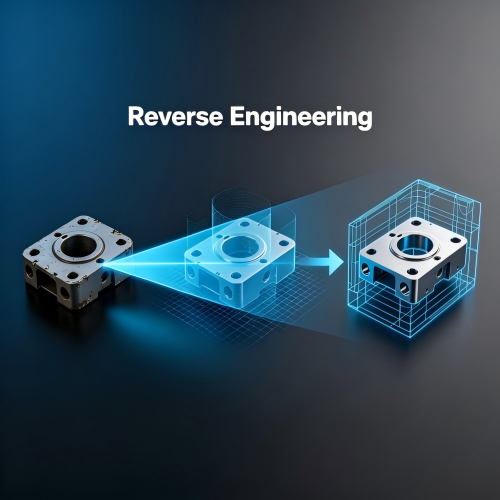
Reverse engineering in sheet metal fabrication is the process of analyzing an existing physical part to recreate its digital design data. Instead of starting with a CAD model and manufacturing from it—which is the "forward" engineering approach—reverse engineering starts with the finished part and works backward to reconstruct its design.
This is particularly valuable in sheet metal fabrication because sheet metal parts have specific design parameters: material thickness, bend radii, hole positions, flange angles, and flat pattern dimensions. These parameters must be accurately captured to produce a replacement part that fits and functions exactly like the original. When original design blueprints are unavailable, reverse engineering provides a reliable path to reproduction.
At Lingyufab, our reverse engineering service is not an add-on—it is integrated with our full manufacturing capabilities. We do not just give you a CAD file and send you elsewhere for production. We take your sample, reproduce its design, and manufacture the finished part using our in-house laser cutting, CNC bending, welding, and surface treatment facilities. One partner, from sample to finished product.
How Does Reverse Engineering Work at Lingyufab?
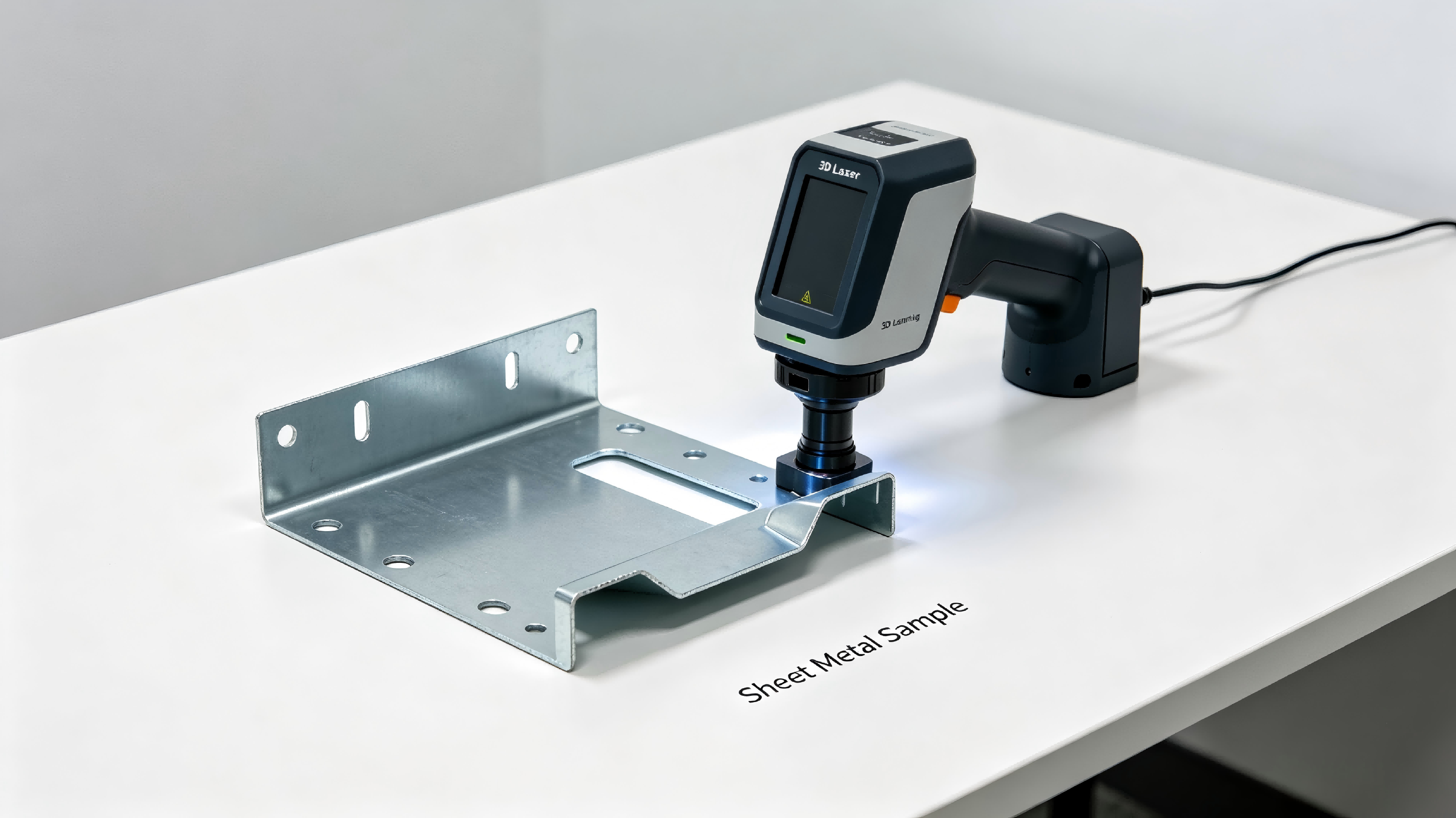
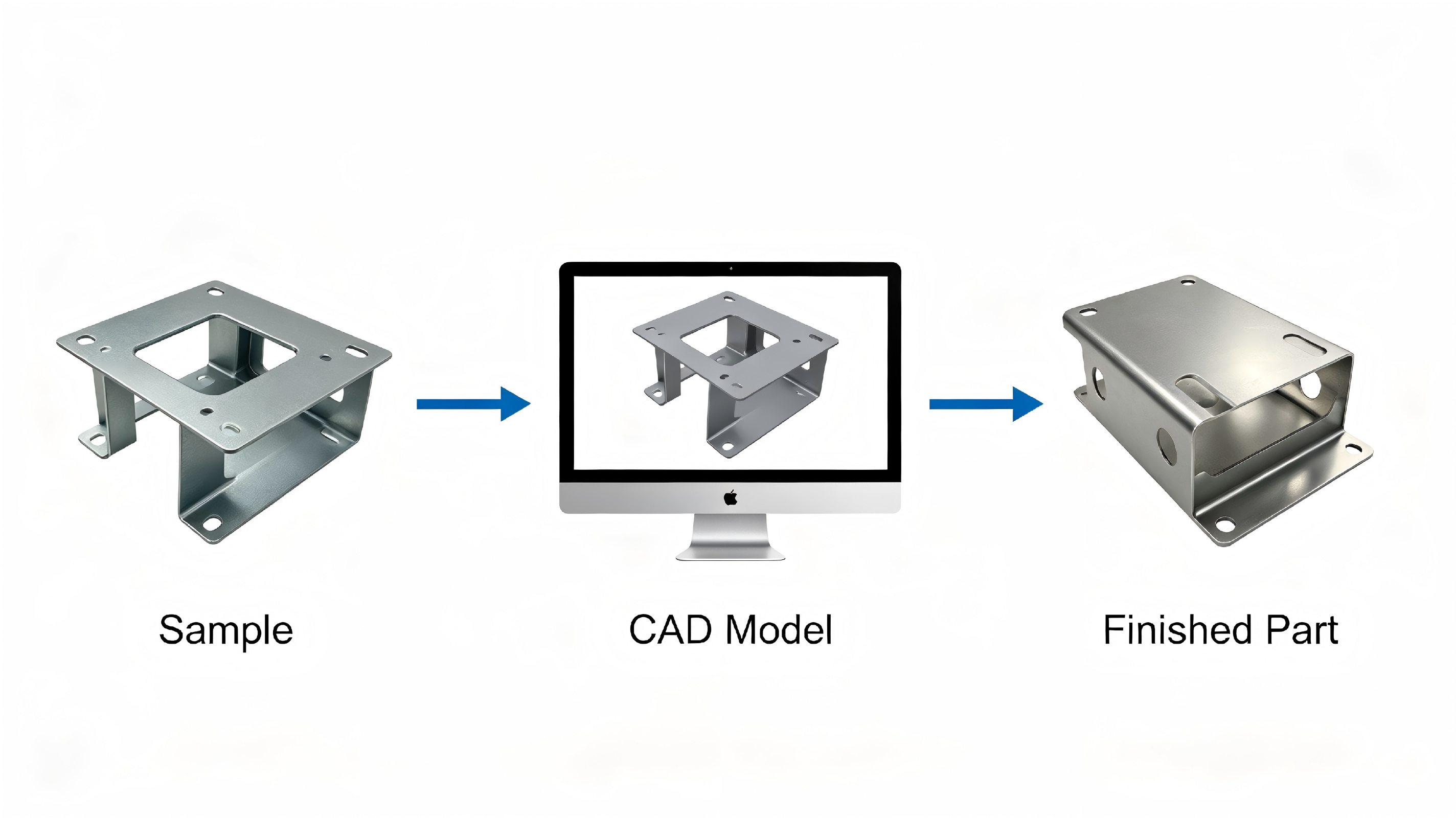
The process starts with your physical sample. We use high-precision 3D laser scanning to capture the part's geometry, reconstruct a CAD model, and manufacture the finished part using our in-house fabrication capabilities—all in one facility.
What makes us different is not the process—it is the capability behind it. We combine three things that most reverse engineering providers cannot offer together:
Precision Scanning and Modeling
Our 3D laser scanning captures complex geometries with high accuracy. But scanning alone is not enough—our engineers understand sheet metal design, so they know how to reconstruct not just the shape, but the design intent: bend allowances, flat patterns, material thickness, and tolerances. We deliver a CAD model that is actually manufacturable.
In-House Manufacturing, Not Outsourcing
Most reverse engineering providers only deliver a CAD file. You then have to find a separate manufacturer to produce the part—introducing coordination costs, quality gaps, and delays. Lingyufab handles everything: scanning, modeling, manufacturing, finishing, and fastener installation. One point of contact. One quality standard. One delivery.
Quality You Can Trust
We are a certified core supplier for Mitsubishi Electric. We hold ISO 9001, ISO 14001, and TÜV CE certifications. Every batch of raw materials comes with a Mill Test Certificate (MTC). These are not just credentials—they are proof that we have the systems and standards to reproduce your parts reliably, even when no drawings exist.
Key Advantages of Reverse Engineering at Lingyufab
Choosing reverse engineering for your sheet metal reproduction needs offers several distinct advantages, especially when you work with a manufacturer that combines reverse engineering with full production capabilities.
Eliminates the "No Drawings" Problem
This is the most obvious benefit. When original drawings are lost, unavailable, or never existed, reverse engineering provides a reliable alternative. You do not need to track down obsolete files, reconstruct designs from memory, or abandon the part entirely. A physical sample is all you need.
One Partner, Full Responsibility
Most reverse engineering providers only deliver a CAD file. You then must find a separate manufacturer to produce the part—introducing coordination costs, quality inconsistencies, and communication risks. At Lingyufab, we handle everything: scanning, modeling, manufacturing, finishing, and fastener installation. You get one point of contact and one quality standard. This is particularly valuable when the part requires fasteners—we manufacture and install them in-house, eliminating external sourcing.
Reduces Production Downtime
When a critical part fails, every hour of downtime costs money. Our reverse engineering process accelerates reproduction by eliminating the need for manual measurement and design from scratch. With laser scanning capturing the part geometry in minutes, we move from sample to production faster—and because we manufacture in-house, there is no time lost shipping files to another supplier.
Enables Design Improvements
Reverse engineering is not limited to exact reproduction. It also allows you to improve upon the original design. Perhaps the original part used a material that corroded too quickly. Perhaps the manufacturing method was inefficient. With our engineering team's expertise, we can analyze the original design and recommend practical improvements while maintaining compatibility with the original fit and function.
Supports Legacy Equipment Maintenance
Many factories operate equipment that is decades old. The original manufacturer may have gone out of business. Spare parts may no longer be available. Reverse engineering provides a pathway to keep legacy equipment running, extending its useful life and delaying costly capital replacements.
Where Can You Use Reverse Engineering for Sheet Metal Parts?
Reverse engineering for sheet metal parts is valuable across a wide range of industries and applications.
Industrial Equipment Maintenance
Industrial machinery—presses, conveyors, packaging equipment, and production lines—all contain sheet metal components that wear out or break over time. When the original manufacturer no longer supports the equipment or the drawings are lost, reverse engineering provides a reliable solution for producing replacement parts.
Automotive and Transportation
Commercial fleets and heavy equipment often require sheet metal parts that are no longer manufactured. Reverse engineering enables accurate reproduction of brackets, structural components, mounting hardware, and custom assemblies.
Construction and Infrastructure
Construction equipment, building systems, and infrastructure projects often use custom sheet metal components. When modifications are needed or replacements required, reverse engineering captures the design of existing components for accurate reproduction.
Product Improvement and Aftermarket Parts
For companies looking to improve an existing product or create a compatible aftermarket part, reverse engineering provides a starting point. By analyzing an existing part, you can identify design opportunities and develop improved versions with better materials or more efficient manufacturing methods.
Key Specifications and Design Guidelines for Reverse Engineering Projects
To achieve optimal results with your reverse engineering project, understanding the key specifications and what to prepare is essential.
What You Need to Provide
A physical sample is the minimum requirement. For the best results, consider providing any available documentation (even outdated drawings or photos), information about the material (if known), the part's application and operating environment, and any known issues with the original design.
Design Outputs We Deliver
3D CAD files in STEP (.stp), IGS (.igs), and SolidWorks (.sldprt) formats. 2D drawings in PDF, DWG, and DXF formats with critical dimensions and tolerances. Manufacturing-ready flat patterns for fabrication. Material recommendations based on application requirements. Fabricated finished parts delivered to your specifications.
Important Considerations for Part Reproduction
Consider whether you need exact reproduction or design improvement. Clarify the operating environment to ensure proper material selection. Define functional requirements—critical dimensions, mounting interfaces, load requirements. Discuss quantity requirements to optimize manufacturing efficiency.
Your Trusted Partner for Reverse Engineering and Manufacturing
Beyond technical capability, the success of your reverse engineering project depends on selecting a partner with the right expertise, equipment, and quality standards. Lingyufab is not just a reverse engineering provider—we are a full-service manufacturing partner.
Who We Are
Lingufab is a professional sheet metal fabrication and fastener manufacturer based in Shanghai, China, with more than 20 years of precision manufacturing experience since 2003. The company follows strict Japanese quality standards and is a certified core supplier for Mitsubishi Electric.
Our Integrated Service Model
What sets Lingyufab apart is integration. We combine reverse engineering, sheet metal fabrication, and fastener manufacturing under one roof. From sample to finished part, we handle every step. This eliminates the coordination costs, communication gaps, and quality inconsistencies that arise when working with multiple suppliers.
Our Reverse Engineering Capabilities
3D laser scanning for accurate geometry capture. CAD model reconstruction in multiple formats. Dimensional validation against original samples. Design optimization for improved performance or manufacturability.
Our Manufacturing Capabilities
Laser cutting, CNC bending, welding, assembly, surface treatment (powder coating, anodizing, electroplating, polishing), and fastener installation using our own in-house manufactured SEMS fasteners, bolts, nuts, and self-clinching fasteners.
Our Quality Assurance
Every reverse engineering project undergoes rigorous quality control, from sample assessment to final inspection. We provide Mill Test Certificates (MTC) for all raw materials and operate under ISO 9001, ISO 14001, and TÜV CE certifications.
Getting Started with Your Reverse Engineering Project
If you have a sheet metal part that needs reproduction—whether you have drawings or not—the process is simple:
Send us your sample — Ship the physical part to our facility. Receive a free consultation — Our engineering team will assess your sample, discuss your requirements, and provide a quote. Get your CAD model — We scan, process, and reconstruct a digital design of your part. Approve and produce — Review and approve the CAD model, and we manufacture your replacement parts.
For businesses needing sheet metal part reproduction, legacy equipment support, or design improvement services, please don't hesitate to contact us. Our engineering team is available to assess your sample and provide a free quote.
Conclusion
Reverse engineering for sheet metal parts is not just a technical capability—it is a practical solution to one of manufacturing's most persistent problems: what to do when the drawings are lost and the part is needed now. By combining high-precision 3D laser scanning, expert CAD reconstruction, and full in-house manufacturing capabilities, Lingyufab provides a reliable path from physical sample to finished product—all from a single partner.
Whether you are maintaining legacy equipment, reproducing obsolete parts, or looking to improve an existing design, our reverse engineering services can help you get the parts you need—quickly, accurately, and cost-effectively.
FAQs
Q1: What is reverse engineering in sheet metal fabrication?
Reverse engineering is the process of analyzing an existing physical sheet metal part to recreate its digital design data. Using 3D laser scanning and CAD reconstruction, we capture the part's geometry and create a production-ready CAD model—no original drawings required.
Q2: What if my sample part is damaged or worn?
We can often work with damaged or worn parts. Our engineering team assesses the sample's condition and can reconstruct missing sections based on symmetry, mating surfaces, or functional requirements. In some cases, we may recommend using a less-worn example or combining measurements from multiple samples.
Q3: What file formats do you provide for the CAD model?
We provide CAD models in common formats including STEP (.stp), IGS (.igs), and SolidWorks (.sldprt) for 3D data, and PDF, DWG, and DXF for 2D drawings.
Q4: How accurate is the reverse engineered part compared to the original?
With high-precision 3D laser scanning, we achieve high dimensional accuracy. Final accuracy depends on the part's condition, material, and complexity. Our engineering team validates critical dimensions against the original sample and can discuss specific tolerance requirements for your application.
Q5: Does Lingyufab provide manufacturing as well, or just the CAD model?
We provide both—this is what makes us different from most reverse engineering providers. We scan, model, and manufacture the finished part in-house, delivering a finished product, not just a digital file.
Q6: What is the typical lead time for a reverse engineering project?
Lead time depends on part complexity, condition, and quantity. Simple parts can be scanned, modeled, and produced within days. More complex projects may require additional time for analysis and validation. Contact our team for a specific timeline based on your part.