
 +8613003178786
  sales@lingyufab.com
CNC Bending
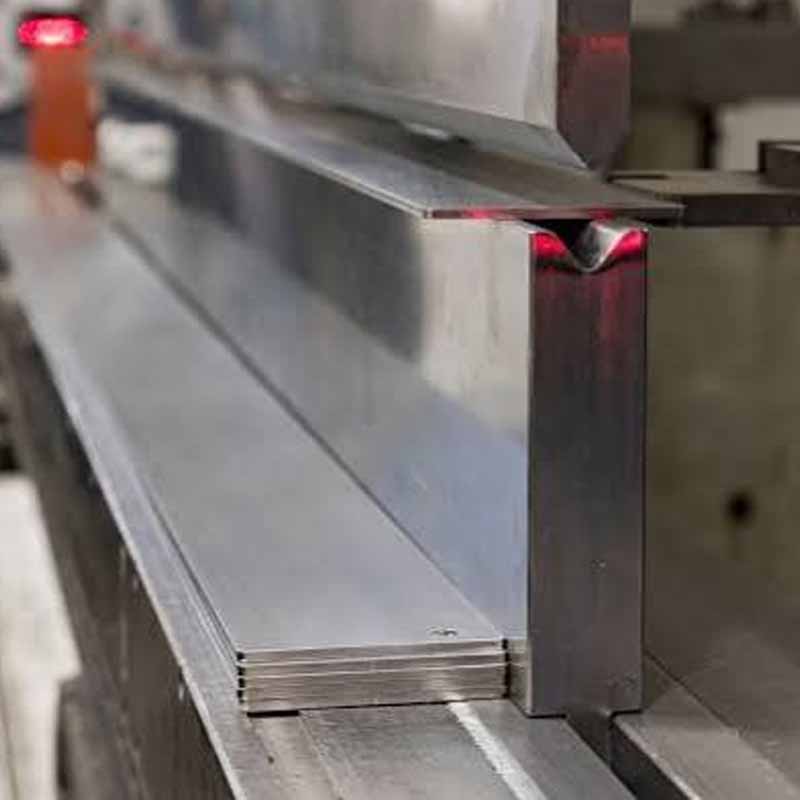
China's Leading CNC Bending & Forming Capabilities
Lingyufab delivers the ultimate synergy of world-class supply chain speed, scaling capacity, and engineering depth. We harness advanced, multi-axis CNC press brakes featuring real-time angle monitoring and dynamic crowning systems to fulfill complex global forming demands with unmatched efficiency. For our partners in telecom, renewable energy, and industrial sectors, this means a flawless build-to-print execution. Our machinery achieves a precise, highly accurate bending tolerance of ±0.5° for intricate thin-gauge electronic chassis, while seamlessly shaping heavy-gauge structural components up to 20 mm thick with perfect angular consistency and zero surface cracking. Backed by intelligent CNC automation and precision-ground tooling, Lingyufab effortlessly scales from zero-tooling rapid prototyping to 24/7 high-volume mass production—giving your business an aggressive speed-to-market advantage without compromising on structural integrity.
High-Precision CNC Bending Techspecs & Manufacturing
Empowering global industries with structurally rigid, high-repeatability sheet metal forming solutions.
CNC Bending Techspecs
| Bending Parameter | Standard Capability | High-Precision Capability |
|---|---|---|
| Max Bending Force (Tonnage) | 40 Tons to 400 Tons | 500 Tons to 1,000+ Tons (Heavy Plate) |
| Max Bending Length | Up to 3,200 mm (10.5 ft) | Up to 4,000 mm (13 ft) |
| Material Thickness Range | 0.5 mm to 6.0 mm (Thin sheet) | 6.0 mm to 20.0 mm (Heavy gauge plate) |
| Bending Angle Range | 30° to 180° (Hemming) | Customizable multi-bend sequences |
| Bending Angle Tolerance | ±1.0° | ±0.5° (Real-time laser compensation) |
| Linear Position Precision | ±0.25 mm | ±0.05 mm |
| Inside Bend Radius (R) | Min R = 1 x material thickness | Multi-die customization from R1 to R50 |
The Precision Difference
While standard sheet metal shops rely on manual guesswork, our advanced CNC line integrates real-time laser angle tracking. This system dynamically measures the angle during the stroke, automatically adjusting for metallurgical deviations across different batches of steel and aluminum.
China CNC Bending Manufacturer
Why global brands partner with Lingyufab for integrated, high-performance hardware supply chains.
Automated DFM
Our engineering team reviews your 3D CAD files within 24 hours to verify K-factors, bend allowances, and avoid structural failures.
Laser cutting
Blanks are precisely pre-cut with state-of-the-art fiber lasers to ensure clean edges and perfect dimensional alignment before forming.
Backgauging
Using advanced CAD/CAM offline programming to control 5-axis backgauges, eliminating physical tooling setup errors.
In-Process Crowning
Automatic hydraulic crowning prevents uneven bending, keeping angles completely consistent across long parts.
CNC Bending Materials: Engineering the Perfect Form
Lingyufab combines deep material science expertise with precision metal-forming technology. We work with a comprehensive range of industrial metals—including stainless steel, performance aluminum, carbon steel, and conductive copper—utilizing premium hardened tooling calibrated to handle each material's distinct yield strength and springback behavior. For our clients across the telecommunications, green energy, and heavy industrial sectors, this deep material capability ensures reliable, exact-to-spec manufacturing. Our intelligent CNC press brakes adjust automatically to gauge variations, delivering flawless, blemish-free finishes on ultra-thin aluminum enclosures while safely delivering the high tonnage required to form rugged structural plates up to 20 mm thick. Supported by data-driven material optimization and a secure raw material supply network, Lingyufab easily transitions from fast-turnaround prototyping to continuous high-volume production—accelerating your time-to-market while guaranteeing exceptional structural durability.
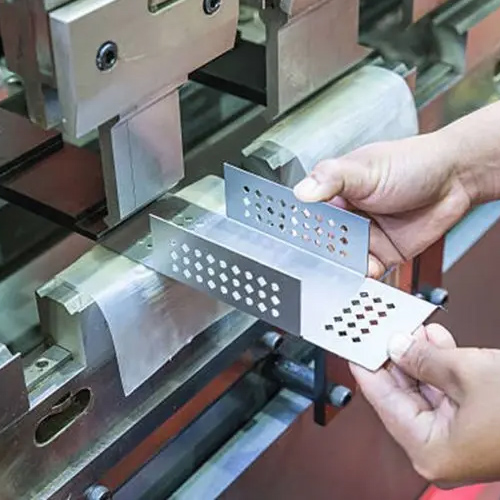
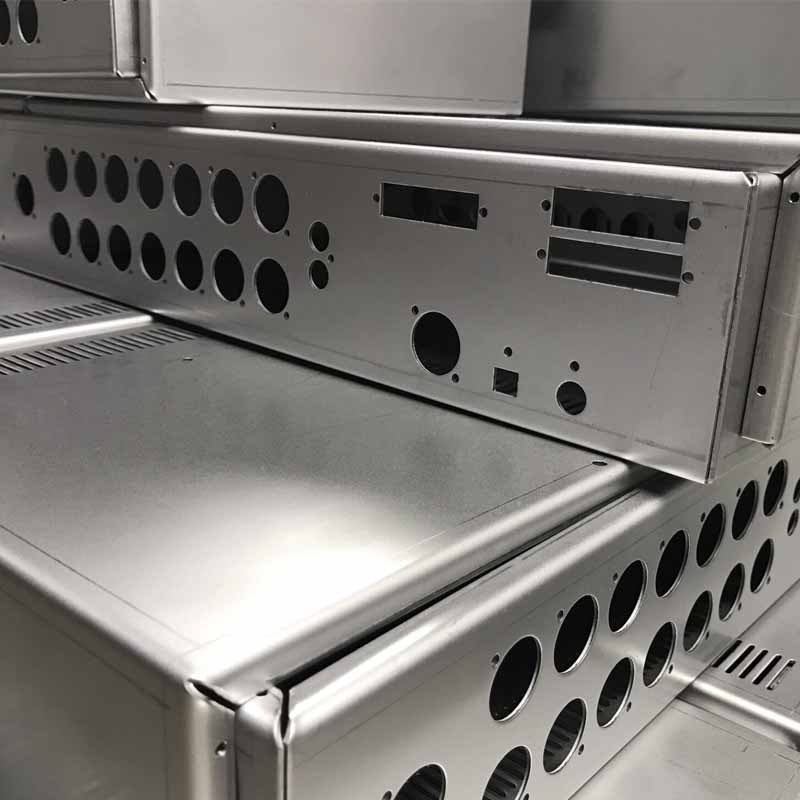
CNC Bending Applications: Shaping Global Industry
Leveraging high-precision CNC bending technology, Lingyufab engineers critical, formed components across the world's most demanding sectors. We specialize in transforming flat metal sheets into highly complex, structurally sound three-dimensional shapes designed to excel in challenging operational environments. For our partners in telecommunications, renewable energy, industrial automation, and heavy machinery, our specialized bending expertise ensures a flawless build-to-print execution. We deliver ultra-tight angular tolerances for intricate, multi-bend 5G telecom chassis and electronic shielding enclosures, while seamlessly forming heavy-duty structural mounting brackets, solar tracker profiles, and modular power distribution cabinets up to 20 mm thick with guaranteed dimensional repeatability. Backed by intelligent design-for-manufacturability (DFM) analysis and versatile press brake tooling, Lingyufab effortlessly scales from rapid prototyping to 24/7 high-volume mass production—giving your business an aggressive speed-to-market advantage without compromising on structural integrity.
Precision CNC Bending Services
Professional custom sheet metal forming and fabrication solutions engineered to your exact specifications.
What is CNC Bending?
CNC (Computer Numerical Control) Bending is a high-tech manufacturing process used to reshape sheet metal. The process involves placing a metal sheet onto a die bed while a specialized punch presses down into the material to create a precise angle or shape.
Guided by advanced computer software, the machinery controls the exact pressure, depth, and positioning to ensure perfect consistency across every single bend.
Features of CNC Bending
- High Automation & Speed: Computer-controlled processes minimize manual adjustments, drastically shortening production cycles.
- Complex Geometries: Multi-axis backgauge systems allow us to perform intricate, multi-angle bends in a single setup.
- Excellent Repeatability: Perfect for both rapid prototyping and high-volume production runs with zero variance between batches.
- Material Efficiency: Precision calculations reduce scrap metal, optimizing your overall production costs.
CNC Bending Techspecs
| Parameter | Capability / Range |
|---|---|
| Maximum Bending Length | Up to 4,000 mm |
| Bending Thickness Range | 0.5 mm – 20 mm (Depending on material) |
| Angular Accuracy | ±0.5° |
| Linear Positioning Accuracy | ±0.1 mm |
| Press Brake Tonnage | 40 Tons – 400 Tons |
CNC Bending Material
We process a wide range of ferrous and non-ferrous metals, selecting the right tooling based on specific material behavior and springback rates:
Stainless Steel
e.g., SUS304, SUS316. Offers exceptional structural strength and excellent corrosion resistance for harsh environments.
Aluminum
e.g., 5052, 6061. Extremely lightweight, highly formable, and ideal for electronics and aerospace industries.
Carbon & Mild Steel
Provides excellent structural integrity, superior mechanical strength, and is highly cost-effective.
Copper & Brass
Exceptional electrical and thermal conductivity, perfect for heavy-duty busbars and complex electrical units.
CNC Bending Accuracy
Achieving tight tolerances is the hallmark of high-quality fabrication. Our state-of-the-art press brakes feature real-time angle monitoring systems that automatically measure and correct variations during the bending cycle.
By calculating exact material springback and utilizing precision-ground tooling, we consistently guarantee high-accuracy results that meet strict aerospace and medical industry standards.
CNC Bending Applied in Sheet Metal Fabrication
CNC bending is a critical bridge in the sheet metal fabrication ecosystem. It transforms flat, laser-cut or punched metal blanks into rigid, functional three-dimensional components.
By eliminating the need for excessive welding or assembly fasteners, bending enhances the structural integrity, aesthetics, and aerodynamic profiles of the final fabricated assemblies.
CNC Bending Guide for Sheet Metal Assembly
Designing parts with assembly in mind ensures seamless manufacturing. Keep these core guidelines in mind:
Uniform Bend Radii
Try to design all bends with the same radius to minimize tool changes and reduce setup costs.
Bend Relief Slots
Include relief cuts at the corners where a bend meets a straight edge to prevent tearing or deformation.
Minimum Flange Length
Ensure your flanges are long enough to properly rest across the die opening (typically minimum length ≥ 4 × material thickness).
What parts can be manufactured by CNC Bending?
Enclosures & Racks
Electrical boxes, server chassis, control cabinets, and network housings.
Brackets & Mounts
Heavy-duty structural brackets, automotive mounting plates, and custom clips.
Panels & Covers
Machinery guards, architectural facade panels, and appliance covers.
Channels & Profiles
Custom U-channels, V-channels, hat sections, and complex Z-profiles.
Applications of CNC Bending
Our precision components serve a vast array of global industries:
Automotive & Transit
Chassis brackets, heat shields, and internal reinforcing panels.
Electronics & Telecom
Shielding cans, device chassis, and custom internal brackets.
Medical Equipment
Hospital cart frames, medical device enclosures, and surgical instrument trays.
Industrial Machinery
Heavy equipment housings, conveyor components, and structural frames.
How to Control Quality for CNC Bending?
Incoming Inspection
Verifying thickness, grain direction, and mechanical properties before production begins.
First Article Inspection
Testing and measuring the very first piece off the press brake using 3D coordinate measuring machines (CMM).
In-Process QC
Scheduled operator checks and automated angle-tracking to eliminate tool wear or sheet material deviations.
Final Verification
Comprehensive dimensional audits and protective customized packaging to ensure scratch-free delivery.
Leading CNC Bending Service Manufacturer / China CNC Bending Manufacturer
As a top-tier China CNC Bending Manufacturer, we operate a world-class facility equipped with advanced, multi-axis CNC press brakes. We combine highly efficient manufacturing supply chains with strict international quality standards to give your business an aggressive speed-to-market advantage.
CNC Bending FAQ
Q1: What is the minimum bend radius I should use?
As a general rule of thumb, the minimum inside bend radius should be equal to the material thickness (R = 1t) to prevent cracking, especially in harder materials like stainless steel or structural aluminum.
Q2: How do you handle material springback?
Different metals naturally "spring back" slightly to their original shape after being bent. Our CNC machines automatically compensate for this by overbending the sheet by a precise, mathematically calculated angle.
Q3: Can you perform bending on prepainted or coated metals?
Yes. We utilize specialized protective urethane tape or specialized non-marking dies to ensure that prepainted, polished, or anodized surfaces remain completely scratch-free during the forming process.
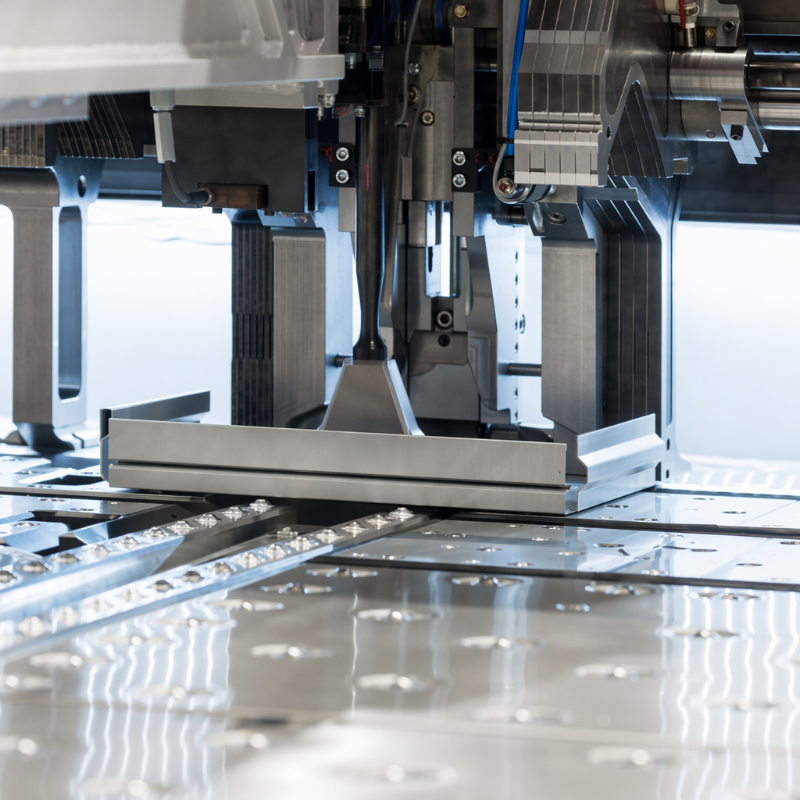
What Is CNC Bending in Sheet Metal Fabrication?
CNC bending is a key sheet metal fabrication process used to form flat metal parts into precise angles and shapes. Learn how it works, its advantages, applications, pricing factors, and sourcing consi
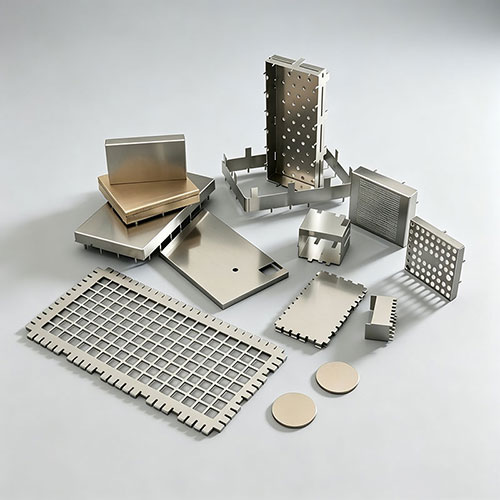
The Impact of Material Choice on Enclosure Shielding Performance
Sheet metal fabrication supplier for EMI shielding enclosures. Custom OEM parts from prototype to production.
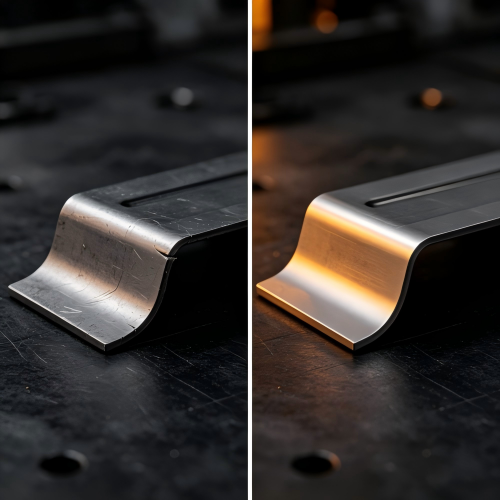
How to Evaluate CNC Bending Quality: A Buyer’s Guide to Accurate, Consistent Parts
How to evaluate CNC bending quality. 5 key indicators for buyers. Angle accuracy, flange length, consistency.
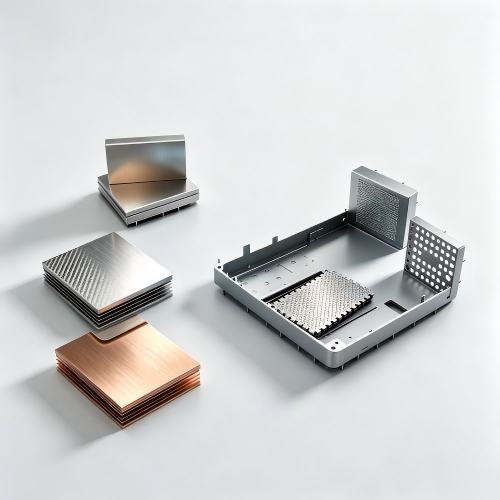
The Role of Material Selection in Enclosure EMI Performance
EMI shielding material guide. Compare steel, aluminum, stainless. Choose the right metal for EMC compliance.