+8613003178786
  sales@lingyufab.com



What Are Hex Flange Screws Used For?
30
Jul’2026What Are Hex Flange Screws Used For?
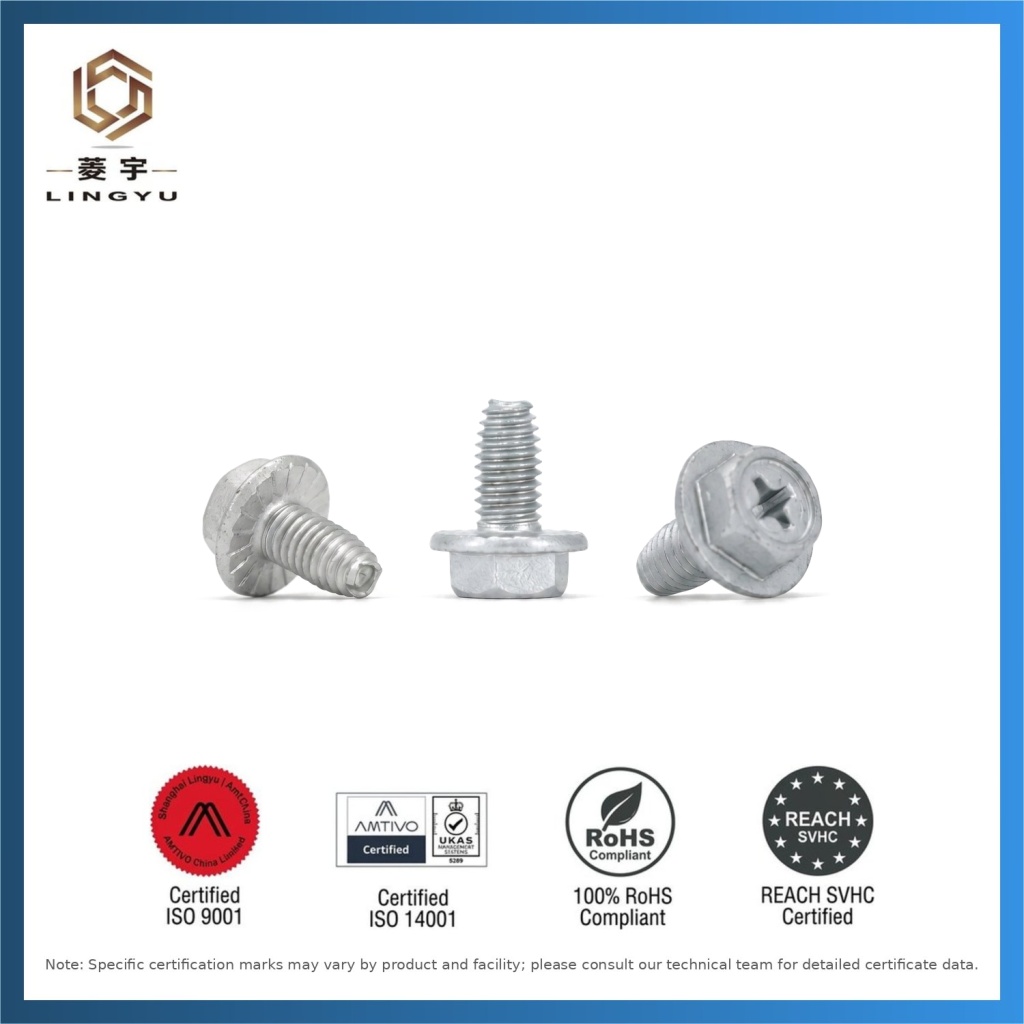
Hex flange screws are fasteners with a hexagonal head and an integrated flange beneath the head. The flange acts like a built-in washer, spreading load over a wider bearing surface during assembly. In sheet metal products, appliance panels, brackets, enclosures, cabinets, machine covers, and light industrial structures, this design makes fastening more stable and efficient.
For OEM buyers, a hex flange screw is more than just another head style. The flange diameter, serration design, drive type, material, coating, pilot hole, and installation torque all affect whether the joint performs well in real production. A screw that looks suitable in a catalog can still cause trouble if it damages a coated surface, interferes with a bent edge, strips a thin sheet, or produces inconsistent torque on the assembly line.
Lingyufab supports OEM projects that involve both fasteners and sheet metal assemblies. In real projects, we review hex flange screw selection alongside sheet thickness, hole size, surface treatment, assembly access, corrosion requirements, and final product use—rather than treating the screw as an isolated hardware item.
What Is a Hex Flange Screw?
A hex flange screw has a six-sided head that can be driven with a socket, wrench, or automated tool. Under the head, a circular flange provides a larger bearing surface than a standard hex head or pan head screw.
The flange can be plain or serrated. A plain flange spreads load and helps protect the joint surface. A serrated flange has teeth or ribs under the head that bite into the mating surface to improve resistance to loosening in some applications. Serrations are not suitable for every surface, though, especially where appearance or coating protection is critical.
Hex flange screws can be designed as machine screws, tapping screws, thread-forming screws, or self-tapping screws depending on the application. In sheet metal assemblies, hex flange self-tapping screws are common because they combine efficient driving, load distribution, and simple installation.
Why Hex Flange Screws Are Used in Sheet Metal Assemblies
Sheet metal parts often need fasteners that install quickly, hold consistently, and work well with relatively thin material. Hex flange screws are widely used because the integrated flange gives the joint a wider contact area without always requiring a separate washer.
In products such as appliance panels, cabinet parts, brackets, equipment covers, and enclosures, this simplifies assembly and reduces part count. The hex head also supports more stable tool engagement than some shallow drive recesses, which helps when torque control matters.
In high-volume assembly, a small fastening problem can slow the whole line down. If the screw slips, strips the hole, damages the surface, or needs an extra washer, the process becomes less stable. A properly selected hex flange screw makes the joint more repeatable and easier to control.
Common Types of Hex Flange Screws
Plain hex flange screws
Plain hex flange screws have a smooth bearing surface under the flange. They are commonly used when the goal is to distribute load without cutting into the mating surface. This style is often preferred when the panel is painted, powder coated, plated, or otherwise appearance-sensitive.
Serrated hex flange screws
Serrated hex flange screws have teeth under the flange. The serrations help resist loosening by biting into the surface during tightening. They are useful in some vibration-prone or general industrial applications, but they can leave marks on painted or coated surfaces. For visible panels or finished appliance parts, buyers should confirm whether serrations are acceptable.
Hex flange self-tapping screws
Hex flange self-tapping screws are designed to form or engage threads in the workpiece during installation, often in prepared holes. They are widely used in sheet metal assembly, appliance manufacturing, equipment housings, and brackets. Sheet thickness, pilot hole size, and torque control are especially important for this type.
Hex flange screws with combined drive
Some hex flange screws use a combined drive, such as hex plus Phillips, allowing the screw to be driven with different tools depending on the assembly process. For OEM production, combined drives add flexibility, but the drive design still needs to match the actual tool, torque requirement, and assembly line condition.
Where Are Hex Flange Screws Commonly Used?
Home appliance assemblies
Refrigerators, washing machines, air conditioners, kitchen appliances, and other appliance products often use hex flange screws to fasten panels, brackets, supports, covers, and internal structures. Here, assembly speed, torque consistency, and surface protection are important.
Electrical enclosures and cabinets
Control boxes, electrical cabinets, telecom housings, and industrial enclosures may use hex flange screws for covers, mounting plates, internal brackets, hinges, or support components. The flange helps distribute load, while the hex head supports reliable tool engagement.
Sheet metal brackets and supports
Brackets and support structures often need a fastening method that is strong yet still practical for production. Hex flange screws reduce the need for separate washers and make assembly more efficient, especially where access is limited.
Industrial equipment and machine covers
Machine guards, equipment housings, removable covers, and access panels may use hex flange screws where repeated installation or service access is required. In these products, the screw should hold securely while still allowing controlled removal when needed.
Automotive and transportation-related parts
Hex flange screws may be used in light brackets, covers, auxiliary structures, and sheet metal sub-assemblies. In these applications, vibration, corrosion protection, and batch consistency usually call for closer review.
Practical Details OEM Buyers Should Notice
Flange diameter and available space
The flange spreads load, but it also takes up more space than a smaller head. If the screw sits too close to a bend, raised feature, slot, wall, or another component, the flange can interfere during tightening or final assembly. This matters most in compact brackets, cabinet corners, and folded sheet metal structures.
Serrations can damage coated surfaces
A serrated flange improves grip, but it can also cut into powder coating, plating, or painted surfaces. In some joints this is acceptable; in visible parts or corrosion-sensitive areas, it can leave cosmetic marks or expose the base metal. Buyers should decide early whether a plain or serrated flange is more suitable.
Pilot hole size affects holding strength
For hex flange self-tapping screws, the pilot hole must match the sheet material and thickness. A hole that is too large reduces thread engagement and can lead to stripping or loosening. A hole that is too small can create excessive torque, deform the sheet, or damage the screw during installation.
Torque control matters in thin sheet metal
Thin sheet metal offers limited thread engagement. If installation torque is too high, the screw can strip the hole; if it is too low, the joint may not clamp properly. In appliance and enclosure assembly, the screw should be tested with the actual panel, coating, and assembly tool before mass production.
Coating thickness can change assembly behavior
Powder coating, plating, or zinc-aluminum flake coatings can all affect screw seating and thread engagement. Coating buildup around holes may raise installation torque, and a coated screw can behave differently from an uncoated sample. For that reason, fastening trials should use parts and screws that reflect the final production condition.
Drive engagement should match the assembly tool
Hex flange screws are often chosen because the hex head gives stable tool engagement. Even so, tool size, head height, recess quality, and access direction still matter. If the tool cannot reach the screw straight on, the head can be damaged or the torque can become inconsistent.
Material and Coating Options
Hex flange screws can be produced from different materials and finished with different coatings depending on strength and corrosion requirements.
Carbon steel
Carbon steel is widely used for general industrial and appliance fasteners. It offers a practical balance of strength and cost efficiency. Heat treatment and hardness control may be needed depending on whether the screw is self-tapping or used in higher-strength applications.
Stainless steel
Stainless steel may be chosen when corrosion resistance is more important, especially in humid or demanding environments. Thread-forming performance and material compatibility still need to be reviewed, however, particularly in sheet metal assemblies.
Zinc plating
Zinc plating is common for general indoor applications. It provides basic corrosion resistance and a clean appearance, but may not be enough for more demanding outdoor or high-humidity conditions.
Zinc-aluminum flake coating
Zinc-aluminum flake coatings, including Dacromet-type or Geomet-type finishes, are often considered when higher corrosion resistance is required. For OEM projects, buyers should confirm the required salt spray performance, friction behavior, appearance, and compatibility with the mating parts.
What Affects the Price of Hex Flange Screws?
The price of hex flange screws depends on more than size alone. Several practical factors shape the final quotation.
Material and hardness
Carbon steel, stainless steel, and alloy materials sit at different cost levels. Heat treatment and hardness requirements also affect production cost, especially for self-tapping or thread-forming screws.
Head and flange design
Flange diameter, serration pattern, head height, and drive type all influence manufacturing complexity. A standard hex flange screw is usually easier to source than a special combined-drive or non-standard flange design.
Thread design and point type
Self-tapping threads, special thread forms, drill points, or custom dimensions can increase tooling and production difficulty. The screw should be specified according to the actual assembly need, not selected on appearance alone.
Surface treatment
Zinc plating, nickel plating, black finish, zinc-aluminum flake coating, and other surface treatments affect both price and performance. Higher corrosion resistance usually increases cost.
Inspection and packaging
If the project requires torque testing, salt spray testing, hardness testing, thread inspection, special sorting, labeling, or assembly-line packaging, these requirements should be included in the quotation request.
Factors to Consider When Purchasing Hex Flange Screws
When sourcing hex flange screws for OEM projects, buyers should look past unit price and check whether the screw will work reliably in the actual assembly.
Application and load requirement
The supplier should understand where the screw will be used, what it is fastening, and whether the joint will face vibration, repeated removal, corrosion, or visible appearance requirements.
Sheet metal thickness and hole design
For sheet metal applications, the screw should be reviewed together with panel thickness, pilot hole size, hole quality, and surface finish. This is especially important for self-tapping hex flange screws.
Plain flange or serrated flange
A serrated flange may improve grip, but it can damage painted or coated surfaces. A plain flange may be the better choice for appearance-sensitive parts. The decision should match both mechanical and cosmetic requirements.
Coating and corrosion requirement
The coating should match the product environment. Indoor appliance use, outdoor equipment, high-humidity environments, and export projects may each need different coating levels and inspection standards.
Batch consistency
For OEM assembly, consistency matters more than one good sample. Head dimensions, flange diameter, thread quality, hardness, coating, and drive fit should stay stable from batch to batch.
Why Screw Selection Should Be Reviewed with Sheet Metal Design
In many projects, the screw and the sheet metal part are specified separately, which can create avoidable problems. The screw flange may interfere with a bend, the pilot hole may not match the thread, or the serrated flange may damage a finished surface.
A better approach is to review the screw, hole, material, coating, and assembly method together. This helps reduce stripped holes, surface damage, loose joints, poor appearance, and production delays.
For OEM buyers, the goal is not simply to purchase a hex flange screw. The goal is to create a stable, repeatable fastening solution that works in the real product and can be assembled consistently in production.
Hex Flange Screw Supplier for OEM Projects
Lingyufab supports OEM projects that require industrial fasteners, sheet metal parts, and assembly-related hardware. For products such as appliance panels, enclosures, cabinets, brackets, equipment covers, and custom metal housings, we can review drawings, screw specifications, sheet thickness, coating needs, and assembly conditions together.
Because many fastening problems only appear after the screw is installed into the actual part, early review helps reduce rework and improve production stability. Whether the project needs standard hex flange screws, hex flange self-tapping screws, serrated flange screws, or custom fastener support, the screw should be selected based on the complete application.
If you are looking for hex flange screws or fastener support for OEM sheet metal assemblies, Lingyufab can review your specifications and provide a practical manufacturing solution based on your application requirements.
FAQ
What are hex flange screws used for?
Hex flange screws are used to fasten sheet metal parts, brackets, covers, enclosures, appliance panels, and industrial components. The flange helps spread load and can reduce the need for a separate washer in some applications.
What is the advantage of a flange head screw?
The flange provides a larger bearing surface under the head, which helps distribute clamping force. This improves joint stability and simplifies assembly compared with using a separate washer.
What is a serrated hex flange screw?
A serrated hex flange screw has teeth under the flange. The serrations help resist loosening, but they can also mark or damage coated surfaces. Buyers should confirm whether serrations are suitable for the part.
Can hex flange screws be used in sheet metal?
Yes. Hex flange self-tapping screws are commonly used in sheet metal assemblies, but sheet thickness, pilot hole size, torque, and coating should be reviewed carefully.
How should I specify hex flange screws for an OEM project?
Provide screw size, material, coating, head style, flange type, thread design, pilot hole information, quantity, application details, and any testing or packaging requirements.
Need hex flange screws for sheet metal assemblies or OEM products? Send Lingyufab your drawings, screw specifications, material requirements, or product details, and our team will review the application and provide a practical fastening solution for your project.