+8613003178786
  sales@lingyufab.com



TIG vs. MIG vs. Spot Welding: Which Sheet Metal Welding Process Is Right for Your Project?
30
Jul’2026TIG vs. MIG vs. Spot Welding: Which Sheet Metal Welding Process Is Right for Your Project?
Have you ever specified a welding method for a sheet metal assembly, only to find that the welds were too visible, the parts warped from excessive heat, or the production rate was simply too slow to meet your deadlines? Or perhaps you have received welded assemblies where the joints looked fine at first glance, but failed during testing due to insufficient penetration or weak fusion? These are among the most common and costly frustrations faced by procurement professionals, design engineers, and quality managers. The welding process you choose directly affects weld strength, appearance, production speed, cost, and—ultimately—product reliability.
At Lingyufab, we understand that welding is one of the most critical steps in sheet metal fabrication. With over 20 years of precision manufacturing experience since 2003 and certification as a core supplier for Mitsubishi Electric, we offer multiple in-house welding processes—TIG, MIG, and spot welding—to match the specific requirements of each project. This guide compares these three common welding methods, explains their advantages and limitations, and helps you choose the right process for your sheet metal components.
Why Welding Process Selection Matters
The welding process you choose determines far more than just how parts are joined together. It affects:
Joint strength and integrity — Different processes produce welds with different penetration depths, fusion characteristics, and structural reliability.
Appearance and finish quality — Some processes produce clean, aesthetically pleasing welds with minimal cleanup; others leave spatter, slag, or visible marks that require additional finishing.
Heat input and distortion — Excessive heat can warp thin sheet metal, affect material properties, or cause dimensional changes that compromise assembly fit.
Production speed and cost — Some processes are fast and efficient for high-volume production; others are slower but deliver superior quality for precision applications.
Material compatibility — Not all welding processes work well with all materials. Stainless steel, aluminum, and carbon steel each have different welding requirements.
Choosing the wrong process can lead to weak joints, excessive rework, production delays, or field failures. Choosing the right process ensures strong, reliable, and cost-effective assemblies.
Overview of the Three Welding Processes
Before diving into the comparison, here is a quick overview of each process:
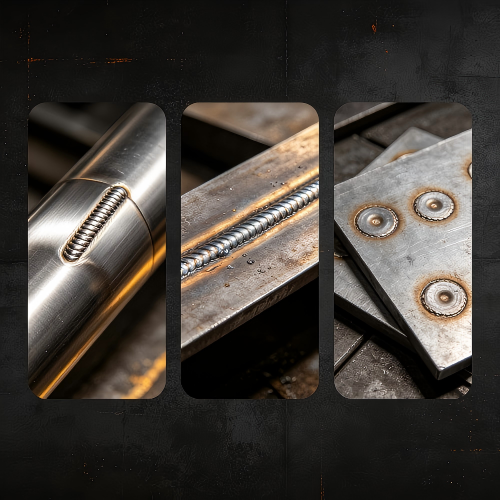
TIG Welding (Tungsten Inert Gas) — Uses a non-consumable tungsten electrode to produce the weld. A separate filler rod is added manually or automatically. An inert gas (typically argon) shields the weld area from contamination. TIG welding is known for producing clean, precise, high-quality welds with excellent appearance.
MIG Welding (Metal Inert Gas) — Uses a continuously fed consumable wire electrode that also serves as the filler material. An inert gas shields the weld area. MIG welding is faster and more productive than TIG, making it suitable for higher-volume production.
Spot Welding (Resistance Spot Welding) — Uses electrical resistance and pressure to join overlapping metal sheets at localized points. Two copper electrodes clamp the sheets together and pass an electrical current through them, generating heat at the contact point to create a weld nugget.
TIG Welding: Precision and Appearance
TIG welding is widely regarded as the highest-quality welding process for sheet metal applications. It produces clean, precise welds with excellent appearance and minimal spatter.
Key characteristics: TIG welding delivers superior weld quality with precise control over heat input and filler metal addition. The process produces clean, aesthetically pleasing welds that require minimal post-weld cleanup. TIG welding works well on thin materials where heat control is critical and produces strong, ductile welds with excellent penetration.
Limitations: TIG welding is slower than MIG welding, making it less suitable for high-volume production. It requires a higher skill level from the operator and is generally more expensive per weld due to slower speeds and higher labor costs.
Best suited for: Stainless steel components where appearance and corrosion resistance are critical, thin sheet metal applications requiring precise heat control, medical devices and food processing equipment requiring clean, sanitary welds, and visible exterior surfaces where weld appearance matters.
MIG Welding: Speed and Productivity
MIG welding is one of the most widely used welding processes in sheet metal fabrication due to its combination of speed, productivity, and versatility.
Key characteristics: MIG welding is significantly faster than TIG welding, making it ideal for higher-volume production. The continuously fed wire electrode eliminates the need for manual filler rod feeding, increasing productivity. MIG welding is easier to learn and requires less operator skill than TIG welding, and it works well on a wide range of material thicknesses.
Limitations: MIG welding produces more spatter than TIG welding, requiring additional cleanup. The weld appearance is generally less refined than TIG welds. MIG welding is less suitable for very thin materials where heat control is critical.
Best suited for: General fabrication where speed and productivity are priorities, carbon steel and galvanized steel components, thicker sheet metal applications where heat input is less critical, and structural components where weld appearance is less important than strength.
Spot Welding: Speed and Consistency for Thin Sheets
Spot welding is a resistance welding process specifically designed for joining overlapping thin sheet metal components at localized points.
Key characteristics: Spot welding is extremely fast—each weld takes only a fraction of a second. It is highly repeatable and consistent, making it ideal for high-volume production. Spot welding produces no filler material, spatter, or slag, requiring minimal post-weld cleanup. It is well suited for thin sheet metal where other welding processes would cause distortion.
Limitations: Spot welding only works for overlapping joints—it cannot weld butt joints or edge joints. Access to both sides of the workpiece is required for the electrodes. Spot welding produces visible weld marks (nuggets) on the surface. It is less suitable for thick materials or applications requiring continuous seals.
Best suited for: High-volume production of thin sheet metal assemblies, automotive body panels and structural components, enclosures and cabinets where appearance is less critical, and applications requiring fast, consistent joining.
How to Choose: A Practical Comparison
With these characteristics in mind, here is how the three processes compare across key decision factors:
| Decision Factor | TIG Welding | MIG Welding | Spot Welding |
|---|---|---|---|
| Weld quality | Excellent—clean, precise | Good—some spatter, less refined | Good—consistent, localized |
| Weld appearance | Excellent—minimal cleanup | Fair—spatter requires cleanup | Fair—visible weld marks |
| Production speed | Slow | Fast | Very fast |
| Material thickness | Thin to medium | Medium to thick | Thin only |
| Joint types | All types | All types | Overlapping joints only |
| Operator skill | High | Moderate | Low |
| Cost per weld | High | Moderate | Low |
| Heat input | Low—precise control | Moderate | Low—localized |
Decision framework:
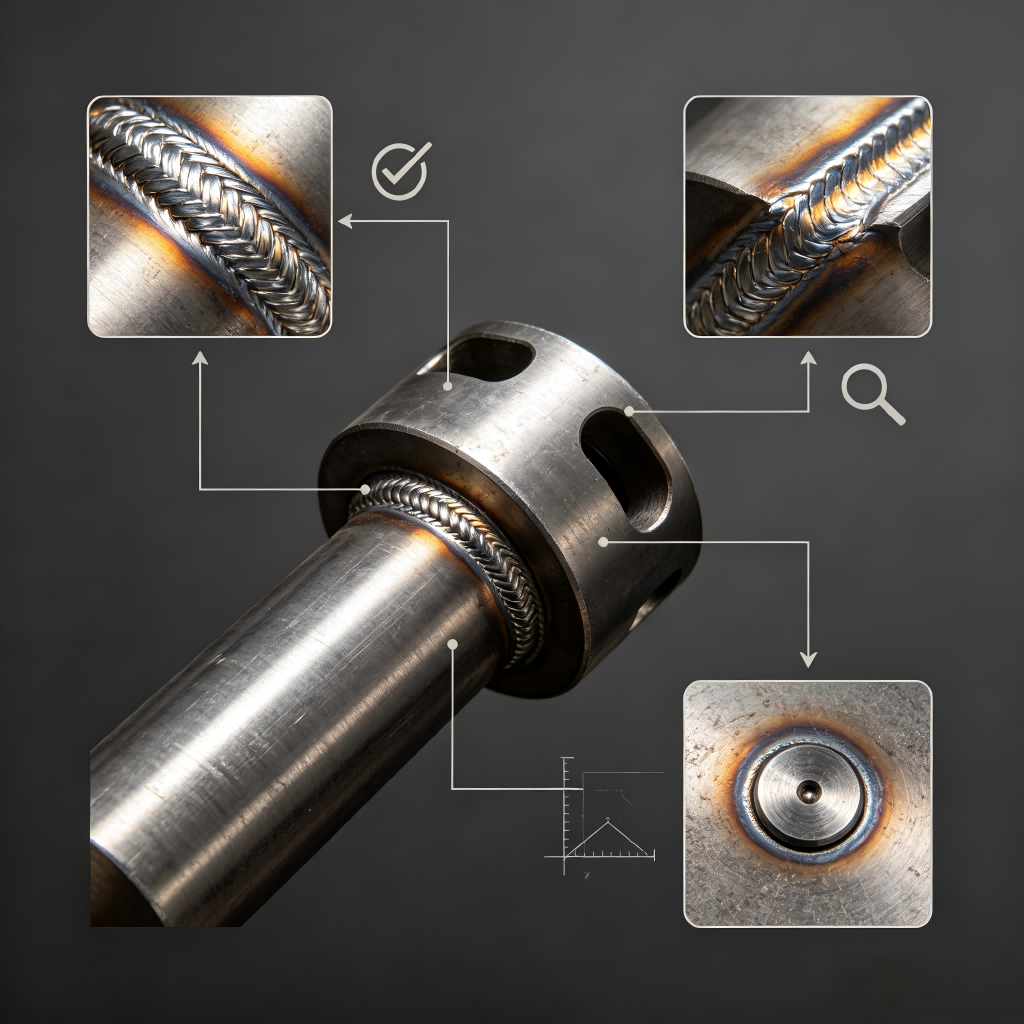
Choose TIG welding if: Your project requires high-quality, aesthetically pleasing welds; the material is stainless steel or thin sheet metal; weld appearance and corrosion resistance are critical; or you are producing medical devices, food processing equipment, or visible exterior components.
Choose MIG welding if: Your project requires faster production speeds; the material is carbon steel or galvanized steel; weld appearance is less critical than strength and productivity; or you are producing general fabrication, structural components, or industrial equipment.
Choose spot welding if: Your project involves high-volume production of thin sheet metal assemblies; you need fast, consistent joining at localized points; the joint type is overlapping; or you are producing automotive components, enclosures, or assemblies where speed and consistency are priorities.
Where Welding Process Selection Matters Most
Welding process choice is critical across a wide range of applications:
Medical Equipment — TIG welding is the standard for stainless steel medical devices and surgical instruments, combining clean, sanitary welds with corrosion resistance and precise heat control. When evaluating a supplier for medical welding, ask: “What is your standard for weld surface finish and cleanliness? Can you provide documentation of your welding procedures and certifications?”
Industrial Equipment and Automation — MIG welding is widely used for industrial machinery frames, equipment enclosures, and structural components where strength and productivity are priorities. When evaluating a supplier for industrial welding, ask: “What is your typical production rate for MIG welding? How do you ensure weld consistency across large frames and complex assemblies?”
Automotive and Transportation — Spot welding is extensively used for automotive body panels and structural assemblies, providing fast, consistent joining for high-volume production. When evaluating a supplier for automotive spot welding, ask: “How do you control weld consistency across high-volume production runs? What is your electrode maintenance schedule to ensure consistent weld quality?”
Electronics and Enclosures — TIG welding is preferred for electronic enclosures and cabinets where weld appearance and corrosion resistance are important. When evaluating a supplier for electronics enclosures, ask: “How do you minimize distortion on thin enclosures during welding? Can you share examples of similar electronic enclosure projects you've completed?”
HVAC and Construction — MIG welding is commonly used for ductwork, support structures, and architectural metalwork where speed and strength are more important than appearance. When evaluating a supplier for HVAC or construction components, ask: “What is your standard for weld strength testing? How do you handle large or bulky assemblies that are difficult to maneuver?”
Key Considerations for Welding Process Selection
When selecting a welding process for your sheet metal project, keep these practical guidelines in mind:
Match process to material — Stainless steel and aluminum typically require TIG welding for best results. Carbon steel and galvanized steel work well with MIG welding. Thin sheets are ideal for spot welding.
Consider weld appearance requirements — If the weld will be visible and appearance matters, choose TIG welding. If appearance is less critical, MIG welding may be sufficient.
Evaluate production volume — For high-volume production, MIG or spot welding are faster and more cost-effective. For low-volume or precision work, TIG welding may be the better choice.
Account for joint design — Spot welding only works for overlapping joints. For butt joints, edge joints, or complex geometries, TIG or MIG welding are required.
How Lingyufab Delivers Quality Welding Services
Lingyufab is a professional sheet metal fabrication manufacturer and supplier based in Shanghai, China, with over 20 years of precision manufacturing experience since 2003. We follow strict Japanese quality standards and are a certified core supplier for Mitsubishi Electric.
Our approach to welding is systematic. We select the right welding process based on material type, thickness, joint design, appearance requirements, and production volume. Our skilled welders are experienced in TIG, MIG, and spot welding, ensuring consistent quality across all projects. During production, we inspect at multiple stages to ensure weld quality meets your specifications.
Our comprehensive in-house capabilities include:
Welding — TIG welding for stainless steel, MIG welding for general fabrication, and spot welding for thin sheet connections, with process selection based on material and application requirements
CNC bending — Precision bending with consistent accuracy across all parts and batches
Laser cutting — High-precision cutting for accurate flat patterns, clean edges, and minimal material waste
Assembly — Complete assembly of fabricated components into finished products and sub-assemblies
Surface treatment — In-house powder coating, anodizing, electroplating, and polishing
Fastener installation — Direct installation of our own manufactured SEMS fasteners, bolts, nuts, and self-clinching fasteners
One supplier, full responsibility. From laser cutting and CNC bending to welding, surface treatment, and fastener installation, we handle everything under one roof. This integration ensures consistent quality, shorter lead times, and a single point of accountability for your entire project.
If you are unsure which welding process is right for your project, please don't hesitate to contact us. Our engineering team is available to review your drawings and provide a free consultation.
Conclusion
Choosing the right welding process for your sheet metal project is not just a production decision—it is a fundamental engineering decision that affects weld strength, appearance, production speed, cost, and long-term reliability. TIG welding delivers superior quality and appearance for stainless steel and precision applications. MIG welding offers speed and productivity for general fabrication. Spot welding provides fast, consistent joining for high-volume thin sheet assemblies. Each process has its place, and the optimal choice depends on your specific requirements for material, appearance, volume, and joint design.
By understanding the trade-offs between these welding processes and working with an experienced partner like Lingyufab—who offers TIG, MIG, and spot welding in-house—you can make informed decisions that balance quality, cost, and production efficiency.
FAQs
Q1: What is the difference between TIG and MIG welding?
TIG welding uses a non-consumable tungsten electrode and requires manual filler rod feeding. It produces clean, precise, high-quality welds but is slower. MIG welding uses a continuously fed consumable wire electrode, is faster, and requires less skill but produces more spatter and less refined welds.
Q2: When should I choose TIG welding over MIG welding?
Choose TIG welding when weld appearance and quality are critical—for stainless steel components, medical devices, food processing equipment, or visible exterior surfaces. TIG welding provides superior control over heat input and produces clean, sanitary welds.
Q3: What is spot welding used for?
Spot welding is used for joining overlapping thin sheet metal components at localized points. It is extremely fast, highly repeatable, and ideal for high-volume production of automotive body panels, enclosures, and assemblies.
Q4: Can spot welding be used on thick materials?
Spot welding is generally limited to thin sheet metal. As material thickness increases, the required current and electrode force become impractical. For thicker materials, MIG or TIG welding are more suitable.
Q5: What materials can Lingyufab weld?
Lingyufab welds stainless steel, aluminum, carbon steel, and galvanized steel. We select the appropriate welding process—TIG, MIG, or spot welding—based on material type, thickness, and application requirements.
Q6: Does Lingyufab provide welding inspection and quality documentation?
Yes. Every welding project undergoes rigorous quality inspection, including visual examination and weld quality assessment. We provide inspection reports upon request, backed by ISO 9001, ISO 14001, and TÜV CE certifications.