+8613003178786
  sales@lingyufab.com



What Is CNC Bending in Sheet Metal Fabrication?
30
Jul’2026What Is CNC Bending in Sheet Metal Fabrication?
CNC bending is a sheet metal fabrication process that uses a press brake and precision tooling to form flat metal parts into specific angles, channels, flanges, and three-dimensional shapes. It is widely used to manufacture brackets, cabinets, enclosures, covers, panels, frames, supports, and many other custom metal components. In modern fabrication, CNC bending usually follows laser cutting, punching, or blank preparation and plays a critical role in turning flat parts into usable products.
For OEM buyers, CNC bending is much more than a simple forming step. It directly affects dimensional accuracy, assembly fit, structural consistency, appearance quality, and total production efficiency. A well-controlled bending process helps ensure that parts match drawings, fit correctly during assembly, and move smoothly into downstream welding, hardware insertion, coating, or final installation.
At Lingyufab, we provide sheet metal fabrication services for OEM and industrial projects, including CNC bending for a wide range of custom metal parts. Based on customer drawings, material specifications, and end-use applications, we support practical manufacturing solutions for parts that require accurate and repeatable forming.
How Does CNC Bending Work?
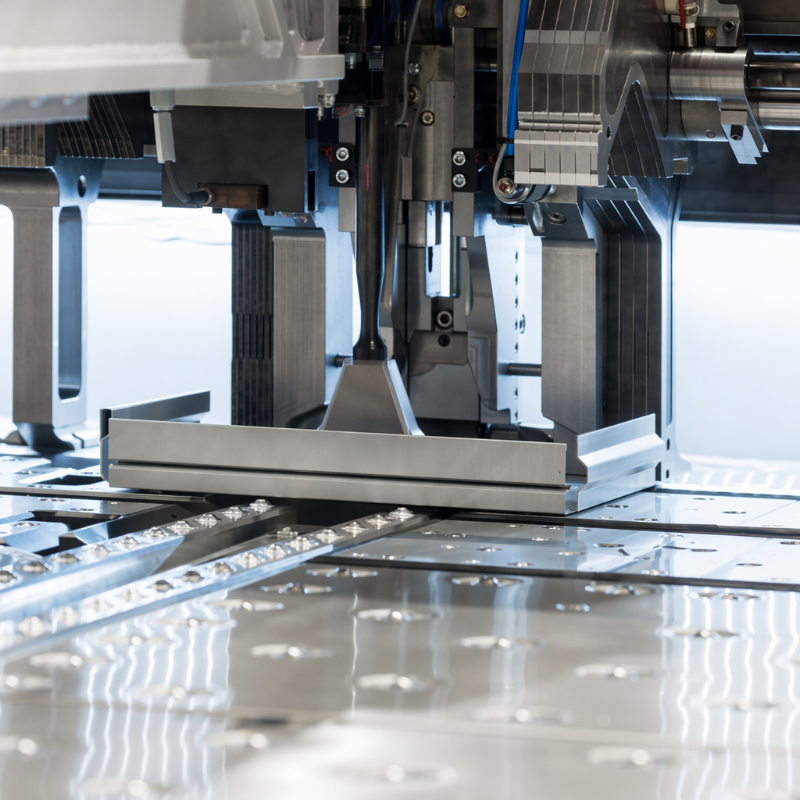
CNC bending uses a press brake to apply controlled force to a metal sheet positioned between a punch and a die. As the punch descends, the metal bends into the required angle or profile. Because the machine is controlled by CNC programming, the operator can set bending angle, bend sequence, backgauge position, and other key parameters with good repeatability.
In practical production, the process usually includes the following steps:
· reviewing the drawing and bend requirements
· selecting the material, thickness, and tooling
· setting the bend program and backgauge positions
· performing trial bends and angle checks
· forming the part according to the bend sequence
· checking dimensions, bend angles, and overall fit
Because many bent parts contain multiple flanges or bend lines, sequence control is important. The order of bends affects tool clearance, part deformation, and whether the final shape can be produced efficiently without interference.
Why Is CNC Bending Widely Used in Sheet Metal Fabrication?
High forming accuracy
CNC bending is valued for producing consistent bend angles and repeatable part geometry. This is especially important for products that must match mating parts, mounting holes, or assembly dimensions.
Good repeatability for production
Once the bending program and tooling are set correctly, CNC bending supports stable repeatability for custom parts and production runs. This helps reduce variation between parts and improves downstream assembly efficiency.
Suitable for many part shapes
CNC bending can form channels, U-shapes, L-shapes, boxes, covers, panels, and many other structures used in sheet metal products. It is one of the most flexible methods for turning flat cut parts into three-dimensional components.
Efficient for custom manufacturing
Because CNC programs can be adjusted for different part sizes and bend sequences, the process works well for both custom samples and batch production. This makes it practical for OEM projects with changing designs or multiple product variants.
Supports downstream fabrication and assembly
Bending accuracy affects welding, hardware insertion, coating, and final assembly. A well-controlled CNC bending process helps ensure the part can move smoothly through the rest of the manufacturing route.
What Materials Can Be CNC Bent?
CNC bending can be used for a variety of sheet metal materials. The right material depends on the product’s function, strength requirements, corrosion conditions, appearance target, and cost goal.
Carbon steel
Carbon steel is commonly used for brackets, frames, cabinets, covers, and general industrial components. It offers a practical balance of strength and cost efficiency, although surface treatment may be needed where corrosion resistance matters.
Stainless steel
Stainless steel is often selected when corrosion resistance, hygiene, and long service life are important. Bent stainless steel parts are widely used in food equipment, medical products, enclosures, and machinery covers.
Aluminum
Aluminum is commonly used where lower weight and good corrosion resistance are priorities. CNC-bent aluminum parts are often found in electronics housings, transport-related products, decorative panels, and lightweight structures.
Galvanized steel
Galvanized steel combines the strength of steel with improved corrosion resistance from its zinc-coated surface. It is widely used for ducts, cabinets, appliance parts, supports, and general industrial products.
Different materials and thicknesses behave differently during bending, so tooling selection, bend radius, springback control, and forming sequence should always be considered together with the product design.
Common Applications of CNC Bending
Electrical and electronic equipment
CNC bending is widely used to produce cabinet parts, control box panels, enclosures, mounting brackets, server rack components, and electrical supports. These products often require accurate bending so that holes, hardware, and mating parts line up correctly.
Industrial equipment
Machine covers, guards, supports, frames, access panels, and custom brackets are commonly made through CNC bending. In these applications, structural fit, dimensional consistency, and assembly convenience are important.
Home appliances
CNC bending is used for appliance panels, internal supports, mounting parts, and protective housings. These parts often need repeatable geometry for stable mass production and reliable assembly.
Construction and HVAC
Bent sheet metal parts are also common in ducts, covers, support components, cabinets, and architectural metal products. Material selection and corrosion conditions often influence both design and process settings.
Transportation and OEM custom products
CNC bending is widely used for transport-related parts, battery housings, custom brackets, light structural components, and many OEM products that require specific angles, shapes, and reliable repeatability.
What Are the Advantages of CNC Bending Compared with Simpler Forming Methods?
Different forming methods have different strengths, but CNC bending is often preferred for custom sheet metal parts because it offers a good balance of control, flexibility, and repeatability.
Compared with simpler or less controlled forming methods, CNC bending is often better suited for:
· parts that require accurate bend angles
· products with multiple bend lines or complex bend sequences
· custom parts with changing dimensions
· short production runs and prototype work
· assemblies that depend on consistent fit
· OEM projects that require repeatable forming quality
For many OEM projects, CNC bending helps reduce forming variation and makes it easier to move from prototype approval to repeat production.
What Affects the Price of CNC Bending?
Material type
Different materials have different costs and forming characteristics. Stainless steel and aluminum may involve different pricing levels and processing considerations compared with carbon steel or galvanized steel.
Material thickness
Thicker materials generally require higher bending force and may affect tooling choice, setup difficulty, and overall processing time.
Part complexity
A simple L-shaped bracket is very different from a part with multiple bends, close flange spacing, tight internal dimensions, or special bend sequences. More complex parts usually require more setup and checking.
Quantity
Production volume affects cost. Larger quantities often improve efficiency, while small custom batches or samples typically carry higher unit cost.
Tolerance and angle requirements
Parts with tighter dimensional or angle requirements may require more setup control, inspection time, and trial adjustment, which can increase total cost.
Additional processing requirements
CNC bending is often one step in a larger fabrication project. If laser cutting, welding, hardware insertion, surface finishing, or assembly are also required, the total project cost will increase accordingly.
For an accurate quotation, buyers should provide drawings, material type, thickness, quantity, bend requirements, tolerances, and any downstream fabrication needs.
Factors to Consider When Purchasing CNC Bending Service
Drawing clarity
A clear drawing helps avoid bending errors and improves setup efficiency. Bend angles, dimensions, tolerances, hole positions, and material specifications should be clearly defined.
Material suitability
The selected material should match the product’s strength, corrosion, appearance, and budget requirements. The supplier should also confirm whether the material is suitable for efficient and stable bending.
Required precision
Different products have different forming requirements. Buyers should communicate clearly whether the part is for general structural use, visible exterior use, or downstream assembly with tight fit requirements.
Downstream fabrication needs
Many bent parts later move into welding, coating, hardware insertion, or final assembly. It is important to consider the full fabrication route rather than only the bending step.
Supplier capability
A reliable supplier should be able to manage bend quality, tooling selection, drawing review, dimensional inspection, and coordination with other fabrication processes. For OEM projects, this is especially important.
Why OEM Buyers Value One-Stop CNC Bending Service
In many projects, buyers do not only need bent parts. They may also need laser cutting, punching, welding, hardware insertion, surface finishing, and final assembly.
When CNC bending is sourced separately from the rest of the fabrication process, buyers may face:
· repeated technical communication
· more supplier coordination
· fit issues in later processes
· higher logistics complexity
· longer project lead time
A one-stop supplier can simplify this by coordinating bending with the full fabrication route. For OEM buyers, this often improves communication, reduces interface problems, and makes sourcing more efficient.
CNC Bending Supplier in China
Lingyufab is a China-based manufacturer providing sheet metal fabrication services for OEM and industrial customers. We support CNC bending for a wide range of custom metal parts and also offer related fabrication processes such as laser cutting, welding, hardware insertion, and surface finishing.
For projects that require more than simple bent parts, working with a supplier that understands the full fabrication process can help improve efficiency and reduce sourcing complexity. This is especially useful for products such as enclosures, brackets, panels, cabinets, covers, and other custom sheet metal components.
If you are looking for a reliable CNC bending supplier in China, Lingyufab can support your project with practical manufacturing solutions based on your drawings, technical requirements, and application needs.
FAQ
What is CNC bending in sheet metal fabrication?
CNC bending is a process that uses a press brake and CNC-controlled positioning to form flat sheet metal parts into specific angles, channels, and three-dimensional shapes with good repeatability.
What materials can be CNC bent?
Common materials include carbon steel, stainless steel, aluminum, and galvanized steel. The best choice depends on strength, corrosion resistance, weight, appearance, and cost requirements.
What are the advantages of CNC bending?
Common advantages include good forming accuracy, repeatability for production, flexibility for custom parts, and better consistency for downstream assembly and finishing.
What affects the cost of CNC bending?
Cost is affected by material type, thickness, part complexity, quantity, tolerance requirements, and whether additional fabrication processes are required.
How do I choose a CNC bending supplier?
You should look for a supplier with suitable equipment capability, drawing review ability, quality control, tooling experience, and good coordination with downstream fabrication processes.
Need CNC bending service for your project?
Send Lingyufab your drawings, material requirements, or product specifications, and our team will help review the design and provide a practical solution for your OEM manufacturing needs.