
 +8613003178786
  sales@lingyufab.com
Sheet Metal Punching
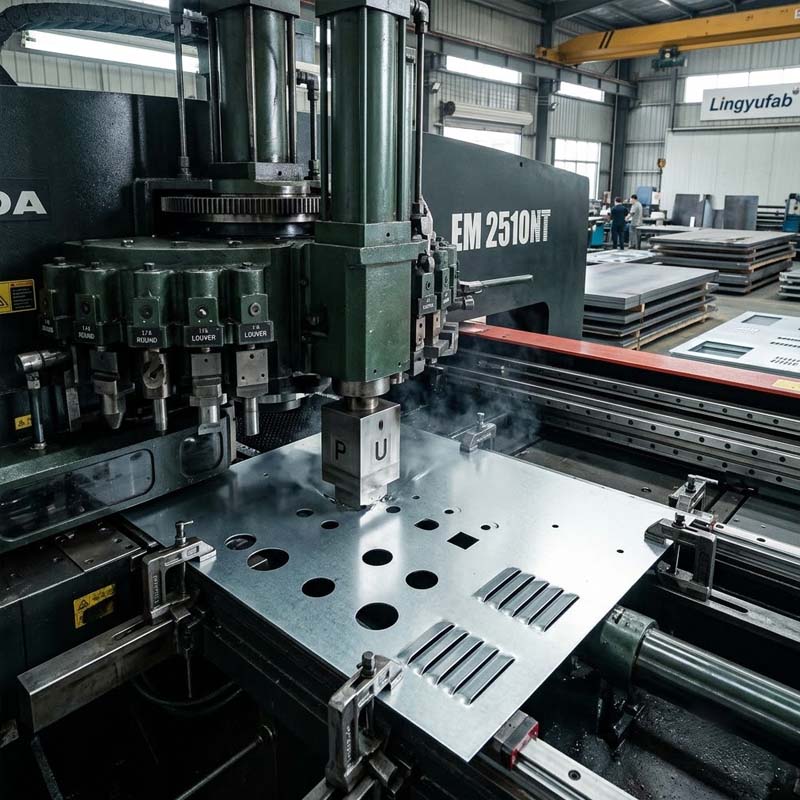
Leading Sheet Metal Punching Service Manufacturer
As a premier custom sheet metal punching manufacturer, Lingyufab deliver high-precision, cost-effective metal components tailored to demanding industrial requirements. Utilizing advanced CNC turret punching presses and automated tooling systems, we support low-to-high volume production with rapid turnaround times and tight tolerances.
China Sheet Metal Punching Manufacturer
Operating out of our state-of-the-art facility in China, Lingyufab combines cost efficiency with rigorous international manufacturing standards (ISO 9001:2015). Our automated production lines, qualified engineering team, and streamlined supply chain enable Lingyufab to provide global OEMs with competitive pricing, consistent quality, and efficient export logistics.
Sheet Metal Punching Techspecs
| Parameter | Capability / Specification |
|---|---|
| Material Thickness Range | 0.5 mm – 6.0 mm (0.020" – 0.236") |
| Standard Punching Tolerance | ±0.05 mm to ±0.10 mm |
| Maximum Sheet Size | 1500 mm × 3000 mm (5' × 10') |
| Press Capacity | 20 Ton – 50 Ton CNC Turret Presses |
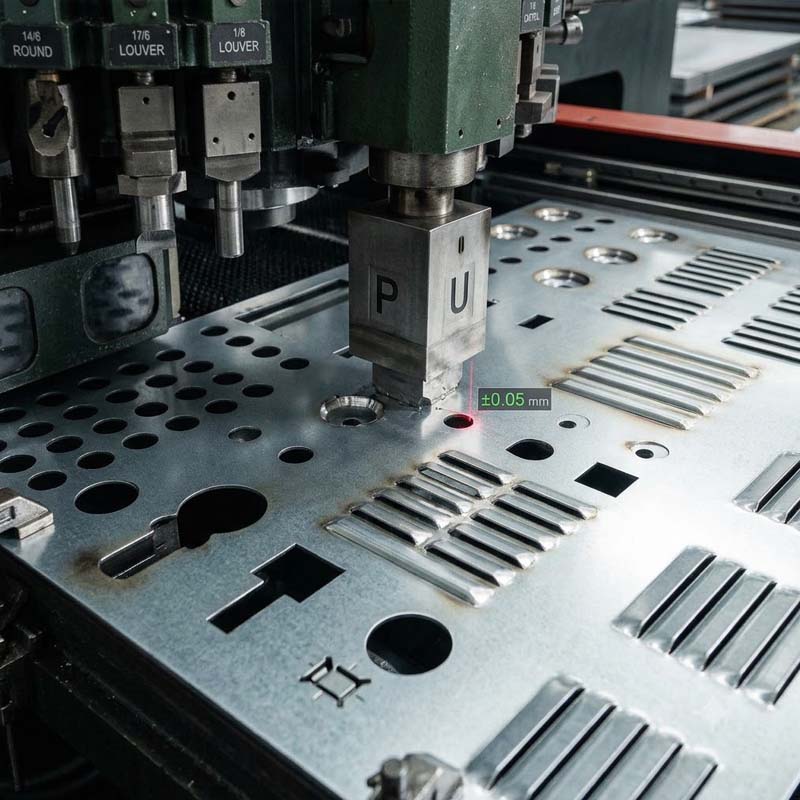
| Tooling Options | Standard shape tools (round, square, oblong), custom progressive dies, forming tools (louvers, dimples, countersinks) |
| Supported Materials | Stainless Steel, Carbon Steel, Aluminum, Brass, Copper, Galvanized Steel |
Features of Sheet Metal Punching
High Speed & Efficiency: Rapid stroke rates make punching significantly faster than laser cutting for repetitive hole patterns and standard shapes. Forming Capabilities: Unlike laser cutting, a punch press can create 3D features such as louvers, card guides, dimples, and countersinks in a single pass. Cost-Effective High-Volume Production: Low per-stroke operational costs make punching the ideal choice for medium-to-large batch runs. Minimal Thermal Impact: A cold mechanical process that eliminates heat-affected zones (HAZ) and thermal distortion.
Applications of Sheet Metal Punching
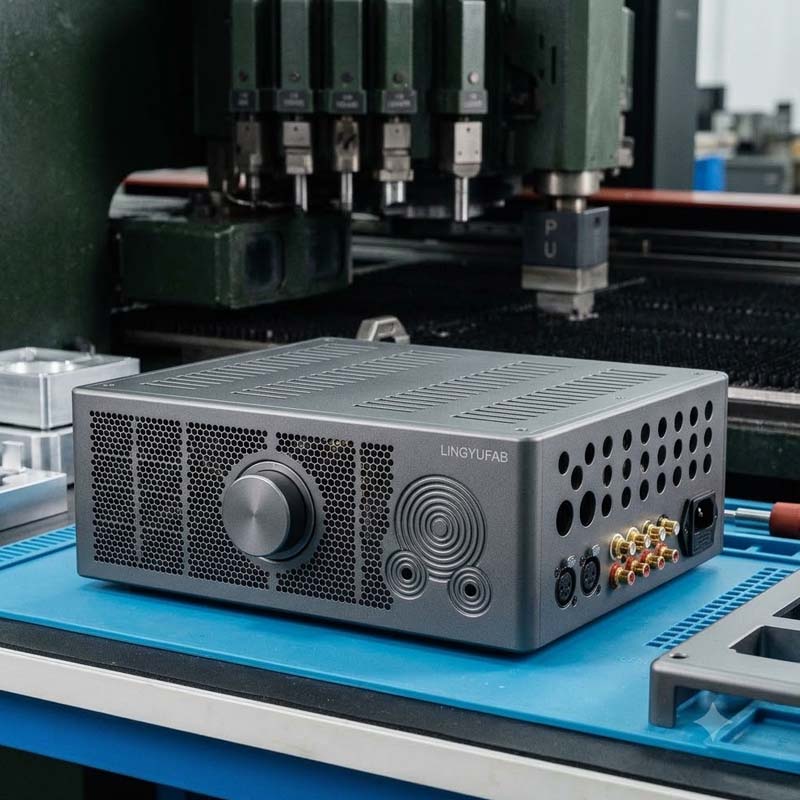
Sheet metal punching is widely deployed across critical industrial sectors: Electronics & Telecom: Server rack panels, chassis, shield cans, and ventilation grilles. Automotive & Transportation: Structural brackets, heat shields, floor panels, and reinforcement plates. HVAC & Appliances: Louvered air vents, fan housings, and cabinet panels. Industrial Equipment: Control box enclosures, conveyor guards, and mounting brackets.
Industry-Leading Precision Sheet Metal Punching Services
As a trusted OEM sheet metal punching specialist, Lingyufab delivers tight-tolerance, highly accurate custom metal components for modern industrial applications. Powered by multi-station CNC turret presses and automated tooling, we efficiently manage prototype runs through high-volume mass production with rapid turnaround times.
China Sheet Metal Punching Services & Manufacturing
Operating from our advanced fabrication facility in China, Lingyufab seamlessly pairs competitive manufacturing costs with rigorous ISO 9001:2015 quality assurance. Our engineering expertise, automated production setups, and robust supply chain network allow us to deliver exceptional value, seamless export logistics, and consistent batch-to-batch quality for global buyers.
Sheet Metal Punching Technical Specifications
| Parameter | Capability / Specification |
|---|---|
| Material Thickness Range | 0.5 mm – 6.0 mm (0.020" – 0.236") |
| Standard Punching Tolerance | ±0.05 mm to ±0.10 mm |
| Maximum Sheet Size | 1500 mm × 3000 mm (5' × 10') |
| Press Capacity | 20 Ton – 50 Ton CNC Turret Presses |
| Tooling Options | Standard shape tools (round, square, oblong), custom progressive dies, forming tools (louvers, dimples, countersinks) |
| Supported Materials | Stainless Steel, Carbon Steel, Aluminum, Brass, Copper, Galvanized Steel |
Custom Sheet Metal Punching Components
We turn your technical 2D/3D CAD designs (STEP, IGES, DWG, DXF) into high-precision punch-formed parts. From straightforward mounting brackets to intricate ventilated enclosures, our flexible tooling strategy helps minimize NRE (non-recurring engineering) and initial tooling expenses.
Integrating Punching into Complete Metal Fabrication
Punching serves as a vital first-stage operation in full-scale sheet metal manufacturing, combining smoothly with secondary downstream processes:
CNC Bending & Press Brake Forming: Transforming flat punched blanks into complex 3D structures.
Laser Cutting Integration: Hybrid workflows where laser cutting shapes intricate outer profiles while punching handles fast matrix hole arrays and forms.
Hardware Insertion & Thread Tapping: Installing PEM fasteners, threaded inserts, or tapped holes right on the press line.
Welding & Sub-Assembly: Joining multiple punched components into complete, ready-to-use assemblies.
What is Sheet Metal Punching?
Sheet metal punching is a cold-forming mechanical process where a CNC punch press drives a hardened punch tool through a metal sheet into a matching die. This shear deformation action cleanly removes material—producing a cutout (the slug) and leaving behind a precisely perforated sheet or finished component blank.
Key Benefits of Sheet Metal Punching
Rapid Production Speeds
High stroke rates make punch presses substantially faster and more economical than lasers when producing repeating hole patterns and standard geometries.
Built-In 3D Forming
Beyond flat cutting, turret presses can execute 3D features—such as louvers, card guides, countersinks, and dimples—in a single handling step.
Lower High-Volume Unit Costs
Extremely fast cycle times yield low per-part costs, making punching the most economical choice for medium-to-large production volumes.
Zero Heat-Affected Zones
As a mechanical shearing process, punching avoids thermal stress, eliminating edge hardening and thermal warping entirely.
Industrial Applications for Sheet Metal Punching
Engineered punch-formed components are critical across a wide range of global sectors:
DFM Design Guidelines for Sheet Metal Assembly
Following key Design for Manufacturability (DFM) rules ensures seamless assembly and prevents material distortion:
1. Minimum Hole Size vs. Thickness (t)
Maintain hole diameters at least equal to material thickness (D ≥ t). For tough stainless steel alloys, aim for D ≥ 1.5t to extend tool life.
2. Hole-to-Hole Distance
Ensure a minimum spacing of 2t between adjacent punched openings to avoid web bulging and wall deformation.
3. Edge Distance Requirements
Position holes at least 2t away from sheet edges or bend lines to prevent outer edge flare during secondary bending.
4. Burr Orientation Consideration
Factor in punch direction during design; punch entry leaves a smooth, rounded edge, whereas punch breakout leaves a micro-burr on the exit side.
Compatible Materials for Sheet Metal Punching
We process a wide range of technical metals to meet specific mechanical and corrosion requirements:
Aluminum Alloys: 5052-H32, 6061-T6, 1100 (lightweight with superb strength-to-weight ratio).
Stainless Steel: 304, 316, 430 grades (exceptional corrosion resistance and structural durability).
Carbon Steel: Cold Rolled Steel (SPCC/CRS), Hot Rolled Steel (SPHC/HRS).
Pre-Coated Steels: Galvanized (GI), Galvannealed (GA), and Electro-Galvanized Steel (SECC).
Copper & Brass Alloys: High-conductivity copper and brass variants (ideal for electrical busbars and terminals).
Precision & Tolerance Standards
Our automated press calibration and controlled tooling clearances guarantee high precision:
Linear Axis Positioning Accuracy: ±0.05 mm across full sheet dimensions.
Hole Center-to-Center Pitch: Controlled within ±0.03 mm to ±0.05 mm.
Precision Die Clearance: Kept within 10% – 20% of sheet thickness to ensure clean shear land and minimal burrs.
Quality Assurance & Inspection Procedures
A rigorous 5-step quality workflow ensures every production batch conforms to drawing tolerances:
Raw Material Verification
Inspecting raw stock thickness, hardness, finish, and Mill Test Reports (MTR).
First Article Inspection (FAI)
Conducting CMM coordinate measurement and optical dimensional checks on initial off-press samples.
In-Line Quality Monitoring
Continuous monitoring with automated press sensors and scheduled operator sampling audits.
Deburring & Surface Inspection
Checking edge quality to verify burr heights stay strictly below threshold limit (<0.05 mm).
Final Pre-Shipment Audit
Thread checking using Go/No-Go gauges, final dimension verification, and coating thickness checks.
Custom Parts Made by Sheet Metal Punching
Representative parts produced via CNC punching include:
Why Choose Us as Your Punching Partner
Collaborating with a full-service custom punching supplier streamlines your production pipeline from initial prototype to mass manufacture. We provide complete manufacturing solutions—including DFM optimization, rapid prototyping, custom die design, post-finish options (powder coating, anodizing, plating), and complete sub-assembly.
Frequently Asked Questions (FAQ)
Q1: What is the main difference between sheet metal punching and laser cutting?
A: Punching relies on mechanical force and die tooling, making it exceptionally fast and cost-effective for large production runs with standard shapes, dense hole patterns, or 3D forms (like louvers). Laser cutting uses a thermal light beam to cut highly intricate or constantly changing shapes without needing hard tooling, making it best suited for low-volume runs or complex outer profiles.
Q2: Can CNC punch presses produce 3D features like louvers or countersinks?
A: Absolutely. Equipping CNC turret punch presses with specialized forming dies enables single-operation creation of countersinks, card guides, louvers, ribs, dimples, and extrusions without requiring secondary machining steps.
Q3: How do you prevent and minimize burrs during the punching process?
A: We control burrs by using precisely sharp tool punch sets, maintaining material-specific die clearance, and utilizing secondary mechanical deburring processes (such as vibratory finishing, tumbling, or wide-belt sanding) whenever specified.
Small Batch Sheet Metal Fabrication with No Minimum Order
Small batch sheet metal fabrication with no minimum order. Prototypes to production. One-stop service.
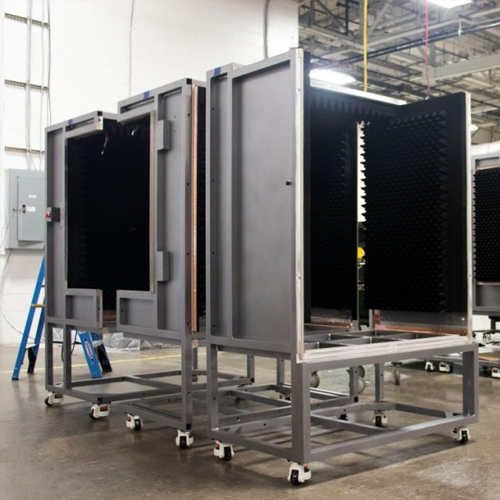
6 Key Steps in Sheet Metal Fabrication Process
Professional sheet metal fabrication involves systematic steps from design review to final delivery. This article introduces the 6 key processes in sheet metal manufacturing.
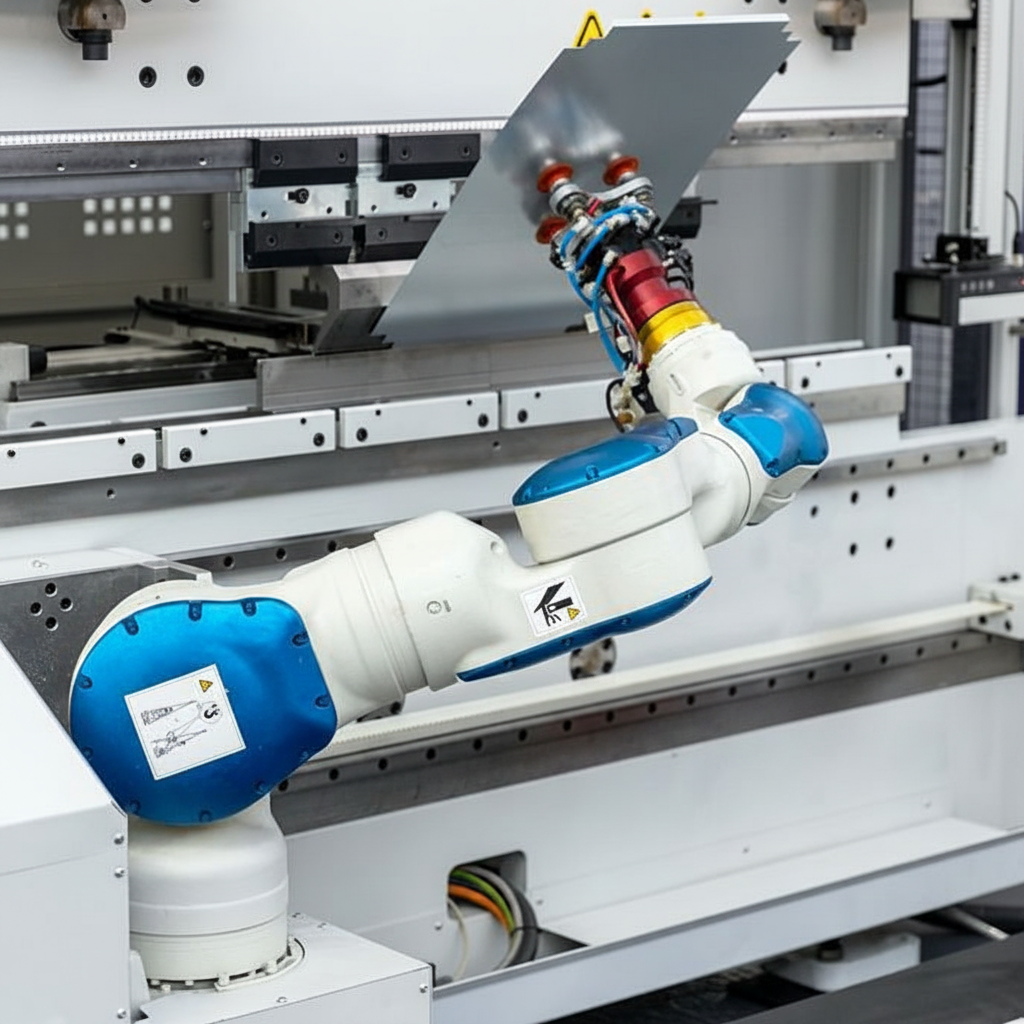
What Is Sheet Metal Fabrication?
Sheet metal fabrication is the process of cutting, bending, welding, and assembling metal sheets into finished parts and products. Learn the main processes, materials, applications, pricing factors, a
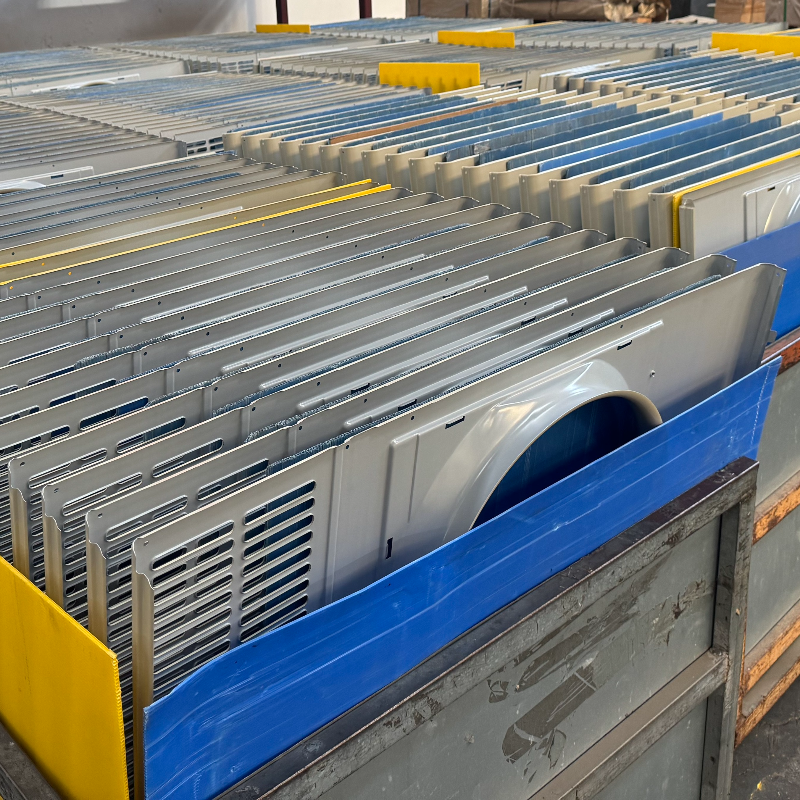
What Are Three Common Types of Sheet Metals?
Learn about three common types of sheet metals—aluminum, stainless steel, and galvanized steel. Explore their features, applications, pricing factors, and sourcing considerations for OEM projects.