
 +8613003178786
 sales@lingyufab.com
Compare Metal Fabrication Supplier Quote Scope
26
Nov 2026
Why Two "Comparable" Quotes Rarely Cover the Same Work
You send one drawing to three shops and get three prices back. The lowest is 12% under the others, so you award the PO. Six weeks later the parts arrive unfinished, the material certificate is missing, and the freight invoice lands on your desk. That is the sourcing risk of comparing totals instead of scope.
A quote is a bundle of assumptions. One supplier prices bare laser-cut and bent parts. Another includes deburring, powder coating, inspection reports and export cartons. Putting those totals side by side tells you nothing until each line is brought to the same basis. The steps below suit any metal fabrication supplier you are evaluating, including us.
Lingyufab (Shanghai Lingyu Industry) has made sheet metal parts and fasteners since 2003. Our Global Custom Sheet Metal Fabrication Service covers laser cutting, CNC bending, stamping, TIG/MIG welding and surface finishing, working from your technical drawings. Because cutting through welding and assembly sit under one roof, we can put every cost line in a single quote. Competing quotes are easier to read when the process steps are not split across several vendors.
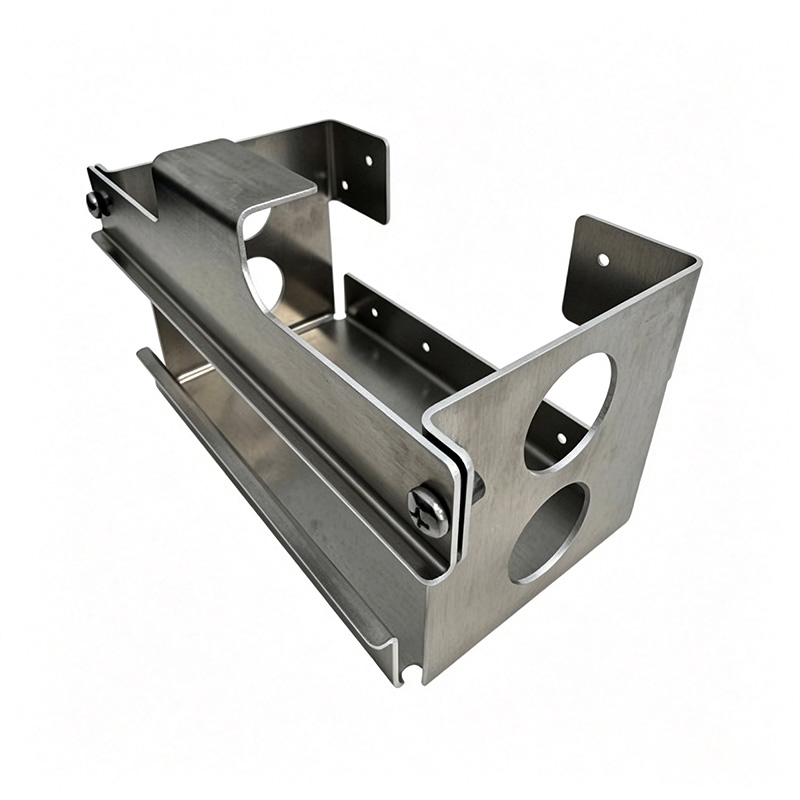
Cost Ownership Table: Material, Tooling, Inspection, Finishing, Packaging and Freight
Quote normalization means assigning an owner to every cost line. If a line is blank, the cost has not vanished. It has moved to you. Ask each supplier to fill the table below, and add any missing items to the quote that left them out.
| Cost line | Question to ask | Common gap | How to normalize |
|---|---|---|---|
| Material | Which grade and thickness? Is an MTC supplied per batch? | "Stainless" quoted without stating 304 or 316; no certificate | Re-price to the grade on your drawing; add MTC as a required line |
| Tooling | Are fixtures, dies or welding jigs included, amortized or one-time? Who owns them afterwards? | Tooling excluded, then billed after PO | Add tooling as a separate one-time cost and spread it over expected volume |
| Inspection | What is checked, how often, and is a report issued? | Sampling only, or "inspection available on request" | Compare the inspection scope; price a reporting requirement on any quote that omits it |
| Finishing | Which process, coating spec and masking areas? | Deburring, plating or powder coat left out | Add a finishing cost per part, or per batch if outsourced |
| Packaging | Export carton, divider, pallet or loose pack? | Standard packing assumed, with damage risk on coated or thin parts | Define packing in the RFQ and price it on every quote |
| Freight | Which Incoterm: EXW, FOB, CIF or DDP? Who handles customs? | EXW compared against delivered prices | Convert every quote to one Incoterm before ranking |
The right column is where savings turn out to be apparent. A supplier that leaves out finishing and inspection can look 10% cheaper, yet you pay for both later, plus the coordination time. This method does not apply when you already hold a tooling or freight contract of your own. In that case, remove those lines from every quote rather than adding them.
Worked Example: A Lower Quote Becomes the Higher One
The numbers below are illustrative index values, not a Lingyufab quotation. Take a stainless steel bracket assembly with a bent flange and two weld nuts.
| Line (index points) | Supplier A | Supplier B |
|---|---|---|
| Quoted price as received | 100 | 112 |
| Finishing (passivation) not included | +9 | included |
| Inspection report not included | +4 | included |
| Export packing not included | +3 | included |
| Converted from EXW to FOB | +6 | included |
| Normalized total | 122 | 112 |
Supplier A started 12 points below B and finished 10 points above. The reverse can also happen: if B's finishing is priced above market, A may still win. The point is that you can only tell after the lines match. Run this exercise on your own shortlist before any commercial discussion.
Process and Tolerance Items That Change the Price
Cost lines cover commercial scope. Technical scope matters just as much, because tolerance and process assumptions drive scrap, rework and fit-up at your assembly line. From a DFM standpoint, these are the items I confirm first on any drawing.
- Tolerance basis. Does the supplier quote to the tolerances on your drawing, or to a general standard? We work to tolerances down to ±0.05mm where the part and process allow. Tight dimensions should be flagged on the drawing, and the quote should state them.
- Cutting method. Sheet metal laser cutting suits profile accuracy and short runs. Stamping suits repeat volumes once die cost is spread. A quote should say which one it assumes.
- Bending. Complex bend geometries need correct tooling selection and bend allowance. See how our sheet metal bending service handles this, then compare the questions your other suppliers answer.
- Welding and hardware. TIG or MIG, spot or laser, and whether nuts, studs or self-clinching fasteners are installed in-house or bought separately.
- Material grade. 304 and 316 stainless, carbon steel and aluminum price very differently. A generic "SS" or "steel" line is a warning sign.
These checks do not replace a drawing review. Where a part has unusual geometry, ask each supplier for a short DFM note and compare how specific the answers are.
Common Mistakes When Awarding to the Lowest Quote
- Comparing totals with different Incoterms. An EXW price against a FOB or delivered price is not a comparison.
- Accepting "per drawing" as scope. Drawings rarely state finishing masks, packing method or inspection frequency. Write them into the RFQ.
- Ignoring tooling ownership. If you pay for a die or fixture, confirm in writing that it stays available to you and what happens if you move production.
- Skipping traceability. Without a Mill Test Certificate for each batch, you cannot verify the material grade after the fact. Add it to the RFQ as a requirement.
- Reading lead time as one number. Check whether it counts from PO, from drawing approval or from material arrival.
- Splitting cut, bend, weld and finish across vendors without pricing the handoffs. Each transfer adds freight, queue time and a place for responsibility to blur.
Evidence to Request From Any Metal Fabrication Supplier
Once scope is matched, qualification decides the winner. Ask every metal fabrication supplier for documents rather than descriptions. This is what we can provide against each concern.
| Buyer concern | Evidence to request | What Lingyufab supplies |
|---|---|---|
| Quality system | Current certificates | ISO 9001:2015, ISO 14001 and TÜV CE certification |
| Process discipline | Customer-audited standards | Mitsubishi Electric certified core supplier, working to strict Japanese quality standards |
| Dimensional conformity | Inspection scope and report | 100% dimensional and visual inspection before shipment |
| Material identity | Mill test certificates | MTC for every batch, with full material traceability |
| Defect handling | Written remedy terms | Free replacement or repair for issues caused by manufacturing defects |
For enclosures and control hardware, the same logic applies at assembly level. Our sheet metal assemblies and custom electrical control boxes are quoted with cutting, bending, welding, hardware and finishing in one document. In-house integration also removes intermediary margin and extra logistics, which is how we reduce overall cost by 15-20% on suitable projects. Whether your part qualifies depends on its drawing, so treat that range as a starting point for discussion, not a quote.
Cooperation Terms to Agree Before You Place the PO
Some terms come from our standing conditions. Others must be settled per project.
- Order size. We set no minimum order quantity for prototyping. A one-piece prototype, a 100-piece pilot run and mass production are handled with the same rigor.
- Lead time. Samples typically take 7-10 days and bulk orders 20-30 days. Urgent orders can be handled in as little as 48 hours when the drawing, material and finishing allow it. Actual dates are confirmed in the quote and depend on part complexity.
- Volume changes. We run multiple flexible production lines, and can raise output by 30%-50% within a short period when a surge is planned with us in advance. Share your forecast early so material and scheduling are set up.
- To agree per project: acceptance criteria and who signs off, the Incoterm, finishing specification, packing method, tooling ownership, and the inspection report format you need.
Not every project follows a sample-then-bulk path. Some buyers go straight to a pilot batch, and others only need repeat orders. Tell us which applies and we will quote that route.
Decision Checklist Before You Award
- Normalize every quote to one Incoterm and one currency.
- Confirm the material grade (for example 304 or 316 stainless) and certificate requirement on each quote.
- Fill the cost ownership table for material, tooling, inspection, finishing, packaging and freight.
- Check that stated tolerances match the drawing, including any ±0.05mm features.
- Compare inspection scope and report format, not only the word "inspected".
- Get lead time defined from a named start point.
- Obtain written defect and rework terms.
- Rank by normalized total, then by evidence quality.
If you want to see how your RFQ looks on this basis, send us your drawings, target quantity, material grade, finishing requirement and preferred Incoterm. Our engineering team will return a scoped quote that states every cost line separately, so you can set it beside your other offers. Request a quote or a prototype and we will respond with the details needed to start.

