+8613003178786
 sales@lingyufab.com
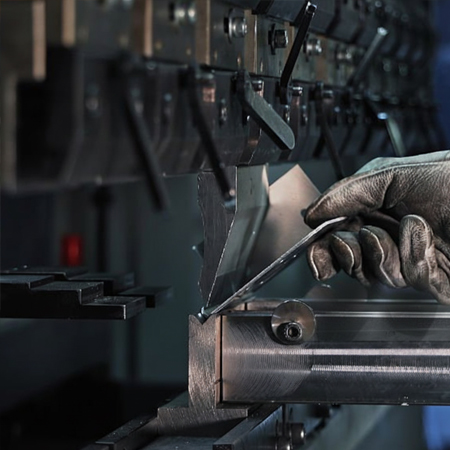
Beyond the Spec Sheet: Evaluating True Precision Capability
Selecting the right manufacturing partner is a critical decision, especially for complex assemblies with strict fit and function requirements. Many procurement managers start by comparing spec sheets, looking for the lowest advertised tolerance. The problem? A fabricator’s stated tolerance for a single process, like laser cutting, rarely reflects the final accuracy of a finished part. This is a common pitfall when trying to figure out how to choose a sheet metal fabricator for precision work.
The real challenge lies in how a supplier manages the accumulation of variances across multiple manufacturing stages. A part isn't just cut; it's bent, welded, deburred, fitted with fasteners, and coated. Each step introduces a new potential for deviation. A true Global Custom Sheet Metal Fabrication Service partner demonstrates their value not by the tolerance of one machine, but by their control over the entire production chain. Choosing a partner who masters this integrated process is the difference between a successful product launch and costly rework, delays, and assembly line failures.
Why Published Tolerances Fail: The Reality of Tolerance Stack-Up
A fabricator might advertise a laser cutting tolerance of ±0.05mm, which sounds impressive. However, that number only applies to a flat, 2D pattern. For any part with three-dimensional features, such as an enclosure or bracket, that initial precision is just the starting point. The final dimensional accuracy depends on how well the fabricator controls the full sequence of operations. This is known as sheet metal tolerance stack-up.
Each subsequent process—bending, welding, finishing—adds its own layer of variance. These deviations accumulate, and the final part's tolerance can be significantly larger than any single process tolerance listed on a spec sheet. A supplier who doesn't actively manage this stack-up cannot reliably deliver parts that meet tight functional requirements.
Example: Tolerance Stack-Up on a Simple Bracket
Consider a U-shaped steel bracket that needs to fit precisely within an assembly. The critical dimension is the final internal width between the two bent flanges.
| Manufacturing Stage | Process Tolerance | Impact on Final Dimension |
|---|---|---|
| Laser Cutting | ±0.05mm | The initial flat pattern is highly accurate. This is the baseline. |
| CNC Bending | ±0.1° angle, ±0.15mm flange length | A tiny angular error or a slight shift in the bend line directly impacts the final width. Two bends can compound this error. |
| Welding (for stiffeners) | ±0.3mm (due to heat distortion) | The heat from welding can cause the material to warp or shrink, pulling the flanges inward or pushing them outward. |
| Powder Coating | +0.06mm to +0.12mm per surface | The coating adds thickness to the inside surfaces, reducing the final internal width. Uneven application creates more variance. |
In this scenario, the initial ±0.05mm precision is lost. The final accumulated tolerance could easily exceed ±0.5mm, a 10x increase from the initial cutting tolerance. This is why evaluating a precision sheet metal fabricator requires looking past the marketing numbers and into their process control capabilities.
A Buyer's Checklist for Assessing a Fabricator's Process Control
To avoid sourcing parts that fail final inspection, your evaluation must focus on a supplier's ability to manage the entire manufacturing ecosystem. Use this checklist to ask deeper questions during your qualification process.
1. Is Manufacturing Vertically Integrated?
A supplier who outsources key processes like bending, welding, or finishing introduces multiple points of failure. Each handoff adds logistical complexity, communication gaps, and another layer of tolerance stack-up. At Lingyufab, our complete in-house fabrication and assembly—from laser cutting and Leading Sheet Metal Bending Service Manufacturer to welding and fastener installation—eliminates these issues. This vertical integration is how we reduce overall project costs for our clients by 15-20% by removing intermediaries.2. How is Quality Managed In-Process?
Final inspection is too late to catch a problem. Ask potential suppliers about their in-process quality control (IPQC) checkpoints. Do they verify dimensions after bending, before parts move to welding? Do they use fixtures to check assemblies before they are sent for finishing? Our ISO 9001:2015 certified system includes 100% dimensional and visual inspection at critical stages, not just before shipment, ensuring deviations are caught and corrected early.3. Do They Integrate Fastener and Assembly Expertise?
For sheet metal assemblies, the location and installation of fasteners are critical. A fabricator who also manufactures or has deep expertise in fasteners understands the interplay between hole tolerances, material hardness, and installation pressure. This dual expertise prevents issues like parts warping during self-clinching fastener installation or misaligned weld nuts. Our capabilities cover everything from standard Fasteners to complex Custom Self-clinching Integrated Components, ensuring seamless integration.4. What is Their Approach to Prototyping and Scaling?
A partner should be able to support your project from concept to mass production. Ask how they ensure that the process used for a 10-piece prototype run is the same, scalable process used for a 10,000-piece order. We offer zero MOQ for prototyping phases and maintain the same rigorous quality standards, whether it's a single part or a full production run of over 8,000 units per month. This approach ensures a smooth transition from R&D to full-scale manufacturing without costly requalification.
Common Mistakes When Sourcing for Tight Tolerances
Even experienced engineers can make oversights when under pressure to find a supplier quickly. Here are some common mistakes to avoid when you need to source tight tolerance sheet metal fabrication.
Focusing Solely on Per-Piece Price: A low per-piece price from a fabricator with poor process control often leads to higher total costs. These hidden costs come from rejected parts, assembly line downtime, project delays, and the engineering time spent resolving quality issues. A vertically integrated partner might have a slightly higher piece price but delivers a lower total cost of ownership.
Ignoring Material Traceability: For applications requiring specific performance, material consistency is non-negotiable. Always demand full material traceability with Mill Test Certificates (MTCs) for every batch. As a certified supplier to demanding clients like Mitsubishi Electric, we provide full MTCs to guarantee that the specified grade of carbon steel, stainless steel (304/316), or aluminum is used every time.
Underestimating the Importance of Communication: Is the supplier’s project management team responsive and technically fluent? Delays in communication or misunderstandings about technical drawings can derail a project. As a PMP-certified project manager, my role is to bridge our Shanghai facility with global clients, ensuring clear communication and seamless project execution from RFQ to delivery.
Choosing a Different Supplier for Prototypes and Production: Using a local "quick-turn" shop for prototypes and then switching to a mass-production supplier for the final run often introduces new variables and requires a complete re-validation of the part. This doubles the effort. Choosing a partner like Lingyufab, who handles both with the same rigor, streamlines your product development lifecycle.
Avoiding these mistakes requires shifting your mindset from sourcing a part to selecting a manufacturing partner. A good partner acts as an extension of your own engineering team, providing DFM feedback and proactively managing quality throughout the production process.
If your project demands functional precision beyond a simple spec sheet, our engineering team is ready to review your technical drawings and discuss how we manage tolerance control from start to finish. Submit your RFQ to see how our integrated approach can benefit your next project.