
 +8613003178786
 sales@lingyufab.com
OEM Sheet Metal Fabrication: When Does Tooling Pay Off?
The Sourcing Risk: Paying for a Die You Did Not Need, or Skipping One You Did
Two mistakes cost buyers the most money. The first is releasing a tooling PO before the design is stable. The second is running a part on laser-and-bend for years after volume has passed the point where a die would have paid for itself. Neither shows up on the first quote. Both show up in year two.
This guide gives sourcing managers a way to decide before committing. We work with OEM sheet metal fabrication programs that move from a single prototype to repeat production, and the question is always the same: at what volume does dedicated tooling beat flexible processing?
Lingyufab (Shanghai Lingyu Industry) has made sheet metal parts and fasteners since 2003. Our prototyping phase carries zero MOQ, so a 1-piece sample and a 100-piece pilot run both go through the same leading sheet metal prototyping manufacturer workflow. That matters here because tooling decisions should be made with real pilot data, not drawing-stage guesses.
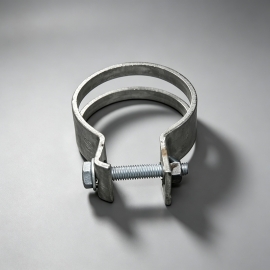
Tooling Routes Compared: Laser and Bend, Soft Tooling, Progressive Die
"Tooling" covers three different commitments. Treating them as one is a common reason quotes look inconsistent.
| Route | Upfront cost | Piece price | Design-change cost | Best fit |
|---|---|---|---|---|
| Laser cutting + CNC bending (no dedicated die) | Programming and bend fixtures, low | Highest per piece | Very low. Edit the program. | Prototypes, pilot runs, High-Mix Low-Volume, designs still changing |
| Soft or single-station tooling | Moderate | Mid | Moderate. Insert or punch changes. | Stable features, medium repeat volume, a few shared hole patterns |
| Progressive or dedicated stamping die | Highest | Lowest per piece | High. Die rework or a new station. | Frozen design, steady annual demand, multi-year programs |
Our precision sheet metal laser cutting services and press brake lines cover the flexible end. For the dedicated end, our sheet metal punching and stamping capability applies. Because both sit in one facility, we can quote the same part both ways and let the numbers decide.
When the flexible route should stay
- Conclusion: Stay on laser-and-bend when annual demand is low or the design is still moving.
- Reasoning: A die amortizes only over repeat pieces. A revision to a hole position or bend line can leave a die obsolete.
- Fits: Enclosure prototypes, brackets with unreleased mounting patterns, customized low-volume variants.
- Limits: This stops being the cheaper choice once recurring piece-price savings exceed the combined tooling, maintenance and inventory costs. The model below shows where.
Five-Year Break-Even Model: Piece-Price Savings vs. Tooling, Setup, Engineering-Change and Inventory Costs
The mistake in most tooling quotes is comparing only the piece price. A five-year model splits the economics into recurring savings and one-time or semi-recurring costs, so each can be challenged separately.
The figures below are illustrative assumptions, not Lingyufab price quotes. Replace them with the quotes you receive. The structure matters more than the numbers.
Step 1: Separate recurring from one-time items
| Cost element | Type | Illustrative input | Applies to |
|---|---|---|---|
| Piece-price saving (laser+bend $4.20 vs. die-stamped $2.60) | Recurring, per piece | $1.60 per piece | Savings side |
| Tooling build and first-article approval | One-time | $18,000 | Die route |
| Die maintenance (sharpening, wear parts) | Recurring, per year | $1,000 per year | Die route |
| Extra stock from larger production lots | Recurring, per year | 2,500 extra pieces × $2.60 × 20% carrying cost = $1,300 per year | Die route |
| One engineering change (die modification) | Event-based | $3,000 in year 2 | Die route (program edit only on laser route) |
Step 2: Run the cumulative cash position at 12,000 pieces per year
| Year | Piece-price savings | Maintenance + inventory | Tooling / change | Cumulative net |
|---|---|---|---|---|
| 0 (tool build) | $0 | $0 | –$18,000 | –$18,000 |
| 1 | $19,200 | –$2,300 | $0 | –$1,100 |
| 2 | $19,200 | –$2,300 | –$3,000 | $12,800 |
| 3 | $19,200 | –$2,300 | $0 | $29,700 |
| 4 | $19,200 | –$2,300 | $0 | $46,600 |
| 5 | $19,200 | –$2,300 | $0 | $63,500 |
At this volume the tool pays back around month 13. The break-even point is simply tooling cost divided by net annual saving.
Step 3: Test the volume sensitivity
| Annual volume | Net annual saving after maintenance and inventory | Five-year result (including tool and one change) | Reading |
|---|---|---|---|
| 3,000 pcs | $2,500 | –$8,500 | Stay on flexible processing |
| 4,100 pcs | about $4,260 | about $0 | Break-even at five years |
| 6,000 pcs | $7,300 | $15,500 | Tooling pays, with moderate margin |
| 12,000 pcs | $16,900 | $63,500 | Tooling clearly pays |
Under these assumptions, the break-even volume is roughly 4,100 pieces per year. Treat that as a screening threshold, not a rule. A part with complex bends may need extra die stations that raise tooling cost. A part made from 304 stainless instead of carbon steel changes die wear and maintenance assumptions.
Where the model stops applying
- If you expect more than one engineering change, add each event to the table. Two changes in the example above raise the break-even to about 4,700 pieces per year.
- If demand is irregular, the inventory line grows and the saving shrinks.
- If features such as ±0.05mm tolerances need secondary operations after stamping, add that cost to the die-route piece price before comparing.
Buyer's Checklist Before Releasing a Tooling PO
- Design freeze: Has the drawing passed pilot-run validation without a revision for at least one build cycle?
- Volume evidence: Do you have a forecast with a supporting contract or purchase history, not only a target?
- Quoted both ways: Have you received a laser-and-bend quote and a tooled quote for the same drawing and material?
- Tolerance feasibility: Are tight features (for example ±0.05mm) achievable directly from the die, or do they need a secondary step?
- Ownership terms: Is it written down who owns the tool, who stores it and who pays for repair?
- Change plan: Is there a known cost and lead time for a die modification?
Common mistakes
- Ordering a die on the strength of a prototype that has not been through a pilot run.
- Comparing a die price to a prototype piece price instead of a production-quantity laser-and-bend price.
- Ignoring inventory: larger lots lower the piece price but tie up cash and warehouse space.
- Leaving tool life, maintenance responsibility and storage out of the contract.
- Putting a die on a part likely to change. Hybrid parts, such as a control box with a stable base and a variable cover, can use tooling on only the stable component. See our custom electrical control boxes for the kind of assemblies where this split applies.
What Lingyufab Can Support, and What Still Needs Agreement
The right supplier for this decision can run both routes under one quality system and compare them honestly. These are the facts that bear on a tooling decision.
| Buyer concern | Supporting fact |
|---|---|
| Can the flexible route be tested cheaply before committing to a die? | Zero MOQ for prototyping. Samples typically take 7-10 days. |
| Is production timing predictable once tooling is approved? | Bulk orders typically take 20-30 days. We deliver over 8,000 fasteners and sheet metal assemblies monthly. |
| Can demand spikes be handled without a second supplier? | Our flexible production lines can raise output by 30%-50% within a short period through scheduling and resource allocation. |
| Is quality documented? | ISO 9001:2015 certified. 100% dimensional and visual inspection before shipment. Mill Test Certificates for every batch. |
| Is the quality standard credible for demanding customers? | Mitsubishi Electric certified core supplier, working to Japanese quality standards. |
| Does a single supplier lower total cost? | Fabrication and assembly are done in-house, which reduces overall costs by 15-20% by removing intermediaries and extra logistics. |
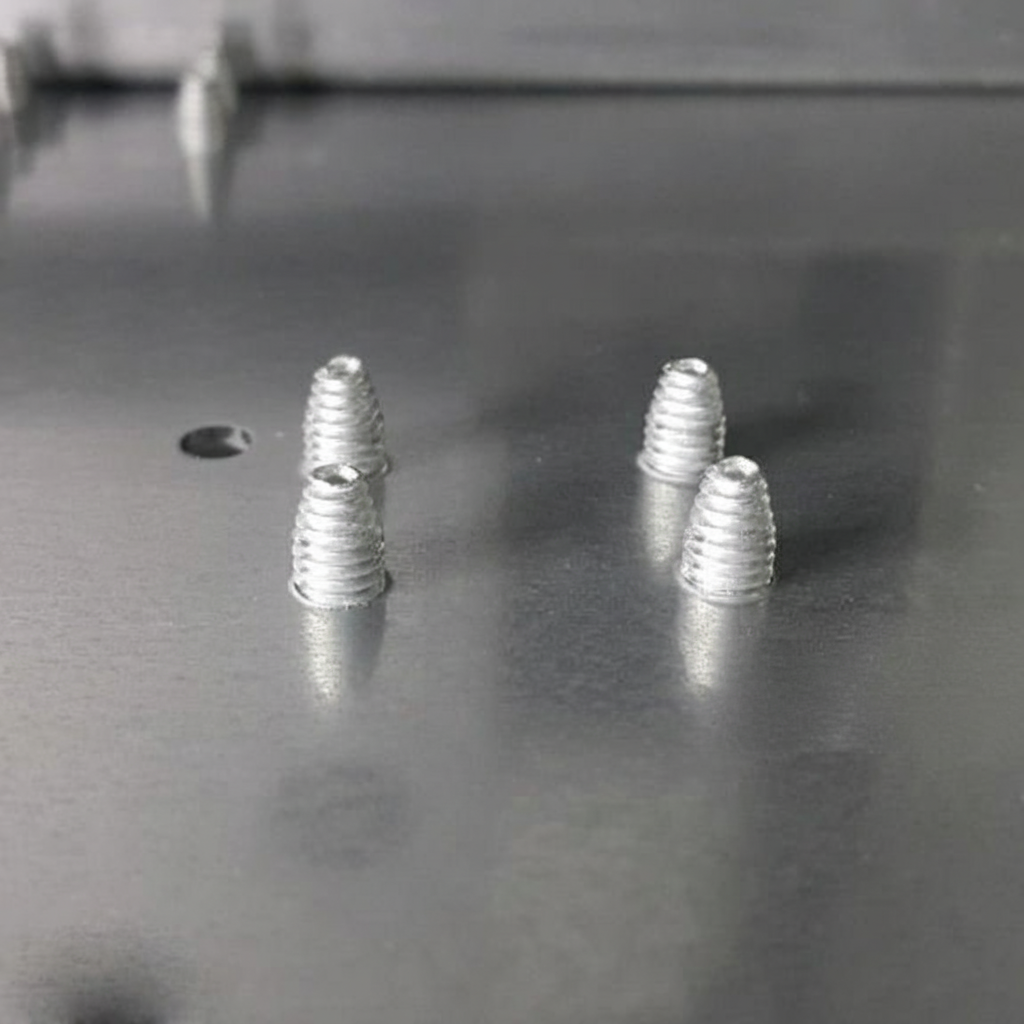
For assemblies that include fasteners or inserts, custom self-clinching integrated components can also change the tooling question. Installing hardware in-house avoids a separate vendor and can simplify the die design.
Items to agree before a tooling order
These are matters to settle in writing. They are not claims about a standard practice.
- Tool ownership, storage location and what happens if the program ends.
- Expected tool life in strokes, and who covers wear-part replacement.
- Acceptance criteria for first articles, including critical tolerances and material grade (carbon steel, 304 or 316 stainless, aluminum).
- How engineering changes are quoted, approved and scheduled.
- Replacement or repair terms for manufacturing defects. We offer free replacement or repair when a quality issue is caused by a manufacturing defect.
Send Your Forecast and Drawings for a Two-Route Cost Comparison
To check whether your part has passed the break-even point, send the drawing, material grade, expected annual volume and how often you expect revisions. Our engineering team will help assess whether laser-and-bend, soft tooling or a dedicated die suits your OEM sheet metal fabrication plan. Request a quote through the contact form on Lingyufab.com.