
 +8613003178786
 sales@lingyufab.com
Pick Sheet Metal Manufacturing Services for Mixed Volumes
Start by Checking Whether the Supplier Can Support the Entire Part-Family Ramp
Before issuing an RFQ, OEM sourcing teams should confirm one point that is easy to miss: can the supplier move the same part family from a one-piece prototype to recurring production without forcing a change in process, quality evidence, or assembly responsibility? A low initial quote is less useful if the supplier can only support the pilot build.
When selecting sheet metal manufacturing services for mixed volumes, assess the supplier against the parts you expect to source six months later, not only the first engineering batch. This matters for brackets, control boxes, chassis, front panels, enclosures, heat sinks, and installed-hardware assemblies where a small drawing revision can affect bend sequencing, welding access, hardware installation, surface finish, and final inspection.
Lingyufab is a sheet metal and fastener manufacturer established in 2003, supporting OEM and ODM requirements from prototypes through recurring production. Our work includes laser cutting, CNC bending, stamping, TIG/MIG welding, surface finishing, and integrated assembly. Buyers sourcing enclosures and multi-part frames can review our Enclosure Chassis Assemblies scope when deciding whether to keep fabricated parts, installed hardware, and final assemblies under one supplier.
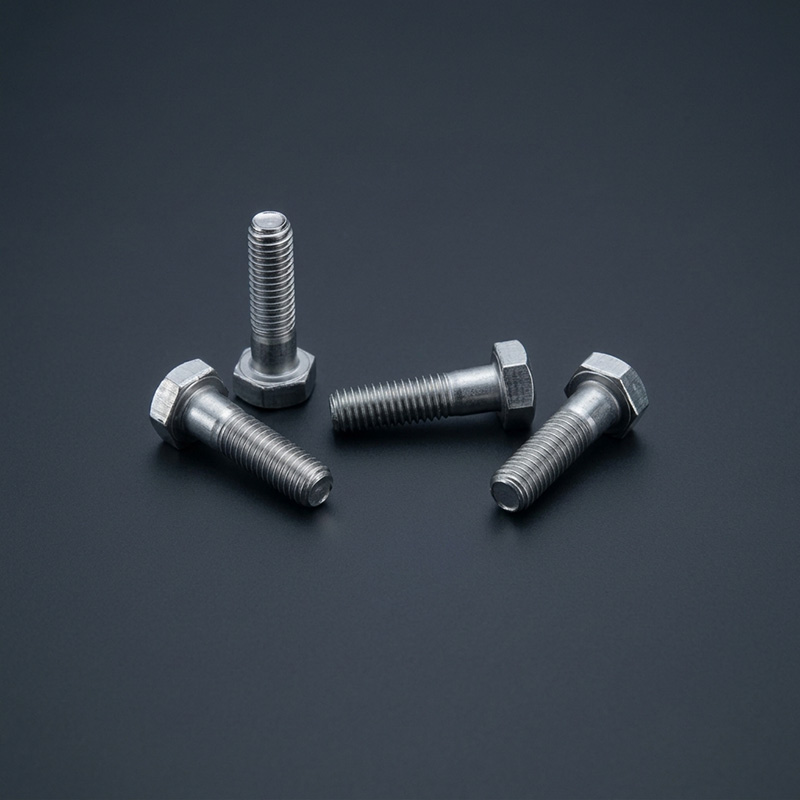
Recommendation: shortlist suppliers that can manufacture the part, install the required fasteners, and inspect the finished assembly under one defined scope. This approach fits programs where engineering samples will become recurring orders. It may not be necessary for a simple flat blank with no forming, hardware, or assembly content, where a specialized single-process source may be adequate.
For mixed-volume programs, request evidence of capability in the materials and operations actually shown on your drawings. Lingyufab processes carbon steel, aluminum, and stainless steel including 304 and 316. Its documented fabrication capability reaches tolerances down to ±0.05 mm for suitable requirements. That figure should be treated as a requirement to discuss against the specific feature, material, bend geometry, and inspection method; it is not a blanket tolerance for every dimension on every part.
Match the Production Route to Prototype, Bridge, and Repeat Volumes
A supplier should not use one production approach for every stage. The right route depends on how stable the drawing is, whether the design is still changing, and how often the part will be reordered. Buyers should make these distinctions clear in the RFQ rather than sending only an annual forecast.
| Program stage | What the buyer should request | Why it matters | When this route is less suitable |
|---|---|---|---|
| Prototype | Flexible fabrication from the released drawing, stated material, finish, and acceptance criteria | Engineering teams can validate fit, access, and assembly before committing to a repeat-order plan | Not ideal when the design is already frozen and repeat demand requires dedicated production planning |
| Bridge build | Repeatable process details, controlled revision status, agreed inspection points, and a realistic release schedule | Bridge lots expose variation that may not appear in a one-piece sample | Less useful when production demand is uncertain and revisions are still frequent |
| Recurring production | Capacity discussion, batch traceability, defined packaging needs, installed-hardware requirements, and shipment acceptance terms | Repeat orders depend on stable execution, not only successful first articles | May be premature for an unproven design with unresolved functional changes |
Recommendation: request separate quantities for the prototype, bridge, and recurring phases in the same RFQ. State whether the quantities are one-time, monthly, or forecasted recurring demand. This gives a supplier a usable basis for choosing laser cutting, CNC bending, stamping, welding, and assembly resources. It also reduces the risk that a prototype price is mistakenly used as the basis for a repeat-production decision.
Lingyufab offers zero MOQ during the prototyping phase, including one-piece prototypes and 100-piece pilot runs. This is a practical fit for OEM teams validating a product family before scheduling broader production. Samples typically require 7–10 days, while bulk production typically requires 20–30 days. Urgent orders may qualify for 48-hour rapid delivery, but buyers should confirm whether their material, forming, welding, finishing, and quantity requirements fit that service scope before relying on it.
Where parts need formed features, review the supplier’s Leading Sheet Metal Bending Service Manufacturer capabilities alongside cutting and welding. A supplier that only prices the blank may not be able to control bend geometry, installed hardware location, or welding distortion in the completed part.
Identify When a Prototype Workflow Breaks Down During Repeat-Production Ramp-Up
A prototype workflow breaks down when the supplier can produce isolated parts but cannot demonstrate how repeat orders will be controlled. The warning signs often emerge after the first sample is accepted: the drawing version changes informally, hardware is sourced separately, inspection records are absent, or the supplier has no stated plan for recurring capacity and batch traceability.
Conclusion: do not treat a successful prototype as proof that a supplier is ready for repeat production. The prototype proves that a part can be made. Repeat production requires evidence that the same requirements can be maintained through multiple orders. This distinction applies most strongly to welded assemblies, tight-tolerance brackets, electrical control boxes, chassis, and assemblies with nuts, studs, screws, or other installed fasteners. It is less significant for a low-risk, one-off cosmetic panel with no planned reorder.
| Prototype-stage signal | What fails during ramp-up | Evidence to request before award | Buyer action |
|---|---|---|---|
| The supplier quotes only the first small quantity | Recurring pricing and lead time are unclear | Separate prototype, bridge, and repeat-volume quotation assumptions | Provide expected reorder frequency and quantity ranges |
| Fabrication and hardware installation are quoted separately | Assembly responsibility shifts between vendors | Defined scope for installed nuts, studs, screws, and sub-assemblies | Identify every supplied and installed component on the BOM |
| Only a visual sample is reviewed | Critical dimensions vary between batches | Inspection criteria for tolerance-sensitive features | Mark critical dimensions and acceptance limits on the drawing |
| No material documentation is included | Material traceability cannot be checked later | Mill Test Certificates for each batch where required | State MTC requirements in the RFQ and purchase order |
| Welds are accepted only on the first unit | Weld access, fit-up, or distortion changes across repeat builds | Weld locations, cosmetic requirements, and inspection expectations | Clarify which weld features are functional and which are cosmetic |
Lingyufab performs 100% dimensional and visual inspection before shipment and provides MTC traceability for every batch. These controls are especially relevant when a part moves from engineering approval to repeat orders, because the buyer can tie material documentation and final checks to defined shipments. If a quality issue results from a manufacturing defect, Lingyufab offers free replacement or repair. Buyers should still agree on the part-specific acceptance criteria, reporting route, and disposition process before production begins.
For assemblies requiring integrated nuts or studs, ask whether the supplier can keep fabrication and hardware work within one controlled scope. Examples include Custom Self-clinching Integrated Components and welded hardware sub-assemblies. This is useful when the assembly must arrive ready for the next OEM operation. It may not apply when the customer has a mandated hardware source that must remain separate.
Use Certifications and Quality Evidence to Qualify Production Readiness
Quality claims should be converted into documentary questions. For a mixed-volume sourcing decision, certifications matter because they indicate that the supplier has a defined management framework; they do not replace drawing-specific controls, dimensional requirements, or incoming material requirements.
Lingyufab holds ISO 9001:2015, ISO 14001, and TÜV CE certifications. It is also a Mitsubishi Electric certified core supplier and follows strict Japanese quality standards. These are relevant trust signals for OEM buyers that need a documented quality orientation while sourcing industrial automation, energy, automotive, server, and electrical enclosure parts.
Recommendation: use certification status as a supplier-screening requirement, then qualify the order through records tied to your own parts. This fits regulated or quality-sensitive OEM supply chains where a generic brochure is not enough. Certification alone does not establish that a particular enclosure, welded frame, or machined feature meets your drawing, so the RFQ must still define the technical acceptance standard.
Ask for material identification: specify carbon steel, aluminum, 304 stainless steel, or 316 stainless steel exactly as required by the drawing and BOM.
Define tolerance-sensitive features: identify hole positions, bend relationships, mounting interfaces, and assembly references that need special attention. Do not assume every feature needs ±0.05 mm.
Specify inspection expectations: state whether dimensional, visual, material, or assembly checks are needed for each shipment.
Request MTCs where applicable: Lingyufab can provide Mill Test Certificates for every batch, but the purchase documentation should make this requirement explicit.
Control revisions: provide the drawing revision, CAD file revision, BOM revision, and any approved deviation in the RFQ package.
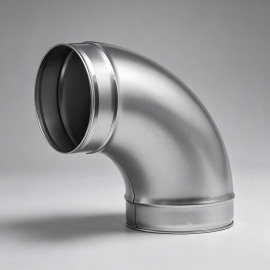
This approach is particularly useful for Custom Electrical Control Boxes, where cutouts, mounting points, fasteners, and final assembly interfaces can all affect downstream installation. For a straightforward single-piece bracket with no material traceability requirement, the documentation package may be lighter, but revision and dimensional requirements should still be clear.
Compare Supplier Scope Before Assuming the Lowest Unit Price Is the Lowest Cost
For mixed volumes, the lowest quoted unit price can hide extra handling between a cutting vendor, a bending shop, a welding supplier, a hardware installer, and a final inspection point. The sourcing team should compare total supply scope rather than placing each process into a separate quote without considering added coordination.
Lingyufab’s in-house fabrication and assembly model covers laser cutting, CNC bending, stamping, TIG/MIG welding, surface finishing, and integrated fastener installation. By reducing intermediaries and extra logistics, its vertical integration can reduce overall costs by 15–20%. This figure is a stated selling point for the integrated model, not a universal saving for every project. Actual results depend on the existing supply chain, part design, supplier split, and assembly content.
| Supply model | Buyer coordination burden | Best fit | Limit to consider |
|---|---|---|---|
| Multiple process suppliers | Buyer manages transfers, specifications, and responsibility between vendors | Programs with established specialist suppliers and stable internal coordination resources | More handoffs can complicate defect ownership and schedule control |
| Integrated fabrication and assembly supplier | One source manages the agreed fabrication and assembly scope | Chassis, brackets, enclosures, control boxes, and parts with installed fasteners | Buyer must confirm each required process and supplied component is inside the quoted scope |
Recommendation: ask each bidder to list what is included and excluded: material, cutting, forming, welding, finishing, fasteners, assembly, inspection, packaging, MTCs, and shipment terms. This fits any RFQ with more than one operation. It is less necessary for a part that genuinely requires only one manufacturing step, although material and inspection scope should still be documented.
Issue an RFQ That Lets Suppliers Plan for Both Flexibility and Repetition
A well-structured RFQ lets suppliers identify whether they are a fit before time is spent on rework. It also gives procurement a consistent basis for comparing quotations. The following process is designed for OEM teams moving a part family from pilot builds to recurring orders.
Separate the part family by maturity. Mark each line as prototype, bridge build, or recurring production. Do not combine all quantities into one unexplained total.
Attach controlled technical files. Include 2D drawings, 3D models where available, BOMs, revision references, material grades, finish requirements, and critical dimensions.
State the manufacturing scope. Identify whether laser cutting, CNC bending, welding, stamping, finishing, installed hardware, or final assembly is required.
List quality evidence needed. Specify dimensional inspection, visual inspection, MTCs, and any customer-specific records required for release.
Provide quantity ranges and timing. State first sample quantity, pilot quantity, expected recurring quantity, and required delivery window. This allows a realistic discussion of the typical 7–10 day sample period and 20–30 day bulk period.
Ask for assumptions and boundaries. Require the supplier to identify open technical points, exclusions, supplied components, and conditions that could change cost or lead time.
Review ramp readiness before award. Compare each supplier’s ability to maintain material traceability, inspection scope, assembly responsibility, and capacity as orders repeat.
Lingyufab delivers more than 8,000 fasteners and metal sheet assemblies monthly and supports high-mix, low-volume production. This is relevant for part families that include changing configurations or a mix of low and recurring quantities. It does not remove the need to confirm available capacity for a buyer’s own launch date, part complexity, and forecast.
Use This Shortlisting Checklist Before Sending Drawings
The right supplier is not simply the one that can make a prototype. The right fit is the one whose documented scope matches the next production stage you expect to reach.
Can the supplier support the required material, including 304 or 316 stainless steel where specified?
Can it perform the needed laser cutting, CNC bending, welding, finishing, and assembly operations within the quoted scope?
Does the supplier offer a workable route for one-piece prototypes, pilot quantities, and recurring production?
Are tolerance-sensitive features clearly identified, with a realistic basis for any ±0.05 mm requirement?
Can the supplier provide 100% dimensional and visual inspection before shipment?
Are MTCs required, and can they be tied to each batch?
Will installed fasteners, such as nuts, bolts, screws, and washers, be supplied and fitted under one responsibility?
Are sample, bulk, and urgent-order timing expectations confirmed rather than assumed?
Does the quote identify exclusions, revision assumptions, packaging requirements, and acceptance terms?
Submit your drawings, material requirements, and prototype-to-repeat volume plan to request a quote from Lingyufab.

