
 +8613003178786
 sales@lingyufab.com
Qualify OEM Sheet Metal Fabrication for Multi-Part Builds
Screen the Supplier’s Scope Before You Release an RFQ
A multi-part build can fail even when every individual component appears acceptable. A chassis may be dimensionally correct but misalign with its mounting brackets. A front panel may fit the enclosure yet show inconsistent surface appearance after assembly. Installed fasteners may match the bill of materials but interfere with internal wiring or a mating cover.
Before issuing an RFQ for OEM sheet metal fabrication, procurement and engineering teams should confirm whether a supplier can manufacture, inspect, and document the complete group of interdependent parts. The sourcing risk is not simply selecting a shop that can cut metal. It is selecting a production partner that can control interfaces between enclosures, brackets, panels, welded frames, hardware, and sub-assemblies.
Lingyufab supports OEM buyers requiring sheet metal products, sheet metal assemblies, enclosures and cabinets, control boxes, server racks, brackets, mounting plates, chassis, frames, front panels, bezels, heat sinks, and custom fasteners. Established in 2003, we provide OEM and ODM manufacturing support from prototype work through production volumes. Our in-house process scope includes laser cutting, CNC bending, stamping, TIG/MIG welding, surface finishing, and assembly.
For buyers sourcing housings and interconnected structural parts, review our Enclosure Chassis Assemblies and Sheet Metal Assemblies to define the type of integrated build your program requires. If the design includes interface brackets, the relevant qualification question is whether the fabricator can produce the bracket and its mating enclosure from one controlled drawing set; see our Custom Mounting Brackets capability.
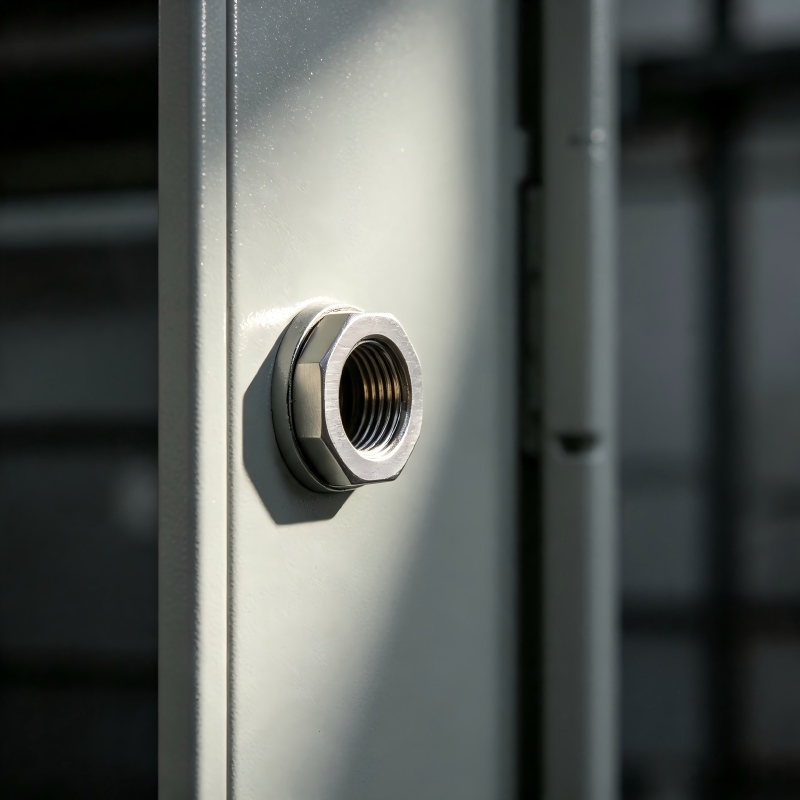
Set the first-pass qualification criteria
Use the following screen before requesting pricing. The conclusion is simple: a supplier should remain on the shortlist only if its stated capability matches the actual interfaces in your build. This approach fits programs with several fabricated parts that must assemble together. It is less relevant for a single, non-mating flat blank with no finish, hardware, or traceability requirement.
| Buyer question | What to verify | Why it affects multi-part builds | When it matters most |
|---|---|---|---|
| Can the supplier make the full part family? | Confirm laser cutting, CNC bending, stamping, welding, finishing, and assembly scope against your BOM. | Each outside handoff creates another opportunity for revision mismatch, handling damage, or unclear accountability. | Enclosures, frames, panels, brackets, and hardware-installed assemblies. |
| Can it control tight interfaces? | Ask which features can be held to the stated tolerance requirement and how mating features are identified on drawings. | Fit depends on the relationship between multiple parts, not on one part measured in isolation. | Rack assemblies, electrical control boxes, machine guards, and chassis. |
| Can it provide material records? | Request confirmation of Mill Test Certificates for the material batch and define the documents required at shipment. | Material evidence must remain linked to the supplied parts when traceability is required. | Programs using carbon steel, aluminum, or stainless steel 304/316. |
| Can it install hardware within the fabrication scope? | Identify clinching, stud, nut, bolt, or other installed hardware on the BOM. | Hardware position can affect cover clearance, tool access, electrical spacing, and final assembly. | Panels, electronics housings, fan cases, and mounting structures. |
Lingyufab processes carbon steel, stainless steel including 304 and 316, and aluminum. For applications that require installed fastening features, buyers can also compare Pre Installed Hardware And Sub Assemblies with their own assembly drawings before requesting a quotation.
Assess Process Capability Against the Interfaces That Actually Matter
The right fabrication route depends on what creates the assembly interface. Do not evaluate laser cutting, bending, welding, and hardware installation as unrelated line items. Instead, map each process to a fit, finish, or functional requirement in the finished unit.
For example, a server chassis can include folded rails, a removable front panel, welded internal supports, and fastener locations for electrical modules. In that scenario, the buyer should qualify the alignment relationship among those parts, not merely ask whether the supplier offers bending and welding. This is suitable for equipment enclosures and structural assemblies. It does not replace product-level validation of electronics, airflow, sealing, or other performance requirements that lie outside the supplied fabrication scope.
Match manufacturing methods to part-level risks
Laser cutting: Select this process when profiles, openings, tabs, slots, and cutout locations establish the starting reference for downstream bends or hardware. The qualification limit is that a cut profile alone does not prove assembled fit; ask how mating features will be checked after forming.
CNC bending: Use CNC bending when flange geometry, panel returns, and formed mounting surfaces govern how parts join. It fits cabinets, covers, chassis, and brackets. It does not by itself settle whether a drawing provides sufficient bend references or clearance for installed hardware.
Stamping: Consider stamping where the part design and volume are appropriate for that route. Ask the supplier to identify whether the quoted method changes between prototype and production. This matters where repeatability and part economics must be reviewed together.
TIG/MIG welding: Specify welded joints when the design needs permanent structural joining. Define cosmetic, dimensional, and access expectations in the RFQ because weld placement can affect both appearance and mating surfaces.
Surface finishing: Treat finish as an assembly requirement when adjacent panels must present a consistent visual result. Provide finish callouts, protected surfaces, masking needs, and acceptance criteria. A finishing request without those details leaves room for different interpretations.
Fastener installation: List every installed item, location, and orientation. Where designs use nuts or bolts, review available Fasteners and identify whether the component is supplied loose or installed in the fabricated part.
Lingyufab can support tight tolerances down to ±0.05 mm where the drawing and part design require that control. The conclusion for buyers is not that every feature needs this level of control. Apply it to mating datums, hardware positions, alignment slots, and other features that determine assembly fit. Applying a tighter-than-needed tolerance broadly can add cost without improving the product. Conversely, leaving an interface tolerance undefined is unsuitable when a panel, frame, or bracket must mate with another fabricated part.
A Sourcing Action Plan for Validating Whether One Supplier Can Control Fit, Finish, and Documentation Across Interdependent Fabricated Parts
Use this action plan to test whether one supplier can take responsibility for a multi-part fabrication package. The conclusion is practical: assess the package as a connected system of parts and records. This method fits OEM teams shortlisting a production partner before an RFQ. It is not intended to replace your internal design review, final product qualification, or any customer-specific regulatory review.
| Step | Buyer action | Evidence to request or define | Decision point and limitation |
|---|---|---|---|
| 1. Build an interface register | List every part-to-part interface: panel-to-chassis, bracket-to-frame, cover-to-enclosure, and hardware-to-mating component. | Drawing numbers, revisions, mating feature references, visible surfaces, and installed hardware locations. | Proceed only when all mating relationships are visible to the supplier. A BOM alone may not show interface intent. |
| 2. Identify control features | Mark datums, mounting holes, slots, bend edges, weld zones, and hardware positions that affect assembly. | Feature-specific tolerances and inspection priorities. | Use ±0.05 mm only where design requirements support it. Not all features need the tightest available tolerance. |
| 3. Align materials and finish | State material grade, finish requirement, and any surfaces that must remain free of marks or welding effects. | Material callouts such as stainless steel 304/316 where applicable, plus finish acceptance criteria. | Proceed when the requirement is written. Material names without grade, finish, or part linkage leave open questions. |
| 4. Confirm process ownership | Ask which fabrication, welding, finishing, and assembly activities will be managed within the proposed scope. | A process-by-part matrix tied to your BOM. | A supplier may be suitable for fabrication but not for every downstream activity. Confirm boundaries before award. |
| 5. Define document package | State which records must accompany the shipment. | Material MTCs, drawing revision identification, inspection requirements, and shipment documentation. | MTCs support material traceability; they do not replace defined dimensional acceptance requirements. |
| 6. Agree acceptance method | Set the inspection focus for dimensions, visual condition, installed hardware, and assembly fit. | Clear acceptance criteria connected to drawings and purchase order terms. | Inspection cannot resolve an undefined cosmetic standard or an unspecified mating condition. |
| 7. Review prototype or pilot results | Use the first build to confirm fit, revision control, and finish expectations before broader release where appropriate. | Approved changes, controlled drawings, and open-item ownership. | This step suits new or revised designs. It may not be required for an established, unchanged production package. |
Lingyufab provides 100% dimensional and visual inspection before shipment and supplies full material traceability with Mill Test Certificates for every batch. For a buyer, this has practical value when the inspection criteria and document list are agreed before production. It should not be read as a substitute for specifying what dimensions, visual features, and records matter to your program.
Our ISO 9001:2015, ISO 14001, and TÜV CE certifications provide relevant qualification evidence for buyers reviewing manufacturing controls. We are also a Mitsubishi Electric certified core supplier and follow strict Japanese quality standards. These facts are particularly relevant for industrial automation, energy, and equipment programs where repeatability, controlled documentation, and consistent communication across multiple components are procurement priorities.

Compare Cost Exposure: One Controlled Package Versus Fragmented Purchasing
A low unit price on one bracket or panel does not automatically create the lowest program cost. For multi-part builds, the decision should include engineering coordination, logistics, inspection effort, rework exposure, and the time required to resolve a cross-supplier fit issue.
The conclusion is to compare total handling effort rather than only quoted piece price. This is most useful where parts are assembled together or require installed hardware. It may not apply when parts are unrelated, already standardized, and intentionally sourced from separate approved suppliers.
| Cost factor | Fragmented sourcing effect | Single integrated fabrication scope | Buyer check |
|---|---|---|---|
| Engineering coordination | Several suppliers may interpret revisions and interface notes separately. | One supplier can work from one connected drawing and BOM package within its agreed scope. | Confirm how revisions will be identified and released. |
| Inter-part fit issue | Responsibility can be difficult to establish when mating parts come from different sources. | One accountable fabrication package reduces handoffs between related manufactured parts. | Define which assembly relationships are included in the quote. |
| Shipping and receiving | More deliveries can increase handling and internal receiving effort. | Combined delivery can reduce intermediate logistics for the included parts. | Confirm packaging, part separation, and delivery grouping requirements. |
| Quality documentation | Records may arrive separately and use inconsistent identifiers. | Material and inspection records can be organized around a unified production package. | State the required document format and part traceability method. |
| Overall cost | Piece-price savings can be offset by added coordination and logistics. | Lingyufab’s in-house vertical integration can reduce overall costs by 15–20% by removing intermediaries and extra logistics. | Evaluate this against your exact BOM and commercial terms; it is not a fixed saving for every order. |
The 15–20% cost reduction is relevant where integrated manufacturing replaces multiple intermediaries and repeated logistics steps. It should be validated against the actual number of parts, shipment arrangement, finish needs, and assembly scope. Buyers should not use it as a blanket target for a single simple component.
Verify Cooperation Terms, Capacity Fit, and Open Boundaries
Supplier qualification also depends on whether commercial terms match the program stage. For early engineering work, an inflexible minimum order quantity can force procurement to buy more than the design warrants. For production, an unclear lead-time discussion can create avoidable planning risk.
Lingyufab has zero MOQ during the prototyping phase, supporting a one-piece prototype, a 100-piece pilot run, or subsequent mass production with the same manufacturing rigor. Standard samples typically require 7–10 days, while bulk production typically requires 20–30 days. For urgent orders, 48-hour rapid delivery is available under applicable order conditions. Buyers should treat these as planning references and confirm the lead time for their material, process route, drawing maturity, and required documentation rather than assuming the same timing applies to every build.
For ongoing production, Lingyufab delivers more than 8,000 fasteners and metal sheet assemblies monthly. We also operate flexible production lines and can increase output by 30%–50% in a short period through scheduling and resource allocation when demand surges. This capacity information is most relevant when a buyer expects changing release quantities. It does not remove the need to communicate forecasts, target delivery dates, and any sudden volume change as early as possible.
Questions to settle before supplier nomination
Scope: Which fabricated parts, fasteners, welded items, and sub-assemblies belong in the supplier’s quotation?
Revision control: What drawing revision, BOM revision, and change approval method will govern the purchase order?
Fit acceptance: Which interfaces must be checked as a mating set rather than as separate dimensions?
Finish acceptance: Which surfaces are cosmetic, protected, hidden, or subject to special handling?
Documentation: Which MTCs, inspection records, labels, and shipment documents are required for each release?
Commercial stage: Is the request a prototype, pilot run, recurring production order, or urgent requirement?
Quality response: Confirm the remedy process for manufacturing defects. Lingyufab offers free replacement or repair where a quality issue is caused by a manufacturing defect.
For builds involving outdoor cabinets, internal structural parts, or electrical housings, ensure that the intended product scope is stated in the RFQ. Buyers can reference Custom Sheet Metal Components for Outdoor Electrical Enclosures and Custom Electrical Control Boxes when preparing part families with related enclosure and mounting requirements.
Use an RFQ Package That Lets the Supplier Quote the Whole Build
The most effective RFQ package gives the supplier enough information to quote the relationship between parts, not just the parts themselves. The conclusion is straightforward: send a controlled package that exposes fit, finish, hardware, and documentation needs early. This fits complex OEM programs and reduces clarification cycles. It is more detailed than necessary for a single standard fastener purchase with no assembly connection.
Provide all current drawings and identify the revision for every part.
Include a BOM that identifies fabricated parts, purchased hardware, installed hardware, and sub-assembly quantities.
Mark mating parts and explain functional interfaces such as alignment, mounting, removable covers, or visible panel joints.
State materials, including carbon steel, aluminum, or stainless steel 304/316 where applicable.
Define finish requirements and identify surfaces that need appearance control.
List requested documents, including MTC requirements and any inspection records needed with shipment.
State the required order stage: prototype, pilot, normal production, or urgent release.
Ask the supplier to identify assumptions, excluded operations, and points requiring engineering clarification.
Submit your drawings and BOM for a quote on a controlled multi-part fabrication package.

