
 +8613003178786
 sales@lingyufab.com
Reduce Rework With One-Stop Sheet Metal Solutions
Why Do My Sheet Metal Parts Keep Coming Back for Rework?
When a sheet metal assembly fails inspection, the immediate cause might be a misaligned weld, a surface finish flaw, or an incorrect bend angle. The root cause, however, is often systemic. It lies in a fragmented supply chain where cutting, bending, welding, and finishing are handled by separate vendors. Each handoff is a potential point of failure, creating communication gaps, inconsistent quality standards, and a frustrating cycle of rework that inflates costs and delays project timelines. An effective strategy for sheet metal rework reduction requires looking beyond individual defects to the process itself.
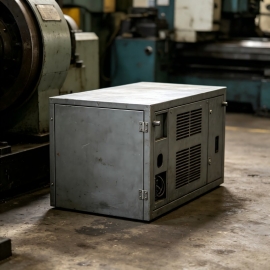
This is where one-stop sheet metal solutions offer a structural advantage. By consolidating all fabrication processes under a single, quality-certified roof, you eliminate the variables that lead to compounding errors. At Lingyufab, our integrated approach ensures that every step, from initial laser cutting to final assembly, is managed by one team with total accountability. As an ISO 9001:2015 certified manufacturer and a core supplier for Mitsubishi Electric, we apply strict Japanese quality standards across our entire production line, giving our clients a single point of contact for guaranteed results.
Quality Gaps: Integrated vs. Fragmented Fabrication Chains
The core difference in fabrication quality control between a single-source supplier and a multi-vendor network is accountability. When an issue arises in a fragmented chain, determining ownership is difficult. Did the bender receive incorrectly cut parts? Did the welder have to compensate for a poor fit-up? Did the finisher apply a coating over a contaminated surface? This ambiguity leads to disputes, delays, and costly rework.
An integrated partner owns the entire process. A quality issue is simply an internal problem to be solved, not a liability to be passed to another company. The feedback loop is immediate. Our engineers can walk from the welding station back to the CNC bending press to resolve a tolerance issue in minutes, not days. This table maps the critical differences in inspection ownership and defect management.
| Fabrication Stage | Fragmented Supply Chain (Multiple Vendors) | Integrated Supply Chain (Single Partner like Lingyufab) |
|---|---|---|
| 1. Laser Cutting / Punching | Inspection: Vendor A checks their own work. Defect Ownership: If Vendor B (Bending) finds an out-of-spec cut, a dispute begins. Production halts pending resolution and part replacement. | Inspection: Internal QC checks against the master drawing. Defect Ownership: The same team is responsible. If a cut is off, it's corrected immediately before moving to the next stage. No delay. |
| 2. CNC Bending / Forming | Inspection: Vendor B checks their bends. Defect Ownership: A bend angle error might be blamed on material variance from Vendor A or an ambiguous drawing. Who pays for the scrap? | Inspection: In-process checks ensure bend angles and radii meet the print, including compensation for material spring-back. Defect Ownership: Our process engineers own material and machine behavior, ensuring consistent results. |
| 3. Welding & Fastener Installation | Inspection: Vendor C checks weld penetration and fastener placement. Defect Ownership: Poor fit-up from Vendor B can cause weld distortion. Wrong fasteners from a separate supplier (Vendor D) can cause assembly failure. The blame game intensifies. | Inspection: Certified welders and assembly technicians work from a single project file. Defect Ownership: We manage both sheet metal fabrication and fastener manufacturing, ensuring perfect compatibility. This is a core part of our Global Custom Sheet Metal Fabrication Service. |
| 4. Surface Finishing (Powder Coating, Plating) | Inspection: Vendor E checks coating thickness and adhesion. Defect Ownership: If the coating fails, was it due to poor surface preparation by Vendor C or an improper application process by Vendor E? | Inspection: Surface preparation and finishing are controlled steps in one continuous workflow. Defect Ownership: We manage the entire surface treatment process, ensuring proper cleaning, priming, and application for maximum durability. |
| 5. Final Assembly & Inspection | Inspection: Your team performs the final inspection, discovering tolerance stack-up issues from all previous vendors. Defect Ownership: You are left to coordinate rework across 3-5 different suppliers, losing weeks of time. | Inspection: We perform 100% dimensional and visual inspection before shipment. Defect Ownership: Full accountability. If any issue arises from a manufacturing defect, we provide free replacement or repair. |
How to Avoid Sheet Metal Rework: A Buyer's Checklist
Proactive planning is the most effective way to minimize rework. Before issuing an RFQ, use this checklist to ensure your project requirements are clear and your potential supplier is equipped to meet them. This reduces ambiguity and sets the foundation for a successful manufacturing partnership.
✔ Drawing & CAD File Clarity: Are all dimensions, tolerances, material specifications, and finish requirements clearly defined on the technical drawings? Ensure your 2D prints and 3D models are consistent. Ambiguity is the primary source of error.
✔ Specify Critical-to-Quality (CTQ) Dimensions: Not all tolerances are equal. Clearly highlight the most important features for your assembly's function. This helps the manufacturer prioritize inspection points. We can consistently hold tight tolerances down to ±0.05mm on critical features.
✔ Define Material & Traceability Requirements: Specify the exact material grade (e.g., Stainless Steel 304, Aluminum 5052). More importantly, ask if the supplier provides Mill Test Certificates (MTC) for material traceability. We provide full MTCs for every batch, guaranteeing material compliance.
✔ Inquire About Integrated Processes: Ask potential suppliers which processes are done in-house versus subcontracted. A supplier with integrated laser cutting, CNC bending, welding, and assembly, like Lingyufab, offers superior control over welding and finishing coordination.
✔ Review Quality Management System (QMS): Does the supplier hold relevant certifications, such as ISO 9001:2015? This demonstrates a documented commitment to quality procedures, risk management, and continuous improvement.
✔ Request a Prototyping Phase: Before committing to a large production run, start with a small batch or even a single piece. We have zero MOQ for prototypes, allowing you to validate your design and our manufacturing process with minimal risk.
The Hidden Impact of Disjointed Fastener Sourcing
A sheet metal enclosure is more than just bent metal; it's a functional assembly. One of the most overlooked areas for rework is the integration of Fasteners. When you source sheet metal from one vendor and hardware from another, you introduce new risks:
Mismatched Tolerances: A self-clinching stud or weld nut requires a precisely sized hole. A small deviation in the sheet metal hole can lead to loose hardware or installation failure.
Material Incompatibility: Plating or material choices between the fastener and the sheet metal part can cause galvanic corrosion, especially in harsh environments.
Assembly Errors: An assembly team unfamiliar with the specific installation parameters for a PEM nut or weld stud can apply incorrect force, leading to damaged parts or weak connections.
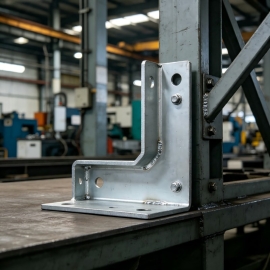
By partnering with a manufacturer that produces both sheet metal parts and fasteners, you eliminate these variables. We manage the entire ecosystem, from manufacturing a Professional Weld Nut Manufacturer to precisely cutting the hole it will be welded into. This ensures perfect fit-up and mechanical integrity in the final Sheet Metal Assemblies, preventing the types of failures that only appear during final product testing.
Quantifying the Value of Vertical Integration
Choosing a one-stop manufacturing partner is not just about convenience; it delivers measurable financial benefits. The fragmented model introduces multiple layers of cost that are often hidden until the final invoice. Our vertically integrated model streamlines production and eliminates these inefficiencies.
Here’s a breakdown of where the savings originate:
Elimination of Intermediary Markups: Each specialized vendor in a fragmented chain adds their own profit margin. By handling all processes in-house, we remove these stacked markups.
Reduced Logistics & Shipping Costs: Instead of shipping parts between 3-5 different facilities for cutting, bending, welding, and finishing, all operations occur under one roof. This drastically cuts transportation expenses and reduces the carbon footprint of your supply chain.
Zero Cost of Rework Coordination: The time your project managers and engineers spend diagnosing quality issues and coordinating returns between multiple vendors is a significant soft cost. Our model provides a single point of accountability, saving hundreds of hours of administrative overhead.
Lower Inventory Holding Costs: Faster overall lead times (typically 7-10 days for samples, 20-30 days for bulk) mean you can operate with a leaner inventory, improving cash flow.
By consolidating these functions, our clients typically see a total cost reduction of 15-20% compared to managing a multi-vendor supply chain. This is a direct result of improved efficiency, superior quality control, and the elimination of redundant overhead.
About the Author
Michael Zhang is a Senior Project Manager at Lingyufab with over a decade of experience in OEM manufacturing. As a PMP-certified professional, he specializes in bridging the needs of global clients with our Shanghai-based production facility, focusing on supply chain optimization and rapid project delivery for complex sheet metal and fastener assemblies.
With over two decades of technical expertise and a capacity to deliver over 8,000 assemblies monthly, we are equipped to handle your project from prototype to mass production. If you are looking to simplify your supply chain and eliminate rework, our team is ready to help.
Submit your technical drawings today to receive a detailed quote from our engineering team.