
 +8613003178786
 sales@lingyufab.com
What Should an RFQ for Laser Welding Services Include?
Start Your RFQ With the Details That Prevent Quote Gaps
A laser welding RFQ can appear complete while still leaving suppliers to make different assumptions about material, joint fit-up, weld depth, appearance, and inspection. That creates quotes that look comparable on price but are based on different manufacturing scopes.
Before requesting laser welding services, provide the part drawing, assembly drawing, annual or batch quantity, required delivery date, and a clear statement of the weld function. The supplier needs to know whether the weld carries load, seals an enclosure, holds a bracket in position, supports an installed fastener, or is primarily visible on a finished surface.
For parts that also require laser cutting and forming, submit the full assembly rather than a weld-only sketch. Weld quality is influenced by upstream part accuracy, bend position, edge condition, and fixture access. A supplier that handles cutting, CNC bending, welding, and assembly in one facility can review those linked factors before quoting. Lingyufab supports these integrated requirements through its Global Custom Sheet Metal Fabrication Service, covering sheet metal parts and assembled products from drawings through final inspection.
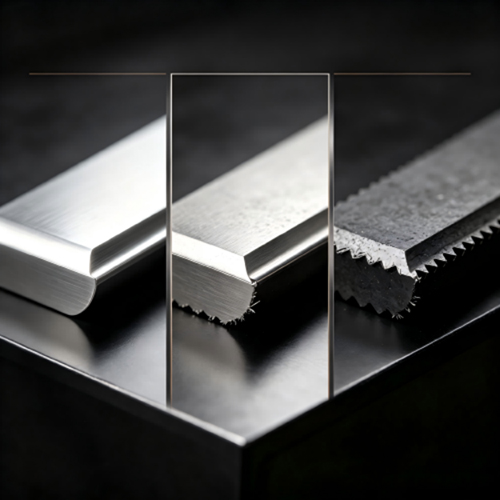
Direct answer: a production-ready RFQ should define the part, material, joint, weld function, quality acceptance, inspection requirement, quantity, and commercial delivery assumptions. If one of these is unknown, label it as open for supplier engineering review rather than leaving it unstated.
This matters especially for OEM enclosures, brackets, frames, chassis, and control-box assemblies. A visible exterior weld on a stainless-steel control enclosure needs a different quoting basis from an internal bracket weld that will later be hidden inside the assembly. Treating them as the same operation makes pricing less useful and approval discussions slower.
What Documents Should an OEM Buyer Attach?
Attach files that allow the supplier to identify every weld location and understand how adjacent parts affect access. A purchase order description alone is rarely enough for repeatable production planning.
Minimum RFQ document package
- 2D part and assembly drawings: Show dimensions, revision level, weld symbols where available, material callouts, finish requirements, and critical interfaces.
- 3D CAD model: Include it when the assembly contains formed panels, tabs, stiffeners, brackets, or closed sections. The model helps assess fit-up and fixture direction.
- Bill of materials: Identify each component, material grade, quantity per assembly, purchased hardware, and customer-supplied items.
- Weld map: Number every weld or clearly mark weld zones. State whether a weld is continuous, intermittent, structural, sealing-related, or cosmetic.
- Quality specification: Define dimensional checkpoints, visual acceptance criteria, penetration requirement, and requested inspection records.
- Surface finish information: State whether components arrive pre-finished, require post-weld finishing, or will receive a later finish process.
- Quantity schedule: List prototype quantity, pilot quantity, release quantity, and expected repeat demand where known.
Use a revision-controlled drawing package. If an early model is for quote reference only, say so and identify the features likely to change. This gives the supplier a practical basis for separating prototype assumptions from production tooling or fixture assumptions.
For a frame or enclosure that requires hardware after welding, include that sequence in the RFQ. For example, a welded enclosure may require studs, nuts, or other installed components. Lingyufab can quote Pre Installed Hardware And Sub Assemblies alongside fabricated parts, which can reduce handoffs between metal fabrication and final assembly.
RFQ Input Matrix: Which Assumptions Must Be Confirmed Before Quoting?
The matrix below is the core of a comparable welding RFQ. Fill in each row for every weld class, not only for the assembly as a whole. If one enclosure contains both an internal strength weld and a customer-facing appearance weld, list them separately.
| RFQ input | What the buyer should state | Quote assumption that must be confirmed | Why it changes the quote |
|---|---|---|---|
| Alloy | Exact material designation, such as carbon steel, stainless steel 304, stainless steel 316, or aluminum; identify mixed-material assemblies. | Material source, material compatibility, and whether material traceability is required. | Different alloys affect weld response, preparation needs, fixture planning, and quality documentation. |
| Thickness | State nominal thickness for every welded component and identify unequal-thickness joints. | Joint preparation, fixture support, access, and the defined weld objective. | Thickness affects heat input planning and whether the requested weld feature is practical at the joint. |
| Joint geometry | Identify butt, lap, corner, flange, tab-to-panel, tube-to-plate, or custom geometry; provide section views where possible. | Fit-up expectation, welding side, access direction, fixture requirement, and allowable gap conditions. | Geometry determines how parts locate and whether the weld can be reached consistently. |
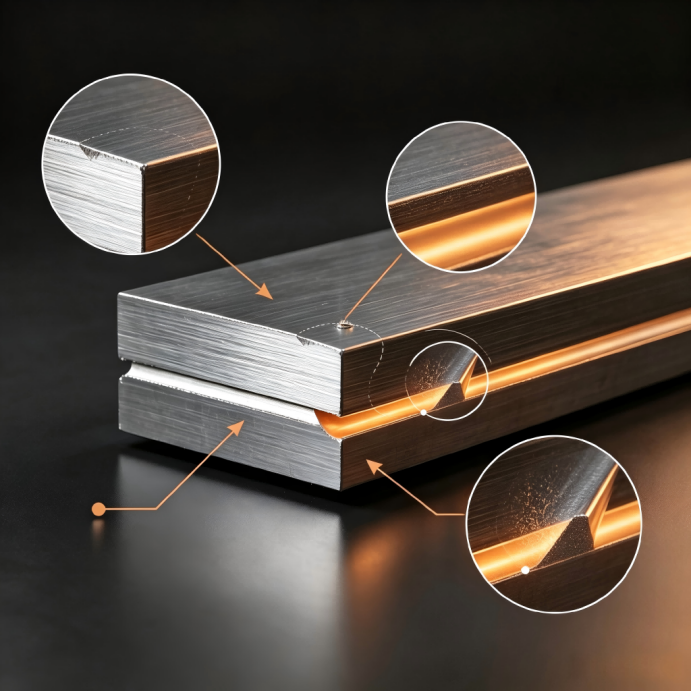
| Penetration requirement | State whether the weld needs a defined penetration condition, a sealed joint, or positional attachment only. | Acceptance basis for weld depth or section performance and the verification method. | A functional weld requirement should not be priced on the same basis as a light retaining weld. |
| Cosmetic acceptance | Identify visible surfaces, permitted weld location, finishing requirement, and whether witness marks are acceptable. | Required appearance standard, post-weld finishing scope, handling protection, and viewing condition. | Cosmetic requirements add process control and may add secondary finishing steps. |
| Inspection method | Specify visual inspection, dimensional inspection, customer-defined test, records required, and sample frequency if defined. | Inspection plan, report format, acceptance criteria, and first-article requirement. | Inspection time and documentation need to be part of the quoted scope, not added after production starts. |
Use this matrix when: you need competitive quotes from more than one supplier, are releasing a new production part, or are transferring an established assembly to a new source.
Its limit: the matrix does not replace a drawing or customer-specific acceptance document. It organizes the questions that a drawing can leave open, particularly where weld symbols do not explain cosmetic expectations or inspection records.
How Should You Define Weld Function, Penetration, and Appearance?
State the function first. Suppliers can then assess the joint against the intended use instead of guessing from its shape alone.
| Weld function | Useful RFQ wording | Information still required |
|---|---|---|
| Structural connection | “This joint retains the bracket in its installed operating position.” | Load direction, relevant dimensional interfaces, penetration expectation, and acceptance method. |
| Sealing-related enclosure joint | “This weld forms part of the enclosure boundary.” | Joint continuity requirement, leak or seal acceptance method, finish sequence, and inspection record needs. |
| Cosmetic exterior joint | “This weld is visible after final assembly.” | Viewing surface, allowable finishing, finish specification, and protected handling requirement. |
| Positioning or retaining joint | “This weld holds the component during assembly and is not customer-visible.” | Permitted weld zone, distortion limits at nearby interfaces, and visual acceptance level. |
A buyer should avoid broad instructions such as “high-quality weld” or “full penetration where needed.” Those phrases do not tell the supplier which joints carry that need or how acceptance will be verified. Replace general language with numbered weld locations and measurable drawing references where your product specification provides them.
Appearance needs equal care. Identify the A-surface or customer-facing side, then state whether post-weld blending, finishing, or surface protection is part of the requested scope. Do not assume that a visible weld and a hidden weld receive the same treatment.
For sheet metal enclosures and machine housings, include the finished assembly orientation. This helps the supplier identify which surfaces are visible and whether welding occurs before or after bends, hardware installation, or final finishing. See examples of Enclosure Chassis Assemblies when preparing a welded enclosure package with multiple formed panels and structural components.
What Tolerances and Inspection Evidence Should Be Requested?
Request inspection evidence that matches the product risk. For most production RFQs, identify the dimensions that affect assembly, alignment, door fit, installed hardware, electrical clearances, or mating components. Place tolerances on the drawing rather than burying them in an email thread.
Lingyufab manufactures sheet metal and fastener products with tight tolerances down to ±0.05mm where the part design and process requirement call for that level of control. This does not mean every welded assembly should be quoted to ±0.05mm. Welded structures can require a different tolerance plan because the relevant question is often the final relationship between interfaces after forming and welding.
Request these quality items when applicable
- Dimensional inspection points tied to functional assembly interfaces.
- Visual acceptance criteria for visible and non-visible weld areas.
- Material identification and Mill Test Certificates for required material batches.
- First-piece or pre-production sample approval requirements.
- Inspection report format, photo requirement, and retention requirement if your quality system needs them.
- Packaging instructions for cosmetic assemblies and components with finished surfaces.
Recommendation: ask for a supplier’s proposed inspection plan when your document package specifies the end requirement but does not prescribe the inspection sequence. This fits new designs, mixed-material assemblies, and parts with several functional interfaces. The buyer retains responsibility for defining the acceptance result; the supplier can propose the most practical check points.
Lingyufab performs 100% dimensional and visual inspection before shipment and provides full material traceability with Mill Test Certificates for every batch. Its ISO 9001:2015 and ISO 14001 systems, TÜV CE certification, and role as a Mitsubishi Electric certified core supplier support documented production control aligned with strict Japanese quality standards.
How Do Quantity, Prototype Stage, and Lead Time Affect the Quote?
Separate prototype, pilot, and production quantities in the RFQ. The same part can have a different quote basis at each stage because fixture approach, programming effort, inspection documentation, and material purchasing are handled differently.
- List the prototype quantity. Include whether the purpose is fit verification, functional testing, customer approval, or process evaluation.
- List the pilot quantity. State whether the pilot parts must use production-intent material and inspection documents.
- List the production release quantity. Include order quantity, expected release pattern, and forecast if available.
- State the requested delivery date. Identify whether it is a required arrival date or a preferred planning target.
- Ask the supplier to separate one-time and recurring assumptions. This makes future price comparisons clearer.
Lingyufab has zero MOQ for the prototyping phase, from a one-piece prototype through a 100-piece pilot run and into mass production. Typical sample timing is 7–10 days, while bulk production is typically 20–30 days. For urgent orders, 48-hour rapid delivery may be available after technical and capacity review; it should be requested as an exception rather than assumed for every design.
For recurring programs, state expected monthly demand and any likely surge condition. Lingyufab delivers more than 8,000 fasteners and metal sheet assemblies monthly and can use flexible production lines and scheduling to respond to demand increases. Final capacity confirmation should remain part of the specific RFQ because part complexity, material availability, and inspection scope all affect the production plan.
Which Cost Assumptions Should Buyers Ask Suppliers to Separate?
Ask for a quote structure that shows what is included. This is the clearest way to compare two laser welding services offers without reducing the decision to unit price alone.
| Cost element | What to ask the supplier to clarify | When it matters most |
|---|---|---|
| Material | Alloy, grade, thickness, traceability requirement, and buyer-supplied versus supplier-supplied material. | 304/316 stainless steel, aluminum, controlled material batches, and multi-part assemblies. |
| Part preparation | Whether cutting, forming, deburring, and fit-up preparation are included. | Assemblies built from several sheet metal components. |
| Fixture and setup | Whether setup is a one-time cost, included in unit price, or revised after drawing changes. | New parts, repeat programs, and parts with close positional requirements. |
| Welding and finishing | Weld zones included, appearance work included, and sequence relative to surface finishing. | Visible enclosures, bezels, and customer-facing panels. |
| Inspection and records | Inspection scope, MTCs, reports, first-piece documentation, and packaging checks. | OEM approvals and traceability-controlled programs. |
Vertical integration can reduce avoidable handoffs. By keeping laser cutting, CNC bending, welding, installed hardware, and assembly under one production system, Lingyufab can reduce overall costs by 15–20% where multi-vendor coordination and extra logistics would otherwise be required. That result is most relevant to fabricated assemblies; it is not a fixed reduction for every standalone weld operation.
What Are the Most Common RFQ Errors to Correct Before Release?
- One material callout for an assembly with mixed materials: List each component and its material separately.
- Missing weld identification: Number welds or provide a weld map so the supplier can quote each joint correctly.
- Cosmetic requirements stated only after samples arrive: Mark visible faces and define finishing expectations in the first RFQ.
- No inspection acceptance method: State what must be inspected and what records are required before production begins.
- Prototype and production quantities combined: Separate quantities so setup and recurring pricing are visible.
- Uncontrolled drawing revisions: Put a revision number and date on each submitted document.
- Ignoring adjacent processes: Include laser cutting, CNC bending, installed fasteners, and final assembly requirements when they affect weld access or finished dimensions.
Lingyufab has specialized in sheet metal and fastener manufacturing since 2003 and supports OEM/ODM production for sheet metal assemblies, control boxes, server racks, brackets, chassis, front panels, and automotive parts. Submit your drawings, weld matrix, required quantities, and inspection criteria to request a quote for your next laser-welded assembly.