+8613003178786
  sales@lingyufab.com



Why Custom Stud-Welded Sub-Assemblies Give You an Edge
31
Aug’2026Why Custom Stud-Welded Sub-Assemblies Give You an Edge
What Is a Custom Stud-Welded Sub-Assembly?
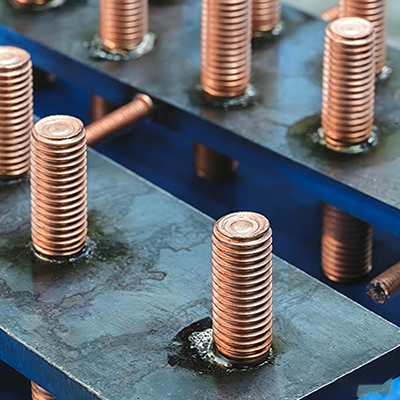
A custom stud-welded sub-assembly is a pre-fabricated metal component that combines a sheet metal part with permanently attached threaded studs or fasteners. The studs are welded directly onto the surface of the sheet metal using a highly controlled arc welding process, creating a single, ready-to-use assembly.
The process itself is straightforward: a welding gun positions a stud against the metal surface, an electric arc melts the stud's base and a small area of the workpiece, and then the stud is pressed into the molten pool. The entire weld cycle takes anywhere from 1 to 100 milliseconds, depending on the stud size and material. The result is a metallurgical bond that is actually stronger than the stud or the base metal itself.
What makes this approach particularly valuable is that it eliminates the need for drilling holes, tapping threads, or using separate nuts and bolts. The fastener becomes an integral part of the sheet metal component rather than an added-on piece. For manufacturers, this means receiving a single part that is ready for final assembly, rather than managing separate fasteners and performing additional installation steps.
Lingyufab specializes in manufacturing these custom stud-welded sub-assemblies as an integrated part of our comprehensive sheet metal fabrication services. By combining in-house fastener production with precision sheet metal bending, laser cutting, and welding, we deliver ready-to-install components that simplify your production process and reduce assembly time.
Why Choose Stud Welding Over Traditional Fastening
Traditional fastening methods like drilling and tapping, riveting, or using adhesives each come with limitations that can slow down production and add costs. Drilling and tapping, for instance, require multiple steps, remove material from the base metal, and consume drill bits and taps that wear out quickly. Riveting is labour-intensive, produces a bulkier finish, and adds unnecessary handling steps. Adhesives require cure times, can be messy to apply, and often lack the strength needed for load-bearing applications.
Stud welding addresses these issues in one clean operation. Instead of drilling, tapping, cleaning, and installing a fastener, the operator simply positions the welding gun and pulls the trigger. The stud is fused directly to the metal surface in a fraction of a second.
The differences are significant:
| Aspect | Traditional Fastening | Stud Welding |
|---|---|---|
| Process Steps | Multiple (drill, tap, clean, install) | One (weld) |
| Base Material | Weakened by hole removal | Unaffected, remains intact |
| Finish Quality | Holes, rivet heads, or adhesive residue | Clean, flush surface |
| Speed | Minutes per fastener | Milliseconds per fastener |
This single-step approach is the foundation for many of the productivity gains that manufacturers experience when switching to stud-welded assemblies.
How It Simplifies Your Supply Chain
Managing a supply chain for metal assemblies often involves juggling multiple suppliers: one for the sheet metal fabrication, another for fasteners, and perhaps a third for assembly work. Each supplier introduces its own lead times, quality control processes, and logistics costs. Custom stud-welded sub-assemblies consolidate these steps into a single source.
When you work with a partner that handles both the sheet metal fabrication and the stud welding in-house, you eliminate the need to coordinate between different vendors. The sheet metal is cut, bent, and formed, and then the studs are welded on—all under one roof and under a single quality management system. This integrated approach reduces the risk of miscommunication, eliminates the time and cost of shipping parts between suppliers, and cuts overall supply chain cycles.
For Original Equipment Manufacturers (OEMs) and product development teams, this simplicity is particularly valuable during prototyping and new product introduction. Instead of waiting weeks for fasteners to arrive from one supplier while the sheet metal comes from another, a single partner can deliver a complete sub-assembly ready for testing and validation. This acceleration can make a meaningful difference in meeting development timelines.
The Quality and Consistency Advantage
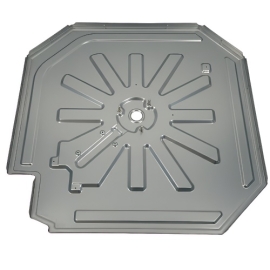
One of the most overlooked benefits of custom stud-welded sub-assemblies is the quality consistency they enable. When a single manufacturer controls both the sheet metal fabrication and the fastener installation, quality standards are unified from start to finish. This matters because the integrity of a stud weld depends on factors like material cleanliness, surface condition, and proper equipment settings.
Advanced stud welding systems now incorporate real-time quality monitoring. Each weld can be compared against a stored "signature" of a good weld, with the system immediately flagging any deviation. This is particularly important for applications where a failed fastener could lead to costly field failures or safety issues.
Furthermore, stud welding produces a clean, one-sided joint that does not mar the reverse side of the sheet metal. There are no burn-through marks, dimples, or distortion on the back surface—an important consideration for applications where appearance matters or where components must fit against flat surfaces. The process is also vibration-proof and leak-proof, as there are no holes drilled through the material that could compromise its integrity.
For complex assemblies like precision electrical-control-box assembly or outdoor electrical enclosures, this quality advantage ensures that fasteners remain secure under demanding conditions without compromising the enclosure's protective integrity.
Cost Savings You Can Expect
The cost advantages of custom stud-welded sub-assemblies come from several sources, and they add up quickly across a production run.
First, labour costs are reduced. Instead of a worker spending time drilling, tapping, and manually installing fasteners, the stud welding operation is completed in a single trigger pull. Even when using manual handguns, an operator can weld studs at rates exceeding 20 per minute. With automated feed systems, throughput increases further.
Second, material costs decrease. There are no drill bits to replace, no taps to break, and no separate nuts or bolts to purchase and inventory. The fastener becomes an integral part of the assembly rather than an additional component.
Third, logistics and handling costs are cut. Receiving a complete sub-assembly rather than separate parts reduces receiving time, inventory space, and the administrative overhead of managing multiple vendors. As noted earlier, integrating fabrication and fastening can reduce overall supply chain costs by 15-20%.
Fourth, rework and scrap are minimized. The repeatability of the stud welding process means fewer defective parts. The built-in weld monitoring systems catch problems immediately, preventing bad parts from moving downstream.
Real-World Applications Across Industries
Custom stud-welded sub-assemblies are used across a wide range of industries, and understanding these applications can help identify where the technology fits your own needs.
In the automotive industry, stud welding is used extensively for attaching trim components, fastening brackets, routing wiring harnesses, and grounding electrical circuits. A well-known application is welding studs to air bag inflation canisters, where the weld must be strong enough to withstand deployment forces while causing absolutely no distortion on the inside of the canister.
In electrical and control panel manufacturing, stud welding is used to add mounting points, grounding studs, and hardware brackets to enclosures. Many electrical enclosures are produced as standard units and later customized with additional gauges, control modules, or display mounts. Stud welding allows these modifications to be made quickly without cutting into the enclosure or compromising its integrity. This makes it ideal for Outdoor Electrical Enclosures and Precision Support And Mounting Brackets that require reliable, corrosion-resistant fastening points.
For metal fabricators and OEMs, the process is used to attach brackets, mounts, panels, and hardware to fabricated components. It is particularly valuable for thin sheet metal applications where traditional welding would cause distortion or burn-through. Capacitor discharge (CD) stud welding can reliably join fasteners to material as thin as 0.5 mm with minimal heat input.
In retrofit and field service work, portable stud welding systems allow technicians to add fastening points directly on site when modifications are needed after installation. This is common in construction, equipment maintenance, and HVAC installations where additional mounting points are required later.
Why Partner with Lingyufab
Lingyufab brings over 20 years of precision sheet metal experience to every custom stud-welded sub-assembly project. As a certified core supplier for Mitsubishi Electric, we understand what it takes to meet stringent quality and delivery standards.
Our integrated approach means we manufacture both the sheet metal components and the fasteners in-house. We operate high-precision Laser Cutting systems, CNC Bending centers, stamping presses, and cold heading machines for bolts and nuts. By controlling the entire process, we eliminate external sourcing lead times and ensure consistency and reliability in every assembly we produce.
We operate under the ISO 9001:2015 quality management system, with rigorous inspection at every stage from raw material to final delivery. Every batch of material comes with an original Mill Test Certificate, and we support composition analysis by third-party laboratories. Whether you need a single prototype or a full production run, we apply the same rigorous standards to ensure your custom stud-welded sub-assemblies meet your exact specifications.
Ready to simplify your supply chain and improve product quality? Contact Lingyufab today to discuss your custom stud-welded sub-assembly project. Our engineering team is available to review your drawings, recommend design optimizations, and provide a competitive quote within 24 hours. Request your free quote now and experience the Lingyufab difference.
Frequently Asked Questions
What is the minimum order quantity for custom stud-welded assemblies?
We are flexible and accept small-volume orders, including single-piece prototypes and pilot runs. We understand that many projects are in development and aim to support you at every stage.
What materials can be used for stud welding?
Stud welding works with mild steel, stainless steel, aluminum, and certain copper alloys. Dissimilar metals can also be joined, such as mild steel studs to stainless steel base material.
What drawing formats are needed for a quote?
We recommend providing 3D files (STEP, IGS, or SolidWorks) for calculating material weight and unfolding bends, and 2D drawings (PDF, DWG, or DXF) for specifying tolerances, surface finishes, and thread specs. Physical samples are also acceptable for reverse engineering.
How long does the welding process take per stud?
Weld cycles range from 1 to 100 milliseconds depending on the stud size, material, and welding method. The entire operation is extremely fast, enabling high throughput in production environments.
Can studs be welded to thin sheet metal without causing distortion?
Yes. Capacitor discharge (CD) stud welding is specifically designed for thin materials and can weld reliably to sheet metal as thin as 0.5 mm with minimal heat input and no backside marking.