
 +8613003178786
 sales@lingyufab.com
Are Laser Cutting Services Worth It for Small Batches?
Why small-batch buyers regret the wrong quote, not the wrong process
The expensive mistake in a small-batch RFQ is rarely the cutting itself. It is the line items nobody priced: a fixture charge that appears after PO, a flat blank that needs three more vendors, or a freight bill that doubles the landed cost of 40 brackets. Laser cutting services are usually the right starting point for 1 to a few hundred sheet metal parts. But only if you compare the whole cost chain rather than the per-part cutting price.
Lingyufab (Shanghai Lingyu Industry) has manufactured sheet metal and fasteners since 2003 and works from customer drawings under OEM/ODM terms. Our sheet metal laser cutting sits alongside bending, welding and finishing, so the quote you receive can cover a finished part instead of a flat blank. That matters for small batches, because every handoff between vendors adds setup, shipping and waiting time.
The short answer to the title question: yes, for most prototype, pilot and bridge-volume work, laser cutting is worth it. The cost curve behaves differently from stamping, though, and the sections below show where the break-even points sit.
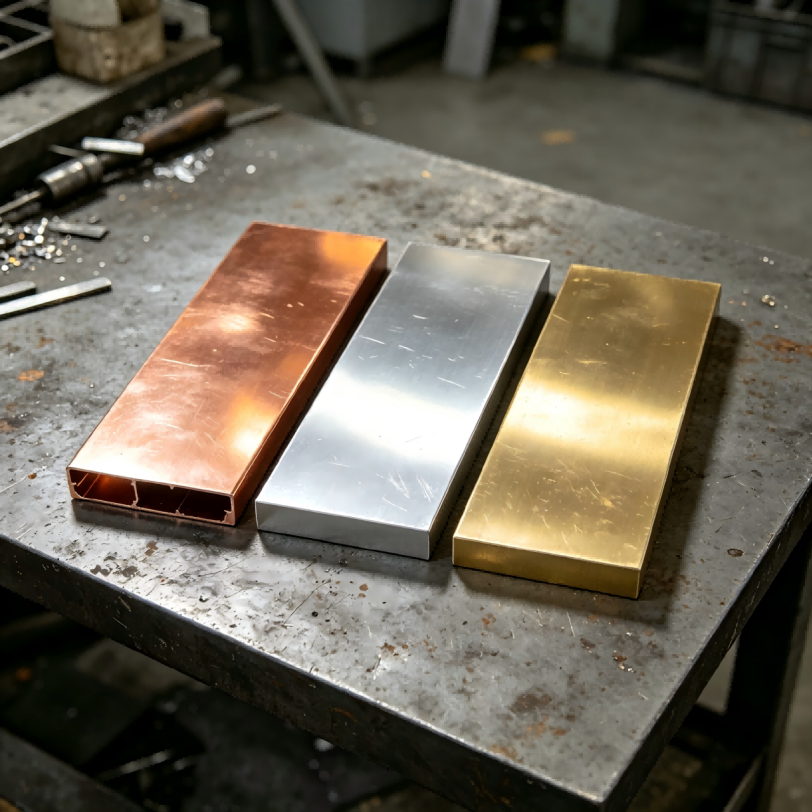
Cost: a batch-size break-even model for laser cutting
Laser cutting needs no hard tooling. A drawing becomes a program, the program gets nested on a sheet, and parts come off the machine. Stamping and punching reverse that logic: high upfront tooling, low cost per part afterwards. The break-even quantity is where those two curves cross.
A working formula for your own quote comparison:
- Break-even quantity = tooling cost ÷ (laser cost per part − tooled cost per part).
- Use landed cost per part in both terms, including material, secondary operations and freight, not the ex-works cutting price.
- Re-run the calculation if the design may change. A revision after tooling is cut can erase the savings.
The table below shows how the four cost drivers shift across the three stages we support: a 1-piece prototype, a pilot run of roughly 100 pieces, and mass production. It is qualitative on purpose. Real figures depend on material grade, thickness, part geometry and destination, and we quote those per drawing.
| Cost driver | 1-piece prototype | Pilot run (~100 pcs) | Mass production |
|---|---|---|---|
| Setup and programming | Dominates the unit price; spread over one part | Small share per part once the program is proven | Negligible per part; tooling for stamping may now be justified |
| Material utilization | Often poor; a part may use a partial sheet | Improves with nesting of multiple parts per sheet | Best nesting, or optimized progressive-die layout |
| Freight | Air express; high per part, low in total | Consolidated shipments cut per-part freight | Sea or consolidated freight; lowest per part |
| Secondary operations (deburring, bending, welding, finishing) | Manual and flexible; cost depends on part complexity | Fixtures may pay back; watch bend and weld count | Dedicated tooling and fixtures reduce handling time |
| Best-fit process | Laser cutting plus bending | Laser cutting, possibly with simple fixtures | Compare laser against punching/stamping at your volume |
Where this model does not apply: very thick plate, large flat parts with high repeat volume, or parts dominated by deep-draw forming. In those cases the cutting method is not the main cost driver, and the comparison should start from the forming step.
Integration also affects the total. Because cutting, bending, welding and finishing are handled in-house, you avoid intermediary margins and extra logistics between vendors. Our in-house vertical integration is associated with overall cost reductions of 15-20%. That figure reflects the savings from removing intermediaries and extra logistics. It is not a discount applied to every part, so treat it as a reason to request a consolidated quote, not as a fixed number.
Where laser cutting stops being the economical choice
Laser cutting is not always the answer. Hold these limits in mind before you commit:
- Repeat volumes with stable design. Once a part is frozen and orders run into the thousands, sheet metal punching and stamping usually wins on per-part cost. Request both quotes at 100, 500 and 2,000 pieces and compare.
- Parts with many small, identical holes. A punch tool can create these in a single stroke. A laser pierces each one individually.
- Parts needing forming features. Louvers, extruded holes and embossed ribs often come from tooling rather than a cutting program.
- Edge-sensitive applications. Thermal cutting leaves an edge condition that may need deburring or finishing before coating or assembly. Specify this early so it appears in the quote.
A practical pattern for HMLV (High-Mix, Low-Volume) programs: cut by laser for the first pilot, confirm fit and function, then decide with real order data whether tooling pays back. That avoids paying for tooling on a design that might still change.
Capability evidence that matters in a small-batch RFQ
Small batches carry a quality risk that large runs do not: there is no statistical cushion. One bad part out of ten is a 10% failure rate. So the evidence behind the quote matters more than the headline price. These are the items worth verifying with any supplier, with what we can document for ours:
| Buyer concern | What to ask for | Lingyufab basis |
|---|---|---|
| Quality management system | Current certificates, not a logo | ISO 9001:2015, ISO 14001 and TÜV CE certified |
| Process discipline | Evidence of audited customer standards | Mitsubishi Electric certified core supplier, working to Japanese quality standards |
| Dimensional accuracy | Tolerance stated per feature on the drawing | Fabrication tolerances down to ±0.05mm, depending on the part and feature |
| Material identity | Mill Test Certificates by batch | MTC provided for every batch; carbon steel, stainless steel (304/316) and aluminum |
| Outgoing inspection | Inspection scope and records | 100% dimensional and visual inspection before shipment |
| Remedy for defects | Written replacement or repair terms | Free replacement or repair for manufacturing defects |
The ±0.05mm figure applies to controlled features on a given drawing, not to every dimension on every part. Flag the dimensions that actually matter to function, because a tolerance on a bent flange stacks differently than one on a flat cut profile. Tolerances on parts that go through CNC bending after cutting should be agreed on the finished geometry.
Cooperation terms and what still needs agreement
For prototyping we apply zero MOQ. A 1-piece prototype, a 100-piece pilot and a production order follow the same quality process. Typical lead times are 7-10 days for samples and 20-30 days for bulk orders. Urgent orders can be turned around in 48 hours, but that depends on material availability, part complexity and current scheduling, so confirm it per project rather than assuming it.
Demand spikes are common in pilot-to-production transitions. We run multiple flexible production lines and can increase output by 30%-50% within a short period through scheduling and resource allocation. That is useful if a pilot order grows faster than planned. The actual increase available for your part depends on process mix and material, so ask for a capacity confirmation at quoting stage.
Points to settle in writing before the first PO:
- Drawing and revision control. Which revision is binding, and how are changes priced mid-order?
- Material and certification. Grade (for example 304 versus 316), thickness tolerance and MTC format.
- Edge and surface condition. Deburring level, finishing and any cosmetic faces.
- Acceptance criteria. Which dimensions are inspected, and how are results reported?
- Incoterms and packaging. Who pays for freight and who owns transit risk?
- Remedy process. How a manufacturing-defect claim is raised, with what evidence, and the timeline for replacement or repair.
Common small-batch mistakes that inflate landed cost
- Comparing laser cutting services on cut price alone. A lower flat-blank price can lose to a higher finished-part price once bending, hardware insertion and freight are added.
- Ordering the flat pattern, then outsourcing bending. Each vendor handoff adds queue time and shipping. For enclosures and brackets, ask for cutting, bending and assembly in one quote.
- Over-specifying tolerance. Applying ±0.05mm to every dimension raises inspection and rework cost. Reserve it for mating features.
- Ignoring hardware. If the part needs nuts, studs or standoffs, consider custom self-clinching integrated components installed at the factory, instead of loose hardware that someone must fit later.
- Freezing the design too early for tooling. Commit to stamping tools only after a pilot run has validated the design.
- Splitting small orders across many shipments. Air freight on repeated small parcels often costs more than one consolidated shipment.
Worked example: bracket pilot of 100 pieces
Consider an automation OEM that needs 100 mounting brackets in 304 stainless steel. The design is likely to change once or twice after field testing. Here is how we would frame the decision:
- Request a quote for laser cutting plus bending, with deburring, at 10, 100 and 500 pieces. This shows how setup spreads across quantity.
- Request a stamping quote at 500 and 2,000 pieces and include tooling cost. Apply the break-even formula above to the quantities.
- Run the 100-piece pilot through laser cutting. Collect fit and assembly feedback and log any drawing changes.
- If the design is stable and annual volume exceeds the break-even quantity, move to tooling. If not, stay with laser cutting.
This example describes a decision method, not a past customer result. Brackets, enclosures and control boxes, such as our custom mounting brackets, are typical candidates for this approach.
What to send with your RFQ
Quotes become comparable when the inputs are complete. Include:
- 2D drawings (DXF/DWG) and 3D models (STEP), with the current revision marked.
- Material grade and thickness, such as 304 or 316 stainless steel, carbon steel or aluminum.
- Quantities at two or three tiers, for example 1, 100 and 1,000 pieces.
- Critical-to-function dimensions, and any ±0.05mm requirements.
- Finishing, hardware and assembly requirements.
- Destination and required delivery date.
Send your drawings and quantity tiers to our engineering team through the contact page, and we will return a quote that shows cutting, forming, hardware and finishing as separate lines so you can model your own break-even point. If you are comparing laser cutting services against stamping, tell us the expected annual volume and we will quote both routes.

