
 +8613003178786
 sales@lingyufab.com
Audit a Sheet Metal Fabrication Factory Before RFQ
Start With Supplier Fit Before Requesting an RFQ
The costly sourcing mistake is not always choosing the highest-priced supplier. It is releasing drawings to a supplier that cannot prove the process control, inspection scope, material handling, or assembly capability your product requires. Before issuing an RFQ, procurement teams should confirm whether a sheet metal fabrication factory fits the actual requirement rather than relying on a broad capability list.
For OEM buyers in industrial automation, energy equipment, automotive supply chains, and server hardware, the first qualification question is simple: can one supplier manufacture the part, install required hardware, inspect it, and deliver the agreed documentation without avoidable handoffs? The answer affects quote accuracy, lead time, quality risk, and total landed cost.
Lingyufab, also known as Shanghai Lingyu Industry, has specialized in sheet metal and fastener manufacturing since 2003. Our scope includes laser cutting, CNC bending, stamping, TIG/MIG welding, finishing, fastener installation, and sheet metal assemblies. This makes us relevant when the buyer needs more than a flat laser-cut blank, such as enclosures, chassis, brackets, mounting plates, front panels, control boxes, server racks, and assembled components.
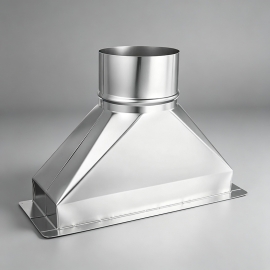
Buyers assessing enclosure or chassis work should first review the supplier’s ability to manage the full build scope, including formed parts, welded structures, and installed hardware. Our Enclosure Chassis Assemblies capability is suited to projects where dimensional relationships between panels, brackets, fasteners, and welded features must be controlled as one production package.
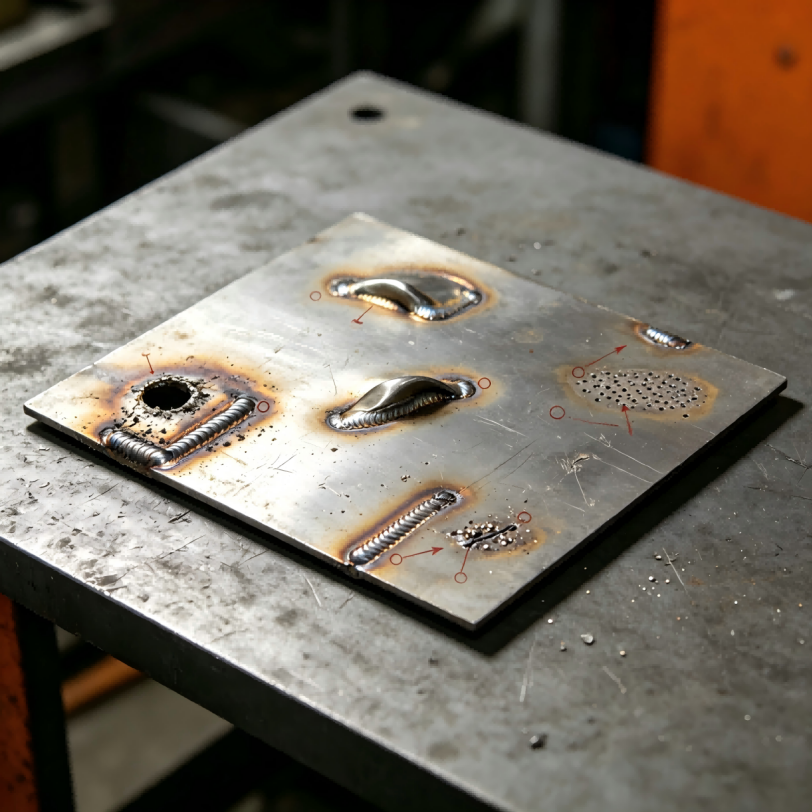
Use a fit screen before sharing controlled drawings
Conclusion: Shortlist suppliers by the required manufacturing route, not by product photos. A supplier that can cut sheet may not be equipped to manage bending, welding, hardware insertion, finishing coordination, and final assembly.
Reason: Each external handoff can add quoting assumptions, logistics exposure, and responsibility gaps when a formed or welded part fails inspection.
Best fit: Use this screen for assemblies with multiple bends, welded tabs, threaded hardware, mounting points, or material traceability requirements.
Limit: A capability match is not approval. The buyer still needs evidence for the specific material, tolerance, finish, inspection method, and acceptance criteria.
Run a Buyer-Side Audit Sequence Before Drawings Are Released
A pre-RFQ audit should link each claimed process to a sourcing risk. This avoids sending sensitive drawings before you know what evidence the supplier can provide. Ask for documents, photos, process explanations, and sample records that relate directly to your intended part family. Do not accept general statements such as “high precision” without asking how that precision is inspected and recorded.
| Audit step | Evidence to request before RFQ | Risk reduced for the buyer | When this step matters most | Limit of the evidence |
|---|---|---|---|---|
| 1. Confirm process scope | List of in-house operations: laser cutting, CNC bending, stamping, TIG/MIG welding, finishing, and assembly. | Unexpected outsourcing, split accountability, and quotation gaps. | Chassis, cabinets, control boxes, and multi-part assemblies. | A process list does not confirm capacity for your geometry or material. |
| 2. Check material control | Material grades handled and Mill Test Certificate availability by batch. | Incorrect alloy selection and missing traceability. | 304/316 stainless steel, carbon steel, and aluminum parts with specified material requirements. | MTC availability must be agreed for the actual order, not assumed from a general policy. |
| 3. Review dimensional capability | Inspection approach for critical dimensions and the supplier’s stated tolerance capability. | Parts that assemble poorly because formed dimensions or hole positions vary. | Parts with mating features, installed fasteners, dense bend patterns, or controlled mounting interfaces. | A stated capability down to ±0.05mm does not mean every feature can or should use that tolerance. |
| 4. Verify welding and assembly control | Explanation of welding scope, hardware installation scope, and final visual inspection procedure. | Distortion, missing hardware, cosmetic defects, and unclear responsibility for subassemblies. | Welded frames, fan cases, mounting brackets, and electrical enclosures. | Specific weld acceptance, cosmetic standards, and hardware requirements still need to be defined in the RFQ. |
| 5. Review quality documentation | Certification details, inspection commitment, material traceability terms, and nonconformance response. | Receiving disputes and incomplete compliance records. | Approved supplier lists, regulated programs, and repeat production. | Certification does not replace product-specific approval requirements. |
| 6. Confirm commercial boundaries | Prototype MOQ, sample and bulk timing, packing expectations, and change-control contacts. | Incorrect assumptions about minimum order, timing, or responsibility after a revision. | New product introduction, low-volume pilots, and phased launches. | Lead times must be confirmed against current load, drawing completeness, and purchased material needs. |
At Lingyufab, this sequence can begin before a formal drawing release with a high-level product description, material family, estimated quantity, and required documents. We support zero MOQ during prototyping, from a one-piece prototype through a 100-piece pilot run and onward to mass production. That is useful when engineering needs an early manufacturing review without committing to a production quantity.
The boundary is equally important: a high-level review cannot replace a controlled drawing package. Tolerances, finish, critical-to-function features, thread requirements, assembly sequence, packaging, and inspection criteria must be established before a binding production quote can be assessed.
Verify Equipment Claims Against Your Part’s Manufacturing Route
Buyers should assess machinery in the context of the part, not as a factory-tour checklist. Laser cutting, CNC bending, and welding are connected operations. A supplier may own all three but still need your drawings to show that bend radii, weld access, datum strategy, and post-weld interfaces are practical.
Match process evidence to the part category
| Part requirement | Process evidence to assess | Buyer decision | When it does not apply |
|---|---|---|---|
| Flat profiles, vent patterns, openings, and mounting holes | Laser cutting capability, material range, burr expectations, and inspection of critical hole locations. | Request a review when cut features locate mating components or installed hardware. | Less relevant for purchased standard fasteners with no fabricated sheet component. |
| Multi-bend brackets, panels, and chassis | CNC bending scope, bend geometry review, inspection of formed dimensions, and handling of tight interfaces. | Identify which formed dimensions are functional before quoting. | Not required for fully flat components. |
| Frames, cabinets, and welded supports | TIG/MIG welding scope, access to weld areas, visual inspection, and control of post-weld assembly interfaces. | Define weld locations and cosmetic expectations in the drawing package. | Not needed for mechanical assemblies without welded joints. |
| Threaded attachment points and installed hardware | Fastener installation method, hardware identification, and final assembly checks. | Confirm whether fasteners are customer-supplied, supplier-supplied, or integrated into the assembly quote. | Not applicable when all hardware is installed by the buyer. |
Lingyufab processes carbon steel, stainless steel including 304 and 316 grades, and aluminum. Our stated capability includes tight tolerances down to ±0.05mm where the part design, feature, material, and inspection approach support it. For a buyer, the practical conclusion is not to assign ±0.05mm to every dimension. Instead, mark the few interfaces that control fit, such as a mounting-hole pattern, a folded return, or a hardware location. This directs inspection effort where it has value and can prevent an unnecessarily expensive quote.
For projects dominated by formed brackets and mounting interfaces, review the available Custom Mounting Brackets scope alongside the drawing requirements. For profiles with detailed cut-outs, the relevant process question is whether the supplier can inspect the functional features after Precision Sheet Metal Laser Cutting Services, not merely whether it owns a laser.
Audit Quality Evidence, Traceability, and Document Control
Quality claims are meaningful only when tied to records that can travel with the order. A procurement team should distinguish between a supplier’s management certification, its batch material records, and its part-level inspection evidence. Each answers a different question.
Certification evidence: Request confirmation of ISO 9001:2015 and ISO 14001 certification status. Lingyufab is also TÜV CE certified and is a Mitsubishi Electric certified core supplier operating to strict Japanese quality standards. This is relevant when your approved supplier process requires documented management systems and disciplined production control.
Material evidence: Confirm whether Mill Test Certificates are required for the purchase order and how the batch references will be presented. Lingyufab provides full MTC traceability for every batch, which is particularly useful for specified carbon steel, 304/316 stainless steel, and aluminum requirements.
Inspection evidence: Clarify the dimensions, appearance requirements, and record format that need reporting. Lingyufab performs 100% dimensional and visual inspection before shipment. Buyers should still identify which measurements require retained records, because not every project needs the same inspection report content.
Nonconformance terms: Establish acceptance criteria and notification channels before the PO. For manufacturing defects, Lingyufab offers free replacement or repair. This does not remove the need to define drawing revision status, shipping responsibility, and whether the issue resulted from manufacturing, handling, or a design change.
Sarah Wang, Quality Assurance Director and ISO 9001 Lead Auditor with more than 12 years of experience, focuses on material traceability, tolerance analysis, and QC process discipline. For buyers, the useful request is not a generic quality presentation. Ask for the evidence that matches your risk: certificate copies for supplier onboarding, MTC requirements for material control, and the intended inspection points for functional dimensions.
Identify Subcontracting and Assembly Boundaries Early
A supplier can be a strong fit even when an order has external dependencies, but the dependencies must be visible before quoting. The buyer should ask which operations are performed in-house, which materials or finishes need outside coordination, and who owns final accountability for the finished part.
Lingyufab’s in-house scope covers fabrication and assembly stages including laser cutting, CNC bending, stamping, TIG/MIG welding, finishing, and integrated fastener installation. This vertical integration can reduce overall costs by 15–20% by reducing intermediaries and extra logistics. The conclusion applies best to multi-operation sheet metal parts and assemblies. It is less relevant for a simple standard fastener order or a flat component requiring only one process.
Common pre-RFQ mistakes that create avoidable quote risk
Sending an assembly drawing without a bill of materials. Include each fabricated item, purchased hardware, quantity, and whether hardware must be installed. This is necessary for control boxes and chassis assemblies; it may not apply to a single-piece bracket.
Stating “stainless steel” without identifying the grade. Specify 304 or 316 when either is required. Material grade affects sourcing, traceability, and quote interpretation.
Leaving cosmetic requirements implied. Identify visible faces, scratch limits, weld appearance expectations, and finish requirements. This matters for front panels and customer-facing enclosures, but may be less significant for concealed internal brackets.
Using unmarked dimensions as functional tolerances. Flag fit-critical dimensions and explain the mating condition. A tolerance review is most useful where a part must align with another manufactured item.
Assuming hardware is included. Define nut, bolt, washer, stud, or screw requirements and whether they must be pre-installed. For integrated assemblies, review Pre Installed Hardware And Sub Assemblies before issuing the RFQ.
Requesting an urgent date without identifying the prototype or production stage. Lingyufab typically supports samples in 7–10 days and bulk orders in 20–30 days, with 48-hour rapid delivery available for urgent orders. Timing depends on scope and order conditions, so confirm feasibility for the specific request.
Build an RFQ Package That Produces Comparable Quotes
A qualified supplier cannot provide a useful quote from incomplete assumptions. After the evidence audit, issue the same structured RFQ package to each shortlisted supplier. This gives procurement a fair commercial comparison and gives engineering a clearer basis for technical approval.
State the product and application. Identify whether the item is a bracket, chassis, server rack component, electrical enclosure, heat sink, automotive part, front panel, or sheet metal assembly. Mention the operating environment when it affects material or finish selection.
Attach controlled files. Provide revision-controlled drawings, 3D models where available, BOMs, and assembly instructions. Mark revision dates and identify any superseded documents.
Define material and finish. State carbon steel, aluminum, 304 stainless steel, 316 stainless steel, or another approved material. Include finish requirements and identify visible surfaces.
Mark functional tolerances. Highlight the dimensions tied to mating parts, installed hardware, sealing surfaces, or mounting interfaces. Ask the supplier to identify manufacturability concerns before committing to price.
Specify inspection and documentation. State whether you require MTCs, dimensional reports, visual criteria, first-piece approval, or other records. Avoid assuming that all documentation is automatically included.
State quantity and commercial stage. Separate prototype, pilot, and production quantities. Lingyufab has zero MOQ for prototyping, which can support early evaluation without inflating the request into a mass-production commitment.
Ask for exceptions. Require suppliers to list assumptions, outsourced steps, unavailable specifications, or proposed changes. A transparent exception is more useful than a low quote built on unstated assumptions.
For repeat programs, capacity should be reviewed against expected release patterns rather than only total annual volume. Lingyufab delivers more than 8,000 fasteners and metal sheet assemblies monthly. That figure helps demonstrate active production capacity, but it should not be treated as a reserved allocation for a new buyer. Confirm forecast, release schedule, packaging, and inspection needs during supplier qualification.
Use the Audit Result to Select the Right Cooperation Model
The right supplier relationship depends on the maturity of the product. A one-piece prototype needs fast technical alignment and clear revision control. A pilot run needs repeatable inspection points. A production assembly needs documented material control, capacity planning, and defined responsibility for supplied or installed hardware.
Lingyufab is suited to OEM and ODM work that moves from prototype to volume, especially where buyers want a single source for fabricated sheet metal, welding, fastener integration, and assembly. With more than 20 years of technical specialization and service to over 50 premium global clients, our role is to manufacture to technical drawings and specific application requirements rather than substitute undocumented assumptions for engineering decisions.
Request a quote with your drawing package, material grade, target quantity, required documents, and any fit-critical dimensions for a focused pre-RFQ capability review.

