
 +8613003178786
 sales@lingyufab.com
Reduce Airflow Loss with Better Fan Housing Flanges
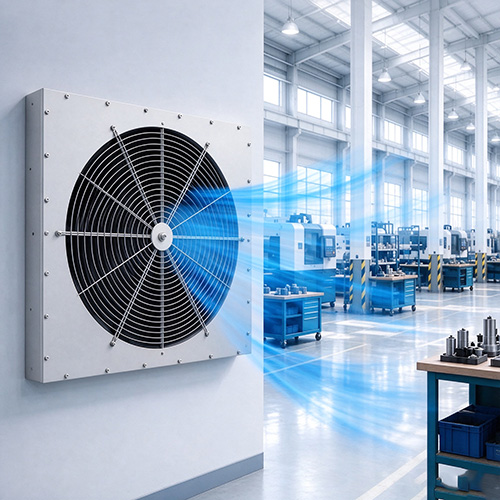
Specifying a sheet metal fan housing that leaks is a costly mistake. Air recirculation and pressure loss at flange joints and seams can degrade system efficiency, increase energy consumption, and generate unwanted noise. Before you issue an RFQ, ensuring your manufacturing partner can control the critical features that guarantee an airtight assembly is essential for performance. A minor oversight in flange design or welding quality can compromise the entire HVAC, ventilation, or cooling system the fan is built for.
At Lingyufab, we understand that the integrity of a fan housing depends on fabrication precision. As a Mitsubishi Electric certified core supplier, we adhere to strict Japanese quality standards, ensuring every component meets demanding performance criteria. Our integrated manufacturing process, from laser cutting to final assembly, focuses on eliminating the common failure points that lead to airflow loss.
Key Design Features for an Airtight Fan Housing Interface
The interface where the fan housing connects to ductwork or other components is the most common source of leaks. Proper design and fabrication of this connection are non-negotiable for achieving target airflow. Four primary features contribute to a secure, leak-proof seal: rolled edges, duct-mating flanges, continuous seam welding, and gasket lands. Understanding their function helps you specify the right solution for your application.
Each method offers a different balance of sealing effectiveness, cost, and structural rigidity. The choice depends on the operating pressure, environmental conditions, and assembly requirements of your system.
| Sealing Feature | Mechanism & Application | Advantages | Limitations |
|---|---|---|---|
| Rolled Edges / Hemming | The edge of the sheet metal is folded over onto itself. This is common for safety (removing sharp edges) and adding rigidity to a round fan housing inlet or outlet. | - Adds significant stiffness to thin-gauge material. - Improves safety during handling and installation. - Low fabrication cost. | - Provides minimal sealing capability on its own. - Not suitable for high-pressure applications. |
| Duct-Mating Flanges | A flange is formed perpendicular to the housing wall, often with punched holes for fasteners. This is the most common method for connecting housings to ducts. | - Provides a strong, rigid connection point. - Hole patterns can be standardized for easy integration. - Allows for disassembly and maintenance. | - Requires a gasket for a reliable seal. - Prone to leakage if flange is not perfectly flat or fasteners are unevenly torqued. |
| Continuous Seam Welding | The seam where two pieces of metal join (e.g., the longitudinal seam of a rolled housing) is fully welded. This creates a permanent, monolithic structure. | - Creates a completely airtight and waterproof joint. - Offers maximum structural strength. - Ideal for high-pressure systems and outdoor applications. | - Higher manufacturing cost and time. - Can introduce thermal distortion if not controlled properly. - Permanent joint; no disassembly possible. |
| Gasket Lands | A dedicated flat, raised, or recessed surface is designed into the flange specifically to compress a gasket. This ensures even pressure on the sealing material. | - Maximizes gasket performance and lifespan. - Ensures a reliable, repeatable seal across multiple assemblies. - Compensates for minor surface imperfections. | - Adds complexity and cost to the flange design. - Requires precise forming from a Leading Sheet Metal Bending Service Manufacturer to be effective. |
How to Specify for Optimal Sealing
For most industrial applications, a combination of these features is ideal. A well-designed fan housing flange design will incorporate a flat, true duct-mating flange with a dedicated gasket land. All structural seams on the housing body itself should be continuously welded, not spot-welded or mechanically fastened, to prevent bypass air leakage. This approach ensures both a secure mechanical connection and a durable, airtight seal.
Material Selection and Fabrication Tolerances: The Foundation of Performance
Even the best design will fail if executed with the wrong materials or imprecise fabrication. The material choice impacts corrosion resistance, weight, and cost, while manufacturing tolerances dictate the final fit and finish, directly affecting the potential for leaks.
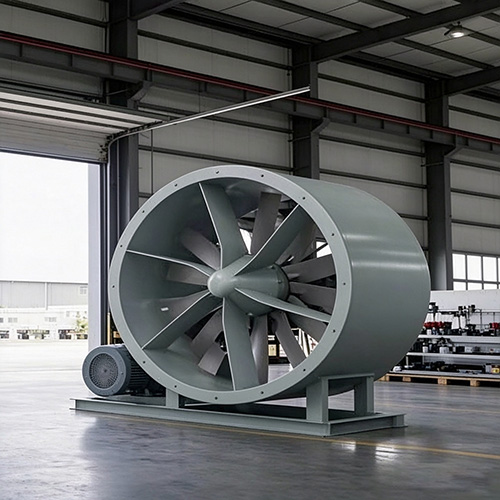
Common Materials for Fan Housings
Carbon Steel (e.g., SPCC, SPHC): Cost-effective and strong, suitable for general-purpose indoor applications. Typically requires a surface finish like powder coating or galvanization to prevent rust.
Stainless Steel (304/316): Offers excellent corrosion resistance. Grade 304 is standard for general industrial use, while 316 is specified for harsh chemical, marine, or food-grade environments.
Aluminum (e.g., 5052, 6061): Lightweight and naturally corrosion-resistant. Ideal for applications where weight is a concern, such as in transportation or portable equipment.
As an ISO 9001:2015 certified manufacturer, we provide full material traceability with Mill Test Certificates (MTC) for every batch, guaranteeing that the material specified is the material used in your product.
The Critical Role of Tight Tolerances
Air gaps are the enemy of efficiency. In a sheet metal fan shroud assembly, gaps can occur at flange faces, panel joints, and mounting points. Controlling these gaps requires a fabricator with high-precision capabilities.
We operate with fabrication tolerances down to ±0.05mm. This level of precision, achieved through advanced laser cutting and CNC bending, ensures:
Flange Flatness: Flanges are perfectly flat, allowing gaskets to compress evenly without creating pressure gaps.
Hole Position Accuracy: Bolt holes align perfectly, preventing stress on the assembly and ensuring uniform clamping force.
Geometric Consistency: Each housing is identical, simplifying installation and ensuring predictable performance across a production run of Custom Fan Case Assemblies.
This precision is a core part of our quality system, which enables us to serve over 50 premium clients worldwide with reliable OEM solutions.
Welding and Assembly: Securing Structural Integrity
Welding transforms flat metal parts into a rigid, functional structure. For a fan housing, weld quality is directly linked to both durability and airtightness. Stitch or spot welding might be faster, but it leaves gaps that permit air to leak, creating inefficiency and noise. Continuous welding is the only way to ensure a truly sealed seam.
Welding Techniques and Quality Control
We utilize TIG (Tungsten Inert Gas) and MIG (Metal Inert Gas) welding processes, chosen based on material type, thickness, and application requirements.
TIG Welding: Provides clean, precise welds with excellent penetration, ideal for stainless steel and aluminum where appearance and corrosion resistance are important.
MIG Welding: Offers faster welding speeds and is well-suited for carbon steel, delivering strong, consistent seams for structural components.
Our complete in-house fabrication, including High-Precision Fiber Laser Welding Services & Custom Sheet metal work, eliminates the miscommunication and quality variances that come from using multiple vendors. This vertical integration not only improves quality but also reduces overall project costs by 15-20% by removing intermediary markups and redundant logistics. Every welded assembly undergoes a 100% visual inspection to check for completeness, undercut, and porosity before shipment.
Buyer's QC Checklist for Fan Housing Welding
When evaluating a potential supplier or inspecting a first article, use this checklist to assess the quality of the fan housing welding:
Check for Continuous Seams: Are all structural joints fully welded along their entire length? Look closely for any gaps or unwelded sections.
Inspect Weld Bead Consistency: Is the weld bead uniform in width and height? An inconsistent bead can indicate poor process control.
Look for Defects: Are there signs of spatter, undercut (a groove melted into the base metal), or porosity (small holes in the weld)? These defects weaken the joint and can create leak paths.
Verify Post-Weld Cleaning: Have the welds been properly cleaned? Slag, flux, and heat tint (on stainless steel) should be removed to prevent corrosion.
Confirm Dimensional Accuracy: Has the heat from welding distorted the part? Check flange flatness and overall housing dimensions against the drawing.
Choosing a Supplier: Verifying Capability for Airtight Assemblies
Selecting a manufacturing partner for critical components like fan housings requires looking beyond price. A supplier's quality systems, technical capabilities, and production capacity are better indicators of long-term value and performance reliability.
With a monthly delivery capacity of over 8,000 fastener and sheet metal assemblies, Lingyufab is equipped for both high-mix, low-volume (HMLV) projects and large-scale production runs. Our process is designed to support your product's lifecycle, from a single prototype with zero MOQ to full mass production.
Key Supplier Evaluation Criteria
Quality Certifications: Does the supplier hold relevant certifications like ISO 9001:2015? This demonstrates a commitment to a documented, repeatable quality management system. Our additional ISO 14001 and TÜV CE certifications reflect our dedication to environmental standards and product safety.
Technical Expertise: Can their engineering team understand and execute complex designs with tight tolerances? With over 20 years of specialization in sheet metal and fasteners, we have the deep technical expertise to solve complex fabrication challenges.
In-House Capabilities: Does the supplier control all critical processes in-house? A vertically integrated manufacturer like Lingyufab (offering laser cutting, bending, welding, and assembly) minimizes risk and improves lead times.
Proven Track Record: Can they provide evidence of their quality and reliability? Our status as a certified core supplier to a demanding client like Mitsubishi Electric is a direct reflection of our adherence to the highest quality benchmarks.
Lead Time: What are their standard timelines for samples and production? We typically deliver samples in 7-10 days and bulk orders in 20-30 days, with rapid 48-hour delivery available for urgent requirements.
A partner who meets these criteria is more likely to deliver a sheet metal fan housing that performs as designed, preventing costly field failures and protecting your brand's reputation for quality.
To ensure your fan assembly achieves maximum efficiency and durability, partner with a fabricator who masters the details. Submit your technical drawings to our team for a detailed review and quotation.