
 +8613003178786
 sales@lingyufab.com
How to Choose Sheet Metal Enclosures for Outdoor Use?
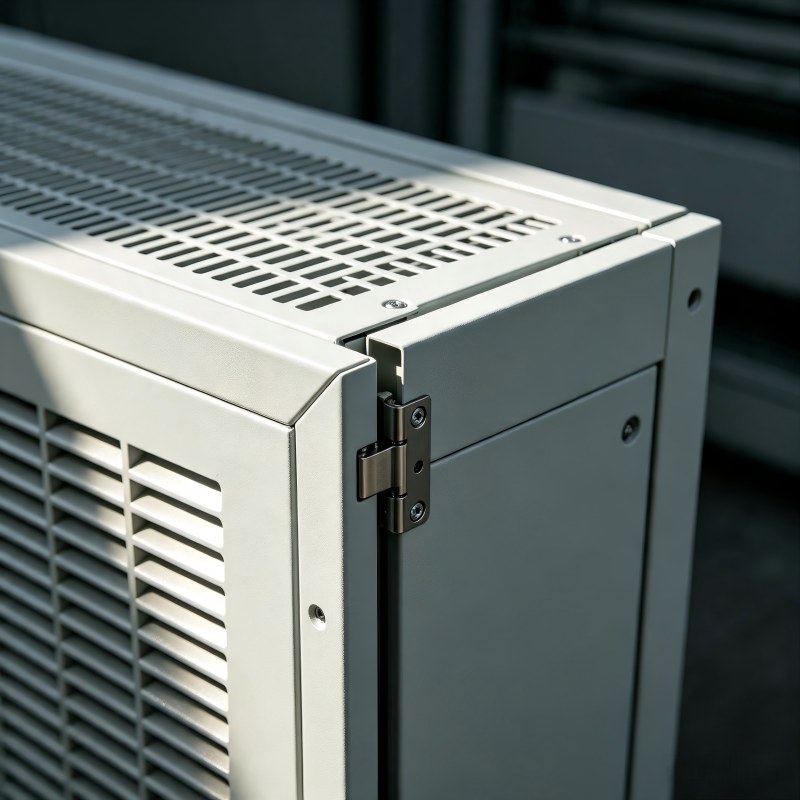
Start With the Outdoor Exposure Map, Not the Enclosure Drawing
How do you translate an outdoor installation site into build requirements before requesting sheet metal enclosures? Start by documenting what reaches the housing, where it collects, how long it remains, and what can enter through doors, seams, cable entries, vents, and mounting interfaces.
This is the practical starting point for engineers developing control boxes, energy equipment housings, communication modules, automotive support assemblies, and industrial automation cabinets. The goal is not simply to select a metal box. The goal is to specify a housing whose material, finish, seals, joints, and drainage paths match the real exposure conditions.
For early-stage product development, review Custom Sheet Metal Components for Outdoor Electrical Enclosures alongside your system layout. This helps identify whether the final design needs a wall-mounted cabinet, pedestal enclosure, ventilated control box, welded housing, removable cover, or chassis-based assembly.
Before selecting materials or issuing an RFQ, collect these inputs:
Installation location: coastal, roadside, rooftop, factory yard, agricultural area, shaded wall, open field, or sheltered loading zone.
Water exposure: wind-driven rain, washdown, condensation, standing water, splash from vehicles, or snow melt.
Airborne contaminants: salt, road dust, industrial particles, fertilizer residue, oil mist, or cleaning chemicals.
Solar exposure: direct sun duration, orientation, and whether one side receives more UV and heat than others.
Temperature behavior: daily heating and cooling, seasonal cycling, internal heat-generating equipment, and expected condensation risk.
Access requirements: service-door frequency, removable panels, tool access, mounting points, cable routes, and field-replaceable parts.
Performance target: the applicable customer, project, or regulatory protection requirement that the finished assembly must meet.
A missing exposure map blocks sound material selection. A missing color, label layout, or minor accessory detail can usually be clarified later. Do not approve the base material until the exposure map is complete.
Use a Boundary-Based Selection Method for Rain, Salt, UV, and Temperature Cycling
Outdoor failure often begins at boundaries: a cut edge, folded seam, door perimeter, cable entry, fastener interface, weld transition, or low point where water remains. Select each construction element by asking where its protection ends and what exposure reaches that boundary.
The table below is a selection method, not a substitute for project-specific validation. It shows where a choice is suitable, where it reaches its limit, and which design feature must support it.
| Exposure condition | Material and coating decision | Gasket and joint decision | Drainage decision | Failure boundary to check |
|---|---|---|---|---|
| Frequent rain with wind-driven spray | Use a material and finish selected for repeated wet exposure. Ensure cut edges, bends, weld areas, and hardware interfaces are included in the finish specification. | Use a continuous compressed gasket path around service doors and covers. Place seams away from direct spray where possible. | Provide a path for water to leave external ledges, door channels, and bottom surfaces. | A gasket cannot compensate for a cover overlap that directs water toward the interior or for a low point that holds water. |
| Salt spray or coastal air | Consider stainless steel 316 when chloride exposure is a governing condition. Stainless steel 304 may suit less severe environments, but its suitability must be reviewed against the actual salt exposure and cleaning plan. | Minimize discontinuities around doors, cable entries, and attached brackets. Check fastener and enclosure material compatibility. | Do not allow saltwater residue to remain in horizontal channels, under external brackets, or at mounting interfaces. | Using a corrosion-resistant panel alone does not protect trapped-water locations or mismatched attached hardware. |
| High UV and direct sunlight | Specify a coating system intended for the project’s outdoor UV exposure and define appearance expectations after exposure if they matter to the product. | Select gasket material based on UV exposure, compression needs, and temperature range required by the project. | Use geometry that avoids debris-filled ledges, since debris retains moisture and can shade wet surfaces from drying. | A finish may protect broad flat panels while exposed gasket edges, labels, adhesive parts, and uncoated damage points age differently. |
| Repeated temperature cycling | Allow for movement where dissimilar materials, long panels, brackets, and mounted equipment expand at different rates. | Confirm that gasket compression remains adequate through the project temperature range; avoid relying on a very narrow compression zone. | Keep drain paths open despite expected dust, ice, or debris conditions at the installation site. | A seal that works during initial assembly can lose contact if panel movement, door distortion, or hardware loading changes the gap. |
Selection conclusion: choose material, coating, gasket, and drainage as one system. This approach fits all outdoor housings because exposure reaches multiple interfaces. It does not replace required testing, site approval, or the customer’s defined protection standard.
At Lingyufab, our engineering and quality work is supported by ISO 9001:2015 and ISO 14001 certification. We are also a Mitsubishi Electric certified core supplier and follow Japanese quality standards in manufacturing control. For an outdoor design, that discipline matters most when the RFQ clearly identifies the boundaries that must be fabricated and inspected.
Choose the Base Material and Construction Around the Actual Failure Mechanism
Material selection should follow the dominant exposure, not a generic preference. Carbon steel, stainless steel 304, stainless steel 316, and aluminum each serve different design conditions. The correct choice depends on corrosion exposure, required stiffness, fabrication method, weight constraints, mating parts, and finish plan.
| Option | When it fits | Reason for selection | Limit to address in the design |
|---|---|---|---|
| Carbon steel with specified surface finishing | Outdoor equipment where the selected finish and geometry are designed around the expected exposure. | It is a practical fabrication material for formed panels, frames, brackets, and welded assemblies. | Cut edges, scratches, weld areas, unprotected interfaces, and retained water zones need explicit attention. |
| Stainless steel 304 | General applications needing corrosion resistance where chloride exposure is not the main design driver. | It provides a stainless option available for fabricated housings and assemblies. | Do not assume it is the same choice as 316 for salt-laden locations; evaluate the installation condition. |
| Stainless steel 316 | Locations where salt spray or chloride exposure is a significant concern. | It is the stronger candidate among the listed stainless grades when chloride exposure drives the material decision. | It still needs drainage, compatible hardware, cleanable geometry, and appropriate joint design. |
| Aluminum | Weight-sensitive housings, panels, and assemblies where the full mounting and joining design supports its use. | It can reduce assembly weight and is one of Lingyufab’s processed materials. | Review joints, fastener interfaces, stiffness requirements, and exposure at dissimilar-material connections. |
Construction geometry matters as much as the grade. A horizontal return flange can become a water shelf. A tightly folded corner can hold moisture if it has no release path. An external bracket mounted directly against a rear panel can create a concealed wet interface. These are design issues, not merely material issues.
Use the following build rules during concept review:
Locate door seams and removable-cover joints away from the most exposed face when installation orientation permits.
Specify slopes, drip edges, or water-shedding overlaps on top-facing and horizontal features.
Keep external mounting brackets from creating closed water traps against the enclosure wall.
Define cable-entry positions before releasing the flat pattern; later field drilling can create unplanned corrosion and sealing boundaries.
Identify every attachment point, including hinges, latches, grounding points, handles, brackets, and internal rails.
Show which joints are welded, mechanically fastened, removable, or gasketed on the drawing.
For designs needing formed panels, mounting hardware, and internal rails delivered together, review Sheet Metal Assemblies. Integrating these items early can reduce mismatched hole patterns and field assembly changes.
Specify Sealing, Drainage, and Hardware Before Releasing a Prototype
A prototype drawing should identify how water is excluded and where accidental water can escape. Leaving these decisions to a later build stage often results in additional tooling changes, revised bends, or reworked access panels.
Define the gasket interface
State the full gasket path on the drawing. Show its start and end points, corner treatment, compression surface, and the parts that load the seal when latched or fastened. A gasket works when the mating faces remain aligned and its compression is maintained. It does not solve warped doors, interrupted flanges, unsealed cable openings, or seams that carry water inward.
For service doors, check that hinges and latches apply load around the entire perimeter rather than only at one point. For removable panels, define fastener locations and access direction. If the panel must be opened repeatedly, the maintenance sequence should not scrape, twist, or displace the gasket.
Design drainage as an intentional feature
Drainage should remove water from external channels and prevent it from collecting at the bottom edge, mounting points, door lips, and cable-entry areas. Confirm that the drain path remains clear after the enclosure is mounted. A drain opening hidden against a wall, blocked by a bracket, or positioned under a retained lip cannot perform its intended function.
Where internal condensation is possible, separate the question of internal moisture control from rain exclusion. The project owner must define whether the housing needs ventilation, thermal management, or another moisture-control approach. Do not add openings before checking how they affect the required protection target.
Select attached hardware as part of the corrosion plan
Hardware is a boundary between materials and a potential entry point for water. Specify its type, location, installation method, and whether it is exposed externally. Internal studs, weld nuts, self-clinching features, and captive hardware can reduce loose-part handling, but they still require a defined interface with the enclosure.
For example, use a Custom Self-clinching Integrated Components approach when an internal mounting arrangement needs repeated assembly without loose nuts. This fits protected internal attachment points. It does not remove the need to evaluate external fasteners exposed to rain or salt.
Issue an RFQ That Lets Fabrication and Quality Teams Verify the Design
An outdoor enclosure RFQ should communicate more than dimensions. The fabricator needs enough detail to build the intended protection features and inspect them before shipment.
Include the following information with the drawing package:
Material selection: carbon steel, stainless steel 304, stainless steel 316, or aluminum.
Surface finish requirement, including external and internal areas where applicable.
Outdoor exposure description, including rain, salt, UV, temperature cycling, dust, and installed orientation.
Door, cover, seam, gasket, cable-entry, vent, and drain details.
Weld locations, cosmetic weld expectations, and joints that must remain watertight according to the project requirement.
Mounting method, bracket locations, fastener callouts, and interfaces with poles, walls, frames, or equipment bases.
Internal component layout, heat-producing devices, rail locations, and service-clearance needs.
Applicable dimensional tolerances and the specific features that control fit.
Inspection requirements, material traceability needs, and packaging requirements for transport.
Do not place a blanket tight tolerance on every feature. Identify the functional dimensions: door gap, latch alignment, gasket compression interface, equipment mounting holes, rail locations, and mating-panel positions. Lingyufab can fabricate specified features to tolerances down to ±0.05 mm where the design and process require it. That level of control is suitable for fit-critical interfaces; it is not automatically necessary for every large external panel.
Our in-house process covers laser cutting, CNC bending, stamping, TIG/MIG welding, and surface finishing. A drawing that defines joint type and inspection points allows these operations to be planned as one manufacturing flow rather than as disconnected parts. Learn more about our Precision Sheet Metal Laser Cutting Services when reviewing cutouts, cable openings, vents, and complex panel profiles.
Check the Prototype Against the Exposure Map and Correct the Right Feature
Prototype review should confirm that the physical housing follows the original exposure map. Inspect it before adding internal electronics whenever possible. That gives the team access to seams, corners, welds, drainage features, and gasket paths.
Use this completion checklist:
Rain path: Confirm water-shedding overlaps face the expected direction of spray and that no cover edge leads water toward an opening.
Gasket continuity: Verify the gasket runs continuously along the specified interface, corners are properly joined, and closure hardware produces consistent contact.
Drainage: Check every external channel, lower edge, and bracket interface for a route that does not retain water.
Material verification: Match the delivered material to the drawing and request Mill Test Certificates when traceability is required.
Hardware interfaces: Confirm nuts, studs, screws, hinges, latches, and brackets match the documented locations and do not interfere with sealing surfaces.
Door operation: Open and close the access panel through its intended service cycle. Look for gasket displacement, panel rubbing, latch misalignment, or gap changes.
Mounting condition: Check the actual installed angle and support points, because a correct tabletop prototype may drain differently after wall or pole mounting.
If water remains on an external feature, revise the geometry or drain path first. If a door gap varies, revisit the panel stiffness, hinge location, latch loading, and bend sequence. If the material choice is challenged by the site condition, return to the exposure map and reassess whether 304, 316, aluminum, or a finished carbon-steel construction best fits the documented risk.
Lingyufab has manufactured sheet metal and fastener products since 2003 and supports OEM/ODM work from one-piece prototypes through volume production. There is no MOQ during the prototyping phase, and standard samples typically take 7–10 days. Every shipment receives 100% dimensional and visual inspection, with full MTC traceability available for every material batch.
Submit your enclosure drawing and installation exposure details to request material, sealing, and fabrication selection advice.