
 +8613003178786
 sales@lingyufab.com
Custom Metal Components: Model Tooling Payback
Set the Cost Boundary Before Comparing Production Quotes
A sourcing manager choosing between a low-upfront quote and a tooling-based production quote is not simply comparing unit prices. The real decision is whether the forecasted production run is large enough to recover the upfront cost of fixtures, dies, or dedicated tooling through a lower cost per good part.
For Custom Metal Components, the comparison should begin with the same defined scope on both quotes. This is especially relevant for OEM brackets, chassis, front panels, electrical enclosures, mounting plates, server-rack parts, and welded assemblies. A prototype method may be the right commercial choice for a short run, while dedicated tooling may offer a lower total production cost when demand is stable and repeat volume is sufficient.
Set the quote boundary in writing before requesting pricing. Use the same material, revision level, inspection standard, finish, packaging requirement, delivery term, and production quantity for each option. Without this discipline, a lower-looking quote may cover fewer operations or place setup, inspection, scrap allowance, hardware installation, or packaging outside the listed price.
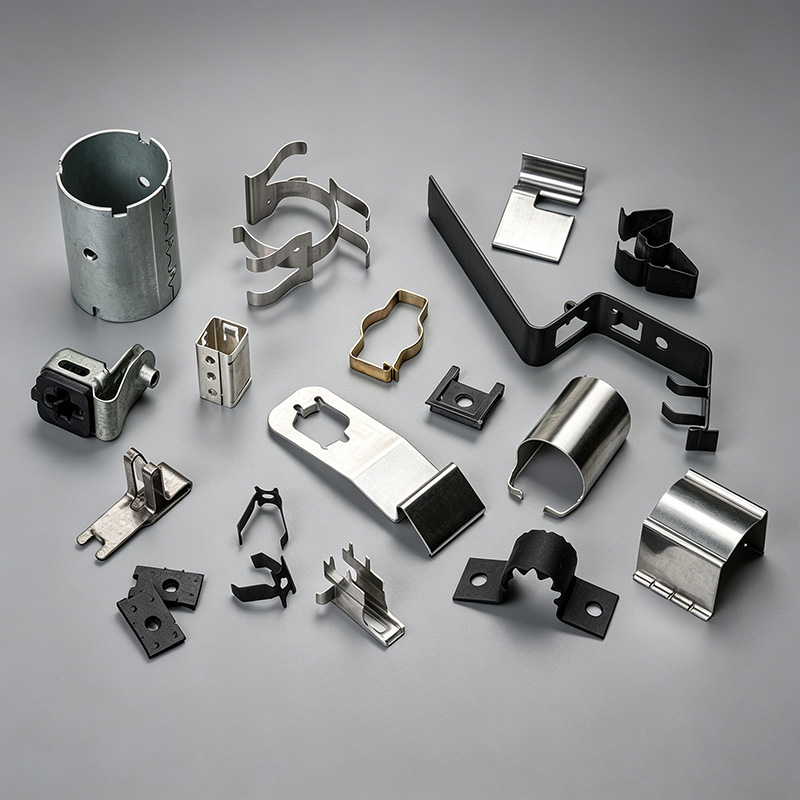
At Lingyufab, we manufacture sheet metal products and assemblies through laser cutting, CNC bending, stamping, TIG/MIG welding, and surface finishing. This allows a buyer to compare a flexible fabrication route with a more dedicated production route while retaining a common manufacturing source. Our Leading Sheet Metal Prototyping Manufacturer service also supports one-piece prototypes with no MOQ during the prototyping phase, which can be useful before approving a production fixture or die.
Define the period and quantity being evaluated
Use a production period that matches the approval decision. For example, compare total costs for one approved release, one purchase order, or the expected annual demand. Do not compare a tooling investment against only the first shipment if the tooling will be used for repeat releases. Conversely, do not use an optimistic multi-year forecast if the product design is likely to change before that volume is reached.
- Use prototype or flexible fabrication pricing when the design is still being validated, demand is uncertain, or revisions are expected. This fits laser-cut and CNC-bent parts where setup flexibility has value.
- Use fixture, die, or dedicated-tooling pricing when the drawing is controlled, repeat demand is supported by a forecast, and the lower cost per good part can repay the one-time investment.
- Use a blended plan when early demand is uncertain but a likely production ramp exists. Start with flexible methods, then release tooling only after the design and volume assumptions are confirmed.
This decision should not be based on material price alone. Carbon steel, stainless steel 304/316, and aluminum can each be manufactured through different routing options. The part geometry, bend count, hole pattern, installed hardware, welding requirement, and finish can change which route makes commercial sense.
Separate Confirmed Costs, Estimates, and Quote-Dependent Items
A useful budget distinguishes facts already stated in a supplier quotation from figures that still depend on drawings, order conditions, or production planning. A confirmed cost driver is not the same as a confirmed price. This distinction prevents a spreadsheet from presenting assumptions as settled commercial terms.
| Cost Category | What Can Be Confirmed | What Usually Remains Estimated or Unknown | Buyer Action |
|---|---|---|---|
| One-time tooling | Quoted fixture, die, gauge, or dedicated-tool cost if listed separately | Engineering changes after approval, maintenance expectations, tool ownership terms | Request a separate line item and define revision-control responsibility. |
| Per-part manufacturing | Quoted unit price at a stated quantity and material grade | Effect of quantity changes, order release pattern, and final production routing | Ask for price breaks at realistic forecast quantities. |
| Material and scrap allocation | Specified material, such as carbon steel, 304/316 stainless steel, or aluminum | Material utilization, remnant handling, and scrap allocation method | Ask whether the unit price includes normal process scrap. |
| Setup and cycle time | Setup charge when expressly quoted | Actual routing, handling steps, cycle time, and changeover burden | Ask which operations are included in each option. |
| Quality and documentation | Inspection scope and documentation explicitly included in the quote | Additional reports, special gauges, or customer-specific approval activities | State drawing tolerances and required records in the RFQ. |
| Freight and fulfillment | Delivery term and packaging if stated | Freight, customs-related costs, storage, and release scheduling if not stated | Keep these outside the part-cost comparison unless terms match. |
For sheet metal parts, the unit cost often contains more than material and machine time. It can include programming, laser cutting, CNC bending, punching or stamping, welding, deburring, hardware insertion, finishing, inspection, and packing. A tooling route may reduce repeated setup and shorten labor content, but that result must be supported by the actual part design and routing.
Quality requirements also belong in the commercial comparison. Lingyufab is certified to ISO 9001:2015, ISO 14001, and TÜV CE standards, and is a Mitsubishi Electric certified core supplier following strict Japanese quality standards. We conduct dimensional and visual inspection before shipment and provide Mill Test Certificates for every material batch. These are defined sourcing controls, not an assumed cost figure; buyers should specify which documents and inspection records their program requires.
Cost: Use a Break-Even Model for Fixtures, Dies, and Dedicated Tooling
The break-even point is the forecast quantity at which the total cost of the tooling-based option becomes lower than the total cost of the flexible option. The calculation is simple, but only when both routes cover the same deliverable: the same revision, material, finish, inspection level, packaging, and delivery basis.
Use the total-cost equation, not unit price alone
For a flexible fabrication route, such as laser cutting and CNC bending without dedicated production tooling:
Total Flexible Cost = Fflex + Q × Vflex
For a tooling-based route:
Total Tooling Cost = Ftool + Q × Vtool
Where:
- Fflex = one-time flexible-route costs, such as programming, first-article setup, or special inspection preparation.
- Ftool = one-time dedicated costs, including fixtures, dies, dedicated gauges, and any required setup work.
- Q = forecast quantity of acceptable delivered parts within the defined period.
- Vflex = variable cost per good part for the flexible route.
- Vtool = variable cost per good part for the tooling route.
Each variable cost should include the quoted per-part manufacturing content plus any per-part allocation for material, normal process scrap, direct labor, machine cycle time, consumables, installed hardware, finishing, and inspection. If one of these items is excluded from one quote, remove it from both calculations or obtain an updated quote.
The break-even quantity is:
QBE = (Ftool − Fflex) ÷ (Vflex − Vtool)
The model only works when Vflex is greater than Vtool. If dedicated tooling does not lower the variable cost per good part, it does not produce a tooling payback under that scope. It may still be selected for another stated reason, such as repeatability, part handling, or a customer-required process, but it should not be justified as a unit-cost reduction.
| Decision Result | Meaning | Commercial Response |
|---|---|---|
| Forecast quantity is below QBE | The one-time tooling cost is not recovered in the planned run. | Keep the flexible route, or reduce tooling scope. |
| Forecast quantity is close to QBE | The result is sensitive to forecast accuracy, revisions, scrap, and price changes. | Use a phased release or obtain a revised quote with clear assumptions. |
| Forecast quantity is above QBE | The lower per-part cost has room to repay the added upfront cost. | Review ownership, design freeze, maintenance, and delivery conditions before approval. |
Worked example using variables instead of unsupported price assumptions
Consider a mounting plate that can be made by flexible laser cutting and CNC bending, or by a route using a dedicated fixture or die. Place the supplier’s quoted setup values into Fflex and Ftool. Then place the quoted cost per accepted part into Vflex and Vtool. The difference between those two per-part values is the contribution toward repaying the additional fixture or die cost.
If the production forecast is lower than QBE, approve flexible production. If the forecast exceeds QBE, tooling may be commercially justified, provided the drawing is frozen and the quote includes the same finish, hardware, inspection, and packaging. This is an illustrative method, not a price estimate. Actual tooling payback cannot be calculated responsibly without the supplier’s quotation inputs and the buyer’s forecast.
Test the Assumptions That Can Change Tooling Payback
A break-even calculation is only as reliable as its inputs. Before approving a fixture, die, or dedicated tooling, test the assumptions most likely to change total cost. The goal is not to reject tooling by default. It is to avoid assigning a long-run production method to a design or forecast that has not yet stabilized.
- Confirm the part revision. Tooling is most suitable after hole locations, bend geometry, hardware positions, and mating interfaces are controlled. It does not fit a component expected to change during the next release.
- Confirm the forecast quantity and release pattern. A total annual forecast may support tooling, but fragmented low-volume releases can affect order economics. Ask the supplier to price the expected lot sizes, not only the annual total.
- Confirm the good-part definition. The quoted variable cost should relate to parts accepted to the agreed drawing and inspection requirement. This prevents scrap assumptions from being hidden in a unit-price comparison.
- Confirm which operations change. A die may reduce repeated forming steps; a welding fixture may reduce handling; a dedicated gauge may reduce inspection time. Identify the actual cost mechanism rather than assuming every tool reduces cost.
- Confirm installed hardware and assembly needs. A bracket with self-clinching hardware, weld nuts, or welded studs may benefit from an assembly fixture even when the blank itself remains laser cut.
- Confirm tool ownership and storage terms. Define who owns the tool, where it is stored, how revisions are managed, and whether the quote includes maintenance or future modification work.
For assemblies with installed hardware, compare whether parts arrive as loose components or as finished sub-assemblies. Our Pre Installed Hardware And Sub Assemblies capability can reduce handoffs between separate part and assembly suppliers. Where in-house vertical integration replaces intermediaries and extra logistics, Lingyufab reports overall cost reductions of 15–20%; the result depends on the actual routing, purchased content, and project scope.
Part tolerance can also affect route selection. Lingyufab supports tolerances down to ±0.05 mm for applicable work, but buyers should apply that requirement only to features that need it. Assigning tight tolerances to non-functional dimensions can increase inspection and processing burden without improving the assembled product. Put functional datums, critical dimensions, and measurement requirements directly on the drawing.
Select the Manufacturing Route Based on Design Maturity and Demand
There is no universal winner between flexible fabrication and dedicated tooling. The suitable route depends on the product stage and cost structure. A practical sourcing plan often changes as the program progresses from engineering validation to recurring production.
| Program Condition | Likely Starting Route | Why It Fits | Limit of the Recommendation |
|---|---|---|---|
| Prototype, pilot build, or active drawing changes | Laser cutting and CNC bending | Low commitment and fast revision response support design validation. | Per-part cost may remain higher at sustained repeat volume. |
| Stable brackets, panels, or chassis with repeat orders | Dedicated fixture, die, or process-specific tooling | One-time costs can be spread across forecasted good parts when variable cost decreases. | Requires a defensible demand forecast and revision control. |
| Welded frame or enclosure with repeat geometry | Welding fixture plus controlled assembly process | Can reduce repeated positioning and handling steps. | Tooling value depends on weld sequence, access, and assembly design. |
| High-mix, low-volume OEM production | Flexible fabrication with targeted fixtures | Balances repeatable features with frequent part-number changes. | Not every part merits a dedicated die or fixture. |
For a buyer sourcing enclosures, frames, and formed parts, a single supplier with laser cutting, bending, welding, and assembly capability can simplify the cost review. See our Enclosure Chassis Assemblies and Custom Mounting Brackets pages for examples of the product categories that may require this type of quote comparison.
Lingyufab has specialized in sheet metal and fastener manufacturing since 2003 and supports OEM/ODM programs from R&D through production. Standard samples typically take 7–10 days and bulk production typically takes 20–30 days, subject to final drawing, process, and order conditions. For urgent orders, 48-hour rapid delivery is available in applicable circumstances; it should be confirmed against the actual part scope rather than assumed during budget approval.
Prepare an Approval-Ready RFQ and Payback Sheet
A usable tooling-payback decision needs a quote package that lets finance, engineering, and procurement work from the same assumptions. Request two clearly separated commercial options: a flexible route and a tooling-based route. Do not ask a supplier to hide tooling inside a unit price, because that prevents a transparent break-even review.
- Current 2D drawing and, where available, 3D model and revision number.
- Material grade, thickness, finish, and any required hardware or welding details.
- Required tolerances, functional datums, inspection method, and documentation needs.
- Prototype quantity, first production quantity, expected lot size, and forecast period.
- A separate line for fixture, die, dedicated gauge, or tooling cost.
- Per-part pricing for each quantity tier and each manufacturing route.
- Statement of included and excluded costs: programming, setup, scrap allocation, packaging, inspection, freight, and taxes or duties where relevant.
- Tool ownership, storage, maintenance, modification, and design-change terms.
With those inputs, your team can calculate QBE, test a conservative forecast, and document why the selected route fits the program. Submit your drawings and forecast quantity to request a quote with separate flexible-production and tooling-based cost options.