
 +8613003178786
 sales@lingyufab.com
Custom Sheet Metal Fabrication: 5-Year Cost
05
Nov 2026
Custom Sheet Metal Fabrication: 5-Year Cost
Assess supplier fit before comparing the lowest quote
A low piece price can look attractive on an RFQ comparison sheet, yet it may conceal the costs that procurement teams absorb later: tooling amortization, freight variability, customs duties, inventory exposure, inspection effort, and rework caused by dimensional or assembly issues. Before placing an order for recurring custom metal parts, buyers should compare the full five-year landed cost rather than the unit price alone.
For buyers sourcing custom sheet metal fabrication for enclosures, brackets, chassis, control boxes, panels, heat sinks, and metal sub-assemblies, Lingyufab supports OEM and ODM requirements from prototype quantities through repeat production. Established in 2003, Shanghai Lingyu Industry specializes in sheet metal and fastener manufacturing, serving industrial customers that require laser cutting, CNC bending, stamping, TIG/MIG welding, finishing, and installed hardware within one supplier scope.
Supplier fit matters most when a part has multiple bends, welded features, installed fasteners, cosmetic surface requirements, or tight assembly interfaces. In these cases, dividing fabrication, hardware procurement, welding, and assembly among separate suppliers can create added coordination work and extra freight movements. Our Global Custom Sheet Metal Fabrication Service combines these operations in one production scope, helping buyers reduce handoffs between vendors.
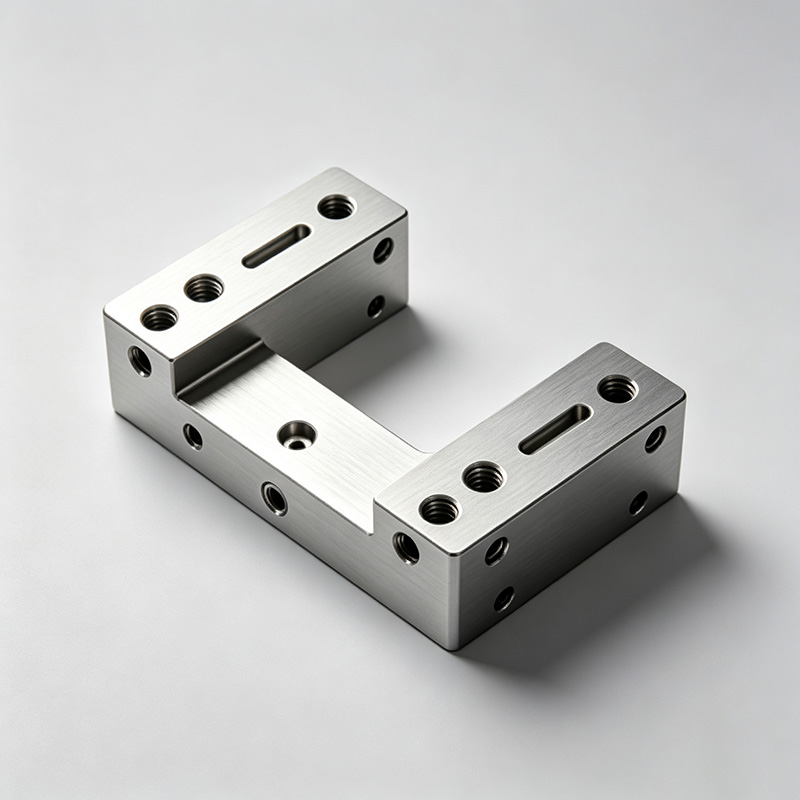
Recommendation: compare suppliers using a program-level cost model when the part will be purchased repeatedly over several years. This is especially relevant for industrial automation housings, electrical control boxes, server chassis, automotive brackets, and energy equipment frames. The method is less useful for a one-off emergency replacement part, where speed and availability may outweigh long-term cost analysis.
Use a five-year landed-cost model that separates every cost driver
The correct comparison starts by separating cost categories. Unit price is only one line in the sourcing decision. A five-year model should show which costs are fixed, which are recurring, and which costs can rise when demand, shipment timing, or quality performance changes.
| Cost category | What to include | How to calculate over five years | Buyer decision use |
|---|---|---|---|
| Unit price | Quoted part price, including agreed fabrication and assembly scope | Unit price × planned annual volume × 5 | Shows direct production cost, but not the complete sourcing cost. |
| Tooling | Dedicated tooling, fixtures, forming tools, or other program-specific setup charges | Initial tooling cost + approved replacement or maintenance costs | Separates a low unit quote that depends on a high upfront charge from a genuinely lower program cost. |
| Freight | International transport, domestic delivery, packing requirements, and shipment-related handling | Freight per shipment × planned shipments over five years | Shows whether larger batch shipments reduce transport cost but increase inventory exposure. |
| Duties | Applicable import duties and customs-related charges | Declared customs value × applicable duty treatment × imported quantity | Requires confirmation with the buyer’s customs advisor because duty treatment depends on destination and classification. |
| Quality losses | Incoming inspection, sorting, scrap, production interruption, replacement handling, and internal administration | Expected quality-loss cost per event × expected events over five years | Turns quality performance into a purchasing comparison rather than a general supplier claim. |
| Inventory carrying cost | Capital tied up in stock, warehousing, insurance, storage handling, and obsolescence exposure | Average inventory value × buyer’s internal annual carrying-cost rate × 5 | Shows the effect of ordering larger quantities to reduce freight or piece price. |
| Rework risk | Labor, modified hardware, rework logistics, assembly delay, and engineering changes caused by fit issues | Estimated rework cost per occurrence × expected occurrences | Important for parts with installed studs, nuts, weldments, precision holes, or mating interfaces. |
The working formula is:
Five-Year Landed Cost = Unit Price Cost + Tooling + Freight + Duties + Quality Losses + Inventory Carrying Cost + Rework Risk
Recommendation: request every supplier to quote against the same annual volume, delivery location, Incoterm, packaging requirement, inspection requirement, and revision level. The reason is simple: an apparently lower quote can be based on a different scope. This approach fits recurring programs with stable drawings and forecast demand. It does not replace an internal financial review when exchange rates, tax treatment, duty classification, or demand forecasts are uncertain.
Worked cost-model structure for a recurring metal-part program
Use the following worksheet format in a sourcing meeting. It avoids inserting unverified assumptions into the model while still forcing each owner to provide a value.
| Input | Supplier A | Supplier B | Evidence required |
|---|---|---|---|
| Quoted unit price | Enter supplier quote | Enter supplier quote | Quote revision, part revision, included operations |
| Five-year purchase quantity | Enter forecast | Enter forecast | Demand plan and annual release pattern |
| Tooling charge | Enter quoted charge | Enter quoted charge | Tooling list and ownership terms |
| Freight per shipment | Enter logistics estimate | Enter logistics estimate | Shipment size, delivery point, trade term |
| Duties and customs charges | Enter buyer calculation | Enter buyer calculation | Customs classification review |
| Inventory carrying cost | Enter internal value | Enter internal value | Order cycle and internal finance rate |
| Quality and rework allowance | Enter risk-based value | Enter risk-based value | Inspection plan, dimensional requirements, supplier documentation |
| Total five-year landed cost | Calculate total | Calculate total | Approved model assumptions |
This structure is useful because it keeps procurement, engineering, quality, and logistics accountable for their own inputs. A supplier can provide a fabrication quote and manufacturing evidence; the buyer should retain ownership of internal labor rates, inventory assumptions, duty treatment, and customer-delay costs.
Match manufacturing scope to the cost risks in the drawing
Cost risk is often created by the drawing itself. A simple laser-cut plate may be evaluated mainly on material, cutting, finish, and shipment terms. A formed electrical enclosure with welded brackets, self-clinching hardware, and several mating surfaces should be assessed differently because variation at one operation can affect assembly cost downstream.
Lingyufab processes carbon steel, aluminum, and stainless steel including 304 and 316 grades. Our in-house scope includes laser cutting, CNC bending, stamping, TIG/MIG welding, surface finishing, and assembly. For selected requirements, we can support tight tolerances down to ±0.05mm. This is relevant when hole location, bend geometry, mounting interfaces, and installed fasteners have to work together at final assembly.
For example, a buyer sourcing a chassis panel with pressed hardware should ask whether the quotation includes the specified hardware installation and inspection points. If the assembly requires nuts or studs to be installed before shipment, separate sourcing of hardware and fabricated sheet can create additional receiving, kitting, and fit-up work. Buyers evaluating this structure can review our Pre Installed Hardware And Sub Assemblies capabilities alongside the metal-part quote.
- Laser-cut and bent brackets: prioritize material grade, bend dimensions, mounting-hole position, finish, and packing protection. This suits straightforward mounting parts. It may not be enough for parts requiring welded hardware or electrical assembly.
- Welded chassis and frames: define datum surfaces, weld locations, cosmetic requirements, and allowable distortion before quote comparison. This suits structural assemblies. It requires clear drawings and acceptance criteria because welding can influence dimensional fit.
- Enclosures and control boxes: include door interfaces, gasket surfaces, cutouts, grounding features, installed hardware, and panel assembly requirements. This suits industrial electrical equipment. It may require separate agreement on electrical components if those components are outside the metal fabrication scope.
- Server and network chassis: focus on hole alignment, airflow-related cutouts, rail interfaces, cable-management points, and cosmetic surfaces. See Custom Metal Components for Server and Networking Chassis when the program needs sheet metal parts designed around equipment integration.
Recommendation: award the work based on the supplier’s ability to quote the completed manufacturing scope shown on the drawing, not simply the blank-part cost. This is most suitable for assemblies that combine bending, welding, and installed hardware. For a commodity flat blank with no secondary operations, a simpler comparison may be sufficient.
Check quality evidence before assigning a quality-loss allowance
Quality cost should not be treated as an arbitrary contingency. It should be linked to the documentation, inspection scope, material traceability, and dimensional requirements that the supplier can support.
Lingyufab is certified to ISO 9001:2015 and ISO 14001, with TÜV CE certification. As a Mitsubishi Electric certified core supplier, we follow strict Japanese quality standards in manufacturing. Every shipment receives dimensional and visual inspection before dispatch, and Mill Test Certificates are available for every material batch. Where a manufacturing defect causes a quality issue, Lingyufab offers free replacement or repair.
These controls matter for buyers who need traceability for stainless steel, carbon steel, or aluminum parts and who must document material origin within their own quality records. They are particularly relevant for control boxes, chassis, mounting plates, and fabricated parts that enter regulated or safety-sensitive equipment. They do not remove the buyer’s responsibility to state the required material grade, finish, acceptance criteria, and any project-specific documentation needs in the RFQ.
Common errors that inflate five-year cost
- Comparing incomplete scopes: One quote includes welding and installed hardware; another includes only cut-and-bent sheet. Confirm each operation line by line.
- Using a prototype price as the production price: Prototype, pilot, and recurring production quantities can have different setup and logistics structures. Ask for pricing by expected release quantity.
- Ignoring material documentation: If material traceability is required, state the MTC requirement before quotation. Adding it after award can create avoidable administrative work.
- Leaving tolerances only in internal notes: Put critical dimensions on the controlled drawing. A tolerance target down to ±0.05mm should be assigned only where function requires it.
- Assuming freight is fixed: Freight depends on shipment size, packing, destination, and delivery frequency. Model it separately from the part price.
- Missing rework ownership: Agree how nonconforming parts, replacement shipments, repair scope, and inspection evidence will be handled before release.
Use prototype and production terms that protect the program economics
A supplier relationship should allow buyers to validate a part before committing to a long production cycle. Lingyufab has no MOQ for prototyping phases, supporting a one-piece prototype, a 100-piece pilot run, or later mass production under the same manufacturing discipline. Typical sample lead time is 7–10 days, while bulk production is typically 20–30 days. For urgent orders, rapid delivery within 48 hours is available in applicable cases; this should be confirmed against the part scope, material availability, and production schedule rather than treated as a standard lead time for every order.
This flexibility can reduce inventory carrying cost when an engineering team needs to confirm fit before placing a larger release. It also helps purchasing teams avoid funding unnecessary inventory while a product revision remains open. The approach is most useful for high-mix, low-volume programs, new equipment launches, and parts with uncertain annual demand. It is less relevant when the buyer already has mature drawings, stable demand, and a justified large-volume release schedule.
Lingyufab delivers more than 8,000 fasteners and metal sheet assemblies monthly. For programs that combine fabricated parts with threaded hardware, buyers can also align related sourcing through our Fasteners product range, including screws, bolts, nuts, washers, and custom fasteners. Consolidating the scope can reduce supplier handoffs, although buyers should still compare the total landed cost and confirm each product’s material, finish, and technical requirements.
Five-step RFQ procedure for a usable cost comparison
- Issue controlled technical files: provide drawings, 3D files where available, material grade, finish, critical tolerances, hardware requirements, and revision status.
- State the five-year demand assumption: identify expected annual volume, release quantity, forecast stability, and target delivery location.
- Request separated cost lines: ask for unit price, tooling, packaging, freight assumptions, and any excluded operations.
- Define acceptance evidence: specify dimensional inspection points, visual criteria, MTC needs, and any required pre-shipment documentation.
- Review total program cost: apply the buyer’s freight, duty, inventory, quality-loss, and rework assumptions before supplier selection.
Decide when Lingyufab is the right sourcing option
Lingyufab is a practical fit for OEM buyers needing recurring sheet metal parts or assemblies with multiple fabrication steps under one production source. The strongest fit includes custom brackets, enclosures, cabinets, chassis, control boxes, front panels, bezels, welded frames, and assemblies that require integrated fasteners. Our vertical integration can reduce overall costs by 15–20% by removing intermediaries and extra logistics, particularly where a buyer would otherwise coordinate several separate vendors.
Before award, the buyer should confirm the final drawing revision, material and finish, annual volume, shipment destination, required traceability, critical dimensions, packaging method, and acceptance responsibility. Those points determine whether the projected five-year savings are real and repeatable.
Submit your drawings and five-year volume forecast to request a quote with separated cost assumptions for your custom metal parts program.