 +8613003178786
 sales@lingyufab.com
Sheet Metal Fabrication: What Drives Quote Cost?
Sheet Metal Fabrication: What Drives Quote Cost?
Compare Quote Scope Before Choosing the Lowest Price
A low quote can become expensive when it excludes the work needed to deliver a production-ready part: installed hardware, weld cleanup, finishing, inspection records, protective packaging, or material certification. Before releasing an RFQ for sheet metal fabrication, buyers should first confirm that every supplier is pricing the same drawing revision, material, finish, inspection expectation, and delivery condition.
Lingyufab is a manufacturer of sheet metal products, enclosures, brackets, chassis, control boxes, front panels, heat sinks, and sheet metal assemblies, as well as related fasteners. We support OEM and ODM requirements from prototype quantities through production releases. For projects that require a single source for formed parts and installed components, our Global Custom Sheet Metal Fabrication Service combines laser cutting, CNC bending, stamping, TIG/MIG welding, surface finishing, and assembly.
Recommendation: Compare quotations by line-item scope rather than total price alone. This fits RFQ comparison, supplier qualification, and cost-reduction discussions for industrial automation, automotive, energy, server, and electrical equipment. It does not replace a review of functional requirements; a lower-cost revision is only suitable if it still meets fit, load, thermal, environmental, and appearance needs.
- Confirm the material callout: Carbon steel, aluminum, stainless steel 304, and stainless steel 316 have different purchase costs and processing behavior. A supplier should not substitute material without written approval.
- Check the included operations: Ask whether cutting, forming, welding, deburring, hardware installation, finishing, final inspection, and packaging are included.
- Compare quantity assumptions: A quote for 10 pieces cannot be evaluated fairly against a quote based on 500 pieces, even if the unit price appears attractive.
- Match quality documentation: If material traceability is required, request Mill Test Certificates for the quoted material batch.
- Identify excluded work: Freight, special fixtures, samples, revision work, and third-party testing can change the landed cost.
Cost: A Quote-Cost Model for Material, Processing, and Volume
The most useful quotation model separates the cost drivers that change when the design or order quantity changes. This gives procurement teams a practical basis for asking targeted questions instead of requesting an unexplained discount.
| Quote Cost Driver | What Increases Cost | Buyer Action to Control Cost | When Cost Reduction May Not Apply |
|---|---|---|---|
| Material yield | Large blank sizes, narrow strips, irregular nesting shapes, and high scrap rates increase material consumed per part. | Review whether multiple parts can share a common sheet layout, or whether blank geometry can be adjusted without changing function. | Do not alter part geometry when clearances, sealing faces, or mating interfaces are fixed by the product design. |
| Cutting time | Long cut paths, many internal profiles, small slots, and repeated small holes add laser machine time. | Remove non-functional cut features and combine nearby openings where assembly requirements allow. | Retain ventilation, cable-routing, mounting, and safety features that are needed for the application. |
| Bend complexity | Many bends, short flange returns, difficult bend access, and tight positional requirements add CNC bending setup and handling time. | Use common bend directions and standardize flange geometry across related parts where possible. | Do not simplify bends that establish stiffness, alignment, service access, or enclosure protection. |
| Welding | Long weld seams, multiple weld locations, cosmetic weld requirements, and post-weld cleanup add labor. | Use formed tabs, slots, self-clinching hardware, or mechanical fastening when these methods meet the load and appearance requirement. | Welded construction remains appropriate where structural strength, sealing, or permanent joining is required. |
| Finishing | Special appearance requirements, masked areas, multiple finish stages, and additional handling increase cost. | Specify finish only where it serves corrosion protection, electrical, marking, or visual requirements. | Do not reduce finish requirements for outdoor, corrosive, or customer-facing installations without engineering approval. |
| Tooling | Dedicated stamping or forming tooling can add an initial project cost. | Ask for separate tooling and recurring-unit-cost lines so the payback can be assessed at the intended volume. | For prototypes or changing designs, dedicated tooling may not be the right choice. |
| Batch size | Small orders carry more setup cost per part for programming, material preparation, machine setup, and inspection. | Release a realistic annual or batch forecast, and consider combining compatible part numbers in one production run. | Do not increase order size beyond inventory, cash-flow, revision-control, or storage limits. |
Conclusion: The largest savings usually come from reducing repeated processing time and improving material utilization, not from asking a supplier to reduce margin without changing the work content. This approach fits stable production parts and planned releases. It is less applicable to urgent, one-off replacement parts where speed and exact conformity are the priority.
At Lingyufab, in-house fabrication and assembly reduce transfers between separate cutting, forming, welding, and assembly vendors. For suitable projects, this vertical integration can reduce overall costs by 15–20% by removing intermediary handling and extra logistics. The exact result depends on part design, order scope, and the work currently divided among suppliers.
Use Design Changes That Lower Cost Without Reducing Function
Cost reduction should be treated as an engineering exercise. The goal is not simply to remove features. It is to remove unnecessary processing while protecting the features that make the part fit, fasten, protect, cool, or support the finished product.
Practical cost-down actions before production release
- Freeze the functional interfaces. Mark mounting holes, electrical grounding locations, door clearances, connector openings, and mating edges that cannot move. These areas should not be changed merely to improve nesting.
- Identify appearance-controlled surfaces. Clarify which faces are customer-visible and which are internal. This helps prevent paying for cosmetic weld cleanup or premium finishing where it is not needed.
- Count secondary operations. List each added operation: threaded inserts, welded nuts, studs, hinges, gaskets, labels, or sub-assembly steps. Confirm whether each one is necessary.
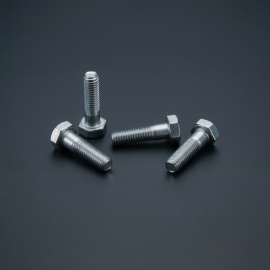
- Standardize fasteners where practical. A common fastener family can simplify purchasing and assembly. For example, a design may use Professional Weld Nut Manufacturer support where a permanent threaded mounting point is required.
- Review bend directions and access. Features that require repeated reorientation or difficult tool access can add handling time. Aligning compatible bends can improve production efficiency.
- Separate prototype and production intent. A prototype may need flexibility and rapid revision, while a stable production design may justify different manufacturing choices.
- Request a revised quote with each change listed. Ask the supplier to identify whether the saving comes from lower material use, less machine time, reduced welding, reduced finishing, or a volume change.
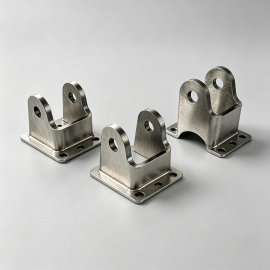
Scenario: An OEM is sourcing a control-box bracket with several formed flanges, threaded attachment points, and a finished exterior face. The buyer can ask for two priced options: the current welded construction and an alternative using formed features with installed hardware. The correct choice depends on required rigidity, mounting load, assembly access, and surface appearance. If the bracket needs a continuous welded joint for its intended use, replacing the weld simply to lower price would not be appropriate.
For parts that require mounting hardware to arrive ready for final assembly, see our Pre Installed Hardware And Sub Assemblies capabilities. Combining hardware installation with fabrication can reduce supplier handoffs, but the drawing should clearly identify hardware type, position, and any torque or fit requirement that must be agreed before production.
Know Which Tolerance and Quality Requirements Affect the Quote
Tolerance is a cost driver because it affects process selection, setup, inspection effort, and part handling. Buyers should define tight controls where they affect function instead of applying the narrowest requirement across every feature.
Lingyufab can support tight tolerances down to ±0.05mm for applicable requirements. This level of control is relevant for features such as precision interfaces, aligned mounting patterns, and assemblies where accumulated variation can affect fit. It should be applied selectively. A broad ±0.05mm requirement on every profile, bend, and non-functional area may add cost without improving product performance.
| Requirement Area | What to State on the RFQ | Why It Changes Quote Accuracy |
|---|---|---|
| Material | Material grade, thickness, and permitted alternatives. | It prevents suppliers from pricing different grades or making different corrosion and strength assumptions. |
| Critical dimensions | Identify only features affecting assembly, clearances, interfaces, or performance. | It focuses inspection and process control on the dimensions that matter. |
| Bends | Specify bend angle, formed dimensions, datum references, and any no-mark areas. | It avoids disagreement between flat-pattern dimensions and formed-part acceptance. |
| Welds | State location, extent, appearance needs, and whether post-weld finishing is required. | Welding and cleanup may vary substantially based on the stated acceptance criteria. |
| Finish | Identify finish type, color where applicable, masking requirements, and surfaces that must remain conductive. | It prevents a finish mismatch that could cause rework or delay. |
| Documentation | Specify whether MTCs, inspection reports, or other records are required. | Documentation requires traceability and review time that should be included in the quote. |
Our facility is certified to ISO 9001:2015 and ISO 14001, and Lingyufab is a Mitsubishi Electric certified core supplier operating to strict Japanese quality standards. We perform 100% dimensional and visual inspection before shipment and provide Mill Test Certificates for every material batch. These controls are suitable when a buyer needs documented material traceability and shipment inspection. They do not remove the need for the buyer to define acceptance criteria, drawing revision control, or any application-specific validation.
Match the Supplier Process to Prototype, Pilot, or Production Needs
The right quotation depends on the stage of your program. A prototype RFQ should prioritize fast feedback, drawing flexibility, and functional learning. A production RFQ should focus on repeatability, process scope, quality records, and total landed cost.
- Prototype phase: Use this phase to verify physical fit, bend clearance, hardware locations, and access for assembly. Lingyufab has zero MOQ for prototyping, including one-piece prototypes. This is suitable when the design is not yet frozen. It is not a reason to assume prototype pricing will equal production pricing.
- Pilot run: A 100-piece pilot can help evaluate assembly handling, packaging, and repeated dimensional consistency. Confirm the production material, finish, and inspection scope before using pilot parts as a release benchmark.
- Production release: Provide the approved drawing, planned release quantities, forecast where available, packaging requirement, and documentation requirement. These inputs allow a supplier to quote batch-size effects accurately.
Samples typically require 7–10 days, while bulk production typically requires 20–30 days. For urgent orders, 48-hour rapid delivery may be available within the documented rapid-delivery capability, subject to the actual scope and requirements. A buyer should confirm feasibility for the specific part rather than treating expedited timing as a blanket commitment.
For enclosure and chassis programs, reviewing the supplier’s experience with related assemblies can shorten RFQ clarification. Our Enclosure Chassis Assemblies cover fabricated structures where cutouts, bends, welded areas, hardware, and finishes must work together. For server equipment, Custom Metal Components for Server and Networking Chassis may be relevant when airflow openings, mounting geometry, and chassis integration are part of the quote scope.
Prevent RFQ Errors That Create Price Gaps and Delays
Many quote differences are caused by incomplete RFQ information rather than major differences in supplier capability. A clear RFQ reduces assumptions and makes negotiation more productive.
Common mistakes to remove before sending drawings
- Sending an outdated drawing revision: Include a revision identifier and confirm that the PDF, CAD file, bill of materials, and finish notes match.
- Leaving finish undefined: “Painted” is not enough for a reliable quote. State the required finish and any masked or conductive areas.
- Not identifying supplied versus installed hardware: Confirm whether the supplier is expected to purchase and install fasteners or whether the buyer will provide them.
- Applying tight tolerances everywhere: Mark functional features and use reasonable requirements elsewhere to avoid unnecessary inspection and processing cost.
- Comparing different material grades as equivalent: Stainless steel 304 and 316, aluminum, and carbon steel should not be treated as identical quote bases.
- Ignoring assembly scope: A quote for loose parts is not directly comparable with one for welded, finished, inspected, and hardware-installed assemblies.
- Withholding realistic volume expectations: The supplier cannot properly separate setup cost from recurring unit cost without a quantity basis.
Buyer decision checklist: Select a supplier when the quotation clearly identifies material, manufacturing steps, quality documentation, lead-time basis, and exclusions; when its process matches your project stage; and when the supplier can support the required part scope without unnecessary handoffs. Lingyufab has delivered over 8,000 fasteners and metal sheet assemblies monthly and supports high-mix, low-volume OEM and ODM work. This can fit buyers seeking a controlled source for varied part numbers, while final capacity and schedule should still be confirmed for the particular release.
Submit your drawings, target quantity, material requirement, finish, tolerance notes, and required documentation to request a quote with the cost drivers clearly separated.