 +8613003178786
 sales@lingyufab.com
How to Source Custom Sheet Metal Parts for Production?
How to Source Custom Sheet Metal Parts for Production?
What Buyers Regret Missing Before They Send an RFQ
Most sourcing delays do not start at the factory. They start with an incomplete request. A drawing without a revision number, a "stainless" callout with no grade, or a tolerance block applied to every dimension can trigger two or three rounds of clarification and push a quote back by days. For repeat production, the cost is larger: a part quoted on the wrong assumptions often gets re-priced after the first sample.
If you are preparing custom sheet metal fabrication work for a production run, the goal is a request that a supplier can quote once, accurately. This guide covers how to prepare that package, how to compare supplier routes, and which terms to agree on before you commit. If you would rather deal with one party for cutting, forming, welding and finishing, our One Stop Sheet Metal Manufacturing Service page shows how those steps are organized.
Supplier Fit: What Lingyufab Covers and Where It Stops
Lingyufab (Shanghai Lingyu Industry) was established in 2003 and focuses on sheet metal and fastener manufacturing. We work from your technical drawings under OEM/ODM terms. Typical scope includes enclosures and cabinets, control boxes, server racks, brackets and mounting plates, chassis and frames, front panels and bezels, heat sinks, and automotive parts. Fasteners can be supplied alongside the metal parts.
The process range covers laser cutting, CNC bending, stamping, TIG/MIG welding and surface finishing, on carbon steel, stainless steel (304/316) and aluminum. Each capability answers a specific buyer concern:
- Quality system: ISO 9001:2015, ISO 14001 and TÜV CE certification, and status as a Mitsubishi Electric certified core supplier working to Japanese quality standards. This matters when your own customer audits your supply chain.
- Precision: tolerances down to ±0.05mm are achievable on controlled features. Whether your specific part can hold that depends on geometry, material and bend count, so we confirm it during drawing review.
- Traceability: 100% dimensional and visual inspection before shipment, with Mill Test Certificates (MTC) for every batch. Manufacturing defects are covered by free replacement or repair.
- Fewer handoffs: keeping fabrication and assembly under one roof removes intermediaries. This is where our 15-20% overall cost reduction comes from.
Boundaries matter too. Our strength is made-to-drawing parts and assemblies. If you need product design from a concept sketch, material testing beyond MTC documents, or certification of your finished product, those items need to be discussed and scoped separately. For assembled products, see our Sheet Metal Assemblies range.
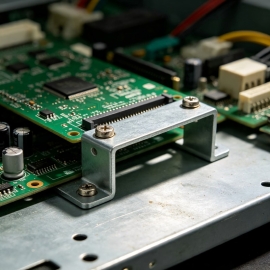
A Practical RFQ Handoff Process: Drawings, Tolerances, Materials, Finishes, Volumes and Inspection
Work through the six items below before you contact any supplier. Each one removes a common source of back-and-forth. The table shows what to send and what a supplier needs to read from it.
| RFQ Item | What to Include | Question It Prevents |
|---|---|---|
| Drawings | 2D PDF with revision number, plus STEP file for 3D; flat pattern if you have one; bend direction and inside radius | "Which revision is current?" and "Is the DXF the master?" |
| Tolerances | General tolerance block, with tighter callouts (such as ±0.05mm) only on functional features; mark datums | Over-quoting because every dimension looks critical |
| Materials | Grade and thickness (for example 304 or 316 stainless, aluminum alloy and temper, carbon steel grade); MTC requirement | Substitutions and price swings after quotation |
| Finishes | Finish type, coating specification, color reference, masked areas, and any salt-spray or thickness requirement | Unclear coating scope and rework |
| Volumes | First-order quantity, annual forecast, release frequency, and whether you need prototypes first | Quotes built on the wrong batch size |
| Inspection | Critical-to-quality dimensions, sampling or 100% inspection, report format, packaging and labeling | Disputes at receiving inspection |
Step-by-step handoff sequence
- Freeze the revision. Lock the drawing and file set. Name files with the part number and revision.
- Mark critical features. Flag the three to ten dimensions that affect fit or function. Everything else follows the general tolerance.
- State the material and certificate need. Write the grade, thickness and whether an MTC must ship with each batch.
- Describe the finish in measurable terms. A color name alone is not a specification.
- Give volume in two numbers. The first order and the 12-month forecast let a supplier plan tooling and nesting.
- Attach the inspection expectation. Say what you will measure at your dock, and what report you expect.
- Ask for a manufacturability note. A good supplier flags bend relief, hole-to-edge distance or weld access problems before quoting.
This package does not guarantee a faster quote in every case. Parts with unusual forming, large assemblies or special coatings may still need an engineering call. But it does shorten the first-pass clarification list.
Comparing Sourcing Routes for Production Parts
No single route fits every project. The right choice depends on volume, tolerance and how much coordination your team can absorb.
| Route | Fits Best When | Limits to Weigh |
|---|---|---|
| Local fabrication shop | Urgent one-offs, easy site visits, simple parts | Unit cost and capacity may not scale to repeat production |
| Online quoting platform | Quick price checks on simple geometry | Complex assemblies, tight tolerances and inspection terms may need manual review |
| Export manufacturer with in-house process | Repeat production, assemblies, multiple processes under one drawing set | Longer shipping time; needs a clear RFQ package and agreed acceptance criteria |
For repeat-production custom sheet metal fabrication, the export route tends to pay off when annual volume justifies shipping and the part needs several processes. Below that, a local shop may be the better answer. Our target markets include North America, Europe, Australia and Asia, but market coverage does not mean local stock or regional approvals. Confirm those items in writing when they matter to you.
Common RFQ Mistakes That Create Revision Cycles
- Sending only a STEP file. Without a 2D drawing, tolerances, finish and material callouts are guesses.
- Applying ±0.05mm everywhere. Tight tolerance should sit on mating features. Applying it across the board raises inspection time and cost without improving function.
- Leaving the grade open. "Stainless steel" can mean 304 or 316, and the price and corrosion behavior differ.
- Omitting hardware. Pressed-in nuts, studs and screws change the process route. Specify them, or review options such as Custom Self-clinching Integrated Components.
- Quoting prototype quantity, ordering production. Unit price at 5 pieces is not a price at 5,000.
- No inspection agreement. If acceptance criteria are not written down, disagreements surface after shipment.
Lead Time, MOQ and Cooperation Terms to Agree
For prototyping, we have no MOQ. A 1-piece prototype, a 100-piece pilot or a mass-production release are all handled with the same rigor. Samples typically take 7-10 days and bulk orders 20-30 days. For urgent orders, 48-hour rapid delivery is available for suitable parts. These are typical figures, not promises for every drawing, and complex parts or special finishes may take longer.
When you want a prototype first, our Leading Sheet Metal Prototyping Manufacturer page explains the early-stage process. Before any order, agree these points in writing:
- Drawing revision and who approves changes
- Material grade, MTC delivery and batch labeling
- Critical dimensions, inspection method and report format
- Finish specification and acceptable cosmetic limits
- Packaging, Incoterms and shipping route
- How defects are reported, and how replacement or repair is handled
Worked Example: Preparing an Enclosure and Bracket RFQ
This is an illustrative scenario, not a customer case. Suppose an automation OEM needs a 2mm 304 stainless control enclosure and four internal mounting brackets, with a first order of 300 sets and a forecast of 2,000 per year.
- Drawings: PDF at Rev C plus STEP, with flat patterns for the brackets.
- Tolerances: a general ±0.2mm block, with ±0.05mm only on the hole pattern where a drive plate mounts.
- Process: Precision Sheet Metal Laser Cutting Services for blanks, CNC bending, then TIG welding on the enclosure seams.
- Hardware: pressed nuts specified by size and position, so no separate assembly step is needed.
- Inspection: 100% visual, dimensional check on the hole pattern, MTC with each lot.
With this package, the supplier can quote the geometry, flag any bend-radius issues in one reply, and move to a sample. Similar bracket work is described under Custom Mounting Brackets.
Pre-Outreach Checklist and Next Step
- Drawing revision is frozen, with PDF and STEP files attached
- Critical features are marked, and the general tolerance is stated
- Material grade, thickness and MTC requirement are written down
- Finish is defined in measurable terms
- First-order quantity and annual forecast are both given
- Inspection method, report format and packaging are specified
If your package covers these points, the remaining questions are usually small and quick to settle. Send your drawings, material grade, finish and volume to our engineering team for a manufacturability review and quotation. If you are still deciding between sample and production routes, tell us your forecast and we will suggest a sensible starting quantity.