
 +8613003178786
 sales@lingyufab.com
Inspect a Sheet Metal Fabrication Factory's Process Flow
21
Nov 2026
Why Process-Flow Proof Matters More Than a Service List
The regret usually arrives after the PO is signed. Laser-cut blanks turn out to be outsourced, welding sits in a queue at a partner shop, and nobody can say who owns the flatness problem on the finished enclosure. A service menu that reads "cutting, bending, welding, finishing" tells you nothing about where those steps actually happen or who is accountable between them.
That gap is the real risk when you compare a sheet metal fabrication factory that claims one-stop capability. Capability on paper is cheap. Controlled flow between operations is what protects your schedule, your tolerances, and your landed cost.
Lingyufab (Shanghai Lingyu Industry) has made sheet metal and fasteners since 2003. Our scope covers carbon steel, stainless steel (304/316), and aluminum, with laser cutting, CNC bending, stamping, TIG/MIG welding, and surface finishing handled in-house. If you want the overall scope first, see our custom sheet metal fabrication service page. The rest of this guide is written to help you verify any supplier's flow, ours included.
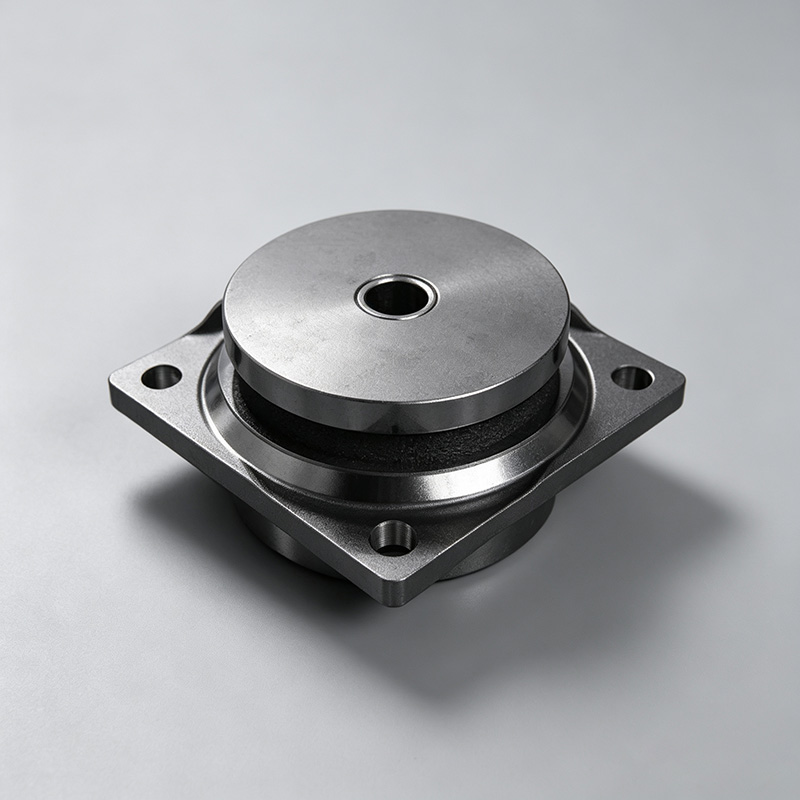
How Handoffs from Cutting to Finishing Reveal Delay, Damage, and Accountability Risks
Every handoff between stations is a place where time is lost, parts get marked or bent out of shape, and responsibility becomes unclear. In my fifteen years in precision fabrication and DFM work, I have found that the handoff points tell you more about a factory than its machine list does. The table below maps each one.
| Handoff | Delay risk | Damage / quality risk | Accountability question to ask |
|---|---|---|---|
| Laser cutting → bending | Blanks wait for press brake tooling or programming | Burrs, edge condition, lost part identification | Who checks blank dimensions before forming, and where is it recorded? |
| Bending → welding | Formed parts queue for a welder or fixture | Angle variance creates fit-up gaps, which leads to rework or distortion | Who decides whether an out-of-angle part is reworked or scrapped? |
| Welding → finishing | Parts wait for a coating or plating slot | Spatter, heat distortion, masking errors on threaded features | Is weld cleanup done before finishing, and who signs it off? |
| Finishing → fastener / sub-assembly | Hardware kitting is not synchronized with coated parts | Coating build-up on holes and threads, scratched surfaces | Is hardware installed after finishing, and are fit checks run afterward? |
| Assembly → final QC → packing | Inspection becomes a bottleneck before shipment | Transit scratches, mixed part revisions in the carton | Is inspection 100% or sampled, and what record goes with the shipment? |
Conclusion: the fewer external handoffs a project has, the fewer places a dispute can start. Reasoning: with in-house processes, one production plan covers all steps. With outsourced steps, each vendor optimizes its own queue. Fits: multi-process parts such as enclosures, control boxes, and chassis. Limits: a simple flat bracket with one process step gains little from this analysis, and a specialist outside process may still suit a niche finish.
For example, sheet metal bending service quality depends heavily on what arrives from the laser. If both run under one roof, a bend-angle problem traced to a blank issue stays inside one accountable team.
A Step-by-Step Way to Inspect the Process Flow
You can run this check as a site visit or a remote video audit. Either way, ask for a real part, not a showroom sample.
- Pick one live job. Ask to follow a current order with at least three processes, such as cutting, bending, and welding. Avoid a demonstration piece prepared for visitors.
- Trace the traveler. Request the route card or work order. It should show each operation, the station, and the sign-off.
- Locate each machine. Ask to see the laser cutter, press brake, and welding cell where your parts are processed. Confirm the location with the person who operates them.
- Check material identity. Ask how heat or batch numbers stay linked to parts after cutting. Mill Test Certificates (MTC) only mean something if the link survives the flow.
- Watch a first-article check. See which gauges or instruments measure the part, and compare the reading to the drawing tolerance.
- Review rework handling. Ask where non-conforming parts go and who authorizes disposition.
- Inspect the packing area. Check how finished surfaces are separated and labeled.
This sequence takes a few hours. It surfaces more than a certificate wall does, because it tests whether the documented flow matches the physical one.
Evidence to Request, and What It Does and Does Not Prove
Documents support the walkthrough, but each one proves only a defined scope. Here is how we would read the evidence you request from us or from any other supplier.
- ISO 9001:2015, ISO 14001, and TÜV CE certificates. They show a managed quality and environmental system. They do not show that a specific part met a specific tolerance. Ask for the certificate scope and validity dates.
- Mitsubishi Electric certified core supplier status. At Lingyufab, this means we work to Japanese quality expectations, including disciplined inspection and traceability. It documents an audited supply relationship, not a guarantee for your design.
- Dimensional capability. We fabricate to tolerances down to ±0.05mm. This depends on feature type, material, and part size, so confirm it against your own drawing during the review rather than assuming it applies to every dimension.
- 100% dimensional and visual inspection with MTC per batch. Ask what the inspection record looks like and whether it ships with the order or is available on request.
Our assurance policy is also stated plainly: if a quality issue is caused by a manufacturing defect, we offer free replacement or repair. Agree on how a defect is confirmed before production starts so both sides read the clause the same way.
Common Mistakes When Auditing a Sheet Metal Fabrication Factory
- Counting machines instead of flow. A press brake on the floor does not tell you whether your job is queued behind other work or outsourced.
- Accepting "one-stop" without asking about finishing. Plating and powder coating are the processes most often sent out. Ask directly where your finish is done.
- Ignoring fastener installation. Self-clinching, nut-welded, and stud-welded features add steps that can shift tolerances. See how custom self-clinching integrated components are sequenced relative to finishing.
- Skipping the drawing review. Unclear bend radii or tolerance stack-ups should be raised before cutting, not after assembly.
- Treating a sample as a process proof. A hand-finished prototype shows what is possible. It does not show how the line performs at pilot or production volume.
Cooperation Terms and Boundaries to Agree Before the PO
Lingyufab accepts zero MOQ at the prototyping stage. That covers a 1-piece prototype, a 100-piece pilot run, and mass production, all handled with the same inspection discipline. Typical lead times run 7-10 days for samples; bulk timing depends on the part and should be quoted per project. Urgent requirements can be discussed case by case, as they are not a standing promise for every order.
Because we work to your technical drawings under OEM/ODM arrangements, these points should be written down before the first order:
| Item to agree | Why it matters |
|---|---|
| Drawing revision and critical-to-quality dimensions | Defines what "100% inspected" is measured against |
| Material grade and certificate requirement (e.g., 304 vs 316) | Sets the MTC expected with each batch |
| Surface finish specification and masking areas | Prevents thread or ground-contact surprises |
| Hardware and sub-assembly scope | Clarifies whether fasteners are supplied, installed, or both |
| Defect definition and remedy | Makes the free replacement or repair clause actionable |
| Packing and labeling | Protects finished surfaces and revision control in transit |
Cost is a secondary reason to keep operations in one place. Cutting out intermediaries and extra logistics typically lowers overall cost by 15-20% for our in-house work, though the exact saving varies by part, quantity, and finish.
Where This Flow Fits Best, and Where It May Not
An integrated flow suits projects that combine several processes and hardware. Examples include sheet metal assemblies, enclosures, chassis, and custom electrical control boxes, where cutting, forming, welding, finishing, and fastener installation all feed one final fit. It also suits teams running High-Mix, Low-Volume programs that need prototype-to-production continuity under one quality record.
It fits less well when your design needs a specialized process we do not list, such as an unusual coating chemistry. In that case, say so up front. We would rather qualify the scope accurately than assume it.
Send your drawings, material grade, quantity range, and finish requirements to our engineering team. We will review the process flow for your part and identify where the handoff risks sit. Request a quote and include any audit checklist you want us to answer.

