+8613003178786
  sales@lingyufab.com



Laser Cutting Reflective Metals: A Practical Guide to Copper, Aluminum, and Brass
09
Oct’2026Laser Cutting Reflective Metals: A Practical Guide to Copper, Aluminum, and Brass
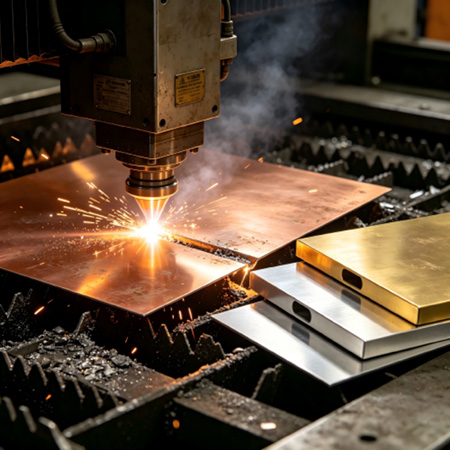
Laser cutting reflective metals like copper, aluminum, and brass presents unique challenges that don’t exist when cutting steel or stainless steel. Have you ever tried to cut copper only to find the laser beam bouncing back, leaving the material barely marked? Or perhaps you have experienced inconsistent cut quality on aluminum, where one batch cuts cleanly and the next leaves rough, slag-covered edges? These issues are not equipment failures—they are the inherent behavior of highly reflective metals.
At Lingyufab, we understand the science behind reflective metal cutting. With over 20 years of precision manufacturing experience since 2003 and certification as a core supplier for Mitsubishi Electric, our advanced fiber laser cutting systems are specifically designed to handle these challenging materials. This guide explains why reflective metals are difficult to cut, how fiber lasers overcome these challenges, and practical tips for achieving clean, consistent cuts on copper, aluminum, and brass.
Why Reflective Metals Are Difficult to Cut
High-reflectivity metals—copper, aluminum, brass, gold, and silver—pose two fundamental problems for laser cutting.
Problem 1: Low Absorption, High Reflection When a laser beam strikes a reflective metal surface, most of the energy is reflected away rather than absorbed. Copper and aluminum can reflect up to 90% or more of the incident laser beam. This means that for every kilowatt of laser power you apply, only a fraction actually heats the material.
Problem 2: Back-Reflection Damage When high-reflectivity materials are not fully penetrated, high-power reflected light can travel back into the laser source, potentially damaging the fiber, optical lenses, and other core components. This is why traditional laser cutting shops often refuse orders for copper, brass, and other “red metals.” CO₂ lasers, with their longer wavelength (10.6 μm), are particularly susceptible to back-reflection damage.
Problem 3: High Thermal Conductivity Copper and aluminum conduct heat away from the cut zone extremely quickly. The heat that should melt the material is instead dissipated throughout the workpiece, making it difficult to maintain a stable melt pool and achieve consistent penetration.
Why Fiber Lasers Are the Solution
Fiber lasers have fundamentally changed the landscape of reflective metal cutting. A fiber laser emits light at approximately 1.07 μm, which is absorbed much more efficiently by metals like copper, brass, and aluminum compared to the 10.6 μm wavelength of CO₂ lasers. This higher absorption rate means less energy is wasted on reflection, and more energy actually cuts the material.
Key advantages of fiber lasers for reflective metals:
Higher absorption — The 1.07 μm wavelength dramatically increases the absorption rate of copper and aluminum.
Back-reflection protection — Modern fiber lasers incorporate anti-reflection protection systems, including optical isolators that block 99.9–99.99% of back-propagating reflected light. High-power systems (10kW+) use three-layer anti-reflection protection.
Higher power density — Fiber lasers deliver concentrated energy that can rapidly overcome the initial reflectivity barrier.
Parameter Guidelines for Reflective Metals
While exact parameters depend on your specific machine and material thickness, these general guidelines provide a starting point.
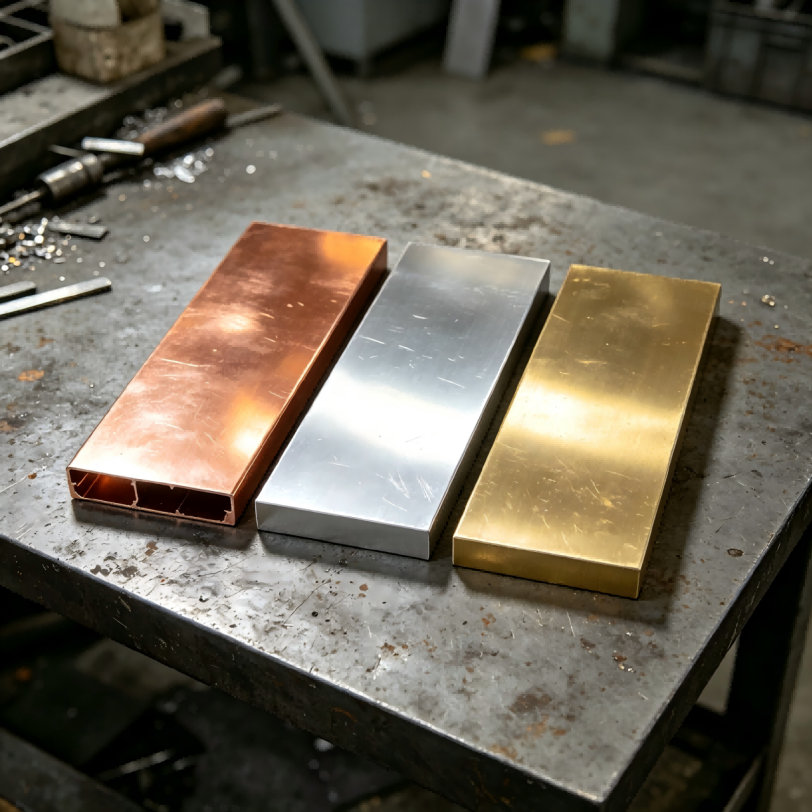
Copper
Copper is arguably the most challenging reflective metal to cut. Its high thermal conductivity and reflectivity require careful parameter control.
General approach: Use a high-power fiber laser (3kW to 6kW or higher), a slightly negative focus position to increase power density, and high-purity nitrogen as assist gas. Cutting speed should be moderate—slower than steel but fast enough to maintain a stable cut.
Parameter guidance: For 2–3mm copper, a 3kW laser with appropriate focus and gas settings can achieve good results with minimal burrs. For 3–5mm copper, 6kW power may be required. Cutting pure copper requires significantly more power than cutting brass—1–2kW may be sufficient for brass at 3–5 m/min, while the same thickness of pure copper may require 3–6kW at 1–2 m/min.
Aluminum
Aluminum is highly reflective but more forgiving than copper. With proper parameter control, clean cuts are achievable.
General approach: Use nitrogen as the assist gas for clean, oxide-free edges. For thin aluminum (1–2mm), a 1.5–2kW machine at speeds of 8–15 m/min is effective. For thicker aluminum, higher power and careful focus adjustment are required. Aluminum’s high thermal conductivity limits practical cutting thickness to 6–8mm for many setups.
Brass
Brass is easier to cut than pure copper because its alloy composition improves absorption. High-purity nitrogen is recommended to prevent oxidation and maintain edge quality.
Parameter guidance: 1–2kW fiber lasers can cut brass at speeds of 3–5 m/min. Brass generally requires less power than pure copper of the same thickness.
Assist Gas Selection
Nitrogen — The preferred gas for cutting reflective metals. It produces clean, oxide-free edges and is recommended for aluminum, copper, and brass where edge quality is critical. For copper and aluminum, high-purity nitrogen (99.999% or higher) is recommended, with pressure up to 25 bar—approximately 50% higher than carbon steel cutting.
Oxygen — Not recommended for aluminum and copper cutting. Oxygen triggers violent oxidation reactions with molten aluminum and copper, creating highly reflective oxide slag that roughens the cut surface and significantly increases back-reflection risk.
Air — A lower-cost option for less demanding applications, but cannot match the edge quality of nitrogen.
Equipment Protection: Anti-Reflection Systems
Protecting your equipment is just as important as achieving cut quality. When cutting reflective metals, you should use:
Anti-reflection cutting heads — Systems with back-reflection protection (BRP) that can shut off the laser within 0.05 seconds if reflected light exceeds safe thresholds.
Optical isolators — Faraday isolators that block 99.9–99.99% of back-propagating reflected light while transmitting forward laser power with >95% efficiency.
Real-time monitoring — Systems that detect abnormal processing conditions and provide immediate protection.
Common Mistakes to Avoid
Using oxygen as assist gas — On aluminum and copper, oxygen causes violent reactions that create reflective oxide slag and increase back-reflection risk.
Underestimating power requirements — Reflective metals require higher power than steel of the same thickness. Pure copper, in particular, demands significant power.
Incorrect focus position — A slight negative focus is typically recommended to increase power density at the material surface.
Starting cuts in the middle of the sheet — For copper, starting from the edge or pre-drilling a starting hole can help overcome initial reflectivity.
How Lingyufab Handles Reflective Metals
Lingyufab is a professional sheet metal fabrication manufacturer and sheet metal supplier based in Shanghai, China, with over 20 years of precision manufacturing experience since 2003. We follow strict Japanese quality standards and are a certified core supplier for Mitsubishi Electric.
What sets Lingyufab apart as a sheet metal supplier is our advanced fiber laser technology and systematic approach to reflective metal cutting. Our ultra-high-power fiber laser systems (10kW to 60kW+) incorporate comprehensive back-reflection protection, allowing us to cut copper, aluminum, and brass safely and reliably—materials that many fabricators simply won’t touch.
Our in-house capabilities include:
Laser cutting — High-precision fiber laser cutting optimized for reflective metals with proper parameter control and back-reflection protection.
CNC bending — Precision bending with consistent accuracy and springback compensation.
Laser welding — High-speed, low-distortion welding with minimal heat input.
Sheet metal fabrication — Complete assembly, surface treatment, and fastener installation.
ISO 9001, ISO 14001, and TÜV CE certified.
Full material traceability with Mill Test Certificates.
One supplier, full responsibility. From laser cutting and CNC bending to welding, surface treatment, and fastener installation, we handle everything under one roof. This integration ensures consistent quality, shorter lead times, and a single point of accountability for your entire project.
If you are working with copper, aluminum, or brass and need reliable laser cutting services, our engineering team is available to review your requirements and provide a free consultation. If you are looking for a trusted sheet metal fabrication supplier for reflective metals, please don’t hesitate to contact us.
Quick Reflective Metal Cutting Checklist for Buyers
| What to Check | What to Consider |
|---|---|
| Material type | Copper, aluminum, or brass—each requires different parameter settings |
| Material thickness | Thicker reflective metals require significantly more power |
| Edge quality requirements | Specify whether oxide-free edges (nitrogen) are required |
| Supplier capability | Does the supplier have back-reflection protection and fiber laser technology? |
| Parameter optimization | Has the supplier optimized settings for your specific material and thickness? |
| Cut quality samples | Request samples to verify edge quality before full production |
FAQs
Q1: Why are reflective metals difficult to laser cut? Reflective metals like copper and aluminum reflect up to 90% or more of the incident laser beam. This low absorption rate means less energy actually cuts the material. Additionally, back-reflected light can damage the laser source, and high thermal conductivity dissipates heat away from the cut zone.
Q2: Can CO₂ lasers cut reflective metals? CO₂ lasers are generally not recommended for cutting reflective metals. Their longer wavelength (10.6 μm) is poorly absorbed by copper and aluminum, making them inefficient and increasing the risk of back-reflection damage. Fiber lasers, with their shorter wavelength (1.07 μm), are the preferred solution.
Q3: What assist gas should I use for cutting copper? High-purity nitrogen (99.999% or higher) is recommended for cutting copper. Oxygen should be avoided as it triggers violent oxidation reactions that create reflective oxide slag and increase back-reflection risk.
Q4: How much power do I need to cut copper? The power required depends on thickness. 2–3mm copper typically requires around 3kW, while 3–5mm copper may require 6kW. Cutting pure copper requires significantly more power than cutting brass of the same thickness.
Q5: What is back-reflection and why is it dangerous? Back-reflection occurs when a high percentage of the laser beam is reflected back into the laser source instead of being absorbed by the material. This reflected light can damage the fiber, optical lenses, and other core components, leading to costly repairs and downtime.
Q6: Can Lingyufab cut all types of reflective metals? Yes. Lingyufab’s advanced fiber laser systems with comprehensive back-reflection protection can cut copper, aluminum, brass, and other reflective metals across a range of thicknesses. Our engineering team can review your specific requirements and recommend the optimal approach for your application.