+8613003178786
  sales@lingyufab.com



Laser Welding Cost Analysis: Is It Really More Expensive Than Traditional Welding?
07
Aug’2026Laser Welding Cost Analysis: Is It Really More Expensive Than Traditional Welding?
Laser welding cost is one of the most common concerns for procurement professionals and engineers considering this advanced joining technology. Have you ever looked at a laser welding quote and wondered why it seemed higher than traditional TIG or MIG welding? Or perhaps you have heard that laser welding is “expensive” and assumed it was out of your budget? These are among the most common misconceptions in sheet metal fabrication. The reality is that laser welding often delivers significant cost savings over the total lifecycle of a project—even when the initial hourly rate appears higher.
At Lingyufab, we understand that cost decisions require a complete picture. With over 20 years of precision manufacturing experience since 2003 and certification as a core supplier for Mitsubishi Electric, our laser welding services are optimized to deliver the best balance of quality, speed, and cost. This guide breaks down the true cost of laser welding, compares it to traditional methods, and shows you how to reduce your welding costs without compromising quality.
What Makes Up Laser Welding Cost?
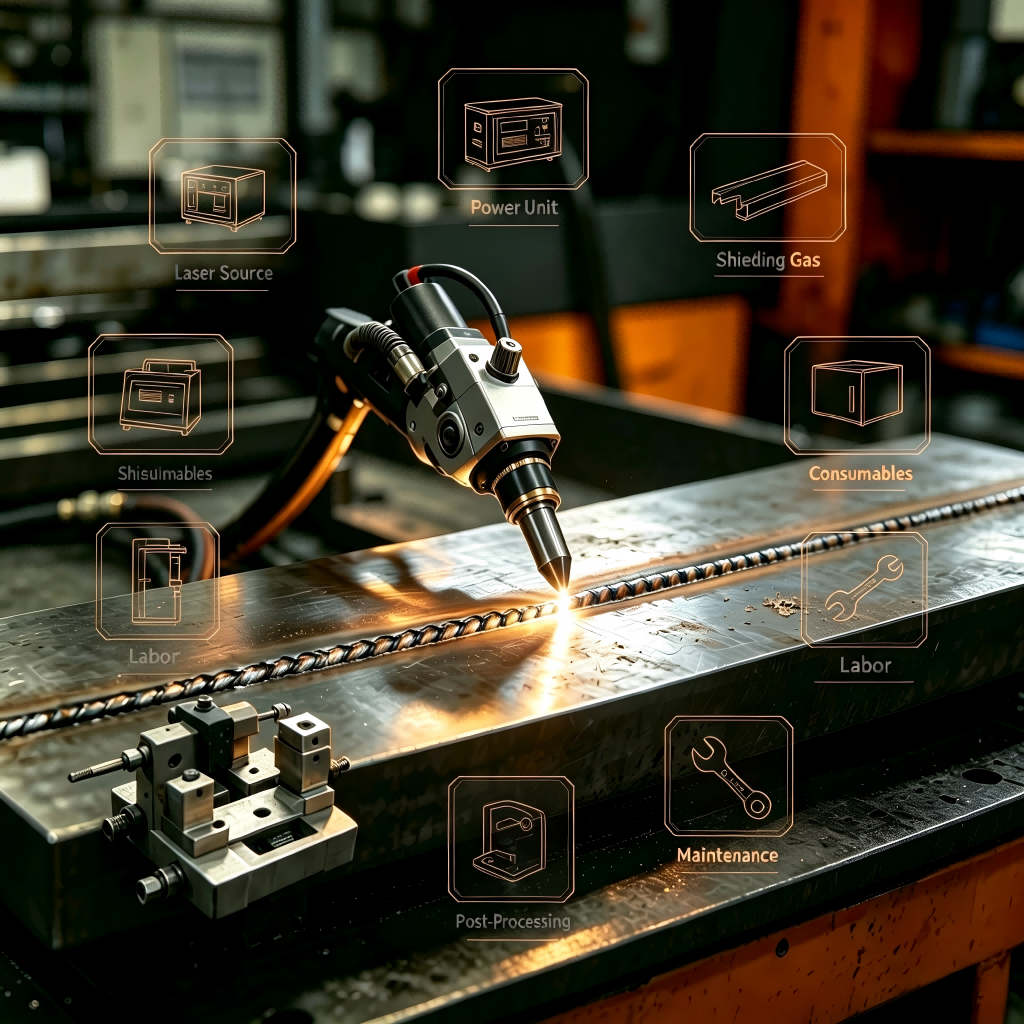
To understand whether laser welding is cost-effective, you need to understand its cost components. The total cost of a laser welding project includes several factors:
Equipment investment. Laser welding systems have higher upfront costs than traditional welding equipment. However, this cost is amortized across the parts produced. For high-volume production, the per-part equipment cost becomes negligible.
Energy consumption. Laser welding systems are highly energy-efficient. A laser welding system can consume significantly less power than a comparable TIG or MIG setup for the same production output. Higher electrical efficiency translates to lower operating costs.
Shielding gas. Laser welding typically requires less shielding gas than TIG or MIG welding because the process is faster and the weld pool is smaller. High-purity argon, nitrogen, or helium may be required, but consumption rates are generally lower.
Consumables. Laser welding uses minimal consumables—no filler wire (for autogenous welding), no tungsten electrodes, and no contact tips. This eliminates the recurring cost of consumables that adds up quickly in TIG and MIG welding.
Labor. Laser welding is typically 4-10 times faster than TIG welding. A single laser welding operator can produce the same output as multiple TIG welders. This means lower labor costs per part and fewer skilled welders needed.
Post-processing. Laser welding produces clean, spatter-free welds with minimal heat-affected zone. This significantly reduces or eliminates post-weld grinding, cleaning, and rework. The savings in post-processing alone often justify the switch to laser welding.
Maintenance. Laser welding systems require regular but predictable maintenance—lens cleaning, gas filter replacement, and periodic optics alignment. While maintenance costs exist, they are typically lower than the ongoing consumable costs of traditional welding.
Laser Welding vs. TIG Welding: A Cost Comparison
TIG welding is often considered the benchmark for high-quality welds. Here is how laser welding compares:
Speed. Laser welding is 4-10 times faster than TIG welding. A weld that takes 60 seconds with TIG can be completed in 6-15 seconds with laser welding. This speed advantage directly reduces labor costs per part.
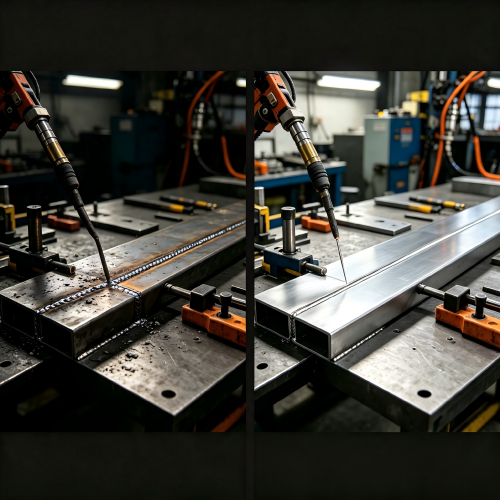
Heat input. Laser welding delivers up to 80% less heat input than TIG welding. This eliminates heat distortion, warping, and the need for post-weld straightening—saving significant time and cost.
Consumables. TIG welding requires tungsten electrodes, filler rods, and gas lenses—all of which are consumable and must be replaced regularly. Laser welding (autogenous) requires none of these.
Post-processing. TIG welds often require grinding, polishing, and cleaning. Laser welds are clean and smooth, ready for subsequent operations with minimal or no post-processing.
Operator skill. TIG welding requires highly skilled operators with years of experience. Laser welding, particularly with automated systems, requires less operator skill while delivering more consistent quality.
Laser Welding vs. MIG Welding: A Cost Comparison
MIG welding is known for its speed and productivity. Here is how laser welding compares:
Speed. Laser welding is generally faster than MIG welding, particularly for thin sheet metal applications. For thicker materials, the speed advantage may be less pronounced but still significant.
Spatter. MIG welding produces spatter that must be cleaned—adding labor cost. Laser welding produces virtually no spatter, eliminating cleanup time.
Distortion. MIG welding introduces more heat, causing distortion that may require post-weld straightening. Laser welding’s low heat input minimizes distortion.
Material savings. Laser welding’s precise heat control allows welding of thinner materials without burn-through, potentially enabling lighter designs and material savings.
Hidden Costs That Make Laser Welding More Affordable
Reduced rework. Laser welding’s consistency and repeatability dramatically reduce defect rates. Fewer defects mean less rework, fewer scrapped parts, and lower quality control costs.
Faster time-to-market. Laser welding’s speed accelerates production. Faster production means shorter lead times, earlier delivery, and faster revenue generation.
Lower inventory costs. Laser welding’s flexibility allows smaller batch sizes without setup penalties. This enables just-in-time production and reduced inventory carrying costs.
Simplified supply chain. When combined with other in-house capabilities like laser cutting and CNC bending, laser welding reduces the need for multiple suppliers—simplifying logistics and reducing coordination costs.
How to Reduce Laser Welding Costs
Optimize joint design. Design joints that minimize weld volume and allow self-fixturing. A well-designed joint reduces welding time and fixturing costs.
Use appropriate laser power. More power is not always better. Using the minimum power required for your material and thickness reduces energy consumption and extends equipment life.
Maximize automation. Automating laser welding with robotics or CNC positioning systems reduces labor costs and improves consistency. The initial investment pays back through reduced per-part costs.
Batch parts efficiently. Grouping similar parts reduces setup time and maximizes machine utilization. Plan your production schedule to minimize changeovers.
Choose the right shielding gas. While high-purity gases cost more, they deliver better weld quality and reduce rework. The right gas choice balances cost and quality for your specific application.
Invest in fixturing. Good fixtures reduce setup time, improve consistency, and minimize defects. The upfront cost of fixturing is quickly recovered through reduced labor and rework.
Work with an integrated supplier. A supplier who offers laser cutting, CNC bending, and laser welding under one roof eliminates coordination costs and quality gaps. Lingyufab’s integrated approach reduces total project cost by up to 20%.
How Lingyufab Delivers Cost-Effective Laser Welding
Lingyufab is a professional sheet metal fabrication manufacturer and sheet metal supplier based in Shanghai, China, with over 20 years of precision manufacturing experience since 2003. We follow strict Japanese quality standards and are a certified core supplier for Mitsubishi Electric.
What sets Lingyufab apart as a sheet metal supplier is our integrated approach to laser welding. Our advanced fiber laser welding systems (1kW to 12kW+) deliver high-speed, low-distortion welding with minimal heat input. By combining laser welding with in-house laser cutting, CNC bending, and assembly, we eliminate the coordination costs and quality gaps that arise when working with multiple suppliers.
Our in-house capabilities include:
Laser welding — High-speed, low-distortion welding with minimal heat input, 4-10x faster than TIG, up to 80% less heat input. Laser cutting — High-precision fiber laser cutting with optimized parameters for clean edges. CNC bending — Precision bending with consistent accuracy and springback compensation. Sheet metal fabrication — Complete assembly, surface treatment, and fastener installation. ISO 9001, ISO 14001, and TÜV CE certified. Full material traceability with Mill Test Certificates.
One supplier, full responsibility. From laser cutting and CNC bending to welding, surface treatment, and fastener installation, we handle everything under one roof. This integration ensures consistent quality, shorter lead times, and a single point of accountability for your entire project.
If you are considering laser welding but concerned about cost, our engineering team is available to review your requirements and provide a free cost-benefit analysis. We'll help you understand the true cost of laser welding for your specific application. If you are looking for a reliable sheet metal fabrication supplier, please don't hesitate to contact us.
Quick Laser Welding Cost Checklist for Buyers
Before making a welding decision, review this checklist:
| What to Check | What to Consider |
|---|---|
| Production volume | Higher volumes amortize equipment costs and make laser welding more cost-effective |
| Material thickness | Laser welding is most cost-effective for thin to medium sheet metal (0.5-10mm) |
| Weld quality requirements | Higher quality requirements favor laser welding due to consistency and repeatability |
| Post-processing needs | Laser welding reduces or eliminates post-weld grinding and cleaning |
| Supplier integration | Integrated suppliers eliminate coordination costs |
| Total cost of ownership | Consider speed, consumables, rework, and lead time—not just hourly rate |
FAQs
Q1: Is laser welding more expensive than TIG welding?
Laser welding typically has a higher hourly rate but is 4-10 times faster than TIG welding. When you factor in speed, reduced consumables, minimal post-processing, and lower rework rates, the per-part cost is often lower—especially for production volumes.
Q2: What is the biggest cost driver in laser welding?
For high-volume production, equipment amortization is the biggest fixed cost. For low-volume production, setup time and fixturing are the biggest variable costs. Optimizing joint design and fixturing can significantly reduce per-part costs.
Q3: How much faster is laser welding than TIG?
Laser welding is typically 4-10 times faster than TIG welding. A weld that takes 60 seconds with TIG can be completed in 6-15 seconds with laser welding. This speed advantage directly reduces labor costs per part.
Q4: Does laser welding require shielding gas?
Yes, shielding gas is typically required to protect the weld pool from oxidation. However, laser welding uses less gas than TIG or MIG because the process is faster and the weld pool is smaller. High-purity argon, nitrogen, or helium may be required for specific applications.
Q5: Can Lingyufab help me reduce laser welding costs?
Yes. Lingyufab provides design review, joint optimization, fixturing recommendations, and integrated manufacturing to minimize your total welding cost. Our engineering team can help you optimize your design for manufacturability and cost-effectiveness.
Q6: What is the typical lead time for laser welding projects?
Lead time depends on part complexity, material availability, and quantity. Simple parts can be processed quickly, while complex assemblies may require additional time for fixturing and setup. Lingyufab’s integrated workflow and in-house capabilities help minimize overall lead time.