+8613003178786
  sales@lingyufab.com



How Surface Treatment Affects Weld Quality: 5 Key Factors Buyers Must Know
11
Aug’2026How Surface Treatment Affects Weld Quality: 5 Key Factors Buyers Must Know
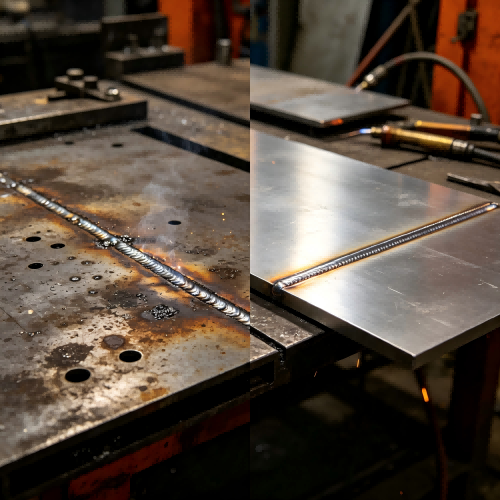
Surface treatment and weld quality are closely connected—yet this relationship is often overlooked by procurement professionals and engineers until problems arise. Have you ever selected the right material, optimized welding parameters, and still ended up with porosity, cracking, or excessive spatter? The issue may trace back to one critical factor: the condition of the material surface before welding. A surface that is not clean cannot produce a good weld.
At Lingyufab, we understand that weld quality begins before the first arc is struck. With over 20 years of precision manufacturing experience since 2003 and certification as a core supplier for Mitsubishi Electric, our laser welding and sheet metal fabrication processes are supported by systematic surface preparation and quality control procedures. This guide explains why surface treatment matters for welding quality, the common surface defects that affect welds, and the five key questions every buyer should ask to ensure welding success.
Why Surface Treatment Matters for Weld Quality
Welding is fundamentally a metallurgical process—two materials are fused together at high temperatures. If the metal surface contains contaminants, oxides, or moisture, they will enter the weld pool during welding and cause defects. A dirty surface cannot produce a clean weld.
Three main types of surface contaminants:
Grease and oil. This is the most common source of contamination. Lubricants, rust preventatives, and cutting fluids used during processing can decompose at welding temperatures, producing gases that cause porosity and cracking.
Oxide layers. Stainless steel, aluminum, and other metals naturally form oxide layers when exposed to air. These oxides have melting points significantly higher than the base material itself. If not removed, they prevent proper fusion, leading to incomplete penetration or slag entrapment.
Rust and moisture. Rust on carbon steel and condensation from humid environments introduce hydrogen into the weld pool, leading to hydrogen embrittlement and cold cracking.
Common Surface Defects and Their Impact on Welding
Oil and grease residue: Porosity
Residual oil and grease decompose at high temperatures, releasing gases that become trapped in the weld pool and form porosity. Porosity weakens weld strength, reduces fatigue life, and can lead to weld failure in severe cases.
Oxide layers: Incomplete penetration and fusion
Oxide layers prevent direct contact between the weld pool and the base material, resulting in shallow penetration and poor fusion. This is particularly common in aluminum and stainless steel welding.
Rust: Slag entrapment and cracking
Iron oxides in rust form slag inclusions during welding, while absorbed moisture introduces hydrogen that increases the risk of cold cracking.
Excessive surface roughness: Increased spatter
Rough surfaces increase spatter and weld pool instability, reducing welding speed and weld appearance quality.
5 Key Questions Buyers Must Ask
Question 1: Is incoming material surface quality inspected?
A qualified material supplier should be able to provide surface quality assurance. Buyers should specify in contracts: material surfaces must be free of oil, rust, and visible oxide layers. Each batch of material should come with a Mill Test Certificate (MTC) that includes relevant surface quality information.
Question 2: What is the surface cleaning process before welding?
Different materials require different cleaning methods. Carbon steel typically requires grinding or pickling to remove rust; stainless steel requires removal of oil and light oxide layers; aluminum requires immediate oxide removal and welding within a specific time window. Buyers should require suppliers to provide documented cleaning procedures.
Question 3: How are cleaned materials stored and handled?
Cleaned materials that are not welded immediately should be stored in a dry, clean environment to prevent recontamination. Aluminum should be welded as soon as possible after cleaning, as new oxide layers form rapidly.
Question 4: Are surface quality inspection records maintained?
Suppliers should maintain records of surface treatment and inspection results for each batch. These records are not only essential for quality traceability but also for continuous process improvement.
Question 5: Can welding defects be traced back to surface preparation issues?
When welding defects occur, the supplier should be able to trace whether the issue originated from the material itself or from inadequate cleaning. Traceability capability is a key indicator of a supplier's quality management level.
How to Choose a Supplier That Ensures Welding Quality
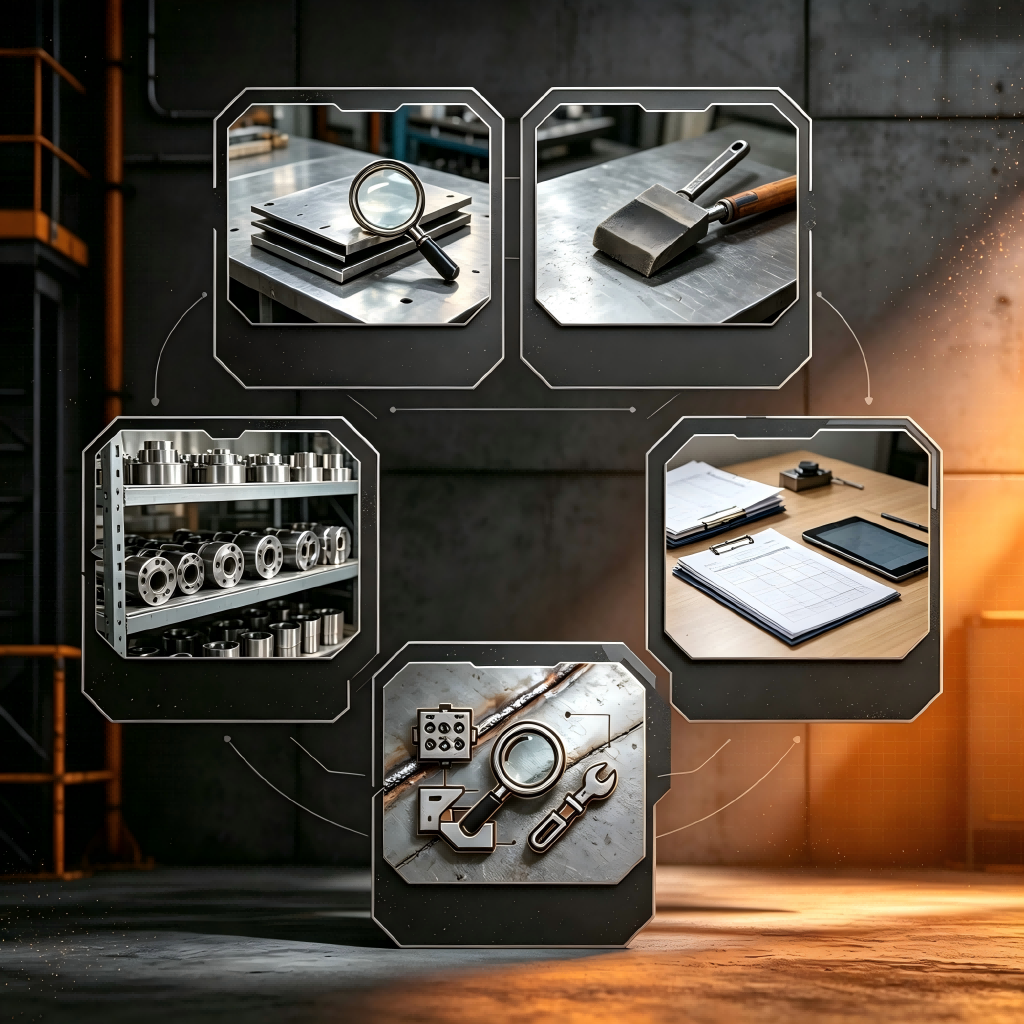
Standardized surface preparation procedures. The supplier should have documented cleaning, rust removal, and degreasing procedures with corresponding operating standards.
Strict incoming material inspection. Each batch of raw materials should be inspected for surface quality before entering production. Non-conforming batches should be rejected.
Segregated storage areas. Cleaned materials and materials awaiting cleaning should be stored in separate areas to prevent cross-contamination.
Comprehensive quality traceability. Every batch of products should be traceable back to the material source and surface treatment records.
How Lingyufab Ensures Surface Quality Before Welding
Lingyufab understands that a good weld starts with a clean surface. As a professional sheet metal fabrication manufacturer and sheet metal supplier based in Shanghai, China, with over 20 years of precision manufacturing experience since 2003, we follow strict Japanese quality standards and are a certified core supplier for Mitsubishi Electric.
Before any welding begins, we implement systematic surface preparation procedures. Depending on the material type—carbon steel, stainless steel, or aluminum—and the welding requirements, we apply mechanical grinding, chemical cleaning, or solvent degreasing as appropriate. Cleaned materials are welded within the specified time frame to prevent recontamination. Every batch of raw materials comes with a Mill Test Certificate (MTC), ensuring full traceability.
Our in-house capabilities include:
Laser welding — High-speed, low-distortion welding. Laser cutting — High-precision fiber laser cutting for accurate flat patterns. CNC bending — Precision bending with consistent accuracy and springback compensation. Sheet metal fabrication — Complete assembly, surface treatment, and fastener installation. ISO 9001, ISO 14001, and TÜV CE certified. Full material traceability with Mill Test Certificates.
One supplier, full responsibility. From laser cutting and CNC bending to welding, surface treatment, and fastener installation, we handle everything under one roof. This integration ensures consistent quality, shorter lead times, and a single point of accountability for your entire project.
If you are concerned about welding quality or have questions about surface preparation requirements, our engineering team is available to provide a free consultation. If you are looking for a reliable sheet metal fabrication supplier, please don't hesitate to contact us.
Quick Surface Quality Checklist for Buyers
| What to Check | What to Look For |
|---|---|
| Incoming material inspection | Surface free of oil, rust, and visible oxide layers |
| Cleaning procedure | Cleaning method appropriate for material type |
| Storage conditions | How cleaned materials are stored and for how long |
| Process documentation | Cleaning and inspection records available |
| Defect traceability | Can welding defects be traced back to surface preparation? |
FAQs
Q1: How does oil on the material surface affect welding?
Oil and grease decompose at high temperatures, releasing gases that become trapped in the weld pool and form porosity. In severe cases, it can cause weld failure.
Q2: Does stainless steel need surface cleaning before welding?
Yes. Oxide layers and oil contamination on stainless steel surfaces affect fusion quality. Mechanical grinding or chemical cleaning is typically required to remove oxides and contaminants.
Q3: What special requirements apply to aluminum surface preparation before welding?
Aluminum rapidly forms oxide layers that have a much higher melting point than the base material. Oxide layers must be removed before welding, and welding should occur as soon as possible after cleaning to prevent new oxide formation.
Q4: Does surface roughness affect welding?
Yes. Excessive roughness increases spatter and welding instability, while excessively smooth surfaces may hinder weld pool wetting. A moderate roughness range helps achieve good weld quality.
Q5: How do I verify that surface cleaning is adequate?
Visual inspection is the most basic method—the surface should be free of oil, rust, and visible oxide layers. For critical applications, water film tests or solvent wipe tests can be used to verify cleanliness.
Q6: Can Lingyufab ensure surface quality before welding?
Yes. Lingyufab has established a comprehensive quality control system covering incoming inspection, cleaning procedures, and process documentation to ensure every part meets the required surface condition before welding.