+8613003178786
  sales@lingyufab.com



Sheet Metal Fan Housing vs. Plastic Fan Housing: Which Is Right for Your Application?
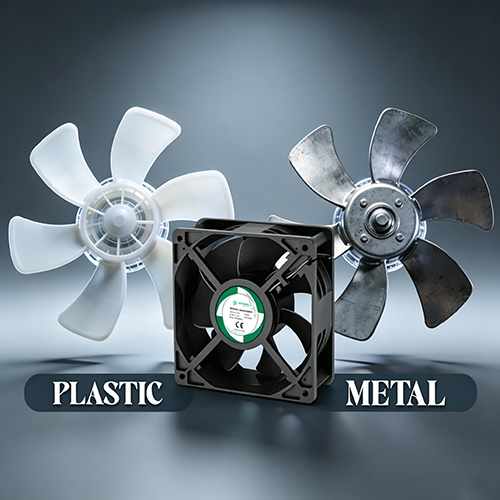
02
Sep’2026Sheet Metal Fan Housing vs. Plastic Fan Housing: Which Is Right for Your Application?
What Are Precision Fan Case Assemblies?
A fan case assembly, also known as a fan housing or fan casing, is the structural enclosure that houses a fan's motor, blades, and other internal components. Its primary function is to direct airflow, protect the fan from environmental factors, and provide a secure mounting interface for the overall system.
In electronics cooling applications, fan case assemblies serve three critical roles:
Airflow Direction – The housing channels air through the fan, ensuring that airflow is directed precisely where it's needed. Poorly designed housings can create turbulence or recirculation, drastically reducing cooling efficiency.
Structural Support – The housing provides mounting points for the fan motor, connectors, and the surrounding system. It must maintain its shape under vibration, thermal cycling, and physical loads.
Protection – The housing shields the fan's internal components from dust, moisture, and accidental contact, while also containing electromagnetic emissions in sensitive equipment.
Precision Fan Case Assemblies are manufactured using sheet metal fabrication or injection molding processes, and their quality directly impacts the performance and reliability of the entire cooling system.
Lingyufab is a professional China-based OEM specializing in high-quality custom build-to-print fabrication of fan case assemblies. As a direct manufacturer, we transform technical drawings into precision customized fan housings, cooling modules, and integrated ventilation frames for high-density server racks and industrial power systems. Our dedicated facility ensures every custom assembly accurately matches your specifications through rigorous full-process inspection, providing the vibration resistance and structural stability needed for your final assembly.
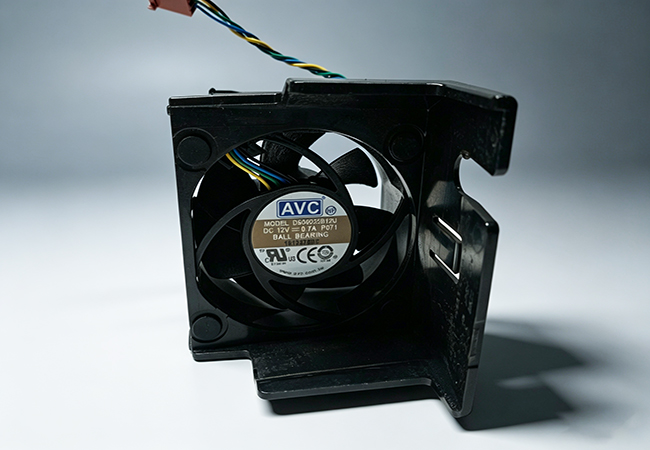
Two Common Materials for Fan Case Assemblies
When selecting materials for fan case assemblies, manufacturers typically choose between two primary material families: sheet metal and plastic. Each offers distinct advantages depending on the application, operating environment, and production volume.
Sheet Metal Fan Housings
Sheet metal fan housings are fabricated from materials such as cold-rolled steel (SPCC), galvanized steel (SGCC), stainless steel (304, 316L), or aluminum alloys (5052-H32, 6061-T6). The manufacturing process typically involves laser cutting, CNC bending, welding, and surface finishing.
Key characteristics of sheet metal fan housings include:
High structural strength – Steel and aluminum provide excellent rigidity and impact resistance, even at thin gauges.
Inherent EMI shielding – Conductive metal creates a natural Faraday cage without additional treatments.
Heat resistance – Metal housings maintain structural integrity at temperatures above 150°C.
Design flexibility – Changes can be made with moderate cost and short lead times.
At Lingyufab, we manufacture precision fan case assemblies from sheet metal using advanced high-precision fiber laser cutting systems, multi-axis CNC bending centers, and high-speed stamping presses. Our integrated approach combines sheet metal fabrication with in-house fastener production, delivering ready-to-install fan housings that simplify assembly.
Plastic Fan Housings
Plastic fan housings are typically manufactured using injection molding. Common materials include PBT (polybutylene terephthalate), polypropylene (PP), polycarbonate (PC), polyamide (PA), and ABS. These materials can be engineered with additives for flame retardancy (UL94 V-0), UV stability, or specific acoustic properties.
Key characteristics of plastic fan housings include:
Lightweight – Plastics have approximately 1/6 the density of steel, making them ideal for weight-sensitive applications.
Sound damping – Plastics absorb vibration and reduce operational noise more effectively than metal.
Complex geometries – Injection molding enables intricate shapes, integrated features, and living hinges at no extra cost.
Color consistency – Housings can be molded in custom colors without secondary painting.
However, plastic fan housings have limitations: they soften at temperatures above 85-100°C, do not provide inherent EMI shielding, and require expensive tooling for production.
The Key Differences Between Sheet Metal and Plastic Fan Housings
Material Properties: Strength, Weight, and Durability
| Property | Sheet Metal Fan Housing | Plastic Fan Housing |
|---|---|---|
| Structural Strength | High – steel provides excellent strength at thin gauge | Moderate – requires thicker sections and ribbing |
| Impact Resistance | Excellent – resists deformation | Good – but can crack at mounting bosses |
| Weight | Heavy – steel is ~3x denser than aluminum | Light – density is ~1/6 that of steel |
| Corrosion Resistance | Depends on material and coating; stainless steel excellent | Generally excellent – plastics do not rust |
| Long-term Durability | Resists creep and vibration-induced deformation | Can creep (deform) under sustained load and vibration |
In demanding environments, sheet metal fan housings offer superior durability. A 1.2–1.5mm steel enclosure typically survives drop tests and vibration qualification with only cosmetic damage—the same housing in plastic often cracks at mounting bosses or corners unless reinforced.
Thermal Performance and Heat Resistance
Heat management is one of the clearest differentiators between the two materials.
Sheet metal fan housings offer excellent heat resistance. Stainless steel housings withstand temperatures exceeding 150°C without degradation. Aluminum housings provide thermal conductivity of approximately 205 W/m·K, actively conducting heat away from the motor and acting as a heat spreader.
Plastic fan housings, by contrast, are thermal insulators. Most standard plastics soften at temperatures above 85-100°C. For applications with continuous thermal stress, special high-temperature plastics such as polyamide (PA), polycarbonate (PC), or polyphenylene sulphide (PPS) are required, which can significantly increase material costs. Even with conductive additives, plastic's thermal conductivity typically only reaches 1–20 W/m·K—far below aluminum's 150–200 W/m·K.
EMI Shielding and Grounding
Sheet metal fan housings provide a conductive barrier that blocks electromagnetic interference (EMI) and provides a reliable grounding path. This is critical for networking, telecommunications, and medical equipment operating in crowded electromagnetic environments. Continuous conductive sheet metal offers natural Faraday cage protection—gaps at seams are easily managed with conductive gaskets or overlapping flanges.
Plastic fan housings are inherently non-conductive and do not offer EMI shielding. For applications requiring EMI protection, plastic housings may need additional treatments such as conductive coatings, conductive paints, or metalized fillers. Each of these steps introduces adhesion, wear, and inspection issues—and coated plastic enclosures can still fail radiated emissions tests if the coating is incomplete at corners or wears off during assembly.
Noise, Vibration, and Acoustic Performance
This is one area where plastic often has a clear advantage. Plastics have much higher loss coefficients than metal (5–100x higher), meaning they dissipate vibration energy as heat rather than transmitting it as noise.
Plastic fan housings are better at absorbing vibration and reducing operational noise. Nidec Corporation, a leading fan manufacturer, extensively tested polymers for fan housing applications and found that PBT (polybutylene terephthalate) provided superior sound absorption compared to nylon or polypropylene.
Sheet metal fan housings, particularly steel, are stiffer and transmit vibration more readily. However, for applications where dimensional stability under long-term vibration is critical, metal's resistance to creep and deformation becomes a significant advantage.
Cost and Manufacturing Considerations
| Cost Factor | Sheet Metal Fan Housing | Plastic Fan Housing |
|---|---|---|
| Tooling/Mold Cost | Lower – no expensive mold required | High – injection molds cost thousands of dollars |
| Per-Unit Cost | Higher material cost | Lower per-unit cost at high volume |
| Lead Time for New Design | Short – days to weeks | Long – 6-10 weeks for mold fabrication |
| Design Changes | Moderate cost to implement | Expensive – requires mold modification |
| Minimum Order Quantity | Flexible – works for 1 to 10,000+ units | Only cost-effective at >1,000-5,000 units |
For prototypes and runs under a few hundred pieces, sheet metal fan housings are almost always cheaper. Laser cutting and CNC bending require no dedicated tooling beyond inexpensive fixtures. A typical enclosure can be quoted in days and delivered in one to two weeks.
Plastic fan housings require substantial upfront investment in injection molds. However, once that mold is paid for, unit cost drops dramatically—often below sheet metal after a few thousand pieces.
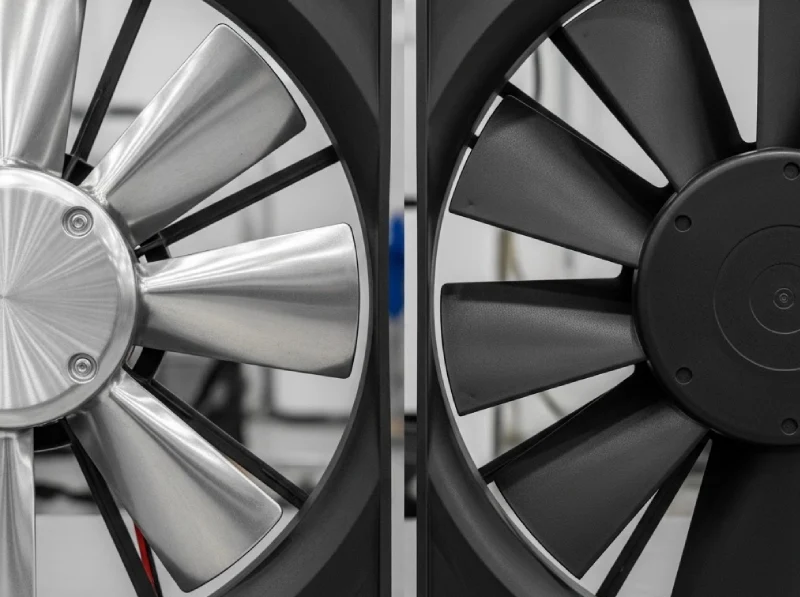
How to Choose Between Sheet Metal and Plastic Fan Housings for Your Application
Selecting the optimal material for your fan housing project requires balancing multiple factors. The following guidance can help clarify the choice:
Choose Sheet Metal Fan Housings if:
The application involves high temperatures (>85°C)
EMI shielding is critical (telecom, networking, medical equipment)
The housing will experience high vibration or mechanical loads
The product requires rapid prototyping or custom low-volume production
Structural strength and long-term durability are priorities
Choose Plastic Fan Housings if:
Weight reduction is a priority (portable equipment, consumer devices)
Acoustic noise reduction is essential
The application is cost-sensitive, high-volume production (>5,000 units)
Complex geometries with integrated features are required
The operating environment is moderate temperature (<85°C)
Hybrid Approaches – Some manufacturers use both materials in the same design, combining a metal motor mount with a plastic shroud for weight savings and noise reduction.
Lingyufab: Precision Sheet Metal Fabrication Supplier for Fan Housings
Lingyufab is a professional sheet metal assembly and fastener manufacturer in China. We specialize in producing a wide range of mechanical and electronic enclosures, chassis, brackets, and other structural components for industries including automotive, aerospace, medical devices, telecommunications, and industrial automation .
Our integrated manufacturing capabilities cover laser cutting, CNC bending, welding, and surface treatment. We also offer custom stud-welded sub-assemblies and custom self-clinching integrated components, delivering ready-to-install assemblies that simplify production and reduce supply chain complexity. Our workshop features high-precision Laser Cutting Systems, CNC Bending Centers, Stamping Presses, and Cold Heading Machines for bolts and nuts, enabling us to handle everything from single prototypes to mass production with short lead times and consistent quality control.
We operate under the ISO 9001:2015 quality management system and strictly follow Japanese quality management standards, with rigorous inspection at every stage from raw material to final delivery.
Not sure which material fits your fan housing or other enclosure project? Contact Lingyufab today with your design files. Our engineering team will review your requirements and provide a competitive quote within 24 hours.
FAQs About Sheet Metal vs. Plastic Fan Housings
Which material provides better heat resistance?
Sheet metal, particularly stainless steel and aluminum, provides superior heat resistance compared to most plastics. Standard plastics soften above 85-100°C, while metal maintains structural integrity at much higher temperatures.
Can plastic fan housings provide EMI shielding?
No. Plastic is non-conductive and does not inherently shield against EMI. For EMI-sensitive applications, metal housings are required, or plastic housings need costly secondary conductive coatings.
Which material reduces noise better?
Plastics generally have better sound-damping properties than metal due to their higher loss coefficients. However, metal frames resist vibration-induced deformation better over long-term use.
Does Lingyufab offer both material options?
Lingyufab specializes in precision sheet metal fan housings and other sheet metal enclosures. Our expertise in sheet metal fabrication ensures high-quality, durable housings for demanding applications.