+8613003178786
  sales@lingyufab.com


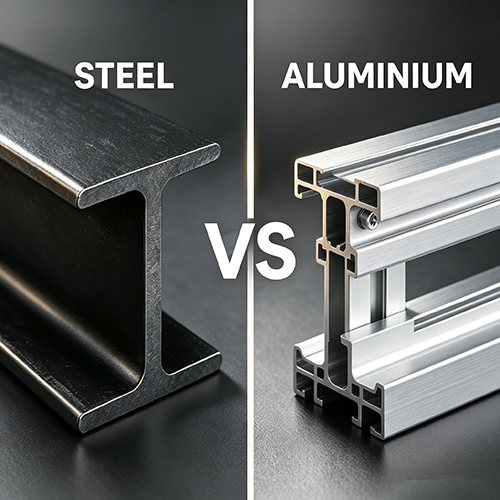
Steel vs. Aluminum for Server and Networking Chassis Components
01
Sep’2026Steel vs. Aluminum for Server and Networking Chassis Components
What Are the Common Materials for Server and Networking Chassis Components?
Server and networking chassis components are typically fabricated from two primary material families: steel and aluminum. Each offers distinct advantages depending on the application, performance requirements, and budget constraints.
Steel—particularly cold-rolled steel (SPCC) and galvanized steel (SGCC)—has been the traditional choice for server and networking enclosures due to its strength, cost-effectiveness, and excellent electromagnetic shielding properties.
Aluminum—commonly 5052-H32 or 6061-T6 alloys—has gained popularity in recent years, especially in high-density computing and telecommunications applications where weight reduction and thermal management are critical priorities.
Both materials are processed using the same sheet metal fabrication techniques—laser cutting, CNC bending, welding, and surface finishing—but they behave differently throughout the manufacturing process and in the final application. Understanding these differences is essential for engineers and procurement professionals when specifying materials for their chassis projects.
Lingyufab brings over 20 years of precision sheet metal experience to server and networking chassis manufacturing, processing both steel and aluminum in our facility. Our integrated approach combines in-house fastener production—including custom stud-welded sub-assemblies and custom self-clinching integrated components—with precision sheet metal fabrication, delivering ready-to-install chassis components that simplify assembly and reduce supply chain complexity. Whether your project requires a robust steel chassis or a lightweight aluminum enclosure, we provide objective recommendations based on your specific design requirements, not on our equipment limitations.
Key Properties of Steel for Server and Networking Chassis Components
Steel remains the dominant material for server and networking chassis for several well-founded reasons.
Mechanical Strength – Steel offers superior yield strength, typically ranging from 180 to 350 MPa depending on the grade. This allows chassis fabricated from steel to maintain structural integrity even in high-density configurations where weight loads are concentrated in the lower portions of the rack.
Cost-Effectiveness – Steel is significantly less expensive than aluminum on a per-ton basis. Additionally, steel's abundance and well-established global supply chain make it a reliable, cost-predictable option for large-scale production runs.
EMI Shielding – One of steel's most valuable properties for networking equipment is its excellent electromagnetic interference shielding effectiveness. Steel provides consistent attenuation across a wide frequency range, making it the preferred choice for chassis housing sensitive networking circuits.
Formability – Modern steel grades are highly formable. Complex chassis features such as louvered ventilation panels, mounting ears, and cable management channels can be formed through CNC bending and stamping with predictable springback behavior, resulting in consistent part dimensions.
Common Steel Grades – For server and networking chassis, the most frequently specified materials are:
SPCC (cold-rolled steel): The default choice for internal brackets and standard chassis panels, offering a balance of strength and formability.
SGCC (hot-dip galvanized steel): Provides corrosion resistance through a zinc coating, ideal for environments with humidity or where paint coverage may be incomplete.
SECC (electro-galvanized steel): Offers a thinner zinc layer than SGCC, with superior surface quality for painting.
However, steel is approximately three times denser than aluminum, which translates to heavier finished products—a significant drawback in weight-sensitive applications. Additionally, steel's corrosion resistance depends heavily on surface coatings, requiring careful attention to finishing processes.
Key Properties of Aluminum for Server and Networking Chassis Components
Aluminum has become increasingly prominent in server and networking chassis manufacturing, driven by trends toward higher compute density and the growing prevalence of edge computing.
Lightweight Construction – Aluminum weighs approximately 2.7 g/cm³, compared to steel at 7.85 g/cm³—a density reduction of approximately 65%. This weight saving translates directly to reduced shipping costs, easier handling during installation, and lower structural load on racks and raised floors.
Thermal Conductivity – Aluminum's thermal conductivity is approximately 205 W/m·K, compared to steel's 43-52 W/m·K. This means aluminum chassis dissipate heat more efficiently, which is increasingly important as compute and networking equipment power densities rise. In active cooling scenarios, aluminum components can serve as effective heat spreaders, reducing the need for dedicated heat sinks.
Corrosion Resistance – Aluminum naturally forms a protective oxide layer that provides good corrosion resistance without requiring additional coatings. For outdoor and edge-deployed networking equipment, aluminum's inherent corrosion resistance is a significant advantage.
Surface Finish Options – Aluminum accepts a range of finishes, including anodizing, powder coating, and chemical conversion (Alodine). Anodized aluminum provides excellent durability with a premium aesthetic that appeals to high-end equipment manufacturers.
Common Aluminum Grades – For chassis applications, the most commonly used alloys are:
5052-H32: Offers excellent formability and moderate strength, suitable for complex chassis shapes and baffles.
6061-T6: Provides higher strength than 5052, with good machinability for precision features.
The primary trade-offs with aluminum are higher material costs and lower strength compared to steel, requiring thicker sections—and potentially more material—to achieve equivalent structural performance. Aluminum's higher cost per ton, combined with the need for thicker gauges in some applications, can significantly impact the component cost.
Thermal Management in Server and Networking Chassis Components: Steel vs. Aluminum
Thermal management is a critical design factor for modern server and networking equipment. As processor thermal design power (TDP) continues to increase and chassis density expands, the material's ability to conduct heat away from components becomes increasingly important.
Aluminum's Thermal Advantage – Aluminum's thermal conductivity (205 W/m·K) is approximately four times higher than steel's. In practice, this means an aluminum chassis can more effectively spread heat from hot spots to cooler areas of the chassis, reducing peak temperatures. This can lead to:
Reduced reliance on high-speed fans, lowering acoustic noise
Improved component reliability through lower operating temperatures
Ability to passively cool lower-power networking equipment
Steel's Limitations – Steel's lower thermal conductivity means it does not contribute significantly to heat spreading. Chassis designs relying on steel typically depend on airflow from fans or blowers for component cooling, with the chassis acting primarily as an airflow conduit rather than a heat sink.
Heat Sink Integration – For high-performance networking equipment, aluminum heat sinks are sometimes integrated into the chassis design itself. Features such as fins, mounting bosses, and channels are CNC machined into aluminum panels to create hybrid chassis-heat sink structures.
Weight-Thermal Trade-Off – While aluminum provides superior thermal performance, steel chassis can often achieve adequate cooling through careful ventilation design and efficient fan selection. The choice between the two materials depends on the specific cooling requirements of the components being housed.
EMI Shielding in Server and Networking Chassis Components: Steel vs. Aluminum
Electromagnetic interference (EMI) shielding is a mandatory design consideration for all network equipment sold in regulated markets. The material's ability to attenuate radiated emissions directly affects the chassis's effectiveness in containing electromagnetic radiation.
Steel's Shielding Superiority – Steel provides excellent EMI shielding due to its high magnetic permeability and electrical conductivity. Steel chassis offer consistent shielding effectiveness across both near-field and far-field emissions, making them the preferred choice for equipment operating at frequencies up to several gigahertz.
Aluminum's Shielding Performance – Aluminum offers good shielding effectiveness against electric fields, but its performance against magnetic fields is less effective than steel due to its lower magnetic permeability. For equipment operating at frequencies above 1 GHz, aluminum's performance is comparable to steel, as shielding at high frequencies depends primarily on electrical conductivity rather than magnetic properties.
Practical Implementation – For both materials, the effectiveness of EMI shielding depends on:
Continuous conductive seams between panels
Proper grounding paths through the chassis
Quality of conductive gaskets and finger stock
Consistency of material thickness and finish
Finishing Effects – Powder coating and painting are insulating, so both steel and aluminum chassis must have grounding points masked during finishing. Aluminum's natural oxide layer is also insulating, requiring special consideration for electrical ground continuity.
Cost Analysis for Server and Networking Chassis Components: Steel vs. Aluminum
Cost is often the deciding factor in material selection for server and networking chassis. Here's a breakdown of the cost considerations:
| Cost Factor | Steel | Aluminum |
|---|---|---|
| Raw Material Cost per Ton | Lower | Approximately 3-4x higher |
| Required Thickness for Equivalent Stiffness | Standard gauge (0.8-1.2mm) | Often requires thicker gauge (1.2-1.6mm) |
| Manufacturing Cost | Similar laser cutting and bending costs | Similar fabrication cost, but thicker material requires more press tonnage |
| Surface Finishing Cost | Powder coating standard | Anodizing costs slightly more; powder coating comparable |
| Logistics (Weight) | Heavier, higher shipping cost | Lighter, lower shipping cost |
| Corrosion Protection | Requires coatings (added cost) | Natural oxide provides basic protection |
Per-Component Cost Estimate – For identical chassis designs, an aluminum version typically costs 30-60% more than a steel version in material cost alone. However, this premium can be offset in certain scenarios:
High-volume production where reduced shipping weight adds up over thousands of units
Applications where thermal performance reduces or eliminates cooling hardware requirements
Designs where aesthetics or brand positioning justifies the premium
Lifecycle Cost Considerations – While aluminum chassis cost more initially, the weight savings can result in lower shipping costs over the product's lifecycle. This is particularly relevant for large-scale data center deployments where logistical costs are significant.
How to Choose Steel or Aluminum for Your Server and Networking Chassis Components
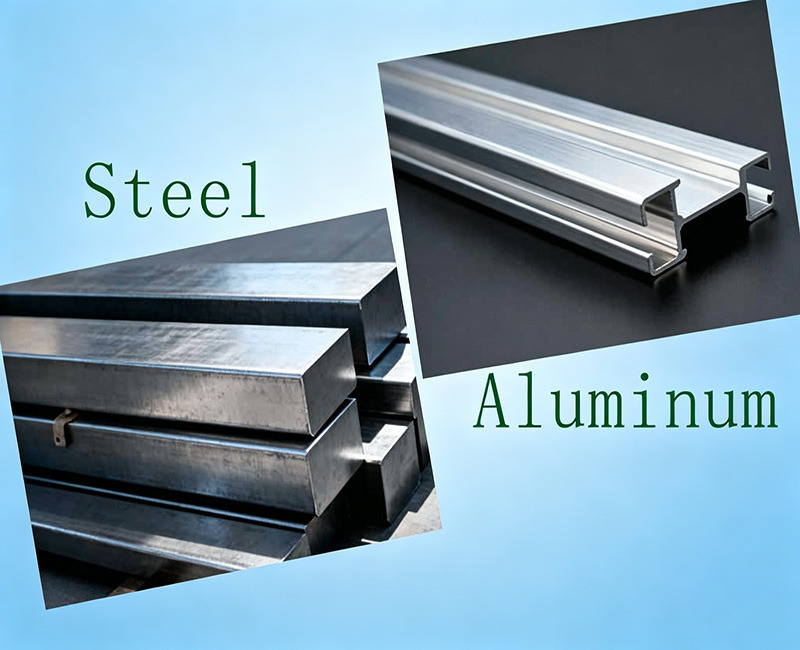
Selecting the optimal material for your chassis application requires balancing several factors based on your project's specific requirements. The following decision guidance can help clarify the choice:
Choose Steel if:
Cost is the primary constraint
EMI shielding is critical (especially for equipment operating below 1 GHz)
Standard, high-volume production with established supply chains is preferred
Structural strength in high-weight configurations is required
The application is indoor rack deployment with controlled environment
Choose Aluminum if:
Weight reduction is a priority (portable equipment, drone or vehicle-mounted)
Superior thermal performance is required (high-power compute, passive cooling)
Corrosion resistance without coating is preferred
Premium aesthetics and anodized finish options are desired
Edge or outdoor deployment is planned
Hybrid Approaches – Some manufacturers use both materials in the same design, combining a steel frame with aluminum panels. For example, the main frame and mounting ears may be fabricated from steel for structural strength, while top and side panels are manufactured from aluminum to reduce overall weight.
Lingyufab: Precision Sheet Metal Fabrication Supplier for Server and Networking Chassis
Lingyufab brings over 20 years of precision sheet metal experience to server and networking chassis manufacturing. As a certified core supplier for Mitsubishi Electric, we understand the quality and delivery standards required by demanding data center applications.
Our integrated manufacturing capabilities span both steel and aluminum processing. We operate high-precision laser cutting systems for accurate blanks, CNC bending centers for precise forming, and automated hardware insertion equipment for fasteners. Our in-house fastener production means we can deliver complete sub-assemblies with studs, standoffs, and self-clinching hardware pre-installed—eliminating the need for secondary sourcing and reducing your supply chain complexity.
We operate under the ISO 9001:2015 quality management system, with rigorous inspection at every stage from raw material to final delivery. Every batch of material comes with a Mill Test Certificate, and we support third-party laboratory analysis for additional verification.
Not sure which material fits your chassis project? Contact Lingyufab today with your design files. Our engineering team will review your requirements and provide a competitive quote within 24 hours.
FAQs
Is steel or aluminum stronger for server chassis?
Steel has a higher yield strength and stiffness compared to aluminum. However, the required thickness for equivalent structural performance depends on the specific application and design. In general, steel provides greater strength at an equivalent thickness.
Which material is better for thermal management?
Aluminum is significantly better for thermal management, with thermal conductivity approximately four times higher than steel. This makes it the preferred choice for high-power-density applications where heat dissipation is critical.
Does aluminum chassis provide adequate EMI shielding?
Yes. Aluminum provides good EMI shielding, particularly at frequencies above 1 GHz where shielding depends primarily on electrical conductivity. For lower-frequency applications, steel offers superior magnetic shielding.
Is aluminum worth the higher material cost?
It depends on your priorities. The higher initial cost can be justified if weight reduction, thermal performance, or corrosion resistance are critical requirements. Otherwise, steel remains a cost-effective solution that meets most data center requirements.
Can Lingyufab fabricate chassis from both materials?
Yes. Lingyufab processes both steel and aluminum in our facility. We can provide objective recommendations based on your specific design requirements and production targets.