+8613003178786
  sales@lingyufab.com


Thin Sheet Bending: Common Problems and Solutions
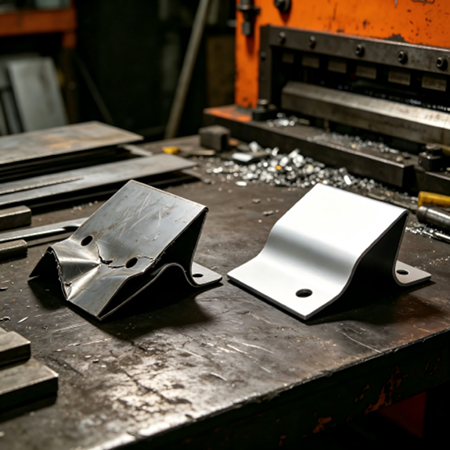
30
Sep’2026Thin Sheet Bending: Common Problems and Solutions
Thin sheet bending is one of the most common yet challenging operations in sheet metal fabrication. Unlike thick plates, thin materials are far more susceptible to distortion, cracking, and surface damage during the bending process. Have you ever received a batch of thin sheet metal parts where the edges were warped, the surfaces were scratched, or the corners were cracked? These issues often trace back to the unique challenges of bending thin gauge metals—typically defined as materials under 2mm in thickness. A mistake that might be barely noticeable on 3mm steel can completely ruin a 0.8mm part, making precision and proper technique essential.
At Lingyufab, we understand the nuances of thin sheet bending. With over 20 years of precision manufacturing experience since 2003 and certification as a core supplier for Mitsubishi Electric, our CNC bending centers are equipped with the tooling and expertise needed to handle thin gauge materials without compromising quality. This guide covers the most common problems encountered when bending thin sheet metal and provides practical solutions to help you achieve consistent, defect-free results.
Why Thin Sheet Bending Is Different
Thin sheet metal behaves differently from thicker materials during bending. Several factors contribute to the unique challenges:
Low stiffness — Thin materials have less resistance to deformation, making them prone to warping and distortion under pressure.
Higher susceptibility to surface damage — Thin sheets are more easily scratched or marked by tooling, especially when bending pre-finished materials.
Reduced tolerance for error — A small variation in tooling or technique that would be acceptable on thick material can cause cracking or wrinkling on thin sheets.
Springback sensitivity — While thinner materials generally exhibit less springback, the impact of any springback on dimensional accuracy is proportionally greater.
Understanding these factors is the first step to solving thin sheet bending problems. This guide covers the most common defects and shows you what to do about each one.
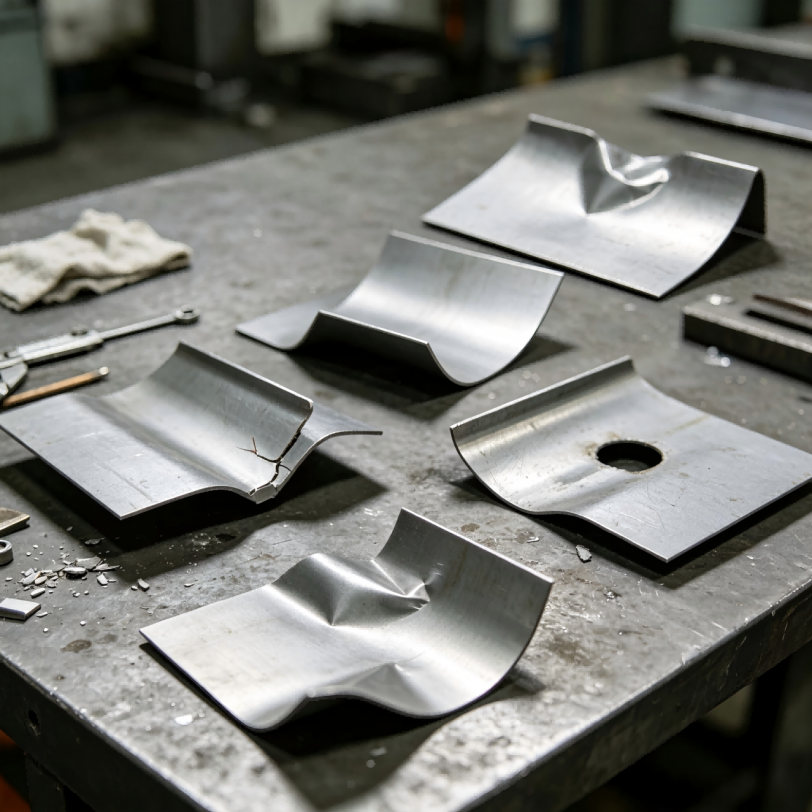
Problem 1: Warping and Distortion
Warping is one of the most frequent quality issues when bending thin sheet metal. The part bends, twists, or bows out of shape during the forming process, making it impossible to assemble.
Why it happens: Warping occurs when uneven stress distribution causes the material to deform inconsistently. In thin materials, the problem is magnified because the metal has less stiffness to resist the contraction forces created during bending. Common causes include excessive bending speed, insufficient support during forming, and uneven material thickness.
How to solve it: Minor warping can sometimes be corrected through mechanical straightening. In severe cases, the part may need to be scrapped.
How to prevent it: Slow down the bending speed to allow the material to deform more evenly. Ensure proper support during bending—especially for long parts where the material can sag or twist. Use a higher tonnage press with better rigidity to minimize deflection. For parts with thin webs or narrow flanges, consider pre-bending or using intermediate forming steps to reduce stress concentration.
Problem 2: Surface Scratches and Tooling Marks
Surface scratches are among the most visible and frustrating defects in thin sheet bending. On thin materials, even minor tooling marks are more noticeable and can compromise the appearance and corrosion resistance of the finished part.
Why it happens: Tooling marks are typically caused by worn or dirty tooling, insufficient lubrication, or contact with sharp edges during handling. For pre-finished materials—painted, polished, or anodized surfaces—the risk is even higher because the protective layer can be easily damaged.
How to solve it: Light scratches can sometimes be removed through polishing or finishing. Deep marks that penetrate the surface finish typically require scrapping the part.
How to prevent it: Use protective urethane tape or non-marking dies for pre-finished surfaces. Ensure tooling is clean and free of burrs before use. Apply proper lubrication to reduce friction between the tooling and the material. Maintain smooth tooling surfaces—polish dies and punches regularly to prevent scratching. For thin materials, consider using radius punches or tooling with larger contact areas to distribute pressure more evenly.
Problem 3: Cracking at the Bend
Cracking is one of the most serious defects in thin sheet bending because it compromises structural integrity. Cracks typically appear on the outside of the bend, where the material is stretched beyond its elongation limit.
Why it happens: The most common cause is an inside bending radius that is too small for the material thickness. A tight radius concentrates stress on the outer surface, overstretching the material until it fractures. Other contributing factors include bending against the grain direction, using low-ductility materials, and insufficient lubrication. The minimum bend radius is particularly important for thin gauge metals, which are more susceptible to damage during bending.
How to solve it: For existing cracks, the part typically must be scrapped—cracks cannot be reliably repaired without compromising structural integrity.
How to prevent it: Ensure the inside bend radius is appropriate for the material thickness. As a general rule, the inner bend radius should be at least one to one and a half times the material thickness. Bend perpendicular to the grain direction whenever possible to minimize cracking. For harder materials, consider using a larger bend radius or applying heat to increase ductility. Use a suitable lubricant during forming to reduce friction and prevent cracking.
Problem 4: Hole Deformation
When holes are located too close to a bend line, they can become distorted, ovalized, or cracked during the bending process. This is particularly problematic for holes that will be used for fasteners or assembly.
Why it happens: Material near the bend area undergoes severe deformation during bending. When holes are placed too close to the bend line, the stretching and compression forces distort the hole shape. The minimum distance between a hole and a bend line should be at least two to three times the material thickness.
How to solve it: Distorted holes can sometimes be reamed or drilled to the correct size. Severe distortion typically requires scrapping the part.
How to prevent it: Maintain adequate distance between holes and bend lines—at least two to three times the material thickness. Consider using slot holes instead of round holes for one set of holes to allow for adjustment during assembly. If the hole must be located close to the bend, add relief slots or cutouts to absorb the deformation. For critical applications, consider performing secondary drilling or machining operations after bending.
Problem 5: Wrinkling on the Inside Radius
Wrinkling occurs when compressive forces cause the material to buckle inward, creating ripples or bulges on the inside of the bend or along flanges. While wrinkling may not break the part, it ruins the clean appearance and can affect fitment in precision assemblies.
Why it happens: Wrinkling is more likely when thin sections lack internal support or when the material does not have enough stiffness to resist compressive forces. Poor die support lets the material shift instead of holding its shape. Excessive compression, inadequate blank holder pressure, and insufficient lubrication all contribute.
How to solve it: Minor wrinkling can sometimes be corrected through additional forming or grinding. Severe wrinkling typically requires scrapping the part.
How to prevent it: Reduce unsupported flange lengths—long flanges are prone to wrinkling. Use proper blank holder pressure to control material flow during forming. Choose the correct sheet thickness for the application. Apply lubrication to reduce friction and stress. In severe cases, redesigning the tooling may be necessary.
How Lingyufab Delivers Precision Thin Sheet Bending
Lingyufab is a professional sheet metal fabrication manufacturer and sheet metal supplier based in Shanghai, China, with over 20 years of precision manufacturing experience since 2003. We follow strict Japanese quality standards and are a certified core supplier for Mitsubishi Electric.
What sets Lingyufab apart as a sheet metal supplier is our systematic approach to thin sheet bending. Our CNC bending centers feature real-time angle monitoring and dynamic crowning systems that ensure consistent accuracy across every part—even on the thinnest materials.
Our in-house capabilities include:
CNC bending — Precision bending with consistent accuracy and springback compensation, optimized for thin gauge materials.
Laser cutting — High-precision fiber laser cutting with optimized parameters for clean edges.
Laser welding — High-speed, low-distortion welding with minimal heat input.
Sheet metal fabrication — Complete assembly, surface treatment, and fastener installation.
ISO 9001, ISO 14001, and TÜV CE certified.
Full material traceability with Mill Test Certificates.
One supplier, full responsibility. From laser cutting and CNC bending to welding, surface treatment, and fastener installation, we handle everything under one roof. This integration ensures consistent quality, shorter lead times, and a single point of accountability for your entire project.
If you are concerned about thin sheet bending quality in your parts, our engineering team is available to review your requirements and provide a free consultation. If you are looking for a reliable sheet metal fabrication supplier, please don't hesitate to contact us.
Quick Thin Sheet Bending Checklist for Buyers
| What to Check | What to Look For |
|---|---|
| Warping | Bending, twisting, or distortion—check flatness |
| Surface scratches | Visible marks, scratches, or tooling indentations |
| Cracking | Any cracks on the outside of the bend—any crack is a reject |
| Hole distortion | Ovalized, shifted, or deformed holes near bend lines |
| Wrinkling | Ripples or bulges on the inside of the bend |
| Bend angle accuracy | Angles match drawing within specified tolerance |
FAQs
Q1: What is considered thin sheet metal for bending?
Thin sheet metal for bending typically refers to materials under 2mm in thickness. Thin gauge metals are usually between 0.5mm and 1.5mm thick and are used in applications requiring lightweight and flexible materials. Due to their thinness, these metals are more susceptible to bending and deformation, making them ideal for intricate designs and precise applications.
Q2: Why does thin sheet metal warp so easily during bending?
Thin material has less stiffness to resist the contraction forces created by heating and cooling or uneven stress distribution. The same forming forces that cause minor distortion on thick plate will cause significant warping on thin sheet. The mismatch between forming pressure and material stiffness is the primary cause.
Q3: What is the minimum bend radius for thin sheet metal?
As a general rule, the inner bend radius should be at least one to one and a half times the material thickness. For example, 0.8mm material requires a minimum inside bend radius of 0.8mm to 1.2mm. A tighter radius increases the risk of cracking. The minimum bend radius is particularly important for thin gauge metals, which are more susceptible to damage during bending.
Q4: How can I prevent surface scratches on thin sheet metal?
Use protective urethane tape or non-marking dies for pre-finished surfaces. Ensure tooling is clean and free of burrs. Apply proper lubrication to reduce friction. Maintain smooth tooling surfaces—polish dies and punches regularly. For thin materials, consider using radius punches or tooling with larger contact areas to distribute pressure more evenly.
Q5: What is the minimum distance between a hole and a bend line?
The minimum distance between a hole and a bend line should be at least two to three times the material thickness. This prevents the hole from becoming distorted, ovalized, or cracked during the bending process. For critical applications, consider using slot holes instead of round holes to allow for adjustment during assembly.
Q6: Can Lingyufab bend both thin and thick sheet metal?
Yes. Lingyufab bends materials from 0.5mm thin sheet up to 20mm heavy gauge plate. Our CNC bending centers feature real-time angle monitoring and dynamic crowning systems that ensure consistent accuracy across all thicknesses. We adjust tooling, bend radius, and forming parameters based on material type and thickness to ensure optimal quality.