+8613003178786
  sales@lingyufab.com



Why Your Sheet Metal Prototype Works, But Production Fails: 5 Critical Gaps to Close
24
Aug’2026Why Your Sheet Metal Prototype Works, But Production Fails: 5 Critical Gaps to Close
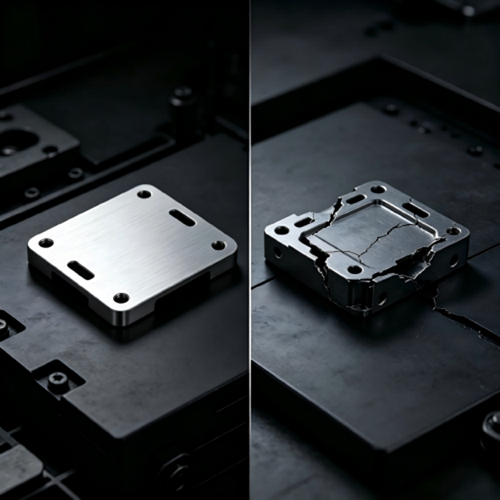
Have you ever watched a sheet metal prototype perform perfectly—only to see the same design fail catastrophically when you scaled to production? Perhaps the parts that fit together flawlessly in the lab arrived with misaligned holes, distorted flanges, or surfaces that no longer matched the prototype's finish. Your prototype worked. Your production parts didn't. And no one could tell you why.
This is one of the most frustrating and costly problems in product development. A prototype that passes every test can still fail in production—not because the design is wrong, but because the gap between prototyping and production is wider than most engineers realize. Understanding this gap is the difference between a smooth scale-up and a costly nightmare.
At Lingyufab, we bridge that gap every day. With over 20 years of precision manufacturing experience since 2003 and certification as a core supplier for Mitsubishi Electric, we help product developers navigate the five critical differences between prototype and production. This guide explains why prototypes fail in production—and how to close the gaps before they close your project.
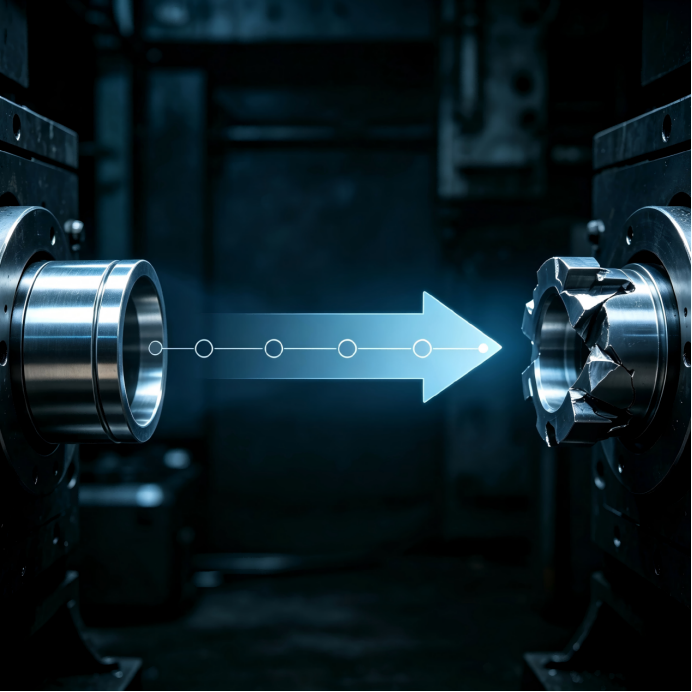
Gap 1: Design Intent vs. Manufacturing Reality
Prototypes are often made using flexible processes that don't reflect production realities. Laser-cut prototypes can have edges that are too hard to drill or tap. CNC-machined prototypes lack the material flow and grain structure that stamping introduces. Small design choices that were invisible in a one-off prototype can multiply cost, increase cycle time, and destabilize your production line once you go to volume.
What can go wrong: A prototype made by laser cutting might have a heat-affected zone that makes edges harder and more difficult to drill, tap, or weld—issues that don't appear in small quantities but become major problems at volume. Design features that were acceptable in a prototype may be impossible to reproduce consistently in production.
How to close the gap: Insist that your supplier's engineering team reviews your design for manufacturability before production begins. Design for Manufacturing (DFM) analysis should flag issues like improper bend radii, insufficient hole-to-edge clearance, and material thickness mismatches. The sooner these are caught, the cheaper they are to fix.
Gap 2: Tolerances That Work for One, Not for Thousands
In prototyping, tight tolerances are often achievable because every part is checked individually. In production, tight tolerances become expensive—and sometimes impossible—to maintain consistently across thousands of parts. The tolerance specification for parts is directly related to the cost of production.
What can go wrong: A prototype made on a calibrated machine with careful operator attention might hold very tight tolerances. In production, maintaining the same tolerance might require slower machine speeds, additional inspection steps, and higher scrap rates—all of which drive up cost. Worse, cumulative tolerances across multiple parts in an assembly can stack up, creating fit problems that didn't appear in the single prototype.
How to close the gap: Specify tolerances realistically from the start. Only apply tight tolerances to critical features. Use standard tolerances for everything else. Discuss tolerance requirements with your supplier—they can tell you which tolerances are necessary and which are driving up cost unnecessarily.
Gap 3: Prototype Materials vs. Production Materials
Prototypes often use materials that are readily available or easy to machine, not necessarily the materials that will be used in production. Even when the same material grade is specified, material properties can vary between batches—and production volumes require sourcing from multiple batches.
What can go wrong: A prototype made from one batch of material might perform perfectly, but production parts from a different batch with slightly different grain structure, hardness, or thickness could behave differently. The prototype validated the design, but it didn't validate the material supply chain.
How to close the gap: Use production-intent materials for prototypes whenever possible. If that's not feasible, test production materials early in the development cycle. Work with a supplier who provides Mill Test Certificates (MTC) for every batch, ensuring full traceability and material consistency.
Gap 4: Artisanal Prototyping vs. Production Process Control
Prototypes are often made by skilled craftspeople who carefully adjust each part individually. Production relies on standardized processes—SOPs—that must work consistently across shifts, operators, and machine settings. A process that relies on a skilled operator's intuition is not a production-ready process.
What can go wrong: The prototype was made by the most experienced fabricator in the shop, who adjusted every bend by feel. Production is run by operators following standard procedures, without the same intuition. The result: production parts that don't match the prototype's quality.
How to close the gap: Validate that your production process is repeatable, not just capable. Run pilot batches and inspect them thoroughly before committing to full production. Document every step—from laser cutting parameters to bend sequences to welding settings—so that the same process can be repeated consistently.
Gap 5: One-Off Inspection vs. Production Quality Systems
Prototypes are typically inspected thoroughly—every part, every dimension. Production requires sampling plans, process controls, and quality systems that catch defects efficiently without inspecting every part.
What can go wrong: The prototype passed inspection because every feature was checked. Production parts fail because the inspection system wasn't designed to catch the specific defects that occur at volume—like inconsistent bend angles across shifts, or surface scratches from material handling.
How to close the gap: Establish a quality plan before production begins. Define acceptable quality limits, sampling plans, and inspection methods. Work with a supplier who has ISO 9001, ISO 14001, and TÜV CE certified quality systems with full traceability.
When These Gaps Are Most Critical
These gaps affect every industry that moves from prototype to production, but they are especially critical in certain applications:
Electronics Enclosures — Tight hole tolerances for PCB mounting; any deviation can render the enclosure unusable. Cumulative tolerances across multiple parts can prevent proper sealing or component fit.
Medical Devices — Rigorous quality documentation and traceability requirements. Material consistency is critical for biocompatibility and sterilization.
Automotive Components — High-volume production demands consistent quality across millions of parts. Any process variation can lead to field failures and recalls.
Industrial Equipment — Structural integrity depends on consistent weld quality and material properties. Welding distortion that was acceptable in a prototype may cause assembly problems at scale.
Lingyufab: Your Trusted Sheet Metal Supplier from Prototype to Production
Lingyufab is a professional sheet metal fabrication manufacturer and supplier based in Shanghai, China, with over 20 years of precision manufacturing experience since 2003. We follow strict Japanese quality standards and are a certified core supplier for Mitsubishi Electric.
As a leading sheet metal supplier, Lingyufab bridges the gap between prototype and production through integrated engineering support and rigorous quality systems:
Free DFM review — Every project receives a manufacturability analysis before production, identifying potential issues before they become costly problems
Production-intent prototyping — Prototypes are made using the same processes as production, ensuring a true reflection of final part quality
Process documentation — Every project has documented SOPs covering material selection, cutting parameters, bend sequences, and inspection criteria
Quality systems — ISO 9001, ISO 14001, and TÜV CE certified with full traceability and MTC for every batch
Our comprehensive in-house capabilities include:
Laser cutting — High-precision cutting with consistent accuracy
CNC bending — Precision bending with springback compensation programmed for each material
Welding — TIG, MIG, and spot welding with certified welders
Surface treatment — In-house powder coating, anodizing, electroplating, and polishing
Assembly and fastener installation — Complete assembly with direct installation of our own manufactured SEMS fasteners, bolts, nuts, and self-clinching fasteners
One supplier, full responsibility. From laser cutting and CNC bending to welding, surface treatment, and fastener installation, we handle everything under one roof. This integration ensures consistent quality, shorter lead times, and a single point of accountability for your entire project.
If you are moving a sheet metal product from prototype to production and want to avoid costly surprises, our engineering team is available to review your design and provide a free gap analysis. If you are looking for a reliable sheet metal fabrication supplier that can support you through every stage of development, please don't hesitate to contact us.
Quick Prototype-to-Production Checklist
Before scaling to production, review this checklist:
| Check Item | What to Verify |
|---|---|
| Design for manufacturability | Has your design been reviewed for production feasibility? |
| Tolerance realism | Are tolerances practical for production volumes? |
| Material consistency | Are production materials specified and tested? |
| Process repeatability | Has the production process been validated with pilot runs? |
| Quality systems | Is there a documented quality plan for production? |
| Supplier capability | Does your supplier have experience scaling from prototype to production? |
Conclusion
Prototypes don't fail in production—designs fail when they aren't prepared for production. By understanding the five critical gaps between prototyping and production, you can catch issues early, avoid costly surprises, and scale with confidence.
Working with an experienced partner like Lingyufab—who combines DFM review, process documentation, and rigorous quality systems—helps you bridge the gap between prototype and production.
FAQs
Q1: Why do production parts sometimes differ from prototypes?
Production parts can differ from prototypes due to differences in material batches, process repeatability, tolerance accumulation, and the transition from skilled prototyping staff to standardized production processes. These gaps can be closed with proper DFM review and process validation.
Q2: What is Design for Manufacturability (DFM) and why does it matter?
DFM is the practice of designing parts that can be produced efficiently using standard tooling and manufacturing processes. It identifies potential issues like improper bend radii, insufficient hole-to-edge clearance, and material thickness mismatches before production begins.
Q3: How can I ensure production quality matches prototype quality?
Use production-intent materials and processes for prototypes, validate the production process with pilot runs, document every step with SOPs, and work with a supplier who has certified quality systems and full traceability.
Q4: What is tolerance stack-up and why does it matter?
Tolerance stack-up is the cumulative effect of individual part tolerances on overall assembly fit. When multiple parts each have their own variations, these variations can add together to create fit problems that didn't appear in the single prototype. Proper tolerance analysis and realistic tolerance specification prevent this.
Q5: Can Lingyufab review my design before production?
Yes. Lingyufab provides free DFM reviews. Our engineering team can review your drawings, identify potential production issues, and suggest design improvements that reduce defects and production costs.
Q6: What file formats do you accept for design review?
We accept 3D files in STEP (.stp), IGS (.igs), and SolidWorks (.sldprt) formats, and 2D drawings in PDF, DWG, and DXF formats. If you don't have drawings, we offer reverse engineering services from physical samples.`