
 +8613003178786
  sales@lingyufab.com
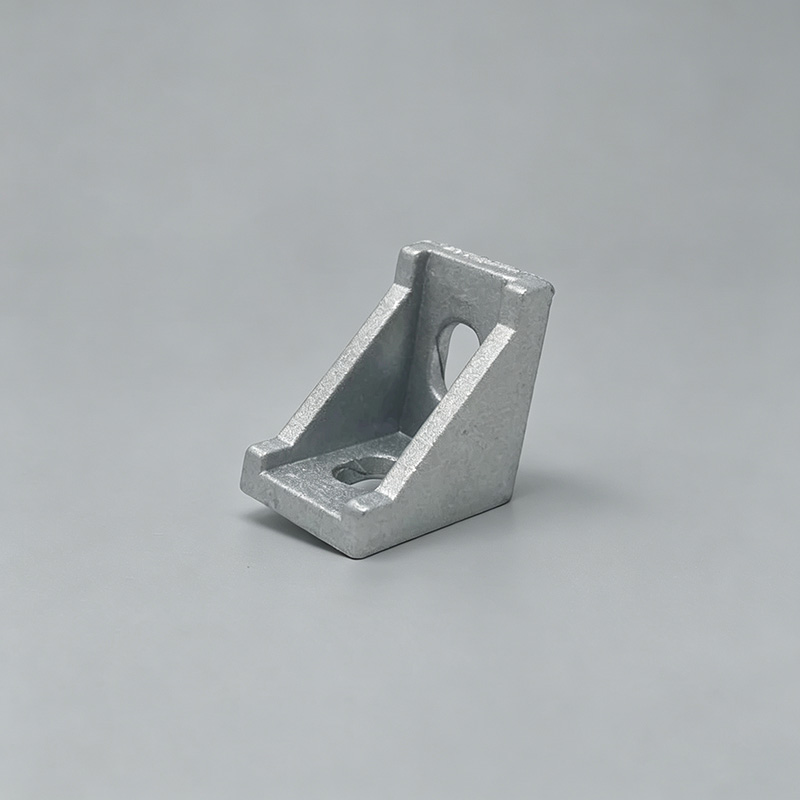
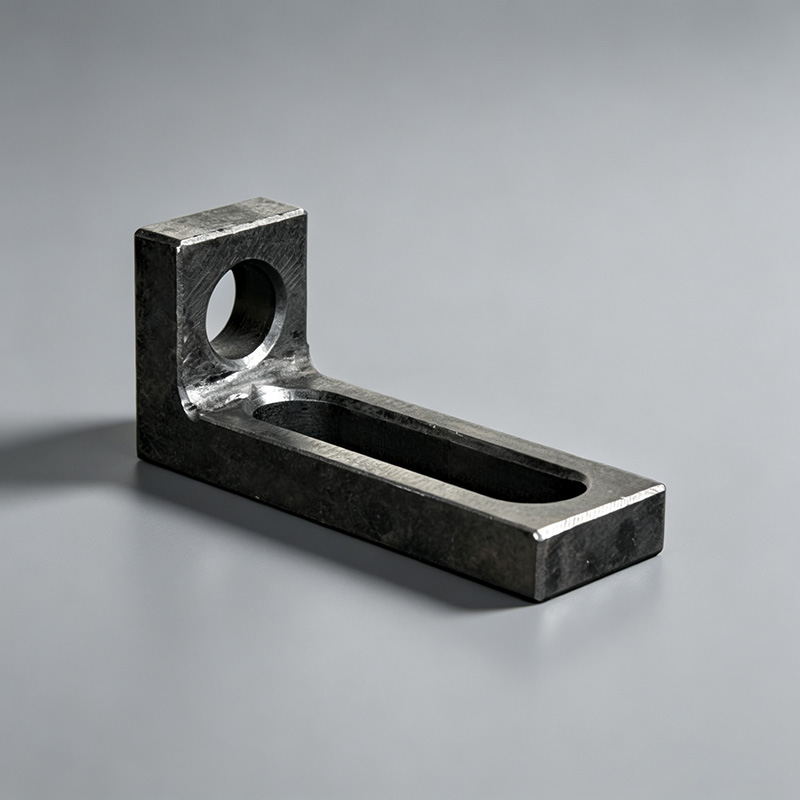
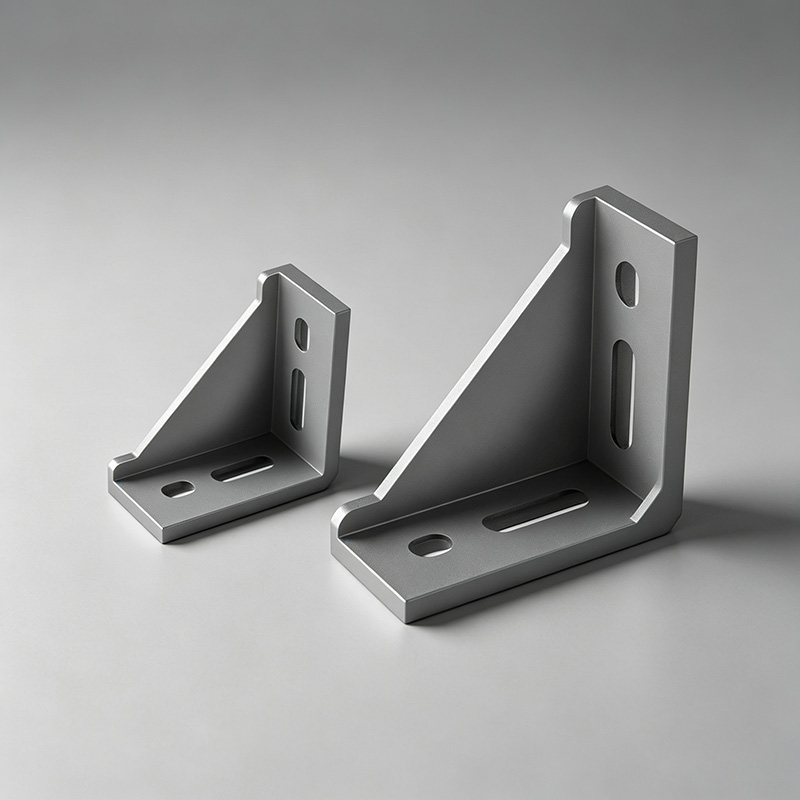
Corner Bracket / Angle Code
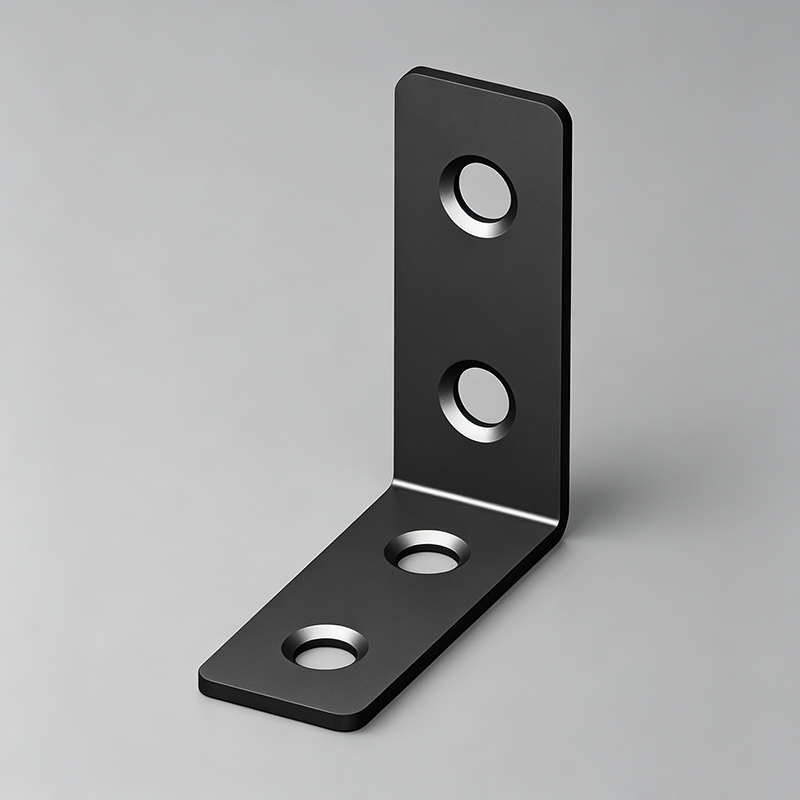
Leading Corner Bracket / Angle Code Manufacturer
As an established OEM and custom sheet metal fabrication specialist, we deliver high-performance, engineer-grade corner brackets and angle codes tailored precisely to global industry requirements. Leveraging state-of-the-art fiber laser cutting machinery, multi-axis CNC press brakes, progressive stamping dies, and automated hardware insertion presses, our production line seamlessly transforms complex 2D and 3D engineering designs into dimensionally stable, burr-free right-angle connecting hardware. From rapid design verification and low-volume pilot testing to millions of mass-produced stampings, our integrated in-house manufacturing process and rigorous Japanese quality inspection protocols guaranteeUnderstood!
Partnering with a reliable supplier for sheet metal structural hardware demands tight angular precision, durable materials, and consistent batch manufacturing. As an experienced China Corner Bracket / Angle Code manufacturer, our production facility deploys high-tonnage progressive stamping presses, laser cutting centers, and multi-axis CNC bending brakes equipped with dynamic angle compensation.
We deliver complete end-to-end contract manufacturing—from design for manufacturability (DFM) reviews and rapid prototyping to full production runs. By combining precision hard tooling with in-house fastener insertion, we eliminate secondary assembly delays and maintain consistent mechanical tolerances for industrial OEMs worldwide.
Reliable right-angle joint reinforcement depends on strict dimensional tolerances, optimized material thickness, and controlled flange dimensions.
Sized per structural load and shear-stress requirements
Verified with optical profile projectors and coordinate measuring machines
Countersunk, clearance, or slotted configurations for M3–M12 fasteners
Material certifications (MTC) supplied with every batch
Tested up to 500+ hours under neutral salt spray conditions (ASTM B117)
Enhances torsional rigidity and prevents deformation under dynamic loads
Custom structural brackets require application-specific hole patterns, tailored bend reliefs, and specialized surface coatings. We fabricate custom Corner Bracket / Angle Code components for a broad spectrum of commercial and industrial applications:
In modern sheet metal manufacturing, the Corner Bracket / Angle Code serves as an indispensable joining element that converts loose panels into rigid, load-bearing 3D assemblies. Its integration delivers critical technical advantages:
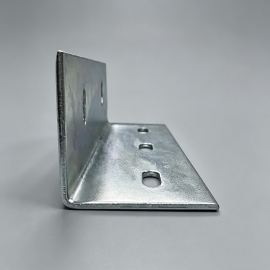
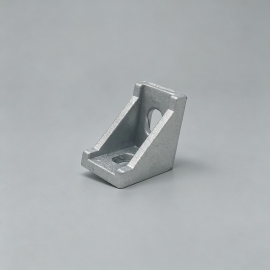
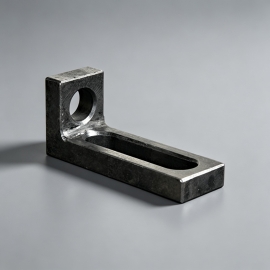
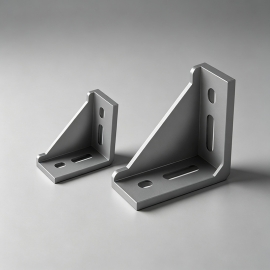
Features of Corner Bracket / Angle Code
Engineered from premium carbon steel, marine-grade 304/316 stainless steel, or lightweight structural aluminum alloys, these precision-formed corner brackets and angle codes deliver exceptional tensile strength and superior resistance to torsional deformation under heavy dynamic loads. The 90-degree bend profiles can be customized with stamped stiffening gussets and embossed reinforcement ribs to maximize load-bearing capacity without increasing wall thickness, while the mounting planes accommodate versatile configurations including countersunk holes, slotted adjustment channels, and factory-installed self-clinching studs or nuts (PEM hardware) for rapid, single-tool field installation. Finished with anti-corrosion treatments such as electro-galvanizing, zinc nickel plating, electrostatic powder coating, or anodization, each bracket ensures long-term resistance to salt spray, moisture, and chemical exposure in harsh industrial environments.
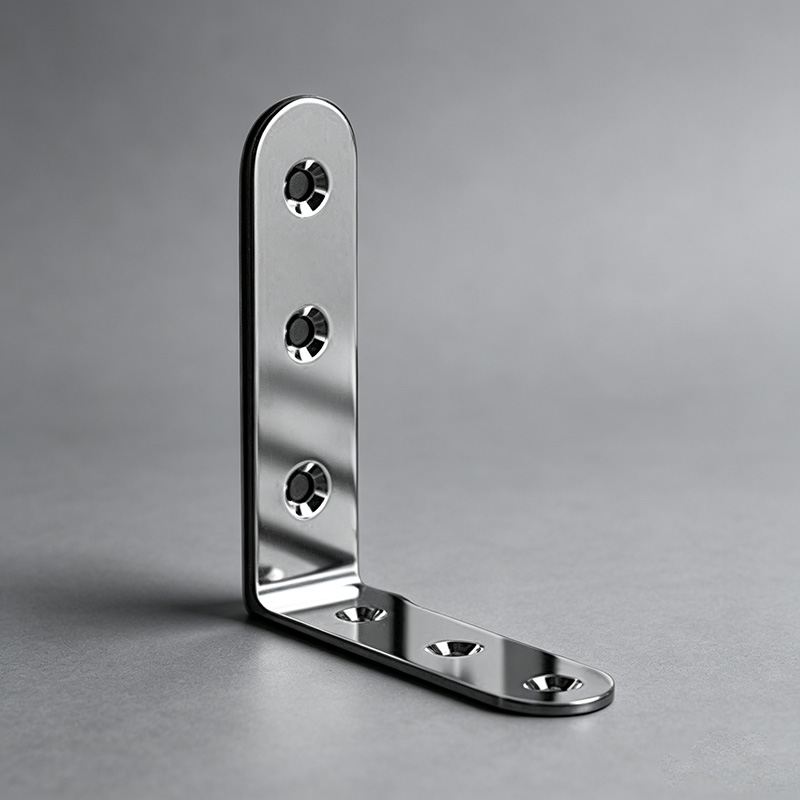
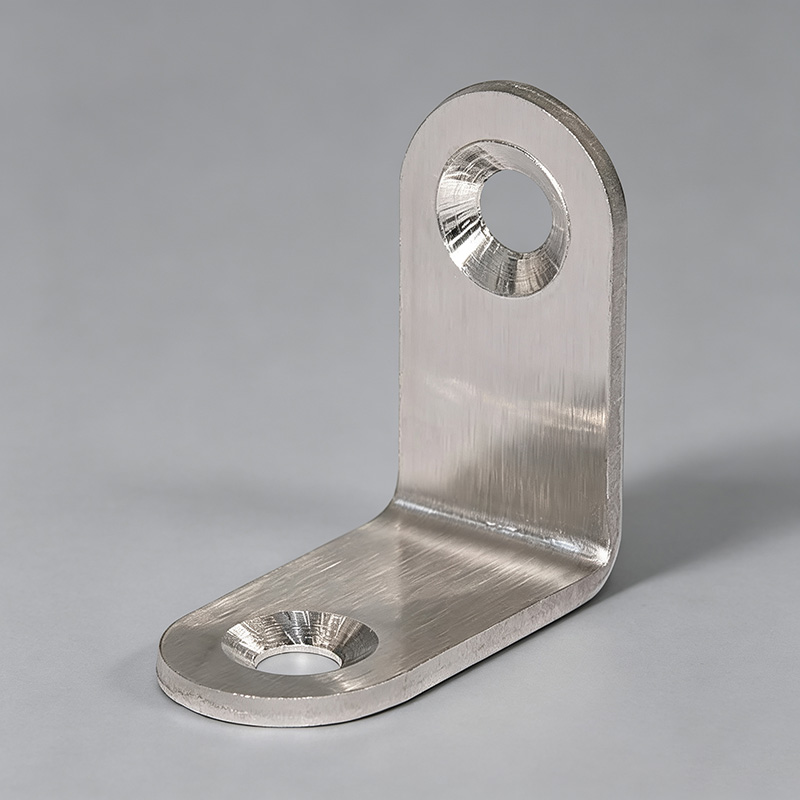
Applications of Corner Bracket / Angle Code
Corner brackets and angle codes serve as essential structural reinforcement components across modern equipment manufacturing, modular construction, and infrastructure projects. Within industrial automation and mechanical engineering, they provide rigid right-angle joints for modular aluminum extrusion systems, robotic workcell safety guarding, conveyor frames, and heavy-duty machinery bases. In power distribution and electronics integration, these brackets securely anchor internal chassis dividers, busbar supports, and peripheral mounting plates inside outdoor electrical enclosures, telecommunication power modules, and server racks, while also offering high-reliability structural bracing for building HVAC ventilation ductwork, commercial warehouse cantilever racking, and solar PV rail mounting systems.
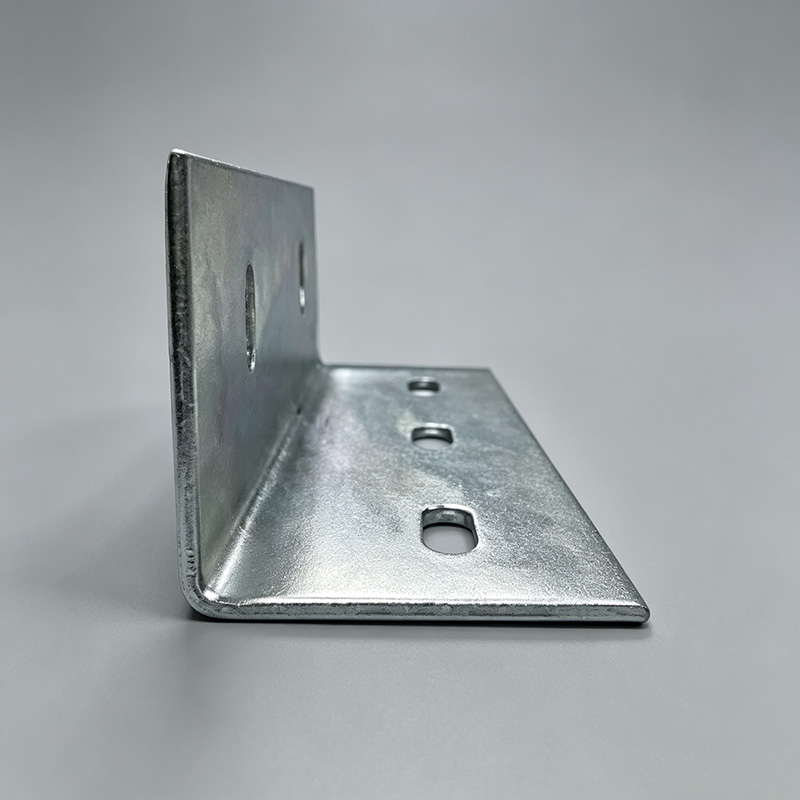
A Corner Bracket / Angle Code is an L-shaped structural fastener or reinforcement component used to connect two intersecting planes at a 90-degree angle. Manufactured through precision metal stamping, laser cutting, and CNC press brake forming, these brackets act as the foundational joints for sheet metal chassis panels, equipment frames, and modular extrusions. They distribute mechanical stress evenly across the joint, ensuring overall structural integrity without the need for permanent seam welding.
When integrating a Corner Bracket / Angle Code into sheet metal assemblies, structural alignment and fastener selection dictate the workflow. Always position the angle codes on the interior faces of an enclosure to maintain a seamless, hardware-free exterior cosmetic appearance. Utilize brackets with elongated slots to act as temporary alignment jigs, loosely threading the fasteners to adjust mating panels before applying final torque. For blind-spot assemblies or tight corners, specify brackets with factory-pressed clinch nuts so technicians only need to drive a single screw from the outside, drastically reducing assembly time.
Structural stability across multi-part assemblies relies entirely on the dimensional accuracy of the bracket. High-quality angle codes maintain a strict 90° angular tolerance of ±0.2° to ±0.5°, preventing the cumulative alignment errors that cause chassis warping. Linear hole-to-edge tolerances are strictly held between ISO 2768-m and ISO 2768-f, ensuring that mounting holes align perfectly with the corresponding sheet metal panels without requiring forced bending, re-drilling, or manual filing on the assembly line.
By substituting complex welded joints with mechanical Corner Bracket / Angle Code connections, manufacturers can efficiently build modular, flat-pack structures. These brackets enable the construction of 19-inch telecom sub-racks, multi-tier cantilever shelving units, 3D printer gantry frames, and heavy-duty battery containment boxes. Designing products around these brackets allows OEMs to ship components disassembled, reducing freight costs and enabling rapid, tool-based assembly on-site.
As a premier OEM manufacturer of precision metal components, we specialize in high-volume Corner Bracket / Angle Code production for global B2B clients. From raw material selection to fiber laser cutting, CNC precision bending, and automated fastener insertion, our ISO-certified facility manages the entire fabrication lifecycle in-house. We deliver customized structural hardware optimized for your specific load ratings and assembly workflows, guaranteeing rapid lead times, strict Japanese quality control standards, and scalable, cost-effective manufacturing.
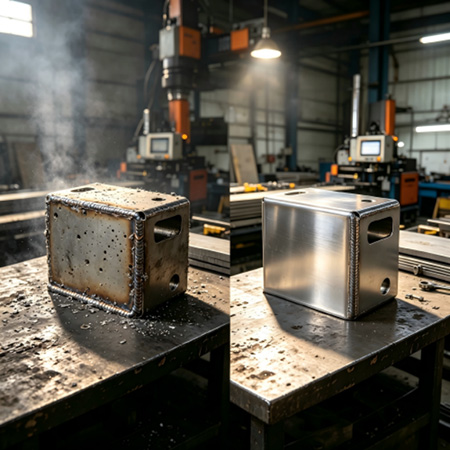
Common Laser Welding Defects and How to Solve Them
Common laser welding defects and how to solve them. Porosity, cracking, spatter, and distortion explained.
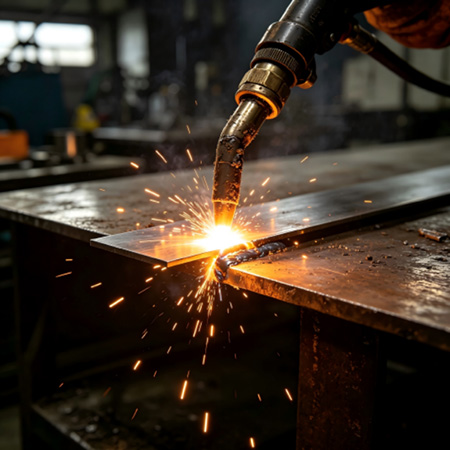
Thin Sheet Metal Welding: 5 Critical Issues and How to Solve Them
Thin sheet metal welding guide. 5 critical issues: burn-through, distortion, porosity, cracking, and spatter.
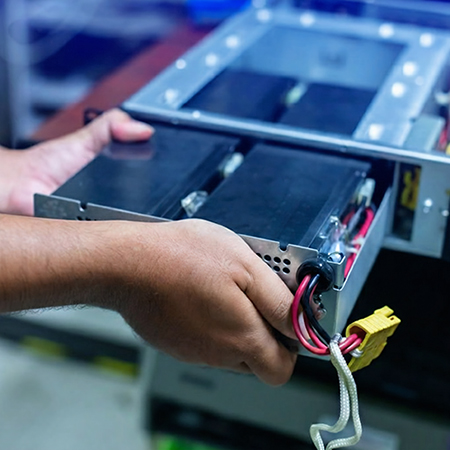
Custom Metal Components for Communication and Power Modules
Custom metal components for communication and power modules: design, materials, and manufacturing.
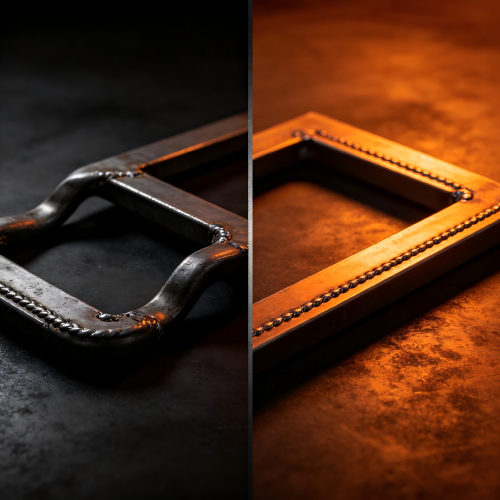
Causes and Prevention of Welding Distortion in Sheet Metal
Guide to welding distortion control in sheet metal. Causes, prevention strategies, and best practices.