+8613003178786
  sales@lingyufab.com



Custom Metal Components for Communication and Power Modules
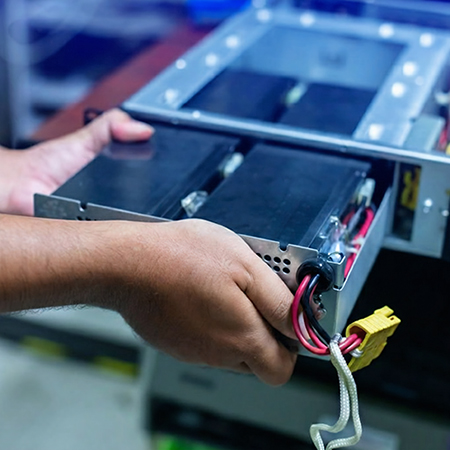
09
Sep’2026Custom Metal Components for Communication and Power Modules
What Are Custom Metal Components for Communication and Power Modules?
Custom metal components for communication and power modules are precision-engineered sheet metal parts and assemblies designed to house, support, cool, and protect electronic equipment in telecommunications infrastructure and power systems. These components include enclosures, chassis, brackets, mounting plates, heat sinks, and structural frames used in applications such as 5G base stations, telecom cabinets, server power supplies, industrial power systems, and radar modules.
What distinguishes these components from general sheet metal parts is the combination of tight dimensional tolerances, application-specific design, and materials selected for electrical, thermal, and environmental performance. Typical tolerance requirements for communication and power module components are ±0.1mm for critical dimensions, with some high-precision applications requiring even tighter control. Custom metal components for communication and power modules often incorporate features such as EMI shielding, heat dissipation structures, precise mounting interfaces, and cable management provisions—all designed to meet the rigorous demands of continuous operation in infrastructure environments.
Lingyufab is a professional China-based OEM specializing in high-quality custom build-to-print fabrication of metal components for communication and power systems. With over 20 years of precision sheet metal experience, we transform technical drawings into precision customized enclosures, chassis, mounting plates, and structural components for 5G infrastructure, telecom cabinets, server power supplies, and industrial power systems. As a direct manufacturer serving over 50 global clients, we strictly follow Japanese quality management systems and provide complete services from rapid prototyping to mass production.
Key Design Requirements for Communication and Power Module Components
Designing custom metal components for communication and power modules requires careful attention to several critical requirements that affect performance, reliability, and manufacturability.
Thermal Management – Communication and power modules generate significant heat during operation. For high-power applications, thermal management becomes a primary design constraint, as heat accumulation can compromise reliability and shorten service life. Aluminum alloys like 5052 and 6061 offer thermal conductivity approximately four times higher than steel, making them ideal for heat-dissipating enclosures. Features such as ventilation holes, louvers, heat sink mounts, and surface treatments like black anodizing can reduce surface temperatures and improve cooling efficiency.
Electromagnetic Interference (EMI) Shielding – Communication equipment, particularly 5G modules and radar systems, requires excellent EMI shielding performance to prevent signal interference and maintain regulatory compliance. Metal enclosures provide inherent shielding, acting as natural Faraday cages. Components fabricated from materials such as galvanized steel, stainless steel, or aluminum with conductive finishes offer reliable grounding paths and contain electromagnetic emissions.
Dimensional Accuracy – Custom components must fit precisely with PCBs, connectors, and other modules. A misaligned bracket or chassis can prevent proper seating of components, leading to assembly delays or field failures. For communication and power module components, critical dimensions such as mounting hole positions and bend angles must be held to tight tolerances to ensure "drop-in" fit with no rework required.
Environmental Resistance – Components installed in outdoor telecom cabinets, base stations, or industrial power systems must withstand humidity, temperature fluctuations, and potentially corrosive environments. Material selection—choosing between steel, stainless steel, or aluminum with appropriate surface finishing—directly affects the component's service life and the reliability of the equipment it supports.
Material Selection for Communication and Power Module Components
The choice of material is one of the most critical design decisions for custom metal components. Each material offers distinct advantages depending on the application's requirements for strength, weight, thermal performance, and corrosion resistance.
| Material | Key Properties | Best Application |
|---|---|---|
| SPCC Cold-Rolled Steel | High strength, cost-effective, good formability | Chassis, brackets, internal mounting plates for indoor equipment |
| SGCC Galvanized Steel | Corrosion-resistant, good grounding properties, EMI shielding | Telecom cabinets, outdoor enclosures, power distribution units |
| Aluminum 5052-H32 | Lightweight, excellent thermal conductivity, good formability | 5G modules, heat-dissipating enclosures, portable equipment |
| Aluminum 6061-T6 | Higher strength than 5052, good machinability | Structural frames, high-load mounting brackets |
| Stainless Steel 304 | Good corrosion resistance, high strength, hygienic finish | Medical equipment, food processing, coastal installations |
| Stainless Steel 316/316L | Superior corrosion resistance, marine-grade | Harsh environments, chemical exposure, outdoor telecom |
Aluminum alloys, particularly 5052-H32, are increasingly popular for communication and power module components. AL5052 aluminum offers good formability and elongation properties while providing significant weight reduction compared to cold-rolled steel or stainless steel—making it ideal for 5G modules where both thermal performance and weight are concerns. For indoor industrial applications, powder-coated SPCC steel offers the best balance of performance and cost. For outdoor or corrosive environments, stainless steel or galvanized steel with robust finish is recommended.
Manufacturing Processes for Communication and Power Modules
The production of custom metal components for communication and power modules involves multiple precision fabrication processes, each contributing to the final component's accuracy and quality.
Laser Cutting – High-precision fiber laser cutting produces accurate blanks and intricate hole patterns. For components with heat dissipation requirements, laser cutting can create ventilation holes, louvers, and perforations with consistent dimensions. Modern laser cutting achieves tolerances of ±0.03mm, producing clean edges that minimize deburring and secondary finishing.
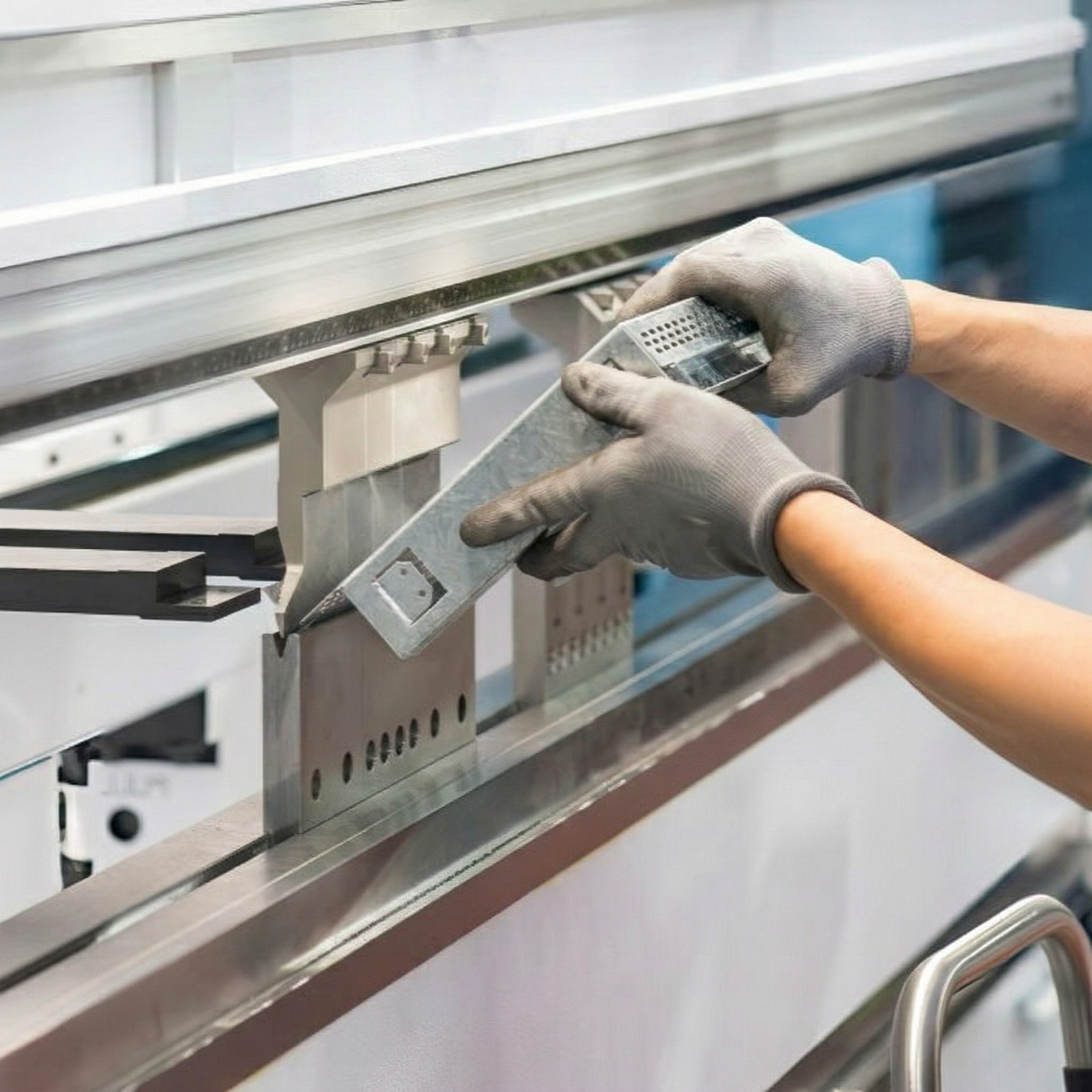
CNC Bending – CNC press brakes form flat blanks into three-dimensional shapes with precise bend angles. For communication and power module components, bend consistency is critical—variations in bend angle can cause misalignment of mounting features or poor fit with mating components. Multi-axis back gauges ensure consistent bend positions, with typical tolerances held to ±0.005 inches.
CNC Punching and Stamping – For high-volume production, CNC punching and stamping processes efficiently produce complex features such as mounting holes, guide slots, and interface openings. Progressive die stamping can achieve tolerances within ±0.1mm while maintaining high production rates, making it cost-effective for mass production.
Hardware Insertion – Many communication and power module components require integrated hardware such as PEM nuts, studs, standoffs, and self-clinching fasteners. Automated insertion processes install hardware during fabrication, reducing assembly time for the end user and ensuring consistent hardware placement.
Welding and Assembly – For complex components, robotic MIG/TIG welding and spot welding join multiple parts into finished assemblies. Weld quality is critical for structural integrity and EMI shielding continuity. For high-quality enclosures, seam welding ensures weathertight seals and prevents electromagnetic leakage.
Surface Finishing – Surface treatments provide corrosion protection and enhance aesthetics. Common finishes include powder coating for steel enclosures (available in RAL colors), anodizing for aluminum components (provides durable, UV-resistant finish), and passivation for stainless steel (enhances corrosion resistance without adding thickness). Secondary processes such as deburring, grinding, and cleaning complete each component to spec.
Common Applications for Communication and Power Modules
Custom metal components for communication and power modules are used across a wide range of applications, each with specific requirements:
5G Base Station Enclosures – 5G communication modules require enclosures that provide EMI shielding, thermal management, and environmental protection. Components such as chassis, covers, and mounting plates are fabricated from aluminum or galvanized steel with corrosion-resistant finishes. 5G modules typically incorporate about 20 different sheet metal parts, covering processes including laser cutting, bending, stamping, clinching, and painting.
Telecom Cabinet Components – Telecom cabinets housing network switches, routers, and power supplies use brackets, mounting plates, and structural frames to organize and support internal equipment. These components must provide reliable fixing points and cable management features while maintaining consistent hole positions and bend consistency.
Server Power Supply Chassis – Power supplies for servers and industrial computers require chassis that provide protection, heat dissipation, and precise mounting interfaces. Stampings from cold-rolled steel incorporate stamped array heat dissipation holes, module installation positions, and interface reserved slots to support plug-in rapid assembly.
Radar and T/R Modules – Phased array radar T/R (transmit/receive) modules face increasing power and heat accumulation under extreme operating conditions. Metal housings and thermal management structures must support both high-frequency performance and efficient heat dissipation.
Renewable Energy and Power Systems – Solar inverters, wind turbine controllers, and power distribution equipment require enclosures and mounting components that resist environmental degradation and maintain structural integrity over decades of service.
Lingyufab: Precision Sheet Metal Fabrication Supplier in China
Lingyufab combines over 20 years of precision sheet metal experience with a comprehensive approach to custom metal component manufacturing for communication and power systems. As a professional China-based OEM specializing in high-quality custom build-to-print fabrication, we transform technical drawings into precision customized enclosures, chassis, brackets, and structural components.
Our integrated manufacturing capabilities cover the entire production cycle—from design review and DFM optimization to fabrication, assembly, and finishing. We utilize high-precision fiber laser cutting systems, CNC bending centers, high-tonnage stamping presses, and expert welding stations to fabricate complex custom components. Our workshop features high-precision Laser Cutting Systems, CNC Bending Centers, Stamping Presses, and Cold Heading Machines for bolts and nuts, enabling us to handle everything from single prototypes to mass production with short lead times and consistent quality control.
We specialize in integrating precision hardware such as PEM nuts, studs, and standoffs through automated insertion processes to simplify final assembly. We also offer custom stud-welded sub-assemblies and custom self-clinching integrated components, delivering ready-to-install components that reduce supply chain complexity.
We operate under the ISO 9001:2015 quality management system and strictly follow Japanese quality management standards, with rigorous full-process inspection at every stage from raw material to final delivery. Our engineering team provides DFM reviews to optimize designs for lower costs and improved manufacturability.
Not sure which material or design fits your communication or power module component project? Contact Lingyufab today with your design files and application requirements. Our engineering team will review your specifications and provide a competitive quote within 24 hours.
FAQs
What materials are most commonly used for 5G communication module enclosures?
Aluminum alloys 5052-H32 and 6061-T6 are widely used for 5G modules due to their excellent thermal conductivity, lightweight properties, and good formability. Galvanized steel is also specified for applications requiring EMI shielding and corrosion resistance at lower cost.
What tolerances can be achieved for custom metal components?
Precision components typically hold tolerances of ±0.1mm for critical dimensions, with advanced stamping and CNC bending achieving even tighter control. For communication and power modules, this level of precision ensures drop-in fit with PCBs and connectors.
Why is thermal management important for communication module enclosures?
Communication and power modules generate significant heat during operation, especially in 5G and radar applications where power density continues to increase. Without effective heat dissipation, internal temperatures can exceed component operating limits, causing reduced reliability and shortened service life.
What surface finishes are available for custom components?
Common finishes include powder coating (for steel enclosures), anodizing (for aluminum components), and passivation (for stainless steel). Each finish offers different benefits for corrosion protection, aesthetics, and environmental resistance based on the application.
Can Lingyufab manufacture custom components for both indoor and outdoor applications?
Yes. Lingyufab fabricates components for both indoor and outdoor environments, with material and finish selections tailored to the specific application requirements, including IP/NEMA ratings and environmental conditions.