+8613003178786
  sales@lingyufab.com



Causes and Prevention of Welding Distortion in Sheet Metal
30
Jul’2026Causes and Prevention of Welding Distortion in Sheet Metal
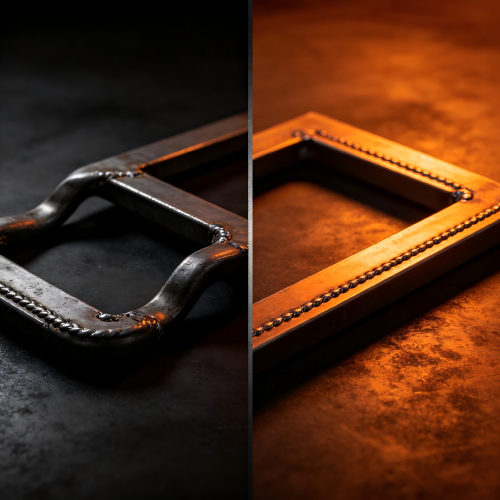
Have you ever received a welded sheet metal assembly that looked perfectly fine on the drawing, only to find that it was warped, twisted, or bowed when you placed it on the assembly table? Or perhaps you have watched your production team struggle to fit a welded frame into its intended position because the corners pulled out of square during welding? These are among the most common and costly frustrations in sheet metal fabrication. Welding distortion doesn't just affect appearance—it compromises assembly fit, creates rework costs, delays delivery, and can even render an otherwise well-designed part completely unusable.
At Lingyufab, we understand that welding distortion is one of the biggest challenges in sheet metal fabrication. With over 20 years of precision manufacturing experience since 2003 and certification as a core supplier for Mitsubishi Electric, we have developed systematic approaches to prevent and control distortion. This guide explains what causes welding distortion, the most common types, and practical strategies to keep your welded assemblies flat, square, and true to specification.
What Causes Welding Distortion?
Welding distortion occurs because of the intense, localized heat that welding applies to the metal. When you weld, the metal in and around the weld zone expands as it heats up and contracts as it cools down. Since the heat is concentrated in a small area while the rest of the part remains relatively cool, this uneven expansion and contraction creates internal stresses. When these stresses exceed the material's yield strength, the part permanently deforms.
Think of it this way: if you heat one edge of a metal strip with a torch and let it cool, the heated edge will shrink slightly, causing the strip to curl. Welding does the same thing on a larger scale—each weld bead acts like a tiny heating event, pulling the metal in the direction of the weld as it cools and contracts.
The amount of distortion depends on several factors:
• Heat input — More heat means more expansion, more contraction, and more distortion
• Weld volume — Larger welds contain more material that shrinks as it cools
• Material thickness — Thinner materials are more susceptible to distortion because they have less stiffness to resist the contraction forces
• Part geometry — Long, narrow parts and asymmetrical designs are more prone to distortion than compact, symmetrical ones
• Joint design — The type of joint affects how the contraction forces are distributed
Common Types of Welding Distortion
Welding distortion can take several forms. Understanding the different types helps you identify the problem and choose the right prevention strategy.
• Transverse Shrinkage — The weld contracts across its width, pulling the two pieces of metal closer together. This is the most basic form of weld shrinkage and occurs in every weld. It primarily affects the gap between the welded pieces.
• Longitudinal Shrinkage — The weld contracts along its length, shortening the overall dimension of the part. This is more pronounced in long, continuous welds.
• Angular Distortion — The welded joint rotates or "hinges" because the contraction is uneven through the thickness of the material. The top of the weld shrinks more than the bottom, causing the parts to pull together at an angle. This is the most common type of distortion in sheet metal welding.
• Bowing — A long part curves or bends along its length because the weld on one side of the neutral axis creates an uneven contraction force. This is common in parts with a single weld along one edge.
• Buckling — A thin panel warps into a wavy, unstable shape because the compressive stresses from welding exceed the panel's buckling strength. This is one of the most troublesome types of distortion in sheet metal fabrication.
• Twisting — The part rotates along its longitudinal axis because the weld creates a torsional force. This is common in asymmetrical assemblies.
How to Prevent Welding Distortion
The most effective way to deal with welding distortion is to prevent it from happening in the first place. Here are the most practical and proven strategies:
Reduce Heat Input
The less heat you put into the part, the less distortion you will get. This is the single most important principle in distortion control.
How to do it: Use the lowest practical amperage and the fastest travel speed that still achieves good penetration. For MIG welding, use a smaller wire diameter and higher wire feed speed. For TIG welding, use a smaller tungsten electrode. Use pulse welding or other advanced processes that reduce heat input. For thin sheet metal, consider laser welding or other low-heat-input processes.
Reduce Weld Volume
Every cubic millimeter of weld metal that shrinks creates distortion. Less weld metal means less shrinkage and less distortion.
How to do it: Use smaller fillet welds—a smaller weld size is often sufficient for light gauge sheet metal, depending on the application requirements. Avoid over-welding—a continuous weld is rarely necessary for non-structural applications. Use intermittent or stitch welds instead of continuous welds where possible. Design joints that minimize the amount of weld metal required.
Use the Right Welding Sequence
The order in which you make the welds dramatically affects how the stresses accumulate and where the distortion ends up. A poor sequence can trap stresses in the part; a good sequence can balance the stresses and minimize distortion.
How to do it: Weld from the center outward whenever possible, so the contraction forces pull toward the center rather than dragging the ends out of alignment. Back-step welding—moving in one direction while welding in short segments in the opposite direction—distributes heat more evenly. Symmetrical welding—welding on opposite sides of a joint to balance the contraction forces. For long seams, use skip welding—weld short sections at intervals, let them cool, and then fill in the gaps.
Use Fixtures and Clamps
Jigs and fixtures hold the parts in the correct position during welding and resist the contraction forces. They are the most reliable way to control distortion for production work.
How to do it: Design fixtures that clamp the parts rigidly in the correct position. Use strongbacks—temporary stiffeners welded to the part to resist distortion. Use clamping devices that apply force in the direction opposite to the expected distortion. For thin sheet metal, use copper or aluminum backup bars to conduct heat away from the weld zone and prevent burn-through.
Use Preheating and Controlled Cooling
Preheating reduces the temperature difference between the weld zone and the surrounding metal, which reduces thermal stress and distortion. Controlled cooling prevents rapid shrinkage that can cause cracking and distortion.
How to do it: Preheat the part before welding, especially for thicker materials or when welding dissimilar metals. As a general guideline, carbon steel is often preheated to 100–200°C to reduce thermal stress and slow the cooling rate. Use post-weld heating to slow the cooling rate and reduce thermal stress. Use thermal blankets or insulation to control the cooling rate.
Use Backstep or Intermittent Welding
Instead of welding continuously from one end to the other, backstep welding involves making short welds in a staggered pattern.
How to do it: Divide long seams into short sections. Weld alternating sections, moving from the center outward. Allow each section to cool slightly before welding the adjacent section.
Use Low-Stress No Distortion (LSND) Welding
LSND is an advanced technique that uses a controlled temperature gradient to counteract the contraction forces and eliminate distortion. It is particularly effective for thin sheet metal where traditional methods fail.
How to do it: LSND requires specialized equipment and expertise, but it can achieve distortion-free welding on thin sheet metal components. Work with a fabricator that has experience with advanced distortion control techniques.
Design for Distortion Control
The best time to prevent distortion is during the design phase. Good design practices can significantly reduce the risk of distortion.
How to do it: Use symmetrical designs whenever possible. Avoid long, continuous welds—use intermittent or stitch welds. Use the minimum practical weld size. Design joints that are easy to clamp and fixture. Consider using forming or bending instead of welding for simple joints. Use pre-bent parts that account for expected distortion.
Correcting Distortion After Welding
Even with the best prevention techniques, some distortion is inevitable. When it happens, there are several ways to correct it:
• Mechanical straightening — Pressing or hammering the distorted area back into shape. This is suitable for mild distortion but can work-harden the material.
• Thermal straightening — Using a torch to heat specific areas of the part, causing them to expand and contract and pull the part back into shape. This requires skill and experience to avoid making the problem worse.
• Fixture-assisted straightening — Clamping the part into a fixture and applying heat or pressure to correct the distortion.
• When to Replace — In severe cases, the distortion may be too extensive to correct economically. It may be more cost-effective to scrap the part and start over with improved prevention measures.
When Welding Distortion Control Matters Most
Welding distortion control is critical across a wide range of applications:
• Electronics Enclosures — Thin sheet metal enclosures are highly susceptible to buckling and warping. Distortion can prevent proper sealing, affect component fit, and compromise EMI shielding. Proper fixturing and heat control are essential.
• Medical Devices — Medical equipment demands precise dimensions and clean, sanitary surfaces. Any distortion can affect sterilization, sealing, or component alignment. Stainless steel welding requires careful heat control to maintain corrosion resistance.
• Automotive Components — Structural parts, battery enclosures, and chassis components require tight tolerances. Distortion can cause assembly problems and compromise crash performance. Welding sequence and fixturing are critical.
• Industrial Equipment — Machine frames, equipment enclosures, and structural brackets rely on accurate dimensions for proper fit and reliable performance. Distortion can cause misalignment in assembly.
Lingyufab: Your Trusted Sheet Metal Partner for Welding Quality
Lingyufab is a professional sheet metal fabrication manufacturer and supplier based in Shanghai, China, with over 20 years of precision manufacturing experience since 2003. We follow strict Japanese quality standards and are a certified core supplier for Mitsubishi Electric.
As a leading sheet metal supplier, Lingyufab controls welding distortion through systematic engineering support and rigorous quality control:
• Design review — Our engineering team reviews your drawings before welding, identifying potential distortion risks—long, unsupported welds, asymmetrical designs, or insufficient joint stiffness
• Process optimization — We select the right welding parameters, weld sequence, and fixturing for each specific job, minimizing heat input and using the smallest practical weld size
• Fixture design — We design and build custom fixtures to hold parts in position during welding, ensuring they stay flat and square
• Quality inspection — We inspect parts at multiple stages, verifying flatness and dimensional accuracy before shipment
Our comprehensive in-house capabilities include:
• Welding — TIG welding for stainless steel, MIG welding for general fabrication, and spot welding for thin sheet connections, with process selection based on material and application requirements
• Laser cutting — High-precision cutting for accurate flat patterns, clean edges, and minimal material waste
• CNC bending — Precision bending with consistent accuracy across all parts and batches
• Assembly — Complete assembly of fabricated components into finished products and sub-assemblies
• Surface treatment — In-house powder coating, anodizing, electroplating, and polishing
• Fastener installation — Direct installation of our own manufactured SEMS fasteners, bolts, nuts, and self-clinching fasteners
One supplier, full responsibility. From laser cutting and CNC bending to welding, surface treatment, and fastener installation, we handle everything under one roof. This integration ensures consistent quality, shorter lead times, and a single point of accountability for your entire project. Every batch of raw materials comes with a Mill Test Certificate (MTC), ensuring full traceability and compliance. We operate under ISO 9001, ISO 14001, and TÜV CE certifications, with quality control covering the complete manufacturing process from raw material inspection to finished product inspection.
If you are concerned about welding distortion in your sheet metal parts, our engineering team is available to review your requirements and provide a free consultation. We'll help you identify risks before production begins. If you are looking for a reliable sheet metal fabrication supplier, please don't hesitate to contact us.
Quick Welding Distortion Prevention Checklist for Buyers
| What to Check | What to Look For |
|---|---|
| Design symmetry | Is the design symmetrical to balance weld contraction? |
| Weld size | Are welds the minimum practical size for the application? |
| Weld type | Could intermittent or stitch welds replace continuous welds? |
| Fixturing | Is there a clamping plan to hold the part during welding? |
| Welding sequence | Is the sequence designed to minimize stress accumulation? |
| Heat input | Are welding parameters optimized for minimum heat input? |
| Material thickness | Is the material thick enough to resist distortion? |
Conclusion
Welding distortion is not inevitable—it is predictable and preventable. By understanding what causes distortion and applying the right prevention strategies—reducing heat input, minimizing weld volume, using proper sequencing, fixturing effectively, and designing for manufacturability—you can keep your welded assemblies flat, square, and true to specification.
Working with an experienced partner like Lingyufab—who combines design review, process optimization, custom fixturing, and rigorous quality inspection—helps you avoid distortion before it happens.
FAQs
Q1: What is the most common type of welding distortion in sheet metal?
Angular distortion is one of the most common types in sheet metal fabrication. It occurs when the contraction is uneven through the thickness of the material, causing the welded joint to rotate or "hinge." Buckling distortion is also common in thin sheet metal panels.
Q2: Why does welding cause distortion?
Welding causes distortion because the intense, localized heat creates uneven expansion and contraction in the metal. The weld zone expands as it heats and contracts as it cools, creating internal stresses. When these stresses exceed the material's yield strength, the part permanently deforms.
Q3: How can I prevent welding distortion?
Key prevention strategies include reducing heat input, minimizing weld volume, using proper welding sequences, fixturing and clamping parts securely, using preheating and controlled cooling, and designing parts for manufacturability.
Q4: What is the best welding sequence to prevent distortion?
The general rule is to weld from the center outward whenever possible. This allows the contraction forces to pull toward the center rather than dragging the ends out of alignment. Back-step welding and symmetrical welding also help balance the stresses.
Q5: Can Lingyufab design fixtures for my welding project?
Yes. Lingyufab's engineering team can design and build custom fixtures to hold your parts in position during welding, ensuring they stay flat and square. This is particularly important for production runs where consistency is critical.
Q6: What should I look for when inspecting welded parts for distortion?
Check for flatness, squareness, and dimensional accuracy relative to the drawing. Use a surface plate or straightedge to check for bowing or warping. Check for angular distortion by measuring the angle at welded joints. Check for twisting by measuring the height of corners from a flat surface.