+8613003178786
  sales@lingyufab.com



Sheet Metal Material Machinability Comparison – Which Materials Are Easier to Fabricate?
30
Jul’2026Sheet Metal Material Machinability Comparison – Which Materials Are Easier to Fabricate?
Have you ever specified a material for a sheet metal part, only to find that it was difficult to cut, prone to warping during bending, or caused excessive tool wear? Or perhaps you have chosen a material based solely on strength or cost, only to discover that its machinability made it far more expensive to produce than you anticipated? These are common frustrations faced by design engineers, procurement professionals, and product developers. The machinability of a material directly affects fabrication speed, tool life, surface quality, and ultimately, your bottom line. Selecting the right material for your project requires more than just matching strength requirements—it requires understanding how the material behaves during fabrication.
At Lingyufab, we work with a wide range of materials every day. With over 20 years of precision manufacturing experience since 2003 and certification as a core supplier for Mitsubishi Electric, we understand the practical differences in how various materials perform in fabrication. This guide compares the machinability of the most common sheet metal materials—aluminum, stainless steel, and carbon steel—to help you make informed decisions for your next project.
What Is Machinability?
Machinability refers to how easily a material can be cut, shaped, or formed using tools and machinery. A material with good machinability requires less cutting force, produces less tool wear, and achieves better surface finish. The machinability of different materials is often expressed as a percentage compared with a known standard. For aluminum, the benchmark grade is 2011 at 100%. Carbon and alloy steels are compared with 1212 steel.
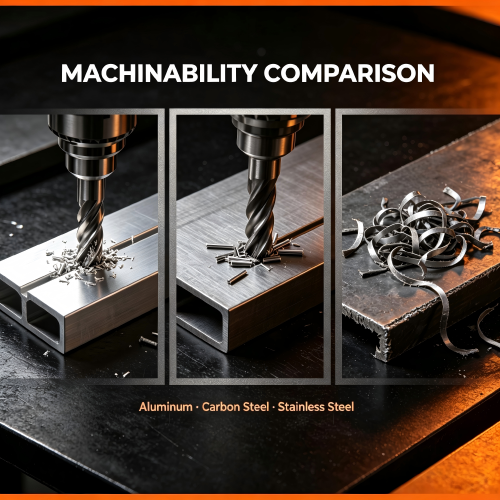
Generally speaking, shorter chips equal better machinability. Materials that produce short, breaking chips do not wrap around cutting tools, while gummy materials that produce long, stringy chips are more difficult to work with.
Aluminum: The High-Machinability Choice
Aluminum is widely regarded as one of the most machinable metals available. Its combination of lightweight properties, excellent machinability, and good corrosion resistance makes it a top choice for manufacturers across industries.
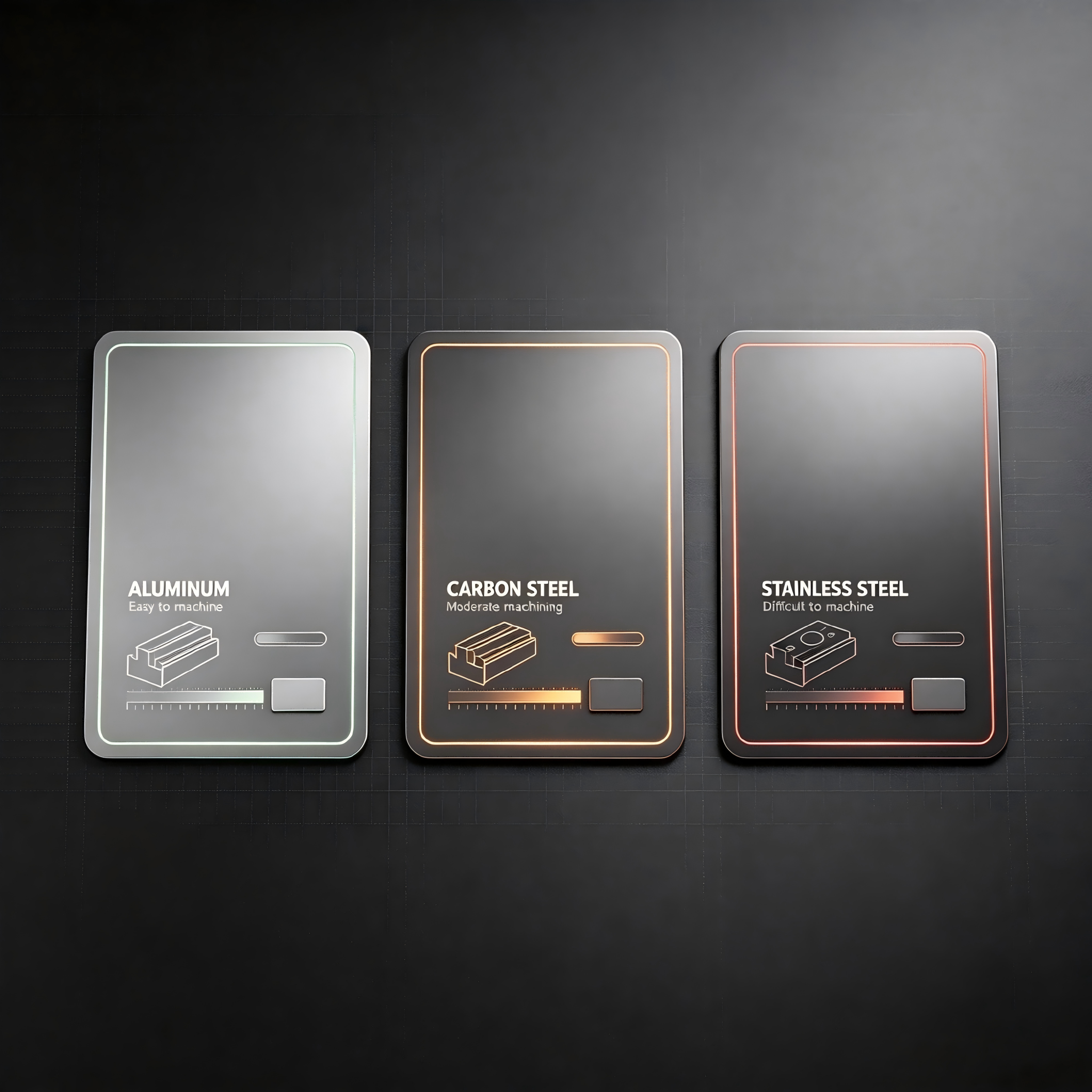
Why aluminum machines well: Aluminum produces short, breaking chips that do not wrap around tools, reducing tool wear and improving surface finish. It requires lower cutting forces compared to steel, allowing for faster machining speeds and shorter cycle times. The material is also easy to cut, form, bend, and weld.
Machinability varies by grade: Not all aluminum alloys machine equally. The benchmark grade for aluminum is 2011 at 100%. Aluminum 6061 is highly machinable and capable of holding tight tolerances, making it ideal for precision parts. Aluminum 3003 offers good workability and corrosion resistance. Aluminum 5052 is highly formable and widely used for bending and forming applications, but its machinability rating is only fair. It is not the best choice for parts requiring extensive machining operations such as drilling, tapping, or milling—for those applications, 6061 is generally preferred.
Best applications: Electronics housings, aerospace components, consumer products, and any application where weight reduction is a priority. For many parts, aluminum is the best place to start because it balances weight, machinability, and cost.
Stainless Steel: The Challenging Performer
Stainless steel is known for its excellent corrosion resistance and strength, but it also presents significant machining challenges. Different stainless steel grades have very different machinability characteristics.
Why stainless steel is difficult to machine: Stainless steel has high hardness and lower thermal conductivity, leading to higher cutting forces, increased tool wear, and deteriorated surface integrity. Stainless Steel 304, one of the most common grades, shows the highest cutting force among common materials. It also has poor machinability and is primarily used for sheet metal applications where machining is limited.
Machinability varies by grade: Not all stainless steel grades are equally difficult. 303 stainless steel has good machinability and is typically available as bar stock, making it a better choice for parts requiring extensive machining. 304 stainless steel, while the most widely used grade in sheet metal fabrication, has poor machinability. For applications requiring extensive machining, consider using free-machining grades like 303 where available.
Best applications: Medical devices, food processing equipment, outdoor enclosures, and structural parts that must withstand heat, humidity, impact, or harsh chemicals. The superior corrosion resistance and durability of stainless steel justify its higher fabrication cost for critical applications.
Carbon Steel: The Workhorse with Variable Machinability
Carbon steel is one of the most versatile and widely used materials in sheet metal fabrication. Its machinability varies significantly depending on the carbon content and alloying elements. Carbon steel provides the lowest cost with excellent formability for structural applications.
Machinability of different carbon steels: Low-carbon steels (like 1008, 1010) are softer and more formable but can be gummy, making them more difficult to machine. Medium-carbon steels (like 1045) offer better machinability but are less formable. Free-machining steels (like 1215, 12L14) are specifically formulated for excellent machinability.
Why carbon steel is challenging: Carbon steel 1020 presents greater machining challenges due to higher hardness compared to aluminum. Low-carbon steels can produce long, stringy chips that wrap around tools, requiring careful chip management.
Best applications: Structural components, automotive parts, heavy machinery, and cost-driven projects in controlled indoor environments.
Comparison Summary Table
| Material | Machinability Rating | Key Challenges | Best Applications |
|---|---|---|---|
| Aluminum 6061 | High | Soft, can gum up tools | Electronics, aerospace, lightweight parts |
| Aluminum 5052 | Fair (formable) | Limited machinability | Bending/forming applications, architecture |
| Stainless 304 | Poor | High cutting force, tool wear | Medical, food equipment, outdoor enclosures |
| Stainless 303 | Good | Limited availability in sheet | Heavily machined stainless parts |
| Carbon Steel (low carbon) | Moderate | Gummy chips | Structural components, general fabrication |
| Carbon Steel (free-machining) | Good | Higher cost | Heavily machined steel parts |
Factors Affecting Machinability
Several factors influence how well a material machines:
• Material hardness: Harder materials require higher cutting forces and cause more tool wear. Stainless steel and high-carbon steels are more difficult to machine than aluminum and low-carbon steels.
• Thermal conductivity: Materials with lower thermal conductivity trap heat at the cutting zone, leading to tool wear and poor surface finish. Stainless steel has lower thermal conductivity than aluminum.
• Chip formation: Materials that produce short, breaking chips are easier to machine. Gummy materials that produce long, stringy chips are more difficult.
• Heat treatment: Annealing softens metal and improves machinability. Heat-treated materials are generally harder and more difficult to machine.
How to Choose the Right Material for Your Project
Choosing the right material is not just about machinability—it requires balancing multiple factors:
1. Consider the operating environment: Will the part face corrosion, heat, or chemicals? Stainless steel may be necessary for harsh conditions. For controlled indoor environments, carbon steel may be sufficient.
2. Evaluate strength requirements: For high-strength applications, stainless steel or structural-grade steel is the best choice. For lightweight strength, aluminum wins.
3. Assess formability needs: Aluminum and brass offer high ductility for complex bends. Stainless steel offers moderate ductility. Some carbon steels have lower ductility.
4. Balance cost and performance: Carbon steel provides the lowest cost with excellent formability. Aluminum offers the best strength-to-weight ratio. Stainless steel delivers superior corrosion resistance but at higher cost.
Where Material Selection Matters Most
Material selection is critical across a wide range of applications:
• Electronics and Telecommunications — Aluminum is widely used for electronic enclosures where weight reduction and thermal management are important. Its high machinability makes it ideal for precision parts.
• Medical Devices — Stainless steel is the preferred choice for medical equipment, combining corrosion resistance with cleanability. While more difficult to machine, its performance justifies the cost.
• Industrial Equipment — Carbon steel is commonly used for industrial machinery frames and structural components where strength and cost efficiency are priorities.
• Automotive and Electric Vehicles — Modern vehicles use a mix of materials: high-strength steel for structural components, aluminum for weight reduction, and stainless steel for corrosion-resistant parts.
Lingyufab: Your Trusted Sheet Metal Partner for Material Selection
Lingyufab is a professional sheet metal fabrication manufacturer and supplier based in Shanghai, China, with over 20 years of precision manufacturing experience since 2003. We follow strict Japanese quality standards and are a certified core supplier for Mitsubishi Electric.
As a leading sheet metal supplier, Lingyufab helps customers select the right material for their specific application through engineering support and integrated manufacturing:
• Material recommendations — Our engineering team helps you choose the right material based on strength requirements, corrosion exposure, weight constraints, and budget
• Design optimization — We suggest design improvements that reduce fabrication costs without compromising quality
• Process selection — We recommend the right fabrication processes based on material characteristics
• Integrated manufacturing — From laser cutting and CNC bending to welding and surface treatment, all under one roof
Our comprehensive in-house capabilities include:
• Laser cutting — High-precision cutting for accurate flat patterns, clean edges, and minimal material waste
• CNC bending — Precision bending with consistent accuracy across all parts and batches
• Welding — TIG welding for stainless steel, MIG welding for general fabrication, and spot welding for thin sheet connections
• Surface treatment — In-house powder coating, anodizing, electroplating, and polishing
• Assembly and fastener installation — Complete assembly with direct installation of our own manufactured SEMS fasteners, bolts, nuts, and self-clinching fasteners
One supplier, full responsibility. From laser cutting and CNC bending to welding, surface treatment, and fastener installation, we handle everything under one roof. This integration ensures consistent quality, shorter lead times, and a single point of accountability for your entire project. Every batch of raw materials comes with a Mill Test Certificate (MTC), ensuring full traceability and compliance. We operate under ISO 9001, ISO 14001, and TÜV CE certifications, with quality control covering the complete manufacturing process from raw material inspection to finished product inspection.
If you are unsure which material is right for your project, our engineering team is available to review your application requirements and provide a free material recommendation. If you are looking for a reliable sheet metal fabrication supplier, please don't hesitate to contact us.
Quick Material Selection Checklist for Buyers
| What to Consider | Questions to Ask |
|---|---|
| Operating environment | Will the part face corrosion, heat, moisture, or chemicals? |
| Strength requirements | What load will the part bear? Does it need high strength or lightweight? |
| Formability needs | Will the part require complex bends or forming? |
| Machinability | Will the part require extensive machining operations? |
| Surface finish | Does the part need a specific appearance or coating? |
| Budget | What is the cost trade-off between material and fabrication? |
| Production volume | Will the part be produced in low or high volume? |
Conclusion
Understanding material machinability is essential for making informed decisions in sheet metal fabrication. Aluminum offers the best machinability with lightweight properties, making it ideal for precision parts and weight-sensitive applications. Stainless steel delivers superior corrosion resistance and strength but presents significant machining challenges that increase cost. Carbon steel provides the lowest cost with excellent formability for structural applications, though machinability varies by grade. Each material has its place, and the optimal choice depends on your specific requirements for strength, weight, corrosion resistance, formability, and budget.
By understanding the machinability characteristics of each material and working with an experienced partner like Lingyufab—who combines engineering support with integrated manufacturing—you can make informed decisions that balance performance, cost, and manufacturability.
FAQs
Q1: What is machinability in sheet metal fabrication?
Machinability refers to how easily a material can be cut, shaped, or formed using tools and machinery. Materials with good machinability require less cutting force, produce less tool wear, and achieve better surface finish.
Q2: Which sheet metal material is easiest to machine?
Aluminum is generally the easiest sheet metal material to machine. It produces short, breaking chips that do not wrap around tools, requires lower cutting forces, and allows faster machining speeds. Aluminum 6061 is particularly known for its high machinability.
Q3: Why is stainless steel difficult to machine?
Stainless steel has high hardness and lower thermal conductivity, leading to higher cutting forces, increased tool wear, and deteriorated surface integrity. Stainless Steel 304 shows the highest cutting force among common materials.
Q4: What is the most cost-effective sheet metal material?
Carbon steel typically provides the lowest cost with excellent formability for structural applications. However, the total cost must also consider fabrication expenses, finishing requirements, and expected service life.
Q5: Can Lingyufab help me choose the right material?
Yes. Lingyufab's engineering team provides free material recommendations based on your application requirements, operating environment, and budget. We work with stainless steel, aluminum, carbon steel, galvanized steel, copper, and brass.
Q6: What file formats do you accept for material selection quotes?
We accept 3D files in STEP (.stp), IGS (.igs), and SolidWorks (.sldprt) formats, and 2D drawings in PDF, DWG, and DXF formats. If you don't have drawings, we offer reverse engineering services from physical samples.