 +8613003178786
 sales@lingyufab.com
CNC Bending Services: Quote Cost Drivers
CNC Bending Services: Quote Cost Drivers
What Buyers Risk Missing Before Requesting a Bending Quote
A low unit price can look attractive until the supplier adds tooling, inspection, hardware installation, welding, or finishing as separate line items. For sourcing managers, the real task is not simply finding CNC bending services. It is comparing quotations that cover the same manufacturing scope, acceptance criteria, and delivery requirement.
Lingyufab supports OEM and ODM sheet metal projects including brackets, mounting plates, control boxes, chassis, server racks, front panels, enclosures, and assembled metal parts. Our work combines laser cutting, CNC bending, stamping, TIG/MIG welding, hardware installation, and surface finishing for carbon steel, aluminum, and stainless steel including 304 and 316 grades.
For example, a bent bracket quote may exclude inserted hardware, while an assembly quote may include laser-cut blanks, formed features, installed studs, weld nuts, and visual inspection. Buyers sourcing Sheet Metal Assemblies should define the finished-part condition before comparing prices. This avoids awarding an order based on a quote for only part of the required work.
Established in 2003, Lingyufab has more than 20 years of sheet metal and fastener manufacturing experience. Our ISO 9001:2015, ISO 14001, and TÜV CE certifications support documented quality requirements, while our role as a Mitsubishi Electric certified core supplier reflects adherence to Japanese quality standards. These qualifications matter when a formed part must align with surrounding components, installed hardware, or a customer-controlled inspection plan.
Buyer conclusion: Compare quotations at the finished-part level, not only at the blank or bending-operation level. This approach fits assemblies, safety-relevant brackets, electrical housings, and repeat production. For a simple formed blank with no finishing or hardware, a shorter quote scope may be appropriate, provided the supplier states the exclusions clearly.
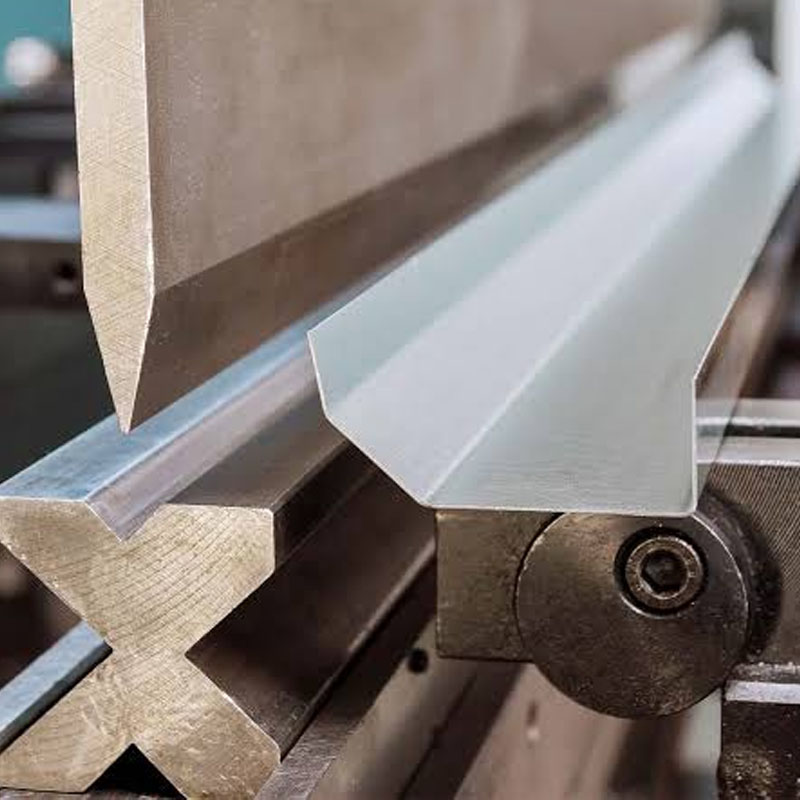
A Quote-Cost Model for Setup, Material, Bends, Inspection, and Volume
What affects CNC bending price is usually visible in the drawing package. A buyer can improve quote accuracy by separating the cost model into six practical elements instead of treating the part as one undifferentiated line item. The table below provides a structured way to review CNC bending services cost.
| Cost element | What the supplier evaluates | Why the quote changes | Buyer action | Best-fit scenario and limit |
|---|---|---|---|---|
| Setup | Drawing review, program preparation, tool selection, first-piece preparation, and production planning. | Setup is distributed across the order quantity. A one-piece prototype carries more setup cost per part than a repeat batch. | State whether the order is a prototype, pilot run, or recurring program. Provide revision-controlled drawings. | Useful for early product development and low-volume work. For repeat orders, confirm whether the drawing revision and process scope remain unchanged. |
| Material yield | Blank size, nesting efficiency, material grade, sheet utilization, and cut-off remainder. | A part with a large rectangular blank may use material differently from a compact nested profile. Stainless steel 304 or 316 can also require separate material planning from carbon steel or aluminum. | Provide flat-pattern dimensions where available, material grade, thickness, and acceptable substitute policy. | Most relevant when material represents a major share of the part value. It has less influence on very small parts where setup and handling dominate. |
| Bend complexity | Number of bends, flange access, bend sequence, tool clearance, return flanges, and geometry stability. | Each additional forming step may add handling, programming, tooling changes, and verification. Difficult access can increase the process time. | Include section views, bend direction, inside-radius requirements, and any cosmetic-face designation. | Especially useful for enclosures, chassis, and multi-flange brackets. A simple one-bend part needs less process detail. |
| Tolerance and inspection | Specified dimensions, datum scheme, angular requirements, critical interfaces, and inspection evidence. | Tighter requirements can require more measurement time and first-piece confirmation. Lingyufab can support tolerances down to ±0.05mm where the design and process are suitable. | Mark only function-critical dimensions and identify the mating feature or assembly interface. | Appropriate for parts that locate boards, connectors, rails, or fasteners. General dimensions should not receive tight tolerances without a functional reason. |
| Secondary operations | Laser cutting, punching, deburring, welding, tapping, clinching, fastener installation, finishing, and assembly. | A formed blank and a ready-to-install component are different supply scopes. Secondary operations can reduce buyer-side handling but must be included in the RFQ. | List every requested operation in order, including supplied or installed hardware and packaging requirements. | Best for buyers seeking fewer suppliers and fewer internal transfers. A blank-only purchase may be suitable when assembly is managed internally. |
| Order volume | Prototype quantity, pilot quantity, production quantity, release schedule, and repeat demand. | Higher quantities can spread setup across more pieces and support planned material use. They also require realistic scheduling and delivery planning. | Quote several quantity breaks and state annual demand separately from the first release. | Useful for planned production programs. A forecast should remain separate from a confirmed purchase order unless both parties agree otherwise. |
Buyer conclusion: Ask each supplier to identify these six elements in the quotation or quote assumptions. The model suits supplier comparisons because it shows whether a price difference comes from scope, production method, or omitted work. It does not replace a full engineering review when the drawing has incomplete dimensions, unclear materials, or undefined finish requirements.
How to Use the Model During Supplier Comparison
- Prepare one controlled drawing revision and a part list for every item in the RFQ.
- State the material grade, required thickness, finish, and quantity break for each line.
- Identify dimensions that control assembly fit, rather than marking every dimension as critical.
- List required secondary operations, including welding, threaded hardware, or supplied fasteners.
- Ask the supplier to state whether tooling, inspection, packaging, and material documentation are included.
- Compare total landed manufacturing scope before comparing unit prices.
This procedure helps buyers separate a lower initial quote from a lower total procurement cost. Lingyufab’s in-house fabrication and assembly can reduce overall costs by 15–20% by reducing intermediary handling and additional logistics, where a project otherwise requires multiple vendors. That advantage is most relevant for multi-operation parts. It may be less relevant for a basic flat blank that needs no forming, assembly, or hardware installation.
How Part Design Changes the Custom Metal Bending Cost
Custom metal bending cost is shaped by geometry before production begins. The same material and nominal overall size can produce very different quotations when one design has open bends and the other has closely spaced flanges, restricted tool access, or installed features.
Design Features That Commonly Change the Quote
- Bend count: More bends generally mean more forming steps, more part handling, and more opportunities for dimensional interaction. Combine features only when the resulting geometry remains accessible to forming tools.
- Flange height and access: Short flanges, deep channels, and return bends can require a different bend sequence or more specialized tooling selection. Provide side views rather than relying on an isometric drawing alone.
- Hole-to-bend relationship: Holes, slots, and cutouts near formed areas should be identified clearly in the drawing. Their location can affect both the flat pattern and the final fit after bending.
- Cosmetic requirements: If one face must remain visible after installation, state this in the RFQ. The supplier can then evaluate material handling and process orientation with that requirement in mind.
- Hardware and welded components: Self-clinching hardware, studs, nuts, and welded attachments should be shown with part numbers and positions. These features change both operation sequence and inspection scope.
For mounting products, buyers can review examples of Custom Mounting Brackets when preparing an RFQ. A bracket is often treated as a simple part, yet its total cost can change materially once hardware positions, assembly datums, finish requirements, and packaging protection are included.
Buyer conclusion: Keep functional requirements clear and avoid adding tighter tolerances by default. This fits engineered parts that must mate with cabinets, rails, electronics, or other components. When a dimension has no assembly or performance role, a general production tolerance may offer better manufacturing flexibility.
How to Request a CNC Tube Bending Quote Without Mixing Process Assumptions
A CNC tube bending quote needs different technical information from a sheet metal forming quote. Tube geometry is defined by outside diameter, wall condition, bend centerline radius, bend angle, straight lengths, end forms, and orientation between bends. Sheet metal bending is generally evaluated from a flat pattern, material thickness, bend locations, and formed dimensions.
Tube bending pricing factors therefore should be submitted as a separate RFQ line or as a clearly separated manufacturing scope. Do not assume that a supplier quoting sheet metal brackets is also quoting tube bending unless the supplier confirms the process scope. Lingyufab’s stated manufacturing scope covers sheet metal fabrication, including laser cutting, CNC bending, stamping, TIG/MIG welding, and finishing. Buyers requiring tube work should identify that requirement at the quotation stage so capability and commercial scope can be confirmed.
| RFQ item | Sheet metal bending request | Tube bending request |
|---|---|---|
| Starting material | Material grade, thickness, flat blank or drawing. | Material grade, outside diameter, wall condition, and stock length. |
| Geometry definition | Bend lines, formed views, flange dimensions, and section views. | Centerline radius, bend angles, straight sections, rotation between bends, and end conditions. |
| Additional work | Cutouts, punched features, hardware, welding, finish, and assembly. | End forming, drilling, welded attachments, finish, and inspection requirements. |
| Quote risk to remove | Unclear bend direction, incomplete flat pattern, or missing assembly datums. | Unclear bend sequence, missing orientation data, or unspecified end geometry. |
Buyer conclusion: Separate tube and sheet metal requirements in the RFQ package. This is suitable when a project includes frames, protective structures, cabinets, or mounting assemblies with more than one manufacturing method. It does not mean the two components cannot be purchased together; it means the scope must be confirmed before the commercial comparison is valid.
Quote Scope for Enclosures, Chassis, and Installed Hardware
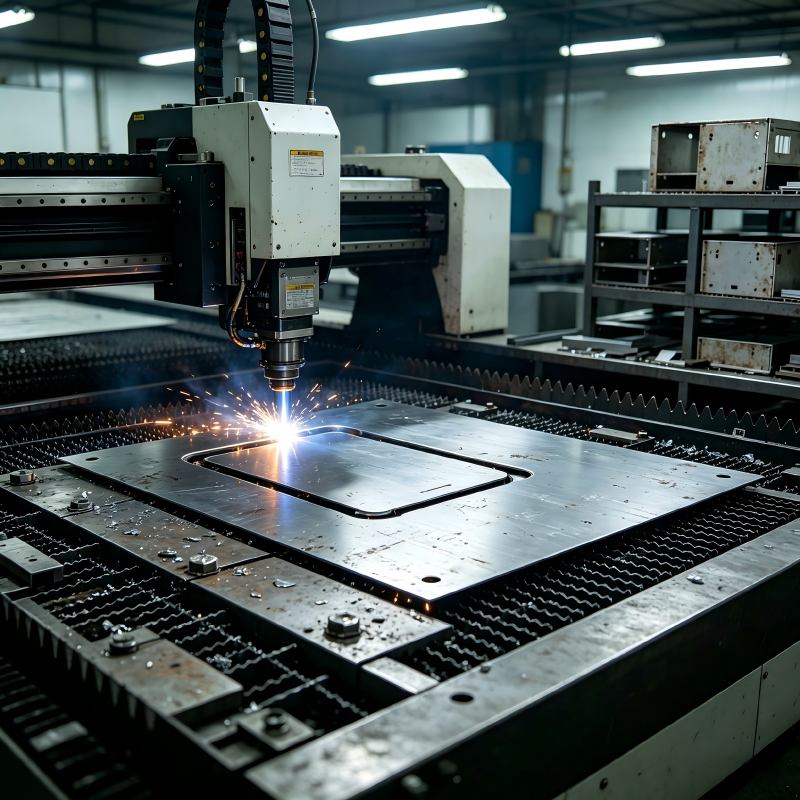
Finished enclosures and chassis often involve more than bending. Laser cutting establishes the blank profile and feature locations. CNC bending creates the formed structure. Welding, hardware insertion, finishing, and assembly can then determine whether the buyer receives a ready-to-install part or a partially processed component.
Lingyufab provides laser cutting, bending, welding, and assembly capabilities in-house. Buyers seeking a combined fabrication route can review our Precision Sheet Metal Laser Cutting Services alongside forming requirements. Combining operations with one manufacturing source can simplify responsibility for dimensions that depend on both the flat blank and final formed geometry.
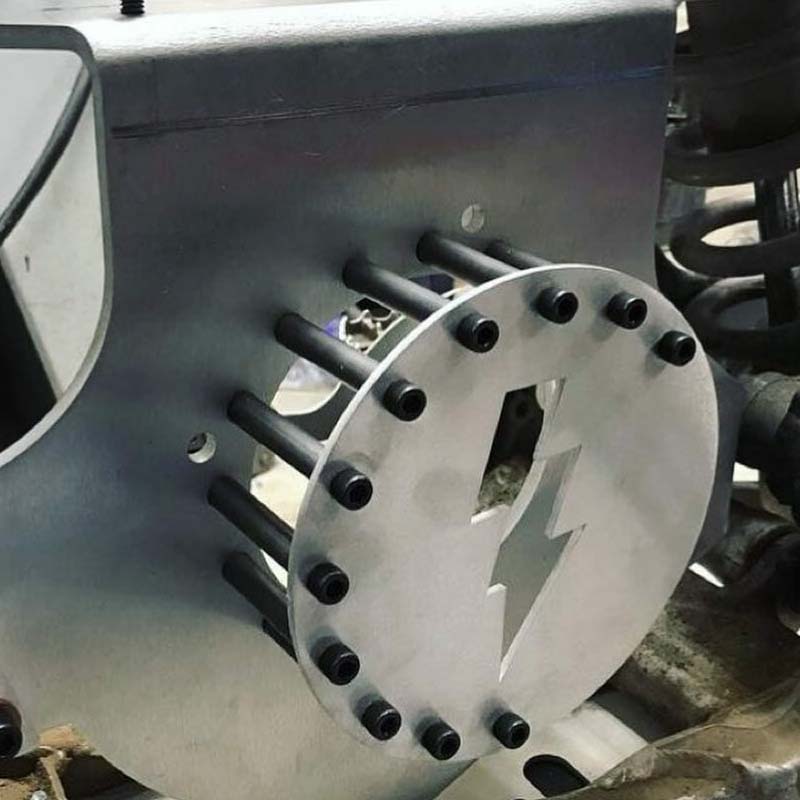
For projects with installed threaded features, define whether nuts, bolts, screws, washers, or studs are supplied loose, installed, welded, or self-clinched. This is particularly relevant for electrical control boxes, server chassis, and equipment frames. A drawing that labels a hole but does not identify the required hardware leaves the supplier to request clarification or quote only the hole.
Buyer Checklist for a Comparable Finished-Part Quote
- Part number, revision, quantity, and requested delivery date.
- Material grade, including carbon steel, aluminum, 304 stainless steel, or 316 stainless steel where applicable.
- Controlled 2D drawing, 3D model if available, and clearly identified units.
- Bend views, section details, critical dimensions, and mating-interface information.
- Required blank operations, including laser cutting, punching, and tapped or formed features.
- Welding locations, cosmetic surface requirements, and requested finishing scope.
- Hardware specification, installation method, and whether hardware must be supplied.
- Inspection requirements, material certificates, packaging instructions, and required documentation.
- Prototype, pilot, and production quantities shown separately.
Lingyufab performs 100% dimensional and visual inspection before shipment and provides Mill Test Certificates for each material batch. Where a manufacturing defect is identified, we offer free replacement or repair. These terms are useful for buyers who need traceability and a stated quality response. Acceptance criteria, fit testing, cosmetic standards, and any customer-specific documentation should still be agreed in the RFQ because they vary by application.
Lead Time, Quantity Planning, and Supplier Fit
A quote should connect price with timing. Lingyufab supports zero MOQ during prototyping, from a one-piece prototype through a 100-piece pilot run and into mass production. Typical sample lead time is 7–10 days, while bulk production is typically 20–30 days. For qualifying urgent orders, rapid delivery can be available within 48 hours. Actual timing depends on drawing readiness, material availability, process scope, and order scheduling.
Our production capacity exceeds 8,000 fasteners and metal sheet assemblies per month, with material traceability supported by MTC documentation. This makes Lingyufab a practical fit for high-mix, low-volume requirements as well as planned repeat demand for formed metal parts and assemblies. It is especially relevant when buyers want one supplier to manage laser-cut blanks, bent forms, installed fasteners, and final assembly rather than coordinating separate sources.
Buyer conclusion: Request pricing at prototype, pilot, and production quantities when the design is likely to progress through several stages. This gives procurement a clearer budget path and lets engineering compare design alternatives before the first release. A rapid-delivery request should include the required date and complete manufacturing scope; speed cannot compensate for missing drawing data or undefined acceptance requirements.
For a quote on CNC bending services, submit your drawing, material grade, quantity breaks, tolerance priorities, required secondary operations, and requested delivery date to our engineering team.