+8613003178786
 sales@lingyufab.com



Laser Cutting Cost Analysis: How to Reduce Per‑Part Cost Without Sacrificing Quality
28
Oct’2026Laser Cutting Cost Analysis: How to Reduce Per‑Part Cost Without Sacrificing Quality
Laser cutting cost is one of the most common concerns for procurement professionals and engineers evaluating sheet metal fabrication options. Have you ever received a laser cutting quote and wondered why the price seemed high for what looked like a simple part? Or perhaps you have compared quotes from different suppliers and found significant price variations for the same part? These are among the most frequent questions in sheet metal sourcing. The reality is that laser cutting costs are influenced by multiple factors—and understanding these factors is the first step to reducing your per‑part cost without compromising quality.
At Lingyufab, we believe in transparent pricing. With over 20 years of precision manufacturing experience since 2003 and certification as a core supplier for Mitsubishi Electric, our laser cutting services are optimized to deliver the best balance of quality, speed, and cost. This guide breaks down the key cost drivers in laser cutting and provides practical strategies to reduce your per‑part cost.
What Makes Up Laser Cutting Cost?
To reduce laser cutting costs, you need to understand where the money goes. The total cost of a laser‑cut part includes several factors:
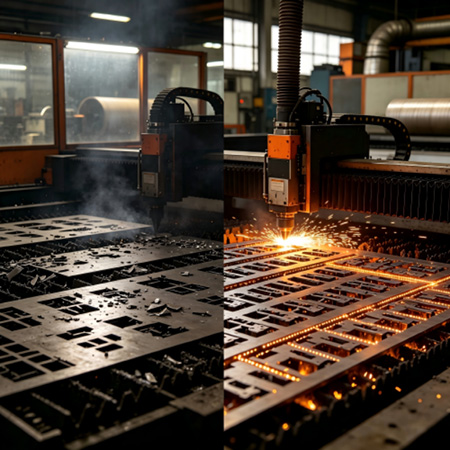
Cutting time. This is the single largest cost driver. The longer a part takes to cut, the higher the cost. Cutting time depends on material type, material thickness, and part complexity—more complex geometries with many internal cutouts take longer to process.
Material utilization. Material cost is typically the second largest component. How efficiently parts are arranged on the sheet directly affects material waste. Poor nesting can waste 20‑30% of the material, and that waste is passed on to you.
Set‑up and programming. CNC programming, tooling selection, and machine setup are required for every job. These costs are spread across the total order quantity. For small batches, setup costs significantly impact per‑part pricing.
Assist gas consumption. The type and amount of assist gas used affects operating cost. Nitrogen cutting, while producing cleaner edges, costs more than oxygen or compressed air.
Labor and overhead. Machine operation, quality inspection, and facility costs are included in the hourly rate. High‑efficiency machines with automated material handling reduce labor cost per part.
How Cutting Time Affects Cost
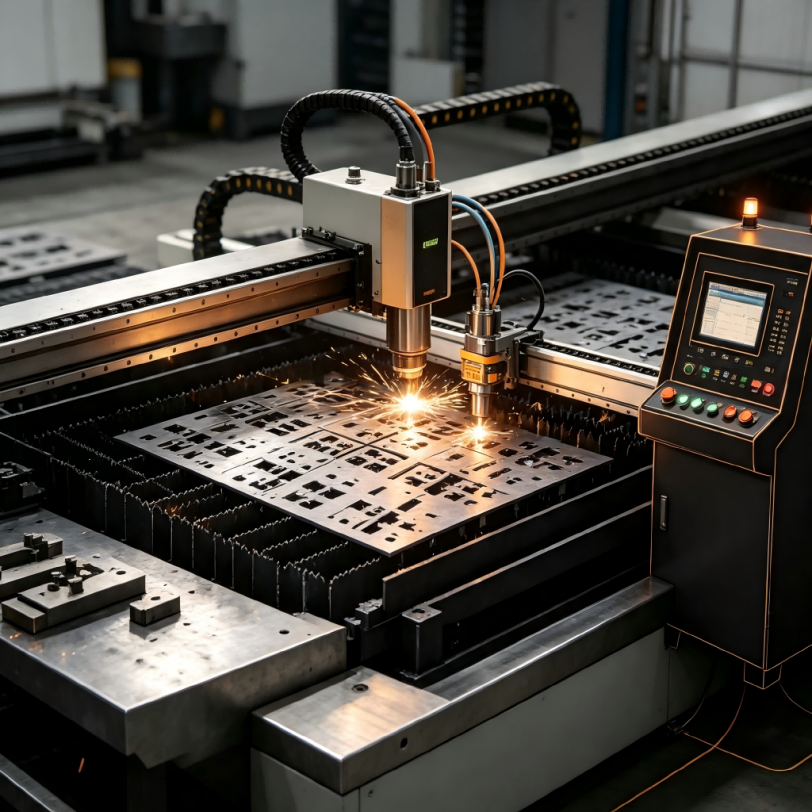
Cutting time is the most significant cost driver in laser cutting. Here is what affects cutting time:
Material thickness. Thicker materials require slower cutting speeds and multiple passes, dramatically increasing cutting time. A 1mm part may take seconds to cut; a 10mm part may take minutes.
Part complexity. A simple rectangular blank cuts quickly. A part with numerous holes, slots, and internal contours takes much longer. Every additional feature adds cutting time.
Part geometry. Parts with many small features require more pierces, which adds time. Each pierce is a separate operation that takes time and consumes consumables.
Nesting efficiency. How parts are arranged on the sheet affects how many parts can be cut per sheet—and how long the cutting process takes.
How to Reduce Laser Cutting Costs
Optimize your design. Simplifying part geometry reduces cutting time. Fewer holes, larger radii, and simpler contours mean faster cutting. If your part doesn't need a complex feature, simplify it.
Use standard material thicknesses. Stock materials are readily available and cost less than special‑order thicknesses. Standardization also simplifies nesting and reduces waste.
Choose the right assist gas. For parts where edge quality is not critical, compressed air or oxygen cutting can be more economical than nitrogen. For visible surfaces, nitrogen may be worth the extra cost.
Order the right quantity. Larger batches spread setup costs across more parts, reducing per‑part cost. If you consistently order small quantities, consider consolidating orders to achieve better economies of scale.
Combine parts in the same material. If you have multiple parts in the same material and thickness, nesting them together improves material utilization and reduces per‑part cost.
Work with an integrated supplier. When a supplier handles cutting, bending, welding, and finishing in‑house, the coordination costs are eliminated. This typically reduces total project costs by 15‑20%.
When Laser Cutting Is Most Cost‑Effective
Laser cutting is most cost‑effective in these scenarios:
Prototypes and low‑volume production. With no tooling costs, laser cutting is ideal for prototypes and small batches (1‑500 parts). The zero‑tooling setup makes it highly flexible.
Parts with complex geometries. Complex shapes, intricate cutouts, and parts with many features are more cost‑effective with laser cutting than with stamping.
Frequent design changes. When designs are still evolving, laser cutting’s zero‑tooling setup allows unlimited design iterations without additional tooling costs.
Multiple material types. Laser cutting handles stainless steel, aluminum, carbon steel, and other materials with the same machine—no tooling changes required between materials.
Cost Comparison: Laser Cutting vs. Other Methods
| Factor | Laser Cutting | Stamping | Waterjet |
|---|---|---|---|
| Tooling cost | None | High | None |
| Per-part cost | Moderate | Low (high volume) | Moderate |
| Setup time | Minimal | Extensive | Minimal |
| Complexity | Excellent | Limited by tooling | Excellent |
| Material waste | Low to moderate | Low | Moderate |
| Ideal volume | 1–5,000 parts | 10,000+ parts | 1–1,000 parts |
How Lingyufab Optimizes Laser Cutting Costs
Lingyufab is a professional sheet metal fabrication manufacturer and sheet metal supplier based in Shanghai, China, with over 20 years of precision manufacturing experience since 2003. We follow strict Japanese quality standards and are a certified core supplier for Mitsubishi Electric.
What sets Lingyufab apart as a sheet metal supplier is our commitment to cost optimization. Our advanced fiber laser cutting systems feature AI‑assisted nesting for maximum material utilization, automated material handling for reduced labor costs, and optimized cutting parameters for faster processing. Our engineering team reviews your designs before production, identifying opportunities to simplify geometry and reduce cutting time.
Our in‑house capabilities include:
Laser cutting — High‑precision fiber laser cutting with optimized nesting for maximum material utilization.
CNC bending — Precision bending with consistent accuracy and springback compensation.
Laser welding — High‑speed, low‑distortion welding with minimal heat input.
Sheet metal fabrication — Complete assembly, surface treatment, and fastener installation.
ISO 9001, ISO 14001, and TÜV CE certified.
Full material traceability with Mill Test Certificates.
One supplier, full responsibility. From laser cutting and CNC bending to welding, surface treatment, and fastener installation, we handle everything under one roof. This integration ensures consistent quality, shorter lead times, and a single point of accountability for your entire project.
If you are looking to reduce your laser cutting costs, our engineering team is available to review your designs and provide a free cost‑saving consultation. We'll help you identify opportunities to optimize your design, material selection, and order quantity. If you are looking for a reliable sheet metal fabrication supplier, please don't hesitate to contact us.
Quick Laser Cutting Cost Checklist for Buyers
Before placing your next order, review this checklist:
| What to Check | What to Consider |
|---|---|
| Part complexity | Can geometry be simplified to reduce cutting time? |
| Material thickness | Is standard thickness being used? |
| Material type | Is the most cost-effective material specified? |
| Assist gas | Is nitrogen necessary, or can air or oxygen be used? |
| Order quantity | Is the quantity optimized to spread setup costs? |
| Supplier integration | Does your supplier handle all processes in-house? |
FAQs
Q1: What is the biggest cost driver in laser cutting?
Cutting time is the single largest cost driver. The longer a part takes to cut, the higher the cost. Cutting time depends on material thickness, part complexity, and geometry.
Q2: How much can nesting improve material utilization?
Good nesting can improve material utilization by 5‑15% compared to poor nesting. AI‑assisted nesting software can find optimal arrangements that manual nesting might miss.
Q3: Does nitrogen cutting cost more than oxygen cutting?
Yes. Nitrogen cutting typically costs more because nitrogen gas is more expensive than oxygen, and nitrogen cutting is generally slower. However, nitrogen produces cleaner, oxide‑free edges that may eliminate post‑processing costs.
Q4: How does order quantity affect per‑part cost?
Larger batches spread setup and programming costs across more parts, reducing per‑part cost. If you consistently order small quantities, consider consolidating orders to achieve better economies of scale.
Q5: Can Lingyufab help me reduce laser cutting costs?
Yes. Lingyufab provides free design reviews and cost‑saving consultations. Our engineering team can identify opportunities to simplify geometry, improve nesting, and optimize material selection—reducing your per‑part cost without compromising quality.
Q6: What file formats do you accept for cost quotes?
We accept 3D files in STEP (.stp), IGS (.igs), and SolidWorks (.sldprt) formats, and 2D drawings in PDF, DWG, and DXF formats. For cost quotes, we also need material specifications, thickness, quantity, and any special requirements.