+8613003178786
  sales@lingyufab.com



Common Laser Cutting Defects and How to Solve Them
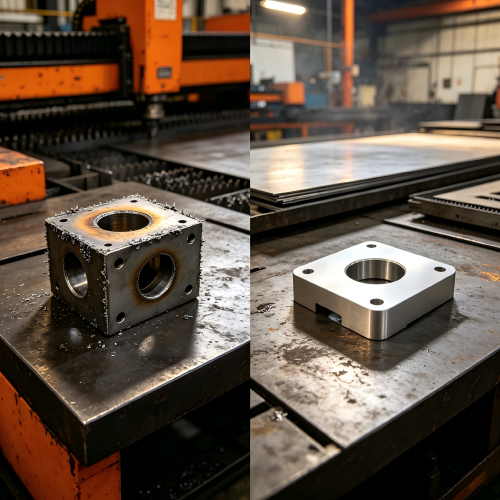
31
Jul’2026Common Laser Cutting Defects and How to Solve Them
Laser cutting is one of the most widely used processes in modern sheet metal fabrication, delivering exceptional precision, speed, and flexibility for custom metal parts. But even the most advanced laser cutting system can produce defects when parameters are not properly optimized. Have you ever received a batch of laser-cut parts where the edges were rough, the holes were tapered, or the surfaces were covered in dross? Or perhaps you have seen parts warp during cutting, making them unusable for assembly? These are among the most common and costly frustrations in sheet metal fabrication. Unlike bending defects, which often appear during forming, laser cutting defects can compromise subsequent operations like welding, painting, or assembly—turning a small cutting issue into a major production delay.
At Lingyufab, we see these defects every day—and we know how to prevent them. With over 20 years of precision manufacturing experience since 2003 and certification as a core supplier for Mitsubishi Electric, our advanced fiber laser cutting systems deliver consistent quality across a wide range of materials and thicknesses. This guide covers the most common defects in laser cutting, what causes them, and how to solve them.
Why Laser Cutting Defects Happen
Most sheet metal laser cutting defects can be traced back to a few root causes: improper cutting parameters, worn consumables, material quality issues, or mechanical system problems. Laser power, cutting speed, focus position, assist gas pressure, and nozzle condition all affect cut quality.
Understanding these root causes is the first step to preventing defects. This guide walks you through the five most common defects in laser cutting and shows you what to do about each one.
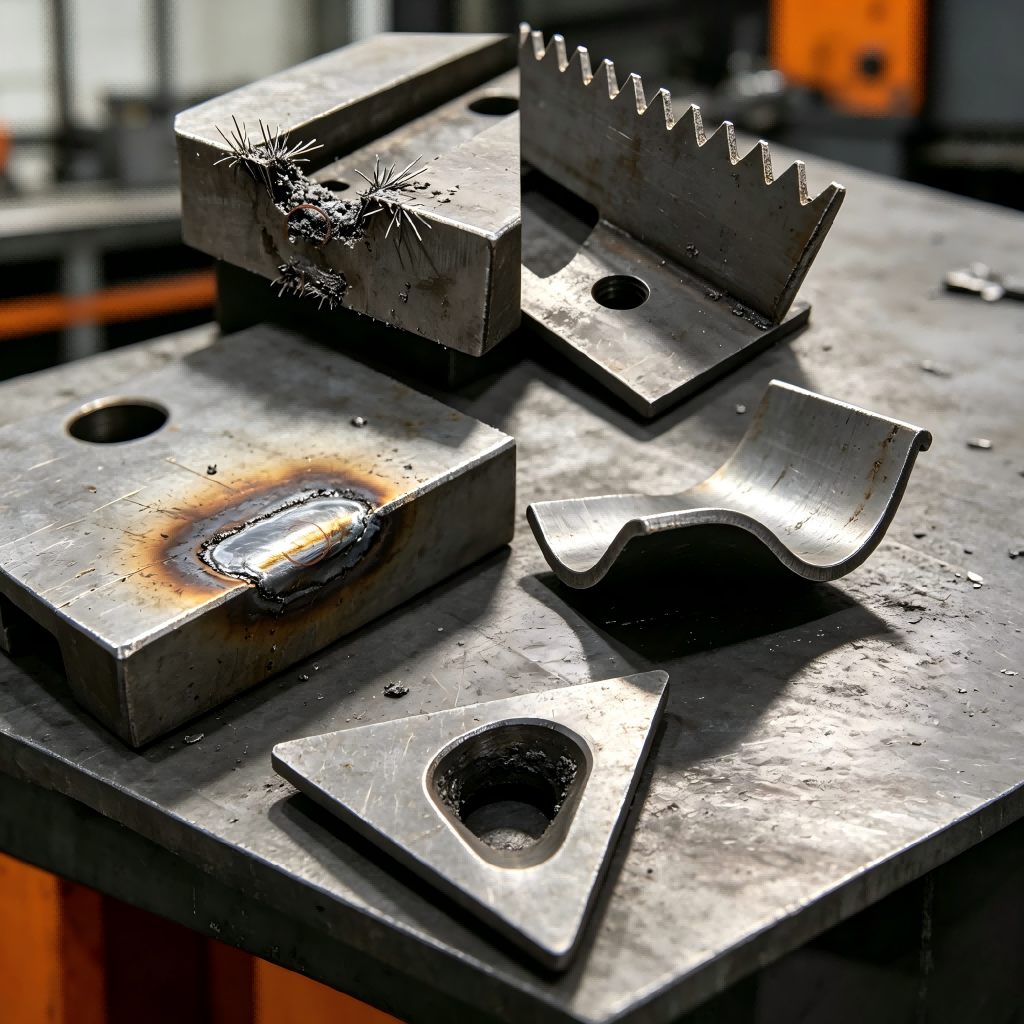
Defect 1: Burrs and Dross — The Surface Problem
Burrs are rough, raised edges along the cut line. Dross is resolidified metal that sticks to the bottom edge of the cut. Both are among the most visible and frustrating defects in laser cutting.
What causes it: Incorrect cutting parameters are the most common cause of burr formation. Excessive laser power, improper focus position, incorrect cutting speed, or insufficient assist gas pressure can all contribute. Worn consumables, such as nozzles or lenses, can also cause burrs. Material quality issues like surface rust, scale, or thickness variations are another contributing factor.
How to solve it: For existing burrs, mechanical deburring or grinding can remove them. For heavy dross, the part may need to be scrapped if the defect affects critical dimensions or subsequent operations.
How to prevent it: Optimize cutting parameters for the specific material and thickness. Reduce laser power if it is too high. Ensure proper focus position. Check and maintain assist gas pressure and purity. Regularly inspect and replace worn consumables, including lenses, mirrors, and nozzles. Use clean, uniform material to reduce the likelihood of defects. Lingyufab’s advanced fiber laser systems feature automated parameter adjustments and real-time monitoring to maintain consistent cut quality across all parts.
Defect 2: Serrated or Rough Edges
Serrated edges have a jagged, uneven appearance along the cut line, affecting both appearance and downstream processes like welding or assembly.
What causes it: Improper laser parameters are a primary cause. Material quality and surface condition also play a role. Misalignment of laser optics can cause uneven beam distribution. Inconsistent cutting speed or power fluctuations during the cut can create a serrated pattern.
How to solve it: Minor roughness can sometimes be removed through grinding or finishing. Severe serration typically requires scrapping the part.
How to prevent it: Regularly clean lenses, mirrors, and nozzles. Check for wear and replace any damaged optical components. Ensure cutting parameters are optimized for the specific material and thickness. Use consistent, high-quality material. Lingyufab maintains strict optical component maintenance schedules and uses advanced CNC controls to ensure consistent beam quality and cutting parameters.
Defect 3: Heat-Affected Zone (HAZ) and Discoloration
The heat-affected zone (HAZ) is the area where material properties have been altered by the thermal cutting process. Excessive HAZ can weaken parts, cause them to resist bending or warp during welding, and create finishing headaches that require extra cleaning before powder coating or anodizing.
What causes it: Excessive heat input is the primary cause. Incorrect cutting parameters, poor gas quality, insufficient gas pressure, improper focus settings, or contaminated optical components all contribute. Black or burnt edges are a visible sign of excessive heat. During laser cutting, heat causes a hardening zone directly at the cut edge and an adjacent tempering zone.
How to solve it: HAZ damage is difficult to reverse. Light discoloration may be removed through finishing, but metallurgical changes are permanent.
How to prevent it: Choose the right cutting method for the application. Optimize cutting parameters to minimize heat input. Use nitrogen as an assist gas to produce oxide-free edges. Maintain proper focus position and gas pressure. Ensure optical components are clean and properly aligned. Lingyufab’s fiber laser systems feature high energy efficiency that minimizes heat input, and our nitrogen assist gas process delivers oxide-free edges ready for welding or coating without secondary grinding.
Defect 4: Warping and Distortion
Warping occurs when excessive heat input causes the material to bend or twist out of shape during cutting. Thin materials are particularly susceptible. Excessive heat-affected zone (HAZ) creates internal residual stresses in the material. When these stresses exceed the material’s yield strength, the part permanently deforms. Therefore, HAZ control and warping prevention are essentially two sides of the same problem—heat management.
What causes it: Excessive heat input is the most common cause. Uneven thermal distribution across the workpiece, improper cutting parameters, and inadequate material support all contribute. Incorrect cutting speed and laser power settings are also contributing factors.
How to solve it: Warping is difficult to fix after the fact. Mechanical straightening may work for mild distortion but can work-harden the material. In severe cases, the part must be scrapped.
How to prevent it: Optimize laser power and cutting speed settings. Use proper material support to prevent movement during cutting. Implement pulse cutting modes for intricate features. Use advanced nesting logic that distributes heat evenly across the workpiece rather than concentrating it in one area. Lingyufab uses automated heat logs to strictly check sheet stress grades, ensuring cut parts stay flat without warp distortions.
Defect 5: Tapered or Oversized Holes
Tapered or oversized holes occur when the laser beam cuts a hole that is not perfectly round or is larger than the specified diameter. This is especially problematic for holes that will be used for fasteners or assembly.
What causes it: Incorrect focus position, improper cutting speed, or incorrect power settings. The laser beam has a natural taper (kerf angle), and if not properly compensated, this creates a hole that is wider at the top than the bottom. Material thickness also affects hole quality—holes that are too small for the material thickness often come out tapered or incomplete.
How to solve it: Oversized or tapered holes typically require scrapping the part or reworking with secondary drilling operations.
How to prevent it: Maintain proper focus position. Adjust cutting parameters to minimize taper. Follow design guidelines: minimum hole diameter should be at least equal to the material thickness, and minimum feature spacing should be at least 2× the material thickness. For example, when cutting 3mm stainless steel, the minimum hole diameter should be 3mm, and hole spacing should be at least 6mm to ensure complete cuts with clean edges. Lingyufab’s advanced fiber laser systems achieve hole diameter accuracy within ±0.08mm to ±0.12mm, with precision positioning down to ±0.05mm.
How Lingyufab Prevents Laser Cutting Defects
Lingyufab is a professional sheet metal fabrication manufacturer and sheet metal supplier based in Shanghai, China, with over 20 years of precision manufacturing experience since 2003. We follow strict Japanese quality standards and are a certified core supplier for Mitsubishi Electric.
What sets Lingyufab apart as a sheet metal supplier is our systematic approach to laser cutting quality:
• Advanced fiber laser technology — Our ultra-high-power fiber laser systems (ranging from 10kW to 60kW+) deliver high-speed, ultra-accurate cuts across a wide range of materials
• AI-assisted nesting — Optimized material utilization reduces waste and prevents heat concentration
• Automated parameter control — CNC controllers dynamically adjust beam width to counter material micro-variance
• Strict quality inspection — First Article Inspection (FAI) and in-process checks at every stage
• Comprehensive material handling — Automated material heat logs ensure cut parts stay flat without warp distortions
Our in-house capabilities include: Laser cutting — High-precision cutting with optimized parameters for clean edges and minimal burrs. CNC bending, welding, assembly, surface treatment, and fastener installation—all under one roof. ISO 9001, ISO 14001, and TÜV CE certified. Full material traceability with Mill Test Certificates.
One supplier, full responsibility. From laser cutting and CNC bending to welding, surface treatment, and fastener installation, we handle everything under one roof. This integration ensures consistent quality, shorter lead times, and a single point of accountability for your entire project.
If you are concerned about laser cutting defects in your sheet metal parts, our engineering team is available to review your requirements and provide a free consultation. We’ll help you identify risks before production begins. If you are looking for a reliable sheet metal fabrication supplier, please don’t hesitate to contact us.
Quick Laser Cutting Defect Prevention Checklist for Buyers
| What to Check | What to Look For |
|---|---|
| Burrs or dross | Rough edges or resolidified metal on the bottom of the cut |
| Edge roughness | Serrated, jagged, or uneven cut edges |
| Heat-affected zone | Discoloration, hardening, or oxidation along the cut edge |
| Warping | Bending, twisting, or distortion of the part |
| Hole quality | Tapered, oversized, or oval holes |
| Dimensional accuracy | Overall dimensions match drawing within specified tolerance |
FAQs
Q1: What are the most common defects in laser cutting?
The most common defects include burrs and dross, serrated or rough edges, excessive heat-affected zone (HAZ), warping and distortion, and tapered or oversized holes. Most defects are caused by improper cutting parameters, worn consumables, or material quality issues.
Q2: What causes burrs in laser cutting?
Burrs are typically caused by incorrect cutting parameters—improper laser power, incorrect cutting speed, or incorrect focus position. Worn consumables and poor material quality can also contribute. Optimizing parameters and maintaining equipment are the best prevention methods.
Q3: How can I prevent heat-affected zone (HAZ) in laser cutting?
Choose the right cutting method for the application. Optimize cutting parameters to minimize heat input. Use nitrogen as an assist gas to produce oxide-free edges. Maintain proper focus position and gas pressure. Ensure optical components are clean and properly aligned.
Q4: What causes sheet metal warping during laser cutting?
Warping is caused by excessive heat input, uneven thermal distribution, improper cutting parameters, and inadequate material support. HAZ and warping are closely related—excessive heat creates residual stresses that cause deformation. Optimizing laser power and cutting speed, using proper material support, and implementing pulse cutting modes help prevent warping.
Q5: What is the typical tolerance for laser cutting?
Standard laser cutting tolerances are typically around ±0.13mm (±0.005 inches) for general applications. Precision features can achieve ±0.05mm (±0.002 inches) with advanced equipment. Lingyufab’s fiber laser systems consistently achieve these tolerances through automated beam focus adjustment and high-rigidity CNC gantries.
Q6: Can Lingyufab cut both thin and thick sheet metal?
Yes. Lingyufab cuts carbon steel up to 20mm, stainless steel up to 12mm, and aluminum up to 10mm. We adjust cutting parameters, assist gas, and focus position based on material type and thickness to ensure optimal quality.