+8613003178786
  sales@lingyufab.com



Fiber Laser vs. CO₂ Laser for Sheet Metal: Which Is Better for Your Sheet Metal Parts?
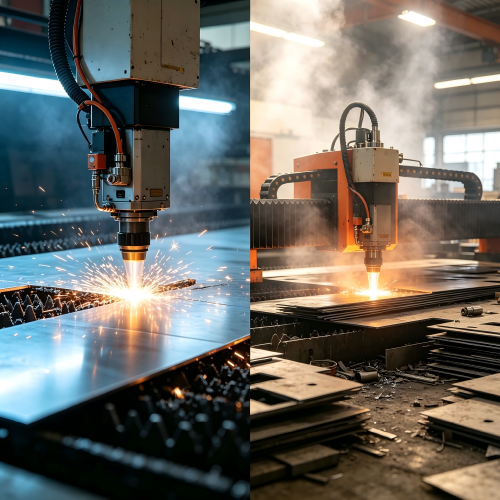
04
Aug’2026Fiber Laser vs. CO₂ Laser for Sheet Metal: Which Is Better for Your Sheet Metal Parts?
Laser cutting has been the backbone of modern sheet metal fabrication for decades, but not all lasers are created equal. Have you ever looked at a laser-cut part and wondered why the edges were rough, why the heat-affected zone was too wide, or why the cut was slower than expected? The answer often comes down to one critical decision: the type of laser being used. Choosing between a fiber laser and a CO₂ laser is one of the most important decisions you can make for your sheet metal parts—affecting everything from cut quality and speed to cost and material compatibility. The wrong choice can mean slower production, higher costs, and parts that simply don't meet your specifications.
At Lingyufab, we understand the nuances of both technologies. As a professional sheet metal fabrication manufacturer and sheet metal supplier with over 20 years of precision manufacturing experience since 2003, we use advanced fiber laser systems to deliver high-speed, high-quality cuts across a wide range of materials. This guide compares fiber lasers and CO₂ lasers across key decision factors to help you choose the right technology for your project.
What Is a Fiber Laser?
A fiber laser generates its beam through a solid-state design using fiber optic cables doped with rare-earth elements like ytterbium. The light is produced at a wavelength of approximately 1.06 μm—which metals absorb very efficiently.
Key characteristics:
• High electrical efficiency — thirty to fifty percent energy conversion
• Faster cutting speeds — especially on thin and medium sheet metals
• Minimal maintenance — solid-state design with no moving optical parts or gas refills
• Superior for metals — including reflective materials like aluminum, brass, and copper
• Longer lifespan — laser sources can last over one hundred thousand hours
What Is a CO₂ Laser?
A CO₂ laser generates its beam by electrically stimulating a gas mixture inside a sealed tube. It produces light at a wavelength of approximately 10.6 μm.
Key characteristics:
• Lower electrical efficiency — eight to fifteen percent energy conversion
• Slower cutting speeds — especially on thin metals
• Higher maintenance — requires mirror alignments, lens replacements, and gas refills
• Versatile for non-metals — wood, acrylic, plastics, textiles, and glass
• Lower initial cost — but higher long-term operating costs
Fiber Laser vs. CO₂ Laser: Key Decision Factors
Here is a practical comparison across the factors that matter most to buyers and engineers:
Cutting Speed
Fiber lasers are significantly faster than CO₂ lasers when cutting thin and medium sheet metals. A fiber laser can cut thin stainless steel much faster than a CO₂ system. As material thickness increases beyond fifteen millimeters, the speed advantage of fiber lasers narrows, but with modern high-power fiber lasers, the technology now covers the entire cutting thickness range of CO₂ systems.
Material Compatibility
| Material | Fiber Laser | CO₂ Laser |
|---|---|---|
| Stainless Steel | Excellent | Moderate |
| Aluminum | Excellent | Poor |
| Copper/Brass | Good | Not suitable |
| Carbon Steel | Excellent | Good |
| Plastics/Acrylic | Poor | Excellent |
| Wood/Leather | Not suitable | Excellent |
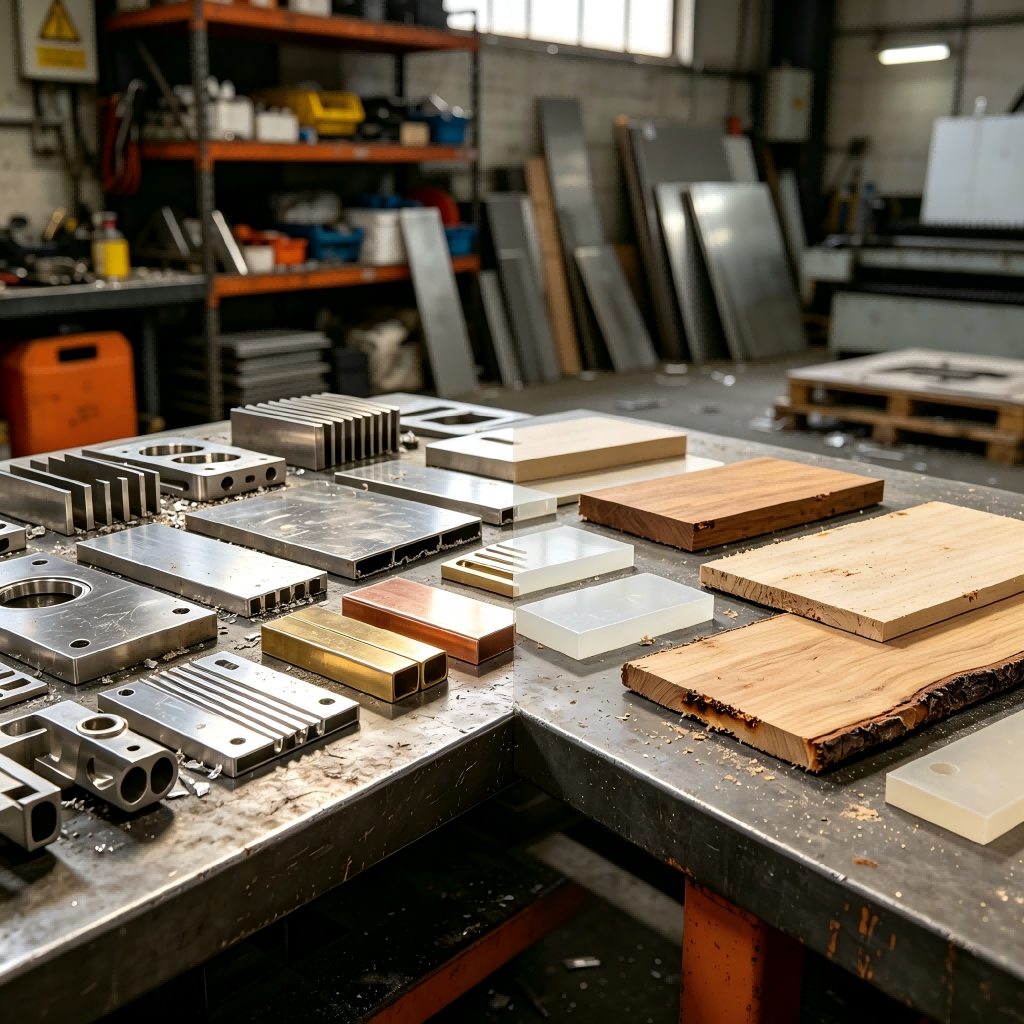
CO₂ lasers are generally not suitable for cutting copper or aluminum due to high reflectivity—the wavelength is almost entirely reflected rather than absorbed, creating safety hazards. Fiber lasers, with their shorter wavelength, are less likely to reflect back into the machine, reducing the risk of damage and improving safety.
Cut Quality and Precision
Fiber lasers achieve a smaller focal spot, producing narrow kerf widths and a smaller heat-affected zone—meaning less thermal deformation and higher precision. CO₂ lasers typically produce slightly wider kerfs but offer smoother edges on non-metal materials.
Energy Efficiency and Operating Costs
Fiber lasers are far more energy-efficient—consuming significantly less power than CO₂ lasers. A four-kilowatt fiber laser delivers the same output as an eight-kilowatt CO₂ laser. CO₂ lasers also require regular gas refills and optics replacements, while fiber lasers have no lenses or gases to replace. The result is that fiber lasers deliver lower total cost of ownership over time.
Initial Investment and ROI
CO₂ lasers typically have a lower initial purchase price. However, fiber lasers offer a faster payback period due to their high efficiency and low maintenance requirements. For businesses processing significant volumes of sheet metal, the long-term savings of fiber technology usually outweigh the higher upfront cost.
How to Choose: A Practical Decision Framework
Here is a simple framework to guide your decision:
Choose fiber laser if:
• You are cutting sheet metal such as stainless steel, aluminum, carbon steel, copper, or brass
• Your material thickness is typically under twenty millimeters
• Cutting speed and throughput are priorities
• You want lower long-term operating costs
• You need to cut reflective materials like aluminum or copper
• You value low maintenance and high reliability
Choose CO₂ laser if:
• You are cutting non-metals like wood, acrylic, plastics, textiles, or glass
• Your primary application is engraving or cutting organic materials
• You have a lower initial budget and limited metal cutting requirements
• You process very thick metals
Still unsure which technology fits your project? Lingyufab's engineering team can review your part requirements and recommend the optimal cutting approach based on your material, thickness, and production needs.
Lingyufab: Your Trusted Sheet Metal Partner for Precision Cutting
Lingyufab is a professional sheet metal fabrication manufacturer and sheet metal supplier based in Shanghai, China, with over 20 years of precision manufacturing experience since 2003. We follow strict Japanese quality standards and are a certified core supplier for Mitsubishi Electric.
What sets Lingyufab apart as a sheet metal supplier is our investment in advanced technology. Our ultra-high-power fiber laser cutting systems deliver high-speed, ultra-accurate cuts across a wide range of materials—from thin-gauge electronic chassis to heavy-gauge industrial power cabinets—with perfectly clean, oxide-free edges. Backed by intelligent CNC automation and rapid AI nesting, we effortlessly scale from zero-tooling rapid prototyping to high-volume mass production.
Our in-house capabilities include: Laser cutting — High-precision fiber laser cutting with optimized parameters for clean edges and minimal burrs. CNC bending — Precision bending with consistent accuracy and springback compensation. Laser welding — High-speed, low-distortion welding with minimal heat input. Sheet metal fabrication — Complete assembly, surface treatment, and fastener installation. ISO 9001, ISO 14001, and TÜV CE certified. Full material traceability with Mill Test Certificates.
One supplier, full responsibility. From laser cutting and CNC bending to welding, surface treatment, and fastener installation, we handle everything under one roof. This integration ensures consistent quality, shorter lead times, and a single point of accountability for your entire project.
If you are unsure which laser technology is right for your project, our engineering team is available to review your drawings and provide a free process recommendation. If you are looking for a reliable sheet metal fabrication supplier, please don't hesitate to contact us.
Quick Laser Technology Selection Checklist for Buyers
| Decision Factor | Fiber Laser | CO₂ Laser |
|---|---|---|
| Best for | Metals | Non-metals |
| Cutting speed | Faster on metals | Slower on metals |
| Energy efficiency | Higher | Lower |
| Maintenance | Low | High |
| Reflective materials | Excellent | Not suitable |
| Non-metal cutting | Limited | Excellent |
| Initial cost | Higher | Lower |
| Operating cost | Lower | Higher |
FAQs
Q1: What is the main difference between fiber and CO₂ lasers?
The main difference is the wavelength and how the laser beam is generated. Fiber lasers use a solid-state design with a wavelength that metals absorb very efficiently. CO₂ lasers use a gas mixture with a longer wavelength that is better absorbed by non-metals like wood and acrylic.
Q2: Which laser is better for cutting sheet metal?
Fiber lasers are generally better for cutting sheet metal. They cut faster, are more energy-efficient, and can handle reflective materials like aluminum and copper that CO₂ lasers struggle with.
Q3: Can CO₂ lasers cut metal?
Yes, CO₂ lasers can cut metal, but they are slower and less efficient than fiber lasers. CO₂ lasers also cannot safely cut highly reflective metals like copper and aluminum due to back-reflection risks.
Q4: Why are fiber lasers better for reflective materials?
Fiber lasers have a shorter wavelength that is absorbed more efficiently by metals like aluminum, copper, and brass. This reduces the risk of back-reflection damage to the laser source. CO₂ lasers reflect almost entirely off these materials.
Q5: How long do fiber laser sources typically last?
Fiber laser sources typically last over one hundred thousand hours—equivalent to many years of continuous operation. This is significantly longer than CO₂ systems, which require regular maintenance and component replacement.
Q6: Can Lingyufab cut both thin and thick sheet metal?
Yes. Lingyufab's fiber laser systems cut carbon steel, stainless steel, and aluminum across a wide thickness range. We adjust cutting parameters, assist gas, and focus position based on material type and thickness to ensure optimal quality.