+8613003178786
  sales@lingyufab.com



Precision Fan Case Assembly: From Sheet Metal to High-Performance Cooling Solutions
11
Aug’2026Precision Fan Case Assembly: From Sheet Metal to High-Performance Cooling Solutions
Fan case assembly is one of the most critical and demanding applications in precision sheet metal fabrication. Have you ever wondered how cooling fans in servers, medical devices, or industrial equipment maintain such consistent performance while running almost silently? The answer lies in the precision of the fan case that houses them. A fan case that is poorly designed or inaccurately fabricated can lead to excessive vibration, noise, reduced airflow efficiency, and premature equipment failure.
At Lingyufab, we specialize in precision sheet metal fabrication for demanding applications, including custom fan cases and enclosures. With over 20 years of precision manufacturing experience since 2003 and certification as a core supplier for Mitsubishi Electric, our sheet metal fabrication capabilities—combining laser cutting, CNC bending, welding, and assembly—are engineered to meet the tight tolerances and structural requirements of high-performance fan assemblies. This guide explains what precision fan case assembly involves, the key manufacturing processes, critical quality considerations, and how to choose the right partner for your project.
What Is Precision Fan Case Assembly?
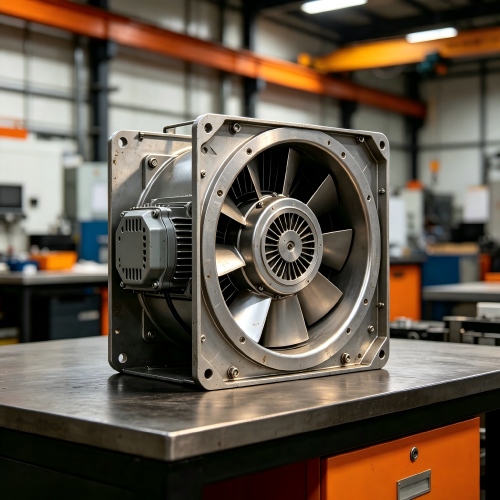
A fan case (or fan housing) is the structural enclosure that houses a fan motor, impeller, and airflow components. While the concept is simple, precision fan case assembly requires the integration of multiple high-tolerance sheet metal components into a single, rigid assembly capable of withstanding vibration, thermal cycling, and continuous operation.
Modern fan cases are typically constructed from sheet metal components—such as side plates, a scroll-shaped wrapper, mounting brackets, and ventilation grilles—that are precisely cut, formed, and joined together. The assembly must provide accurate mounting points for the motor and impeller, correct inlet and outlet geometry for optimized airflow, and sufficient structural rigidity to dampen vibration and noise. Unlike simple enclosures, fan case assemblies often require precision-machined bearing seats (with tolerances as tight as ±0.010mm) and ventilation slots with spacing tolerances of ±0.025mm to ensure vibration-free operation.
How Are Precision Fan Cases Manufactured and Assembled?
The journey from raw sheet metal to a finished fan case assembly involves a carefully orchestrated sequence of manufacturing steps, each critical to the final performance and reliability of the product.
Design and Engineering. The process begins with an engineering review of your 3D CAD models and 2D drawings. Our engineering team assesses the design for manufacturability (DFM), identifying potential issues with material selection, bend radii, tolerances, and assembly sequence. At this stage, we also confirm that the design includes precise cutouts for ports, fans, labels, and ventilation—features that are essential for proper airflow and component integration.
Laser Cutting and Material Preparation. Laser cutting is used to create the flat patterns for each component of the fan case—side plates, wrappers, mounting brackets, and grilles. High-precision fiber laser cutting ensures accurate flat patterns, clean edges, and minimal heat-affected zones. For fan cases, the accuracy of cutouts for airflow paths and the precise shape of the scroll wrapper directly affect aerodynamic performance.
CNC Bending and Forming. After cutting, the flat blanks are formed into their final 3D shapes using CNC bending. The scroll-shaped wrapper is a particularly critical component—its curvature must be formed accurately to create the correct airflow path and pressure characteristics. Precision bending ensures that all mounting flanges, tabs, and brackets are formed to exact angles and dimensions, guaranteeing proper fit during assembly.
Welding and Joining. The individual components—side plates, wrapper, mounting brackets, and grilles—are joined together to form the complete fan case assembly. Depending on the design and material, we use TIG welding for stainless steel, MIG welding for general fabrication, or spot welding for thin sheet connections. The welding process must be carefully controlled to prevent distortion, which can affect the alignment of the motor, impeller, and critical airflow paths. For assemblies where access for maintenance is required, we use removable fasteners that allow easy disassembly of the housing.
Hardware and Fastener Installation. Mounting tabs, threaded fasteners, standoffs, and inserts are installed to provide secure mounting points for the motor, impeller, and other components. For applications requiring vibration isolation, we can install specialized mounting hardware designed to reduce noise and extend component life.
Surface Treatment and Finishing. The assembled fan case undergoes surface treatment to enhance corrosion resistance and appearance. Options include powder coating, anodizing, electroplating, and polishing. For visible or high-end applications, we provide customizable finishes. The finishing process is carefully controlled to ensure that critical mounting surfaces and airflow paths are not affected by coating thickness.
Key Quality Considerations for Fan Case Assembly
Achieving a high-quality fan case assembly requires attention to several critical factors:
Dimensional accuracy. Tolerances on bearing seats, mounting points, and overall enclosure dimensions must be held tightly to ensure proper fit and vibration-free operation. Even small deviations can lead to imbalance, noise, and premature wear.
Structural rigidity. The assembled fan case must be rigid enough to dampen vibration and support the weight of the motor and impeller without flexing or distorting during operation. The choice of material thickness, material type, and joining methods directly affects structural performance.
Airflow path integrity. The geometry of the scroll wrapper, the alignment of inlet and outlet openings, and the surface finish of internal flow paths all affect aerodynamic performance. Any distortion or misalignment can reduce airflow efficiency and increase noise.
Hermetic sealing. For applications where the fan case must prevent moisture or contaminants from entering sensitive electronics, leak-tight welds and proper sealing are essential.
Material selection. The choice of material affects weight, corrosion resistance, and thermal performance. Aluminum alloys (such as 5052 and 6061) are widely used for their lightweight properties and corrosion resistance. Stainless steel is preferred for demanding environments where corrosion resistance and hygiene are critical.
Common Applications for Precision Fan Cases
Precision fan case assemblies are essential components in a wide range of industries and applications:
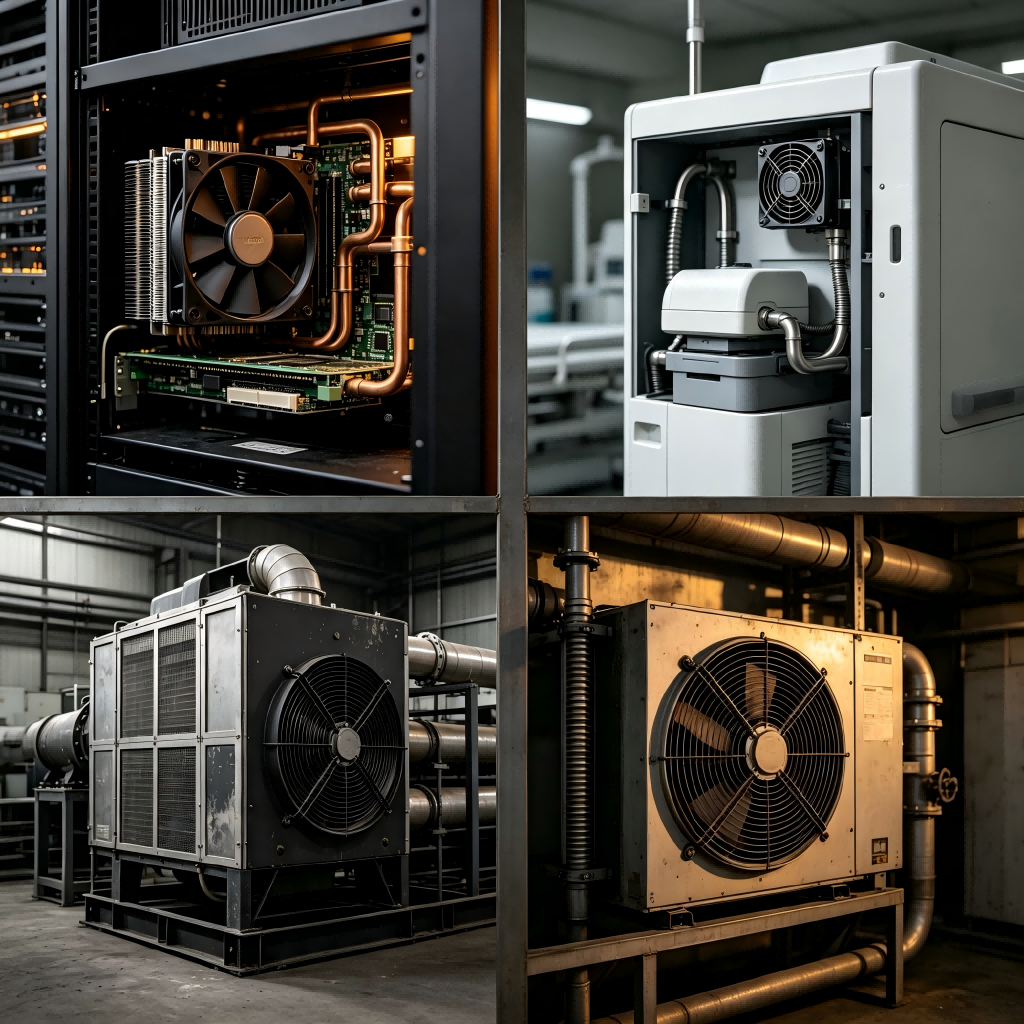
Electronics and Telecommunications. Fan cases are critical for cooling servers, network switches, and communication equipment. These applications demand tight tolerances, reliable EMI shielding, and efficient airflow. Card cage fan enclosures and rack-mount cooling systems are common examples.
Medical Devices. Medical equipment requires reliable, quiet cooling to protect sensitive electronics and ensure patient safety. Stainless steel fan cases are often preferred for their corrosion resistance and cleanability.
Industrial Equipment. Heavy-duty fan cases for industrial machinery must withstand harsh environments, continuous operation, and vibration. Galvanized steel and powder-coated finishes are commonly used for durability.
Automotive and Transportation. Cooling fans for electric vehicles, battery cooling systems, and HVAC systems require precision fan cases that meet strict weight, performance, and durability requirements.
HVAC and Building Systems. Fan cases for HVAC systems must be designed for high airflow, low noise, and ease of maintenance. Sheet metal construction is standard due to its cost-effectiveness and durability.
How Lingyufab Delivers Precision Fan Case Assembly
Lingyufab is a professional sheet metal fabrication manufacturer and sheet metal supplier based in Shanghai, China, with over 20 years of precision manufacturing experience since 2003. We follow strict Japanese quality standards and are a certified core supplier for Mitsubishi Electric.
What sets Lingyufab apart as a sheet metal supplier is our integrated approach to precision fan case assembly. We handle every step of the process in-house—from laser cutting and CNC bending to welding, assembly, and surface treatment—ensuring consistent quality, shorter lead times, and single-point accountability.
Our in-house capabilities include:
Laser cutting — High-precision fiber laser cutting for accurate flat patterns, clean edges, and minimal material waste.
CNC bending — Precision bending with consistent accuracy and springback compensation.
Laser welding — High-speed, low-distortion welding with minimal heat input.
Sheet metal fabrication — Complete assembly, surface treatment, and fastener installation.
Surface treatment — In-house powder coating, anodizing, electroplating, and polishing.
ISO 9001, ISO 14001, and TÜV CE certified — Full material traceability with Mill Test Certificates.
One supplier, full responsibility. From laser cutting and CNC bending to welding, surface treatment, and fastener installation, we handle everything under one roof. This integration ensures consistent quality, shorter lead times, and a single point of accountability for your entire project.
If you are developing a precision fan case assembly or other cooling solution for electronic, medical, or industrial applications, our engineering team is available to review your requirements and provide a free consultation. We'll help you optimize your design for manufacturability and cost-effectiveness. If you are looking for a reliable sheet metal fabrication supplier, please don't hesitate to contact us.
Quick Fan Case Assembly Checklist for Buyers
Before starting your fan case project, review this checklist:
| What to Check | What to Consider |
|---|---|
| Material type | Aluminum, stainless steel, or galvanized steel—each has different weight, corrosion, and cost properties |
| Tolerances | Are bearing seats, mounting points, and critical dimensions clearly specified? |
| Airflow path | Does the design include accurate cutouts and scroll geometry for optimal airflow? |
| Vibration damping | Are mounting points and structural rigidity sufficient to minimize noise and vibration? |
| Accessibility | Does the design allow for easy maintenance and component replacement? |
| Surface finish | Is the specified finish compatible with the operating environment? |
FAQs
Q1: What materials are commonly used for precision fan cases?
Aluminum alloys (such as 5052 and 6061) are widely used for their lightweight properties and corrosion resistance. Stainless steel is preferred for demanding environments where corrosion resistance and hygiene are critical. Galvanized steel is commonly used for cost-effective HVAC applications.
Q2: What is the most critical aspect of fan case assembly?
Dimensional accuracy is the most critical factor. Tolerances on bearing seats, mounting points, and overall enclosure dimensions must be held tightly to ensure proper fit, vibration-free operation, and reliable performance.
Q3: How does welding affect fan case quality?
Welding must be carefully controlled to prevent distortion, which can affect the alignment of the motor, impeller, and critical airflow paths. We use TIG, MIG, and spot welding techniques, with heat input carefully managed to minimize distortion.
Q4: What surface finishes are available for fan cases?
Common surface finishes include powder coating, anodizing, electroplating, and polishing. The choice depends on the operating environment, aesthetic requirements, and corrosion protection needs.
Q5: Can Lingyufab handle both prototypes and high-volume production?
Yes. Lingyufab supports everything from single prototypes to full mass production. Our flexible manufacturing approach allows us to scale production up or down based on your needs.
Q6: What file formats do you accept for fan case projects?
We accept 3D files in STEP (.stp), IGS (.igs), and SolidWorks (.sldprt) formats, and 2D drawings in PDF, DWG, and DXF formats. For fan case projects, we also need material specifications, tolerance requirements, and any specific performance or certification requirements.