+8613003178786
  sales@lingyufab.com



How to Avoid Sheet Metal Welding Defects
30
Jul’2026How to Avoid Sheet Metal Welding Defects
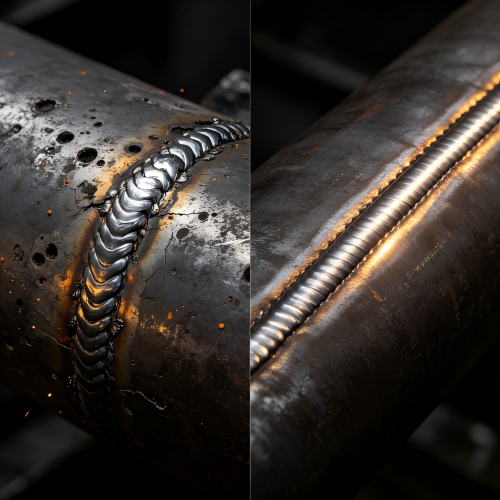
Have you ever received a batch of welded sheet metal assemblies that looked fine at first glance, only to find during strength testing that the welds failed? Or perhaps you have seen parts come back from welding with visible porosity, cracks, or distortion that made them unusable? These are among the most frustrating and costly problems faced by procurement professionals, quality engineers, and product developers. Welding defects don't just affect appearance—they compromise structural integrity, reduce product lifespan, and can lead to field failures that damage your brand reputation.
At Lingyufab, we understand that welding quality is critical to product reliability. With over 20 years of precision manufacturing experience since 2003 and certification as a core supplier for Mitsubishi Electric, we follow strict Japanese quality standards and maintain rigorous welding quality control. This guide covers the most common sheet metal welding defects, what causes them, and how to prevent them—so you can get welds that are strong, clean, and reliable.
Why Welding Defects Happen in Sheet Metal
Sheet metal welding presents unique challenges. Thin materials are more susceptible to heat distortion, burn-through, and warping. Different materials—stainless steel, aluminum, and carbon steel—each have different welding characteristics and defect profiles. And because sheet metal components are often used in structural applications, weld quality directly affects product safety and performance.
Most welding defects can be traced back to a few root causes: inadequate cleaning of the base material (rust, oil, or debris), incorrect welding parameters (current too low or too high, travel speed too fast), improper shielding gas coverage, or poor joint preparation. The good news is that most defects are preventable with proper preparation, technique, and quality control.
Porosity: The Hidden Threat
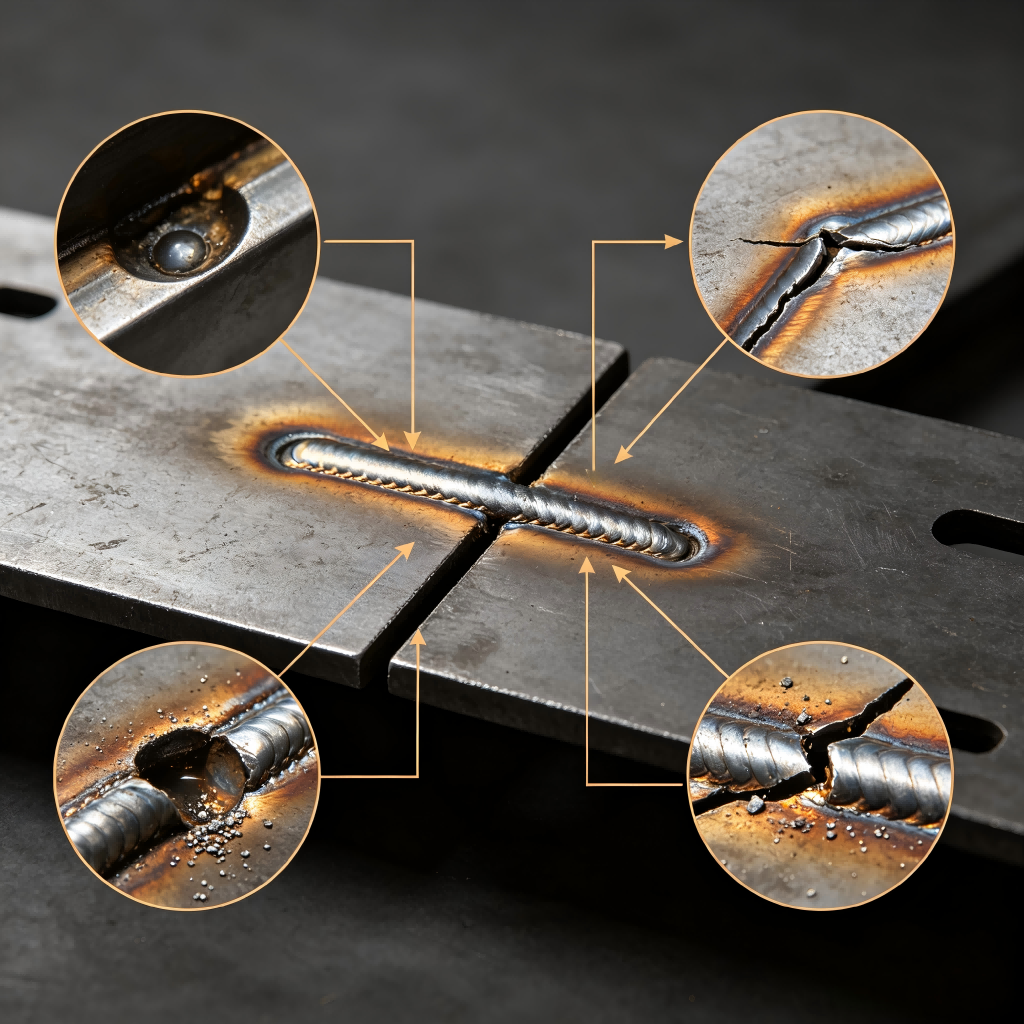
Porosity is one of the most common welding defects in sheet metal fabrication. It appears as gas pockets trapped in the weld bead—ranging from scattered surface pores to subsurface voids that only show up during destructive testing or radiographic inspection.
What causes it: The most common cause of weld porosity is improper surface condition of the metal—oil, rust, paint, or grease on the base metal prevents proper weld penetration and leads to gas entrapment. All porosity is caused by hydrogen and/or a lack of shielding gas covering the molten weld pool. Other contributing factors include a dirty substrate, water, grind dust, surface mill scale, and moisture in the welding consumables. For galvanized steel, the boiling temperature of zinc is lower than the melting temperature of steel, which causes well-known porosity problems during welding.
How to prevent it: Thoroughly clean the base metal before welding—remove all oil, grease, rust, paint, and moisture from the weld area. Use dry, high-quality shielding gas with proper flow rate. Store welding consumables in a dry environment and follow recommended drying procedures. For galvanized steel, consider grinding away the zinc coating in the weld zone or using specialized welding techniques. Ensure proper gas coverage—check for drafts that might disperse the shielding gas.
Cracking: The Most Serious Defect
Cracking is one of the most serious welding defects because it directly compromises structural integrity. Cracks can appear immediately after welding (hot cracks) or hours or days later (cold cracks).
What causes it: Weld cracks often result from combined factors: high thermal stress during heating and cooling, brittle base metals, and excess hydrogen in the weld. Hot cracking happens during solidification when the metal is still hot—common in aluminum and high-strength steels. Cold cracking occurs after the weld has cooled, typically due to hydrogen embrittlement combined with high residual stress. For aluminum, hot cracking is particularly common because we are typically welding alloys rather than pure aluminum. Crater cracks occur at the end of a weld bead when the weld pool solidifies without adequate filler metal.
How to prevent it: Control heat input—use appropriate welding parameters to minimize thermal stress. Preheat when necessary to reduce cooling rate and prevent hydrogen cracking. Use low-hydrogen welding consumables for susceptible materials. For aluminum, avoid welding alloys with high crack sensitivity or use appropriate filler metals. Fill craters properly—when ending a TIG weld, gradually reduce current to fill the crater; for MIG welding, use the "back step" technique by reversing travel direction back into the already welded material. Minimize residual stress by using proper joint design and clamping.
Incomplete Penetration and Lack of Fusion
Incomplete penetration occurs when the weld metal does not extend through the full thickness of the joint. Lack of fusion is poor adhesion of the weld bead to the base metal, resulting in an unmolten contact area.
What causes it: The most common causes of incomplete penetration are insufficient welding current and incorrect workpiece alignment. Low current means the heat is insufficient to melt through the full material thickness. Lack of fusion can also be caused by improper joint preparation, incorrect travel speed, or poor welding technique.
How to prevent it: Use sufficient welding current for the material thickness. Ensure proper joint fit-up and alignment—weld gaps should be as small as possible. Clean the joint area thoroughly to remove any contaminants. Adjust travel speed to allow proper fusion—moving too fast prevents adequate heat input. Use appropriate welding technique—maintain correct torch angle and position.
Undercut
Undercut is a groove melted into the base metal adjacent to the weld toe that is not filled by weld metal. It reduces the effective thickness of the base metal and creates a stress concentration point.
What causes it: Excessive welding current, incorrect travel speed, improper torch angle, or too large an electrode. Undercut is often a sign of too much heat or incorrect technique.
How to prevent it: Use appropriate welding current and travel speed. Maintain correct torch angle—typically 15-20 degrees from vertical for most applications. Use proper electrode size for the material thickness. Ensure consistent travel speed—hesitation can cause excess heat buildup.
Welding Distortion and Warping
Distortion is one of the most common problems in sheet metal welding. Thin materials are particularly susceptible to warping because heat input causes expansion and contraction that can permanently deform the part.
What causes it: Uneven heating and cooling during welding. As welds expand and contract, the material moves in response to thermal stress. Excessive heat input, insufficient fixturing, and incorrect welding sequence all contribute to distortion.
How to prevent it: Control heat input—use the lowest practical current and fastest travel speed that still achieves good penetration. Use jigs and clamps to hold parts in position during welding. Apply welds in a controlled order—often symmetrical or from the center outward to balance heat distribution and reduce cumulative distortion. Reduce weld sections where possible to minimize heat input. For critical applications, consider using Low Stress No Distortion (LSND) welding techniques. Preheating can also help reduce temperature gradients.
Spatter and Poor Weld Appearance
Spatter is the expulsion of molten metal droplets during welding that stick to the surrounding surface. While sometimes considered cosmetic, excessive spatter can indicate process problems and add cleanup cost.
What causes it: Incorrect welding parameters—too high current or voltage, improper wire feed speed, or incorrect shielding gas flow. Poor technique or contaminated material can also contribute.
How to prevent it: Use the correct welding parameters for the material and thickness. For MIG welding, choose a smaller wire diameter to match the thickness of the sheet metal being welded. Check shielding gas flow and composition. Apply anti-spatter spray to protect surrounding surfaces. Ensure proper ground connection.
How Lingyufab Delivers Quality Welding Services
Lingyufab is a professional sheet metal fabrication manufacturer and supplier based in Shanghai, China, with over 20 years of precision manufacturing experience since 2003. We follow strict Japanese quality standards and are a certified core supplier for Mitsubishi Electric.
What sets Lingyufab apart is our integrated approach to welding. We offer TIG welding for stainless steel, MIG welding for general fabrication, and spot welding for thin sheet connections—all in-house. We select the right welding process based on material type, thickness, joint design, appearance requirements, and production volume.
Our comprehensive in-house capabilities include:
Welding — TIG welding for stainless steel, MIG welding for general fabrication, and spot welding for thin sheet connections, with process selection based on material and application requirements
Laser cutting — High-precision cutting for accurate flat patterns, clean edges, and minimal material waste
CNC bending — Precision bending with consistent accuracy across all parts and batches
Assembly — Complete assembly of fabricated components into finished products and sub-assemblies
Surface treatment — In-house powder coating, anodizing, electroplating, and polishing
Fastener installation — Direct installation of our own manufactured SEMS fasteners, bolts, nuts, and self-clinching fasteners
One supplier, full responsibility. From laser cutting and CNC bending to welding, surface treatment, and fastener installation, we handle everything under one roof. This integration ensures consistent quality, shorter lead times, and a single point of accountability for your entire project.
If you are concerned about potential welding defects in your sheet metal parts, our engineering team is available to review your requirements and provide a free consultation. We'll help you identify risks before production begins. If you are looking for a reliable sheet metal fabrication supplier, please don't hesitate to contact us.
Quick Welding Defect Prevention Checklist for Buyers
Before approving welded parts, review this checklist:
| What to Check | What to Look For |
|---|---|
| Porosity | Gas pockets or holes in the weld bead—visible or hidden |
| Cracking | Visible cracks on weld surface or at crater ends—any crack is a reject |
| Incomplete penetration | Weld does not extend through full material thickness |
| Lack of fusion | Weld bead not properly adhered to base metal |
| Undercut | Groove melted into base metal adjacent to weld toe |
| Distortion | Warping or twisting of the welded assembly |
| Spatter | Excessive molten metal droplets on surrounding surface |
| Burn-through | Holes melted completely through the base metal |
Conclusion
Welding defects don't have to be inevitable. By understanding what causes porosity, cracking, distortion, and other common welding problems—and by taking proactive steps to prevent them—you can save time, reduce costs, and get welded assemblies that are strong, clean, and reliable.
Working with an experienced partner like Lingyufab—who combines proper material preparation, process control, skilled welders, and rigorous quality inspection—helps you avoid welding defects before they happen.
If you are concerned about potential welding defects in your sheet metal parts, our engineering team is available to review your requirements and provide a free consultation. We'll help you identify risks before production begins.
FAQs
Q1: What is the most common welding defect in sheet metal fabrication?
Porosity is one of the most common welding defects in sheet metal fabrication. It is typically caused by improper surface condition of the metal—oil, rust, or grease preventing proper weld penetration.
Q2: What causes cracking in welds?
Weld cracks often result from combined factors: high thermal stress during heating and cooling, brittle base metals, and excess hydrogen in the weld. Hot cracking occurs during solidification; cold cracking occurs after cooling.
Q3: How can I prevent weld distortion in thin sheet metal?
Control heat input, use jigs and clamps to hold parts in position, apply welds in a controlled order (symmetrical or from center outward), and reduce weld sections where possible.
Q4: What causes porosity in welding?
The most common cause is improper surface condition—oil, rust, paint, or grease on the base metal. All porosity is caused by hydrogen and/or a lack of shielding gas covering the molten weld pool.
Q5: Can Lingyufab weld different materials?
Yes. Lingyufab welds stainless steel, aluminum, carbon steel, and galvanized steel. We select the appropriate welding process—TIG, MIG, or spot welding—based on material type, thickness, and application requirements.
Q6: Does Lingyufab provide welding quality documentation?
Yes. Every welding project undergoes rigorous quality inspection, including visual examination and weld quality assessment. We provide inspection reports upon request, backed by ISO 9001, ISO 14001, and TÜV CE certifications.