
 +8613003178786
 sales@lingyufab.com
How to Source Sheet Metal Fan Housings for Airflow?
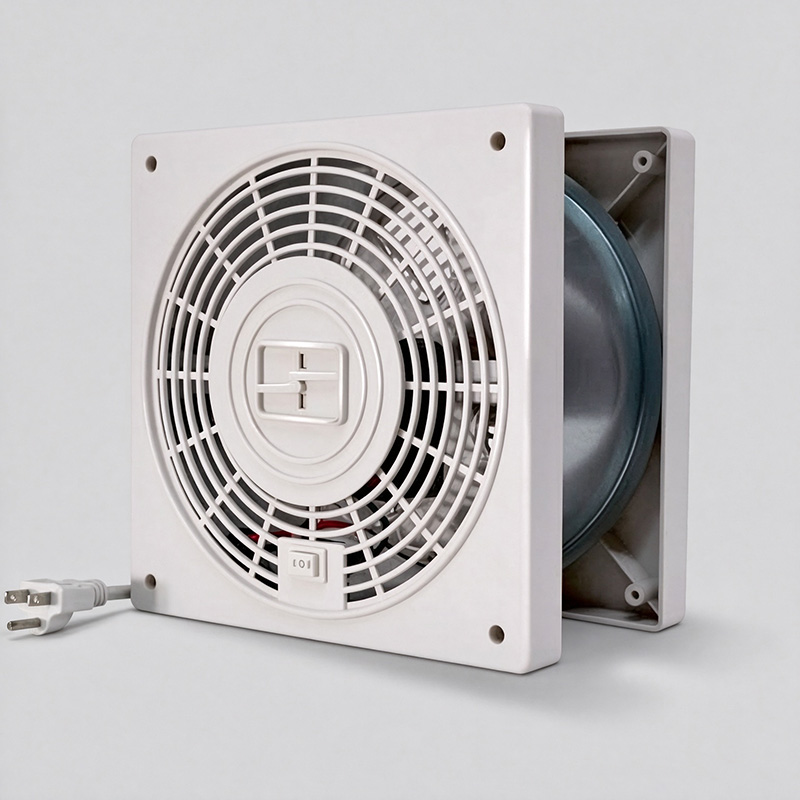
What Buyers Regret Missing Before Sending an RFQ
The most common sourcing mistake is simple. A buyer sends a fan model and an outline drawing, receives a low quote, and finds out during first-article testing that airflow has dropped. The impeller was fine. The housing around it was not. A sheet metal fan housing controls how air enters, how it is guided, and how much leaks back to the inlet, so small geometry and tolerance gaps become measurable losses in flow and noise.
This guide is written for HVAC, ventilation and equipment buyers who need to define the housing before they approach suppliers. It covers which details to put in the RFQ, how they relate to manufacturability, and what to ask a supplier to document.
Lingyufab (Shanghai Lingyu Industry) has made sheet metal and fasteners since 2003. Our scope here is fabrication to your drawings, including Custom Fan Case Assemblies. Fabrication includes laser cutting, CNC bending, stamping, TIG/MIG welding and surface finishing, in carbon steel, stainless steel (304/316) and aluminum. We do not design your fan or certify its aerodynamic performance. Airflow targets come from your fan datasheet and your own testing, and we build the housing to hold the geometry you define.
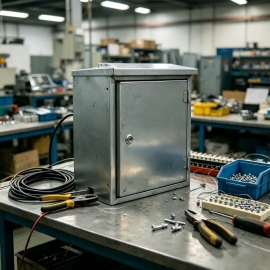
Sourcing Checklist: Inlet Geometry, Flanges, Thickness and Hole Tolerances vs. Airflow
Use this table as the core of your RFQ review. Each row links a drawing feature to its effect on airflow and to the question you should ask a supplier before accepting a quote.
| Feature | What to state in the RFQ | Airflow effect if poorly controlled | Ask the supplier |
|---|---|---|---|
| Inlet geometry (bellmouth, rolled lip, inlet ring) | Inner diameter, lip radius or profile, and fan datasheet reference | Flow separation at the inlet edge, higher turbulence, more noise, lower flow at the same speed | Is the profile formed, spun or welded in, and how is the edge profile checked? |
| Inlet-to-impeller alignment | Concentricity and the clearance zone, taken from the fan manufacturer's recommendation | Uneven gap, recirculation of air around the impeller, vibration | Which datum is used for measurement, and can it be inspected at 100%? |
| Flange interface | Flange width, flatness requirement, hole pattern, gasket or seal face | Air leakage at the duct or panel joint, lost static pressure | How is flatness held after welding, and is a seal face specified? |
| Material thickness | Nominal thickness and material grade, with a note on stiffness or vibration limits | Panel flutter, drumming noise, deformation under pressure that changes clearances | Can thickness be adjusted without changing the flow path? Are stiffening ribs allowed? |
| Mounting-hole position and tolerance | Hole-to-hole and hole-to-inlet datum tolerances; mark only the critical ones | Fan sits off-center, so tip clearance and balance change | What positional tolerance is achievable on laser-cut holes versus holes made after bending? |
| Weld seams and internal edges | Seam location, continuous or tack welds, deburring and no-spatter requirement inside the airflow path | Leakage through gaps; weld spatter and burrs disturb the flow | Are internal seams ground flush, and is leak checking part of inspection? |
| Cutoff or scroll profile (blowers) | Profile drawing with bend radii and angles | Pressure pulsation, reduced efficiency, tonal noise | Is the bend radius feasible for the chosen thickness and material? |
Two points to note. First, mark only the features that matter for airflow as critical. Specifying ±0.05mm on every hole raises cost without improving performance. We can hold tolerances down to ±0.05mm where a drawing requires it, and the saving comes from applying that precision to the inlet datum and mounting pattern rather than the whole part. Second, the tolerance values themselves should come from your fan supplier's installation guidance. A fabricator can hold a number, but cannot tell you whether that number is right for your impeller.
Material and Process Choices for Each Housing Type
Housing type drives the process route. A flat fan shroud with a formed inlet ring is a different job from a scroll-shaped blower casing. Fan shroud fabrication is mainly laser cutting, forming and a few welds. A sheet metal blower housing adds tighter curve forming and longer weld seams.
| Option | Best fit | Limit |
|---|---|---|
| Carbon steel with coating or plating | Indoor HVAC units, equipment cabinets, cost-sensitive volume runs | Needs surface protection; not suited to wet or corrosive air without a suitable finish |
| 304 stainless steel | Humid or washdown areas, food and general industrial ventilation | Higher material cost; forming springback must be allowed for on tight radii |
| 316 stainless steel | Chloride exposure, coastal or chemical environments | Cost is justified only where corrosion risk is real |
| Aluminum | Weight-sensitive equipment, thermal parts where low mass matters | Lower stiffness at the same thickness; welding needs more care on thin sections |
For formed edges, ask the supplier which bending method they plan to use. Our Leading Sheet Metal Bending Service Manufacturer page explains the CNC bending we use for these parts. For the flat blanks, Precision Sheet Metal Laser Cutting Services covers the cutting side, where hole position accuracy originates. Keeping cutting, bending, welding and assembly under one roof removes hand-offs between vendors, which is how we reduce overall cost by 15-20% for many buyers. That figure depends on part complexity and what you are comparing against.
How to Specify Fan Housing Airflow in Your RFQ Package
If you want to know how to specify fan housing airflow, start with the operating point rather than only a part number. A fabricator does not need your whole system model, but it does need enough to see which dimensions are critical.
Attach the fan datasheet or installation drawing. It shows inlet diameter, recommended clearances and mounting pattern.
State the required operating point. Give airflow and static pressure. This lets the supplier judge how much leakage and deformation you can tolerate.
Mark critical dimensions. Identify the inlet profile, datum holes and flange faces. Leave the rest at general tolerance.
Define material, thickness and finish. Include any environment notes such as humidity, salt or temperature.
Describe the joint to the rest of the unit. Say whether it is gasketed, bolted or welded. Hardware choice matters here, so tell us if you want captive hardware such as Custom Self-clinching Integrated Components instead of loose fasteners.
Give annual volume and the build stage. Prototype, pilot or production quantities change how the supplier will tool the job.
Common mistakes in housing RFQs
Quoting from an outline drawing with no inlet profile, so each supplier assumes a different shape.
Applying one general tolerance to the whole drawing and hiding the few dimensions that matter.
Choosing thin material to cut cost, then adding stiffeners later because of noise.
Leaving weld finish unspecified, so seams inside the airflow path are not ground.
Comparing quotes without confirming that each supplier priced the same inlet and flange detail.
Qualifying an HVAC Fan Housing Supplier: Evidence to Request
When you evaluate any HVAC fan housing supplier, ask for documents rather than descriptions. Here is what we can provide and what we cannot.
Quality system: ISO 9001:2015, ISO 14001 and TÜV CE certification. We are also a Mitsubishi Electric certified core supplier and follow Japanese quality standards in manufacturing.
Material traceability: Mill Test Certificates (MTC) for every batch.
Inspection: 100% dimensional and visual inspection before shipment, covering the datum and hole dimensions you mark as critical.
Remedy for defects: If a quality issue is caused by a manufacturing defect, we offer free replacement or repair.
What remains with you: aerodynamic validation. We have no document that proves how a housing performs with your fan. Plan an airflow test on the first samples and send us the results, so we can adjust the drawing if a dimension needs to change.
Cooperation Terms, Lead Times and Where Scope Needs Agreement
For prototyping we apply zero MOQ, so a one-piece sample or a 100-piece pilot run gets the same process rigor as mass production. Samples typically take 7-10 days and bulk orders 20-30 days. These are typical ranges, and the exact schedule depends on material availability, finish and drawing complexity. For early development, our Leading Sheet Metal Prototyping Manufacturer page describes the sample stage.
An illustrative scenario
This is a hypothetical example, not a customer case. An equipment maker needs a stainless inlet shroud for a ventilation unit. The first RFQ lists only the outer size and 1.5 mm 304 stainless. The supplier questions return three gaps: the lip radius, the hole datum and the seam finish. Once those are added, quotes become comparable, and a prototype run shows whether the inlet needs a design change before volume is committed. That order of work costs less than discovering the mismatch after 500 parts.
Matters to agree before the order
Which dimensions are critical and how they will be measured.
Acceptance criteria for the sample, including who runs the airflow test.
Material grade, thickness and finish, with any certificates you want attached.
Packaging and labeling for shipment to North America, Europe, Australia or Asia.
How design changes after sample approval will be handled.
Send Your Housing Drawings for a Quote
If you are preparing an RFQ for a custom sheet metal fan housing, send us the drawing, fan datasheet, material, thickness, finish and target quantity. Mark the inlet, flange and mounting-hole dimensions you consider critical. Our engineering team will review manufacturability and confirm which tolerances we can hold. Request a quote or contact our engineering team to begin.